
The Invisible Hand Behind Every Bottle
Open two bottles of Chardonnay - one from Burgundy, France, and one from South Australia - and you will find yourself tasting what seems like two entirely different wines. Both were made from the same grape variety. Yet one may offer crisp minerality and restrained fruit; the other might feel round, rich, and tropical. The explanation lies not in the grape but in the land.
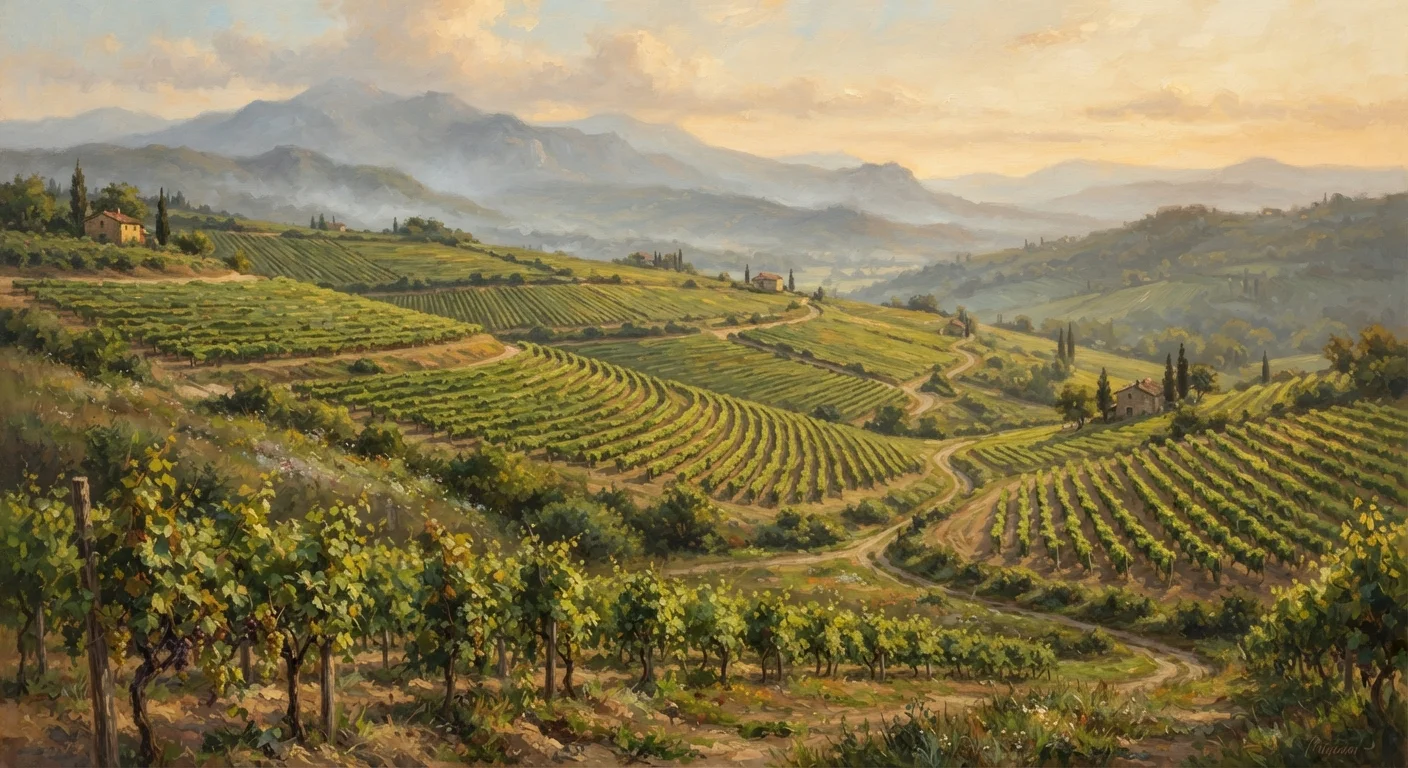
This is the central idea behind terroir: the environment where grapes grow leaves a measurable mark on the wine they produce. Soil, climate, altitude, sun exposure, and even the microbes living in the vineyard all contribute to the final flavor in your glass. Far from being abstract or mystical, terroir is one of the most practical tools for understanding why regional wine styles evolved the way they did.
Just as geography shapes spice use across cultures - explored in our article on how geography shapes cuisine's heat levels - it shapes what ends up in the bottle.
~10,000
Distinct grape varieties cultivated globally
The Food and Agriculture Organization of the United Nations estimates around 10,000 named grape varieties exist, though fewer than 100 dominate commercial wine production.
30°-50°
Latitude band where most wine grapes thrive
The majority of the world's vineyards fall within these latitude bands in both hemispheres, where seasonal temperature variation and sunlight hours suit Vitis vinifera cultivation.
3,000 m
Approximate altitude of world's highest vineyards
Some high-altitude vineyards in Bolivia and northwestern Argentina sit above 3,000 metres, demonstrating how dramatically elevation can extend the viable wine-growing map.
Soil: The Foundation Beneath the Vine
Soil is arguably the most discussed component of terroir, and for good reason. Vines are deep-rooted plants that draw water and minerals from layers of earth extending several metres below the surface. The soil type determines how well water drains, how warm the root zone stays, and what trace minerals the vine can absorb.
Chalk and limestone soils - found in Champagne and Chablis - drain freely, stress the vine slightly, and are associated with wines that show pronounced acidity and a characteristic mineral edge. Volcanic soils, present in regions like Santorini in Greece or Etna in Sicily, often produce wines with a distinctive smoky or saline quality. Clay-rich soils retain moisture and warmth, typically yielding fuller-bodied, rounder wines.
It is worth noting that the precise mechanism connecting soil minerals to wine flavor is still being studied. What scientists can confirm is that drainage, pH, and organic matter content measurably influence vine health and grape composition - and by extension, the wine.
Terroir vs. Winemaking: A Useful Distinction
It is worth separating what the land contributes from what the winemaker adds. Oak aging, fermentation choices, and blending decisions all shape a wine's final profile. Terroir describes only what the environment provides before the grapes reach the cellar. A skilled winemaker works with terroir, not over it.
Climate, Altitude, and the Role of Temperature
Climate is the broadest environmental factor shaping wine style. Cool-climate regions - think northern France, Germany's Rhine Valley, or New Zealand's Central Otago - produce grapes that ripen slowly, retaining high natural acidity and often showing lower alcohol levels. Warm-climate regions accelerate sugar development, leading to riper fruit flavors, softer acidity, and generally higher alcohol.
Altitude adds a crucial layer of nuance. Vineyards planted at elevation experience cooler average temperatures even within warm regions. Argentina's Mendoza, for example, sits at high altitude in what would otherwise be an arid, hot zone. The elevation creates cooler nights that preserve the acidity needed for balanced, structured wines.
Diurnal range - the difference between daytime and nighttime temperatures - is particularly important for aromatic grape varieties. Wide temperature swings slow the conversion of grape sugars while preserving the aromatic compounds that give wines like Riesling or Gewürztraminer their distinctive fragrance.
Taste Terroir Side by Side
One of the most effective ways to understand terroir is a side-by-side comparison. Pour a Chablis and an unoaked white Burgundy - both made from Chardonnay - and notice the difference in texture and mineral quality. Then try a cool-climate versus warm-climate version of the same red variety. The differences you detect are terroir in action.
Why Terroir Matters for Drinkers, Not Just Producers
Understanding terroir does more than satisfy curiosity - it changes how you approach a wine list, a shop shelf, or a conversation about what you enjoy. Once you know that a Sauvignon Blanc from New Zealand's Marlborough region grows in relatively cool, sunny conditions with intense UV light, the wine's distinctive citrus and herb profile makes sense rather than seeming arbitrary.
Terroir also explains why certain regions have become synonymous with specific styles. Bordeaux's gravelly soils warm quickly and drain reliably - ideal conditions for Cabernet Sauvignon. Burgundy's patchwork of limestone and clay plots produces wines so site-specific that adjacent vineyards can taste genuinely different, which is why the French system of appellations contrôlées (protected regional designations) was built around geography rather than producer names.
The concept extends beyond wine, too. Water mineral content shapes the flavor of coffee and tea - a principle examined in our guide on how water quality affects coffee and tea. The underlying logic is the same: what a liquid passes through on its way to your cup leaves traces you can taste. And for a broader view of how geography defines beverages globally, our piece on drinks from around the world shows just how varied those regional expressions can be.