
Heat as a Climate Response
Look at a map of the world's fiercest cuisines - West African pepper soups, Indian curries, Thai stir-fries, Mexican salsas - and a pattern becomes clear: intense spice gravitates toward the tropics and subtropics. This is not a cultural coincidence. Before refrigeration existed, warm temperatures created a genuine food-safety problem. Bacteria multiply far faster at 30°C than at 10°C, and populations living in hot climates faced daily exposure to spoiling meat, fish, and grains.
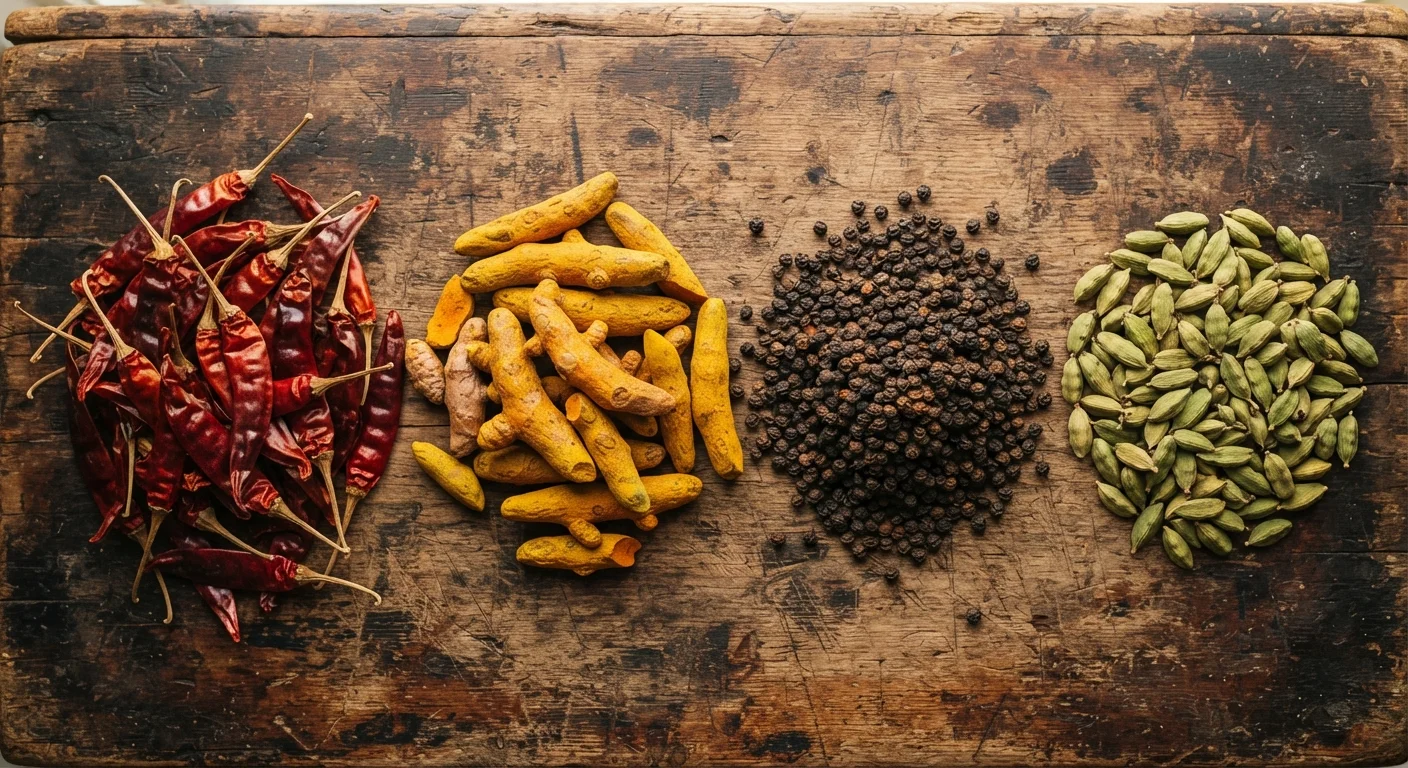
Research in food science suggests that many common spice compounds - including capsaicin from chillies, allicin from garlic, and eugenol from cloves - inhibit the growth of certain foodborne bacteria and moulds. A 1998 analysis by researchers Paul Sherman and Jennifer Billing examined spice use across 36 countries and found a strong correlation between average annual temperature and the frequency of antimicrobial spices in traditional recipes. Hotter countries used more of them.
Spice and Food Safety Today
Modern refrigeration has largely removed the survival pressure that may have encouraged heavy spice use in hot climates. Nevertheless, culinary traditions formed over centuries persist for cultural and sensory reasons that go far beyond food safety. The antimicrobial properties of spices are an interesting historical explanation, not a recommendation to use spice as a substitute for proper food storage.
This does not mean spice was used consciously as a preservative. More likely, populations that cooked with these ingredients suffered fewer food-related illnesses over generations, gradually reinforcing those flavour traditions through cultural selection rather than deliberate strategy.
Trade Routes Changed Everything
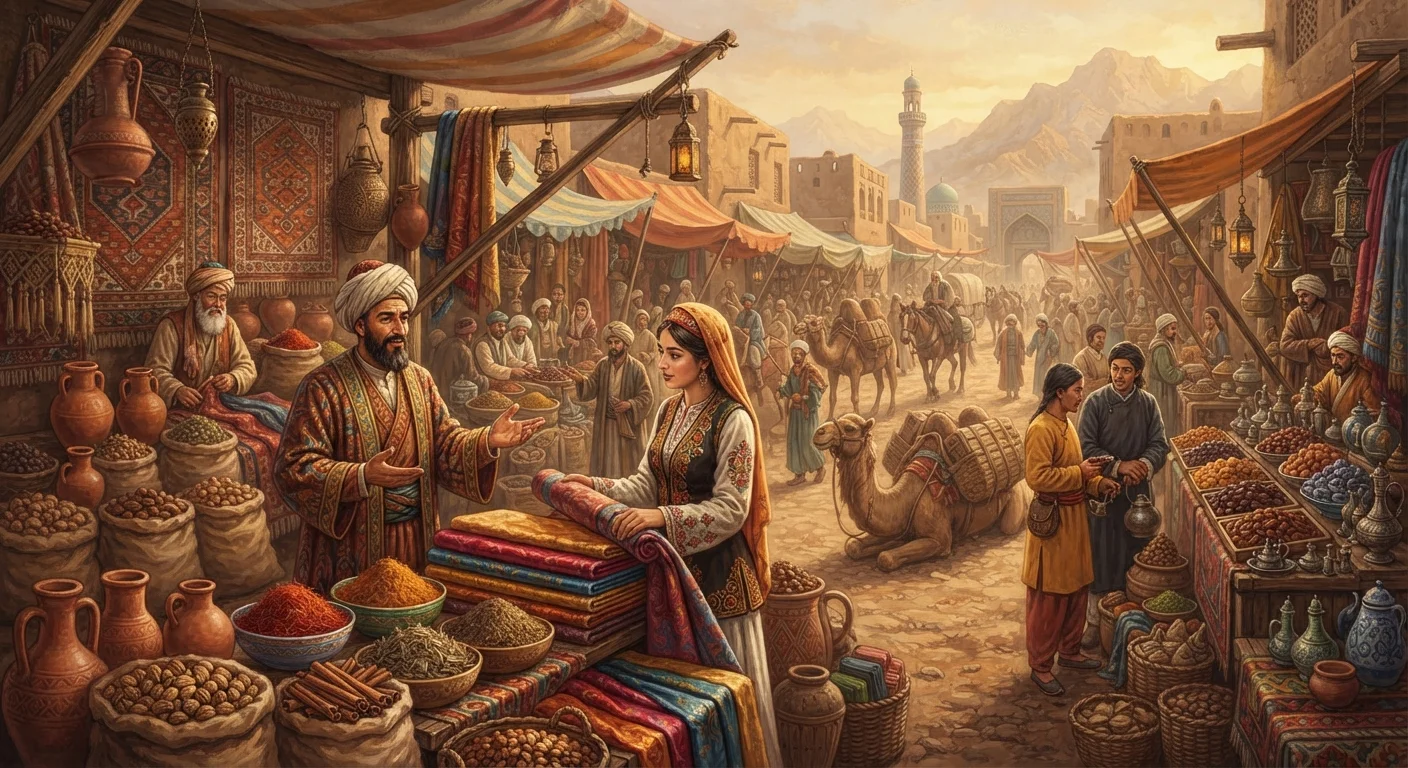
The spice map we recognise today was also drawn by merchants, sailors, and empires. Black pepper, native to South Asia, was so valuable in ancient Rome that it served as currency. Cinnamon from Sri Lanka, cloves from the Maluku Islands of Indonesia, and nutmeg from the same archipelago all moved along trade networks that stretched across the Indian Ocean long before European contact.
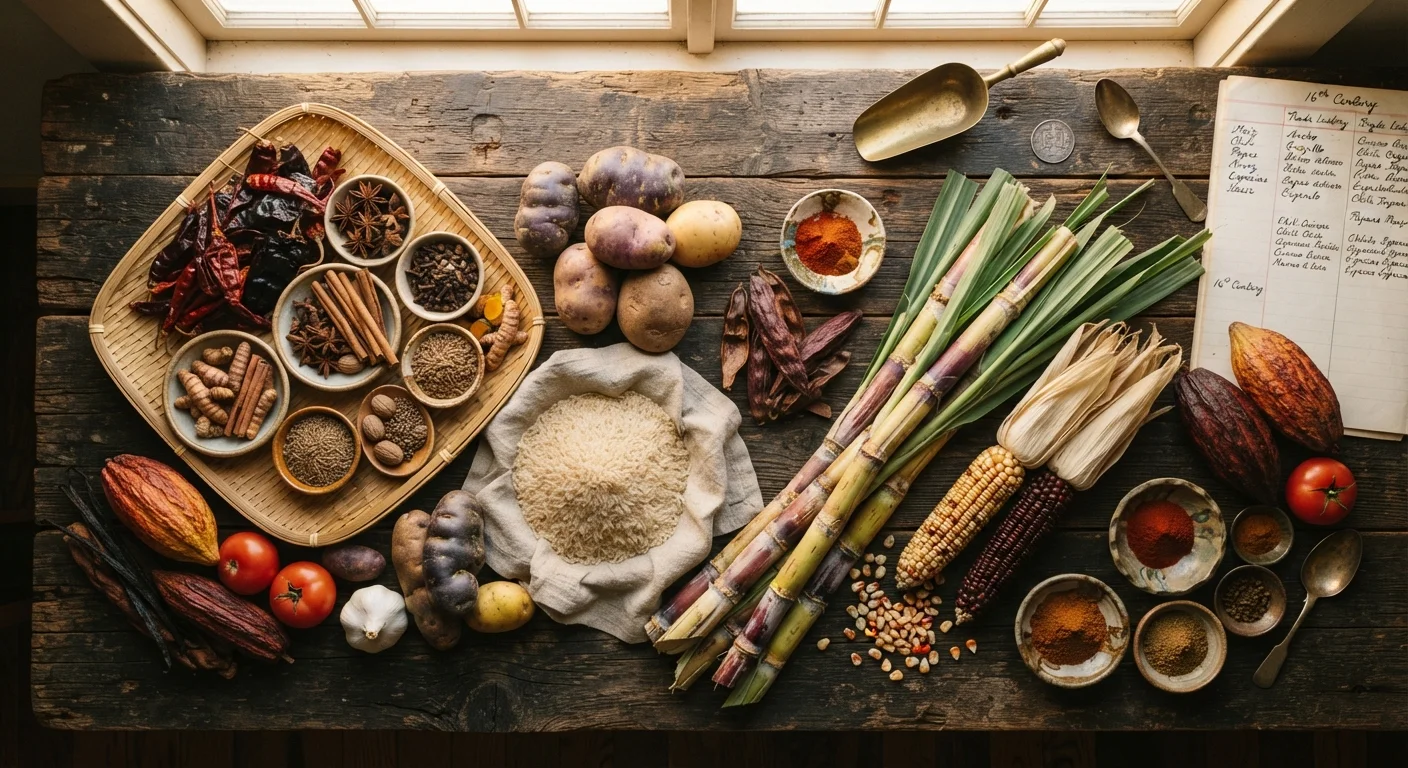
Then came the most dramatic reshaping of global flavour: the Colombian Exchange. After 1492, chillies - entirely unknown outside the Americas - spread with remarkable speed. Within roughly a century, they had been adopted into the cuisines of India, China, Korea, and much of sub-Saharan Africa. The fiery character we now consider inseparable from these traditions is, historically speaking, quite recent. For more on how ancient overland networks spread ingredients across continents, see how the Silk Road rewired what the world eats.
Colonial trade accelerated this process further, but also complicated it - introducing ingredients while disrupting indigenous food systems in ways that are still felt today. Colonialism's imprint on food systems is a layered history worth understanding separately.
~500 years
Time since chillies reached Asia and Africa
Chillies were unknown outside the Americas before the late 15th century, yet are now central to dozens of regional cuisines worldwide.
36
Countries examined in spice-temperature study
A study by Sherman and Billing (1998) found a strong correlation between average annual temperature and the use of antimicrobial spices in traditional recipes.
~2,000 years
Black pepper's documented trade history
Black pepper has been traded across long-distance routes between South Asia and the Mediterranean for at least two millennia, making it one of history's most enduring traded goods.
Why the North Stayed Mild
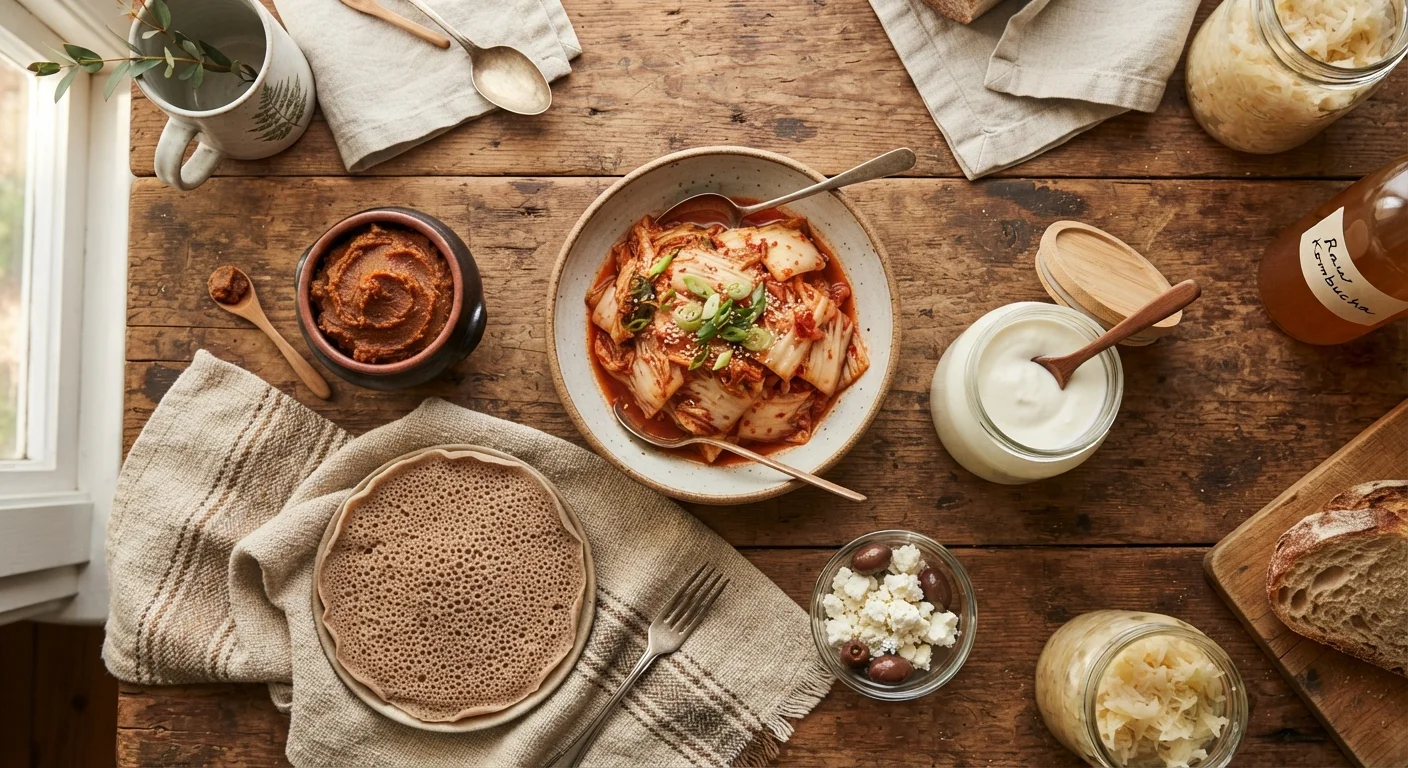
Cooler climates solved the food spoilage problem differently. In Scandinavia, Northern Europe, and parts of East Asia with cold winters, low temperatures naturally slowed bacterial growth, reducing the pressure to cook with antimicrobial spices. Instead, these cultures developed sophisticated preservation techniques: salting, smoking, pickling, and fermentation. The tangy, umami-rich flavours of sauerkraut, miso, and cured fish are answers to the same underlying problem - keeping food safe - just through a different mechanism. You can explore how those methods developed across cultures in our look at fermentation traditions around the world.
Access to spices also mattered. Tropical spices were expensive luxury imports in medieval Europe - prized precisely because they were rare. Everyday cooking in colder regions defaulted to local herbs like thyme, dill, and caraway rather than pepper or chilli. Once a culinary tradition is established over centuries, it tends to persist even when the original conditions change.
Cooking With Spice at Home
If you want to explore a new spice tradition, start with whole spices and toast them lightly in a dry pan before grinding - this releases aromatic oils and gives a fuller flavour. Building familiarity gradually, rather than jumping to maximum heat, helps your palate adapt and lets you appreciate the complexity behind the warmth.
Culture Locks In the Pattern
Climate and trade explain where spice traditions began, but culture explains why they persist. Taste preferences are formed in childhood and reinforced through every shared meal, family recipe, and festival dish. A person raised on mild Scandinavian food and one raised on West African pepper soup have both developed a palate calibrated to what their community defines as normal. Neither is more sophisticated - they are products of different environments and histories.
This is the same principle that governs wine's relationship to place: soil, altitude, and climate all shape character, and so does human habit. Just as the same grape tastes different across regions - a concept explored in depth in our guide to the geography of wine - the same ingredient expresses itself differently depending on the culinary tradition that surrounds it.
Understanding the geography of spice reframes how we read any dish. What looks like a simple flavour preference is often centuries of climate, ecology, commerce, and culture compressed onto a plate. Reading a menu as a cultural document offers another way into this kind of thinking.