
What Was the Silk Road, Really?
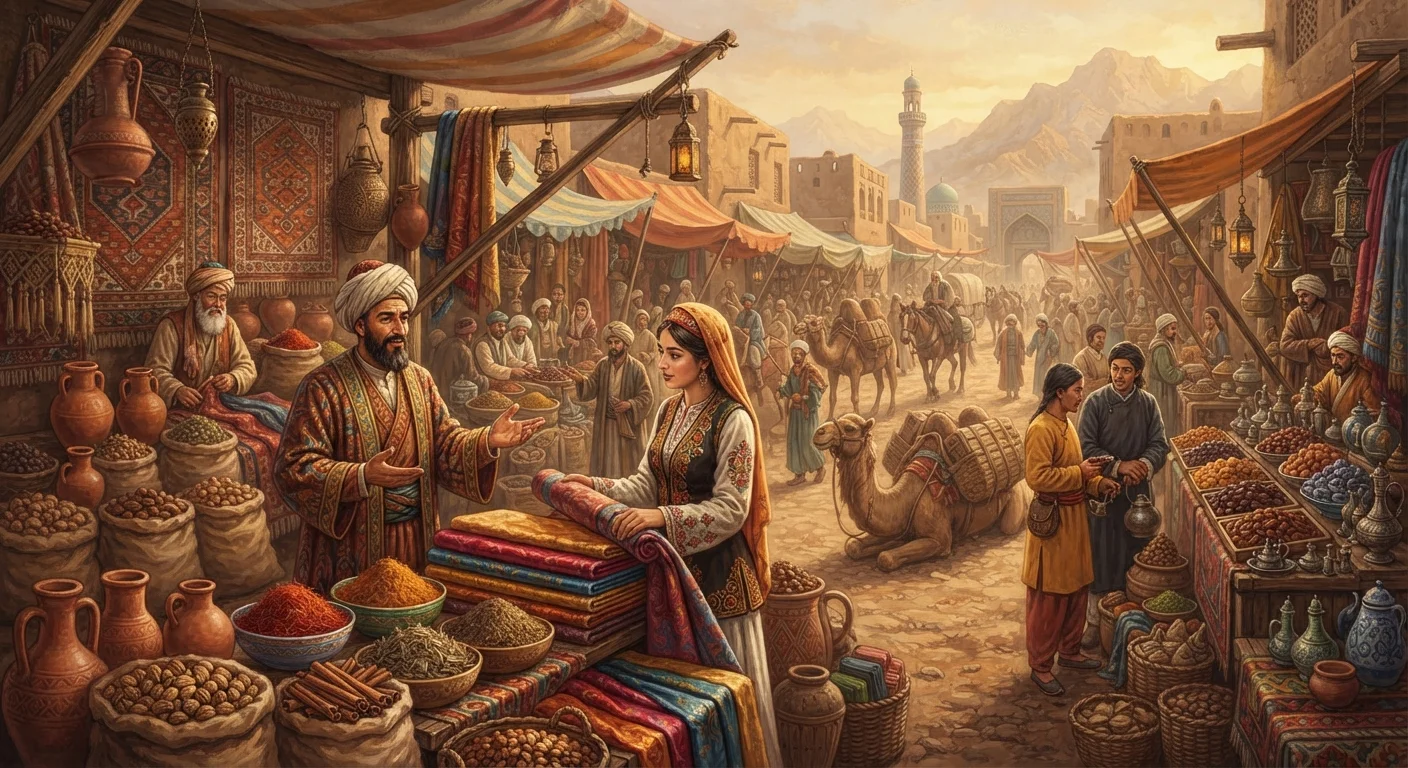
The Silk Road was not a single road. It was a sprawling network of overland and maritime trade routes connecting China, Central Asia, the Indian subcontinent, the Middle East, East Africa, and Europe - active from roughly the 2nd century BCE through the 15th century CE. Silk gave the routes their modern name, coined by German geographer Ferdinand von Richthofen in 1877, but merchants carried far more than fabric: ideas, religions, technologies, and above all, food.
Understanding what moved along these routes means rethinking what we assume to be local or traditional. Many ingredients we associate with specific cuisines today were once exotic imports, arriving via camel caravan or dhow sailing vessel across thousands of kilometers. The concept of 'authentic' cuisine becomes significantly more complicated once you trace where most ingredients actually came from.
~7,000 km
Overland extent of core Silk Road routes
Historians estimate the main overland corridor stretched from Chang'an (modern Xi'an) in China to the Mediterranean coast.
13th-14th c.
Peak era of Silk Road trade activity
Under the Mongol Empire's Pax Mongolica, travel and trade along the routes reached their most expansive and documented period.
~50+
Modern countries crossed by Silk Road corridors
UNESCO's Silk Roads Programme has documented routes crossing more than 50 countries across Asia, Africa, and Europe.
Spices: The Ingredient That Drove Empires
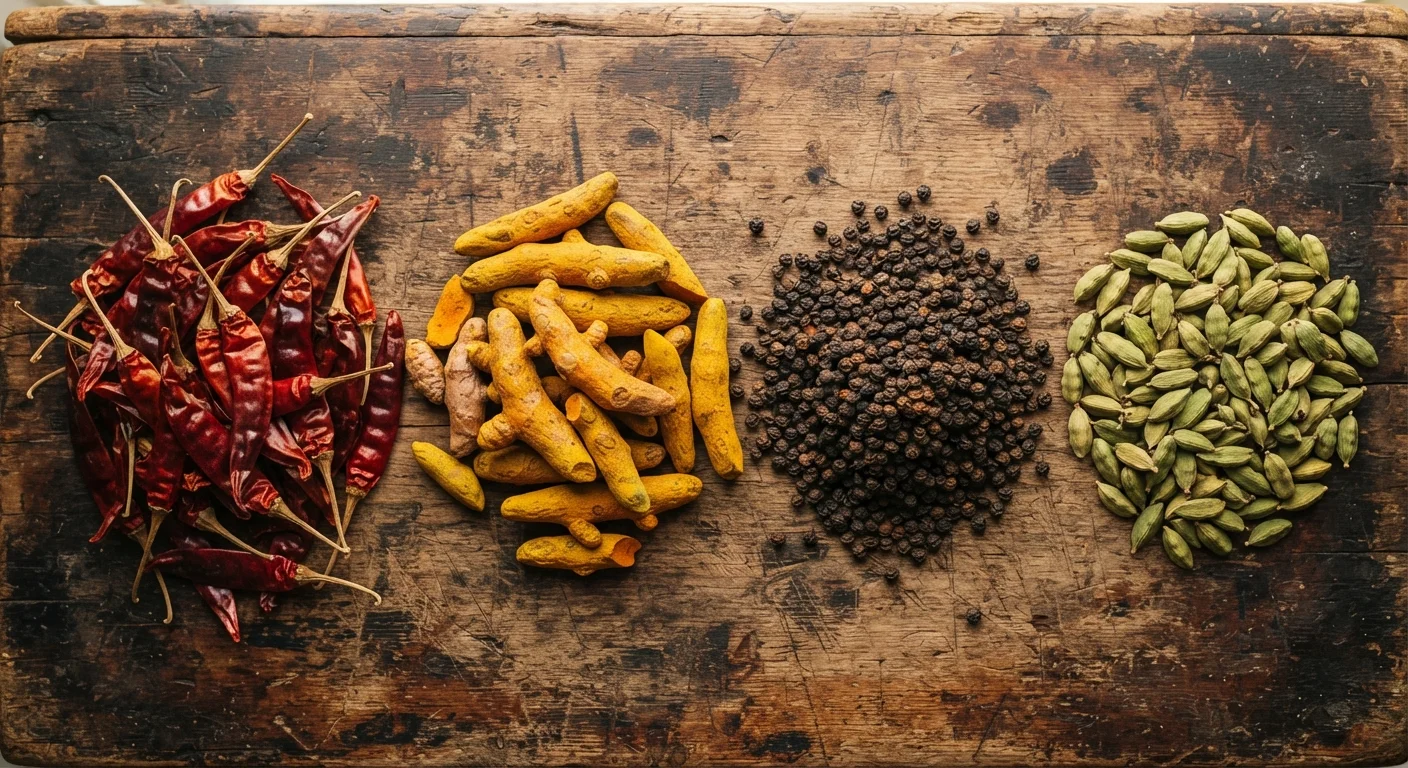
If any single category of food defined Silk Road commerce, it was spices. Black pepper from South India, cinnamon from Sri Lanka, cloves from the Maluku Islands, and saffron from Persia were not mere flavoring agents - they were currency-equivalents that financed wars, built city-states, and motivated centuries of exploration.
Pepper arrived in Europe via Arab and Persian intermediaries so reliably that it became a unit of rent and tribute in medieval Germany and England. Cinnamon, once so scarce that Egyptian pharaohs considered it a royal gift, became a staple of European baking after maritime trade routes were established. Saffron, cultivated across Persia and later Iberia, flavored everything from Persian rice dishes to Milanese risotto.
The geographic clustering of spice use in world cuisines is closely tied to proximity to these routes. The geography of spice use in regional cuisines reflects not just climate but the density of historical trade connections along these corridors.
When tracing the origin of a familiar spice, follow the Arab merchant trail first - Arabic speakers were the primary intermediaries who made spice knowledge legible to medieval Europe.
Arab traders controlled the most profitable Silk Road segments for centuries, and Arabic culinary and botanical texts preserve detailed records of how ingredients moved and were used.
Look for spice blends - not single spices - as markers of Silk Road influence. Garam masala, ras el hanout, and za'atar all reflect layered trade histories in a single mixture.
Blending multiple traded spices into a unified seasoning is a culinary behavior that emerged precisely in cultures that sat on or near major trade hubs.
Noodles, Bread, and the Spread of Wheat
Few food debates are more contested than the origin of noodles. Chinese texts reference noodle-like dishes as far back as the Han dynasty, while pasta appears in Arab manuscripts predating Marco Polo's travels. The likeliest explanation is that wheat cultivation and processing knowledge spread in multiple directions along Silk Road routes, with each culture developing its own preparation methods independently - and then cross-pollinating through contact.
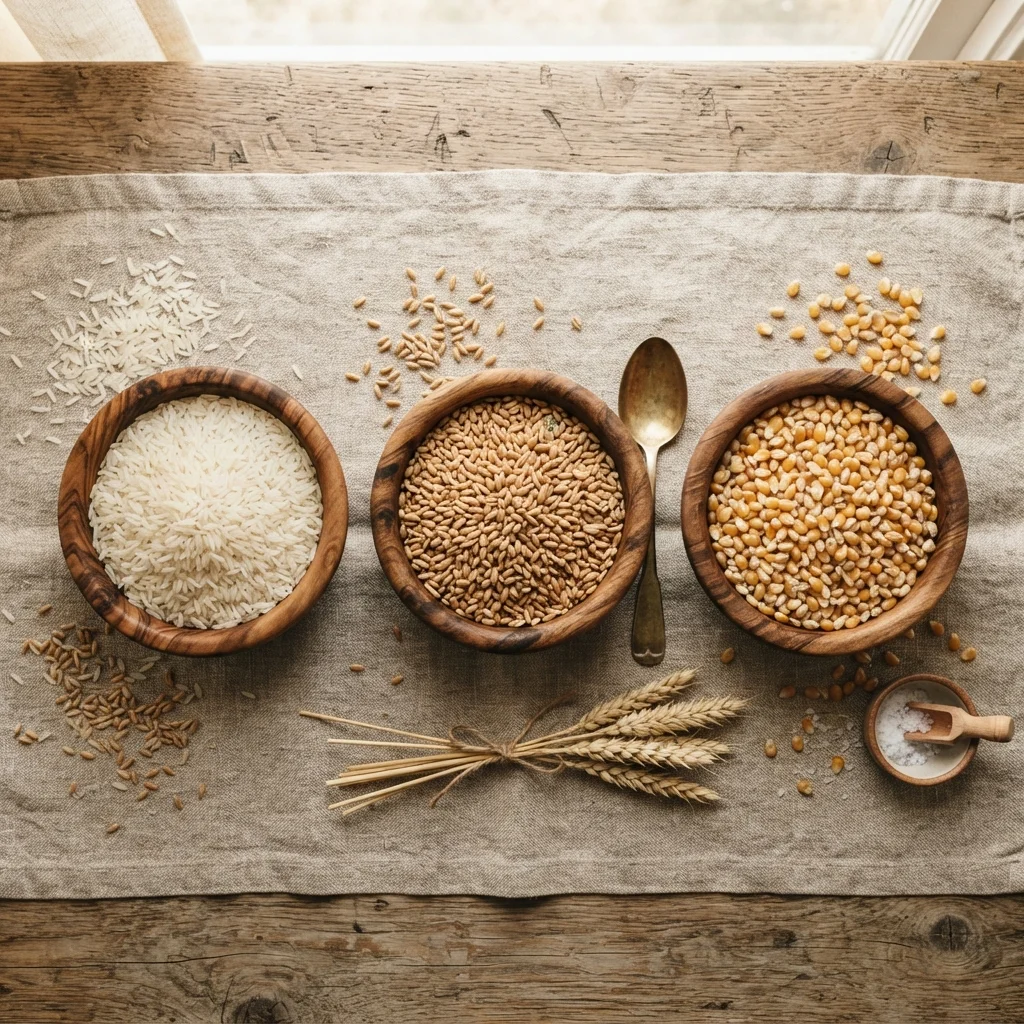
Flatbreads tell a clearer story. From Central Asian naan to Persian sangak, Levantine pita, and Ethiopian injera-adjacent traditions, flatbread technology traveled alongside the wheat grain itself. The spread of wheat as a staple grain across Eurasia is inseparable from the infrastructure the Silk Road provided - the roads, the caravanserais (roadside inns), and the merchant communities that carried grain knowledge with them.
Citrus, Sugar, and the Sweet Side of Trade
Lemons and oranges feel quintessentially Mediterranean, but both originated in South and Southeast Asia. Citrus fruits moved westward through Persia and the Arab world before taking root around the Mediterranean basin - carried by merchants and later by Arab agricultural scholars who introduced advanced irrigation techniques into Iberia and Sicily.
Cane sugar followed a similar path. Originating in New Guinea and cultivated in India, sugar entered the Persian and Arab worlds centuries before reaching Europe. Arab confectionery traditions - marzipan, candied fruits, rosewater-sweetened pastries - entered European culinary vocabulary through trading ports in Sicily, Venice, and Iberia. The sugar Europe would later pursue through colonial plantation agriculture had its conceptual roots in Silk Road transmission.
Trace Citrus Through Your Own Kitchen
Next time you use lemon, orange, or lime, consider that these fruits made a journey of thousands of years and kilometers before reaching your counter. Arab agricultural scholars introduced systematic citrus cultivation to the Mediterranean around the 9th-10th centuries CE. The fruits we take for granted in European cooking are relatively recent arrivals - historically speaking.
These patterns illustrate why nutritional habits found across very different cuisines often converge: the same foundational ingredients reached many cultures through the same ancient networks.
How Culinary Exchange Shaped Regional Identity
One of the Silk Road's subtler legacies is how it created culinary identities that feel deeply local but are built from imported components. Georgian cuisine layers walnuts, pomegranates, and fenugreek - each arriving from different directions. Uzbek plov (a rice and lamb dish) uses ingredients that converged on Central Asia from China, Persia, and the Arab world. Persian cuisine's mastery of sour-sweet balance owes much to citrus and dried fruits traded in from multiple directions.
This is not diminishment - it is how cuisines actually develop. Cultures absorb ingredients and transform them through local technique, preference, and ecological context. The result is something genuinely new and genuinely theirs. It also explains why the disruptive nature of colonial food exchange felt so different: Silk Road trade was largely mutual commerce, while later colonial food exchange often involved coercion and displacement.
“The Silk Road was never really about silk. It was about the exchange of everything that human beings have found meaningful - goods, ideas, beliefs, and the food that sustains daily life.”
— Valerie Hansen, Professor of History at Yale University and author of 'The Silk Road: A New History'
The Silk Road's Legacy on Today's Plate
Modern global cuisine is, in large part, a continuation of what the Silk Road began. The routes are gone but the flows of ingredients, technique, and culinary knowledge never stopped. Today's fusion restaurants, immigrant food communities, and international ingredient markets are direct descendants of the same human impulse that sent a merchant from Samarkand to Xi'an carrying sacks of pepper and dried fruit.
When you season a dish with black pepper in Germany, squeeze lemon over pasta, or stir saffron into a risotto, you are using ingredients whose journeys across continents were set in motion centuries before modern nation-states existed. That continuity is worth acknowledging - it reminds us that no cuisine developed in isolation, and that what we eat today is the result of extraordinary long-distance human connection.
Cuisine Exchange Was Rarely Equal
While Silk Road trade was largely commercial rather than coercive, it still reflected power imbalances - wealthier empires dictated terms, and smaller communities along the routes sometimes had little say in how their local resources were valued or extracted. A complete understanding of food history acknowledges both the richness of exchange and the inequities that shaped it.
UNESCO Silk Roads Programme
UNESCO's initiative documenting the cultural, historical, and culinary dimensions of Silk Road routes across more than 50 countries. A well-sourced starting point for deeper research.
Food Timeline (foodtimeline.org)
A research resource tracing the documented history of individual foods and ingredients, useful for verifying the historical trajectory of specific items.
The Oxford Companion to Food
A comprehensive reference covering food history, ingredient origins, and cultural context - particularly strong on tracing how ingredients moved between regions over time.