
Food as Living Memory
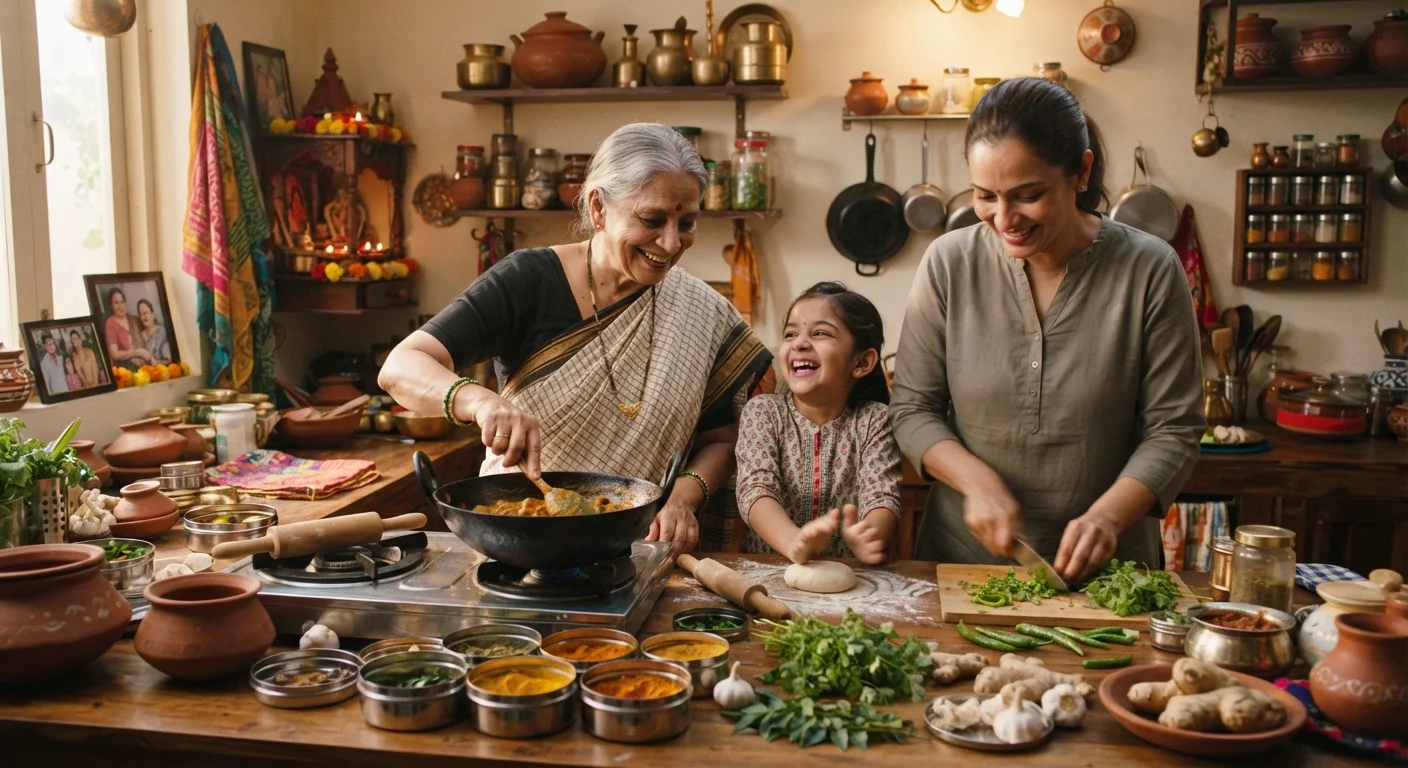
When people move across borders, they cannot always carry objects, land, or language intact - but they can carry recipes. A technique for folding dumplings, the ratio of spices in a curry paste, the particular sourness of a fermented staple: these are forms of embodied knowledge transmitted through practice. The diaspora kitchen is, at its core, a site of memory preservation.
This is not passive nostalgia. Cooking a dish from one's homeland in a new country is an active, effortful assertion of identity. It often requires sourcing unfamiliar local equivalents, adjusting for different ovens or stovetops, and explaining ingredients and techniques to children who have grown up surrounded by entirely different food norms. The effort itself carries meaning.
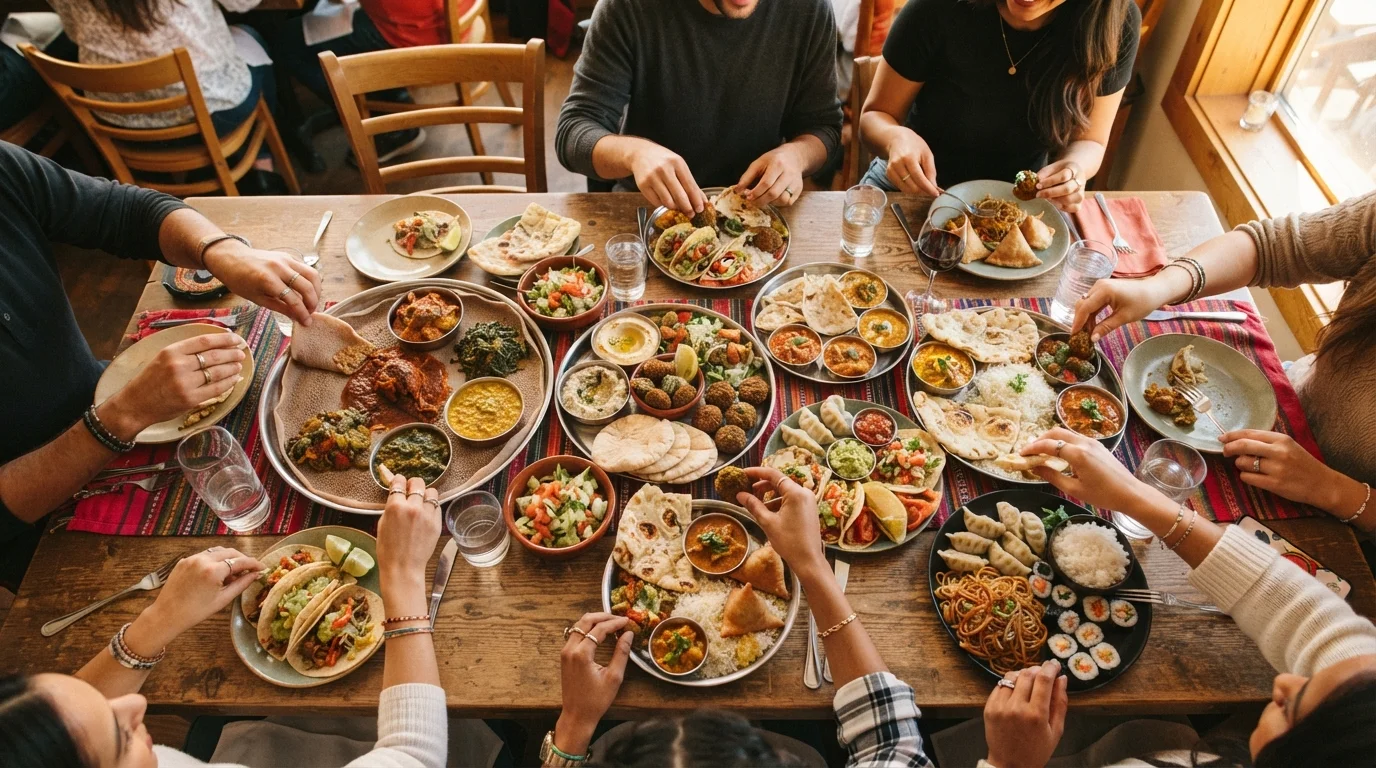
Communal eating amplifies this function. When diaspora communities gather to cook and eat together - at festivals, family celebrations, or informal weekly meals - they reinforce shared identity and create continuity for younger generations who may have little direct experience of the country of origin.
“Food is not just fuel. It is memory, identity, and belonging made edible. When immigrant communities cook the dishes of home, they are not simply feeding themselves - they are making a claim about who they are.”
— Krishnendu Ray, Food studies scholar and author of 'The Migrant's Table'
Adaptation and Improvisation: Where Transformation Begins
No diaspora kitchen is a perfect replica of the original. Ingredients differ. Climate affects what grows locally. Economic constraints shape what is affordable. The result is improvisation - and improvisation, over time, becomes tradition in its own right.
A community might replace one grain with another that behaves similarly in cooking, or find that a local variety of chili provides a comparable heat profile to the one used at home. These substitutions are not failures; they are creative responses to circumstance. They also produce something new: a version of a dish that belongs to both the origin culture and the place of settlement.
272M+
International migrants globally
According to the United Nations, there were approximately 272 million international migrants worldwide as of 2019, each carrying food traditions across borders.
3-4 generations
Typical span of active food transmission
Food anthropologists generally observe that core culinary practices remain actively transmitted across roughly three to four generations within diaspora communities before significant transformation occurs.
~30%
Of restaurant categories in major cities linked to diaspora communities
Urban food researchers have noted that a substantial share of restaurant diversity in large multicultural cities can be traced to the culinary traditions of diaspora and immigrant communities.
This is why diaspora food often looks different from what visitors find in the country of origin - and why both versions can be equally valid expressions of a living food culture. The question of which is more "authentic" tends to obscure more than it reveals. For a deeper look at that tension, see why food authenticity is more complicated than it seems.
How Diaspora Food Reshapes Host Cultures
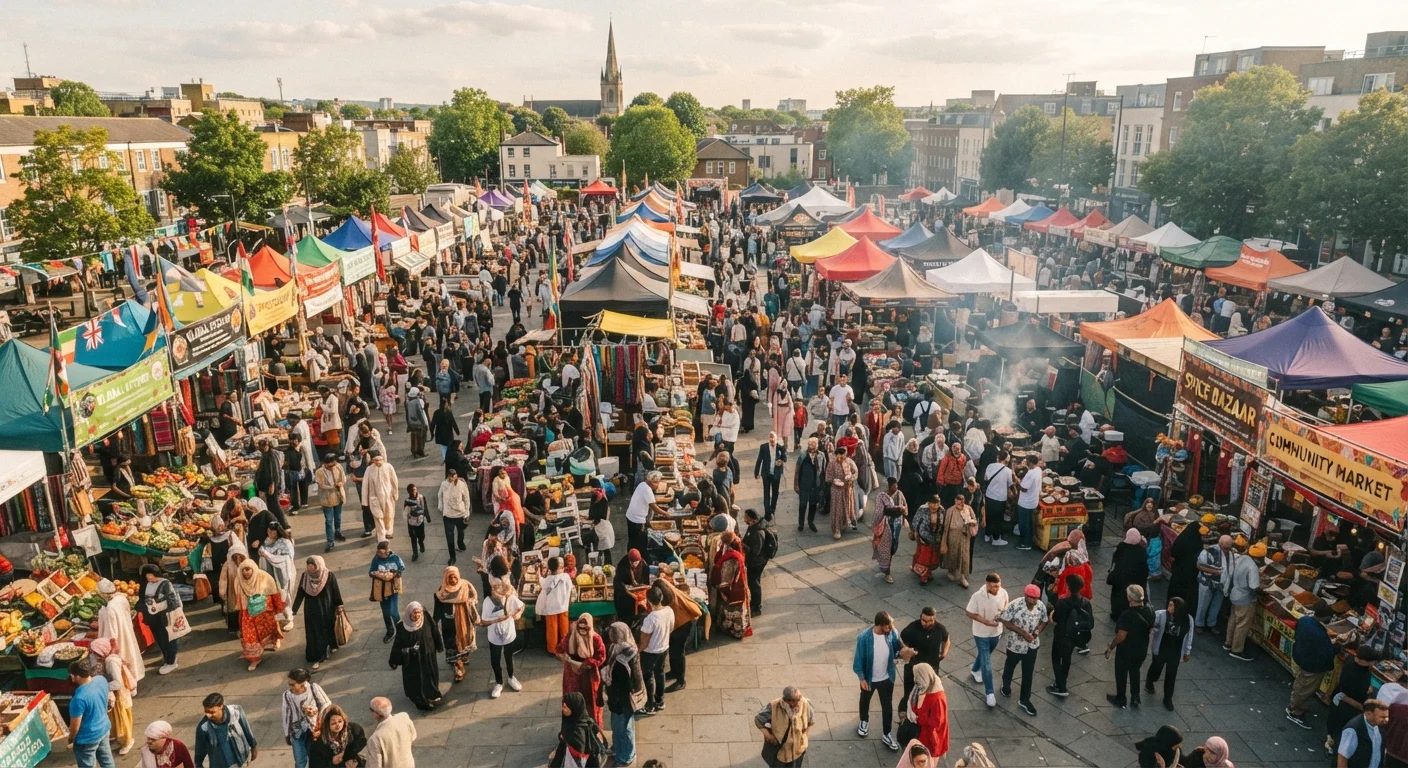
The influence of diaspora kitchens rarely stays contained within the community. Dishes introduced by immigrant populations have, in many cities and countries, become fixtures of mainstream food culture - appearing in supermarkets, street food stalls, and restaurant menus far beyond the communities that brought them. This diffusion is one of the clearest examples of how diaspora communities shape the broader societies they join.
This exchange is not without complexity. When dishes travel from a minority community into the mainstream, questions arise about credit, representation, and economic benefit. Who profits from a dish's popularity? Are the communities that kept a food tradition alive during years of marginalization recognized for that contribution? These are not purely culinary questions - they reflect broader social dynamics between majority and minority populations.
Engaging with Diaspora Food Thoughtfully
When encountering diaspora cuisine outside its community of origin - in restaurants, markets, or social settings - it is worth seeking context about a dish's background. Asking questions, reading about a food's history, and supporting community-owned establishments are ways of engaging with cultural food traditions respectfully rather than merely as consumers.
It is also worth noting that host-country ingredients and techniques flow back into diaspora cooking. The result is a genuinely hybrid food culture that belongs to neither origin nor destination exclusively - it emerges from the encounter between them. This process has been observed across centuries of migration and is closely linked to the broader history explored in how empire reshaped food systems across the world.
Generational Shifts and the Future of Diaspora Cuisine
One of the most dynamic aspects of diaspora food culture is what happens across generations. First-generation immigrants typically cook close to memory, replicating dishes as learned in the country of origin. Second and third generations often relate to these foods differently - sometimes rejecting them during adolescence as markers of difference, then returning to them as adults in search of identity and connection.
This generational arc has produced a wave of diaspora-informed cooks and food professionals who are neither preserving nor abandoning their inherited traditions, but consciously reinterpreting them. They may combine techniques from two or more food cultures, use fine-dining presentation for street-food dishes, or write recipes that translate grandmother's instinctive measurements into reproducible quantities for a new audience.
Fermented foods offer a vivid example: a community might continue making a traditional fermented staple like kimchi or injera in diaspora using adapted methods, and those techniques can evolve distinctly from parallel practices in the country of origin. For context on how fermentation traditions carry cultural meaning, see fermentation traditions around the world.