
Why a Menu Is More Than a List of Dishes
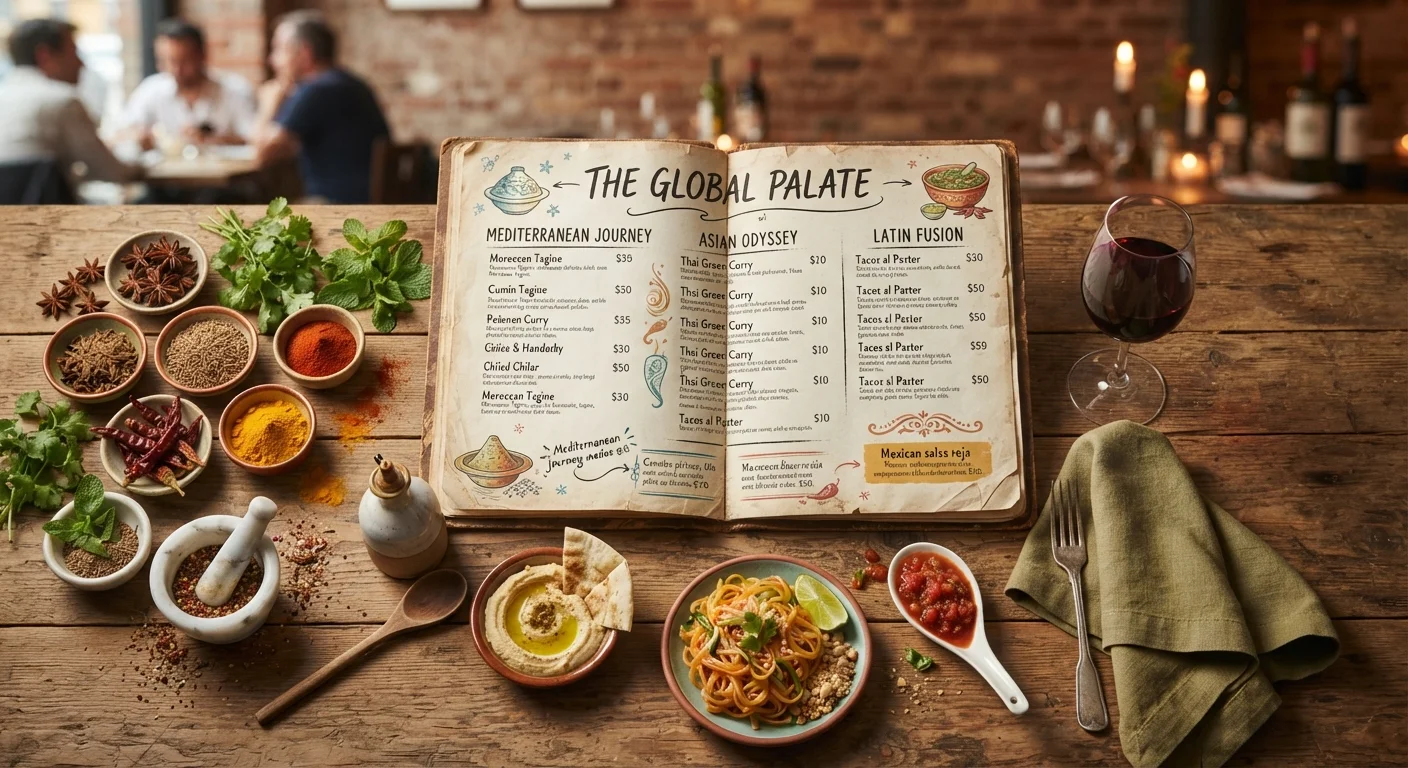
When you sit down in an unfamiliar restaurant - whether in your own city or halfway around the world - the menu in your hands is a cultural document. It encodes geography, agricultural history, trade routes, religious practice, social hierarchy, and the effects of migration and colonisation. Learning to read it that way transforms eating out from a passive experience into an active act of cultural curiosity.
This is not an exercise reserved for food scholars. With a few straightforward observation habits, any curious reader can extract meaningful cultural information from a menu. The method below works on everything from a Sichuan restaurant in Berlin to a traditional Lebanese meze spread.
What you will need
For context on how morning meals encode similar cultural information, see what breakfast reveals about a culture.
How to Read a Menu as a Cultural Document
Identify the dominant ingredients and staple bases
Begin by scanning the menu for the most frequently appearing ingredients. Ask: what is the starch base - rice, flatbread, pasta, root vegetables, or something else? Staple carbohydrates are one of the clearest indicators of a region's agricultural history and climate. Rice-based menus often signal warm, humid environments where paddy farming thrived. Flatbreads - whether injera, roti, or lavash - point to drier grain-growing cultures. Potato-heavy dishes frequently reflect colder, highland environments where root crops were reliable.
Next, look at the proteins. Are they predominantly legume-based, fish-forward, or meat-centred? Coastal cuisines logically lean on seafood; landlocked ones on preserved meats, dairy, or pulses.
Read the spice and seasoning patterns
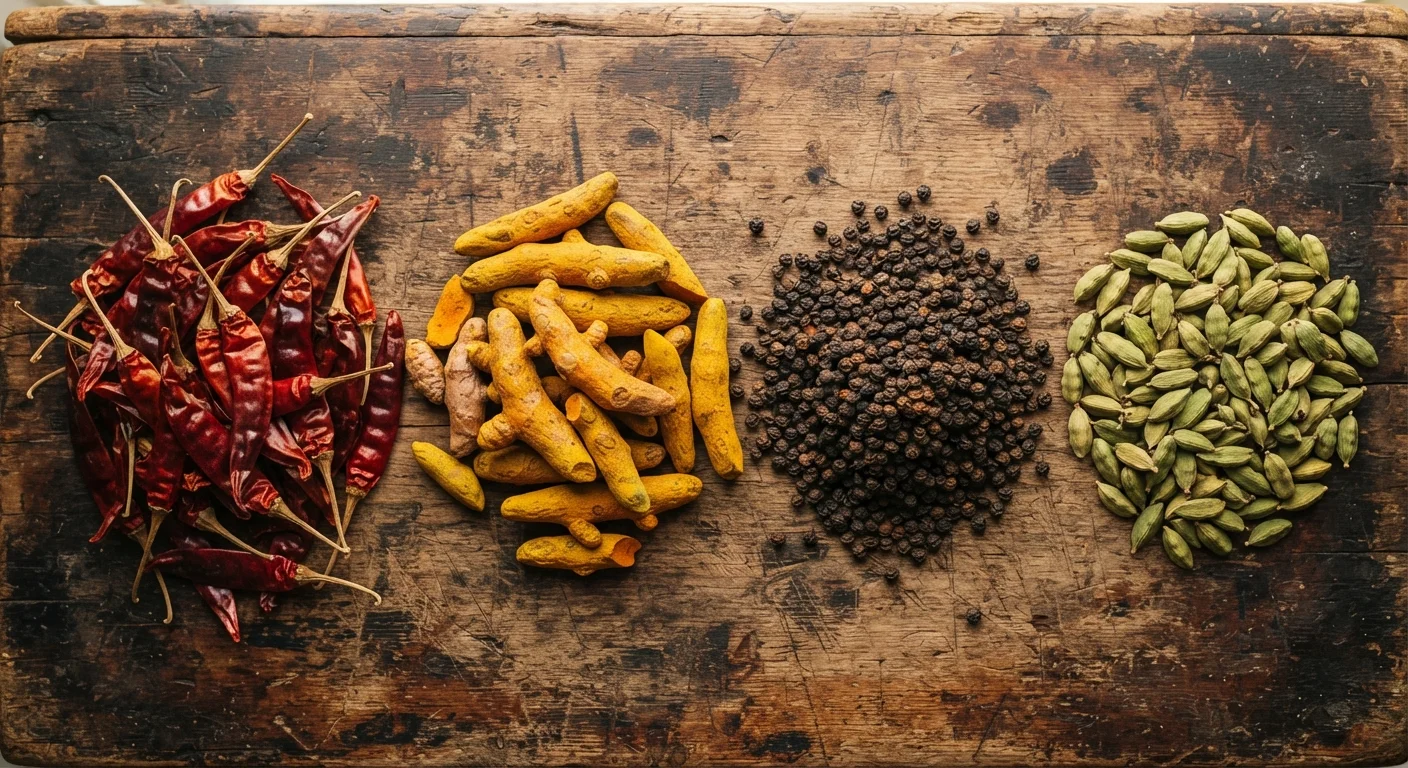
The seasoning profile of a menu is one of its most informative layers. Chilli heat clusters along specific trade and climate corridors - regions that had access to preservation spices also developed heat-forward cooking. Aromatic blends like berbere, garam masala, or ras el hanout encode centuries of spice trade history. A menu featuring fermented or sour notes - tamarind, dried lime, sumac - often reflects older preservation traditions from before refrigeration.
For a deeper look at how geography and trade shaped the global spice map, see our article on why some cuisines run hot and others don't.
Examine the structure and sequence of the meal
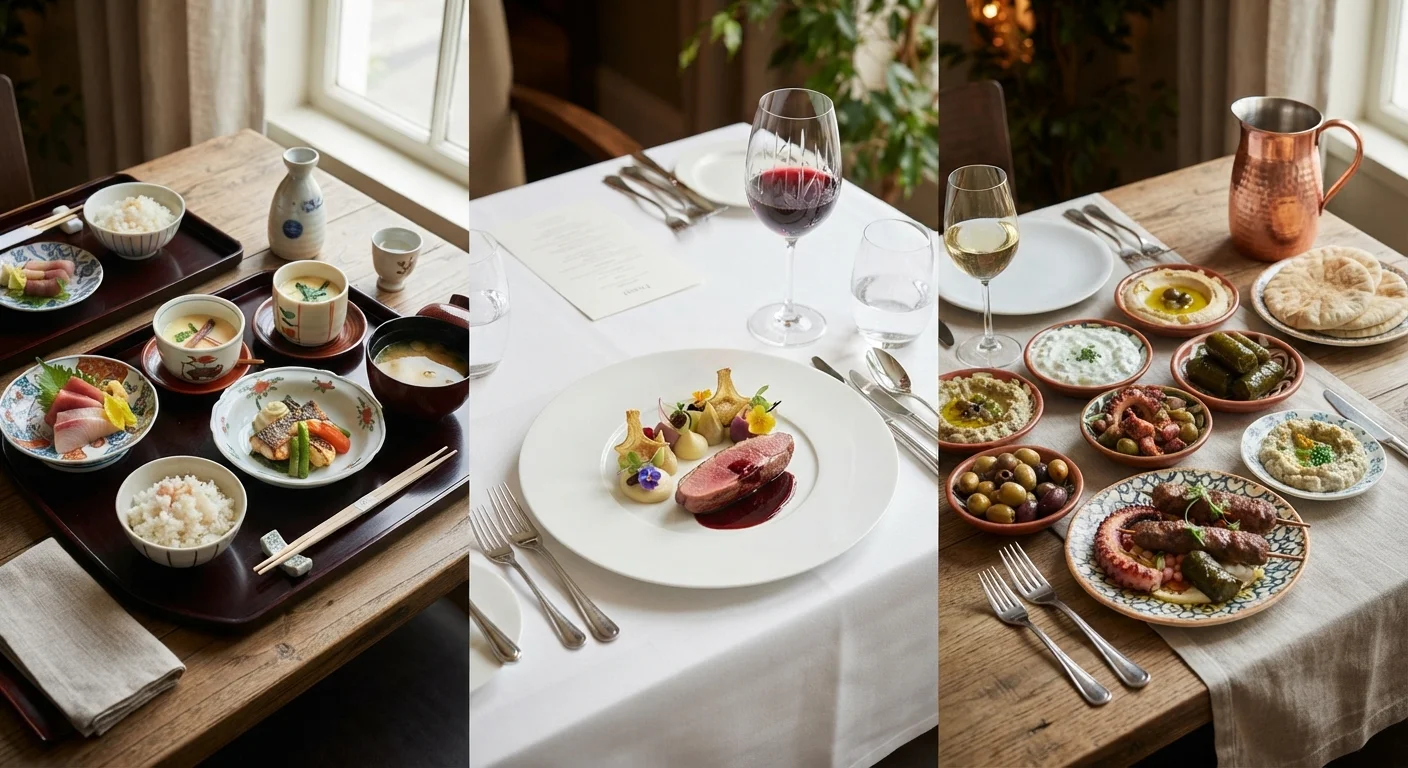
How a menu organises its dishes reveals how a culture conceptualises eating. Western European menus typically divide meals into discrete courses - starter, main, dessert - reflecting an emphasis on sequence and progression. Many Middle Eastern, South Asian, and East African traditions favour simultaneous shared dishes, where everything arrives together. The absence of a dessert section, or its minimalism, may indicate that sweetness is embedded elsewhere - in the tea, the fruit, or the occasion itself.
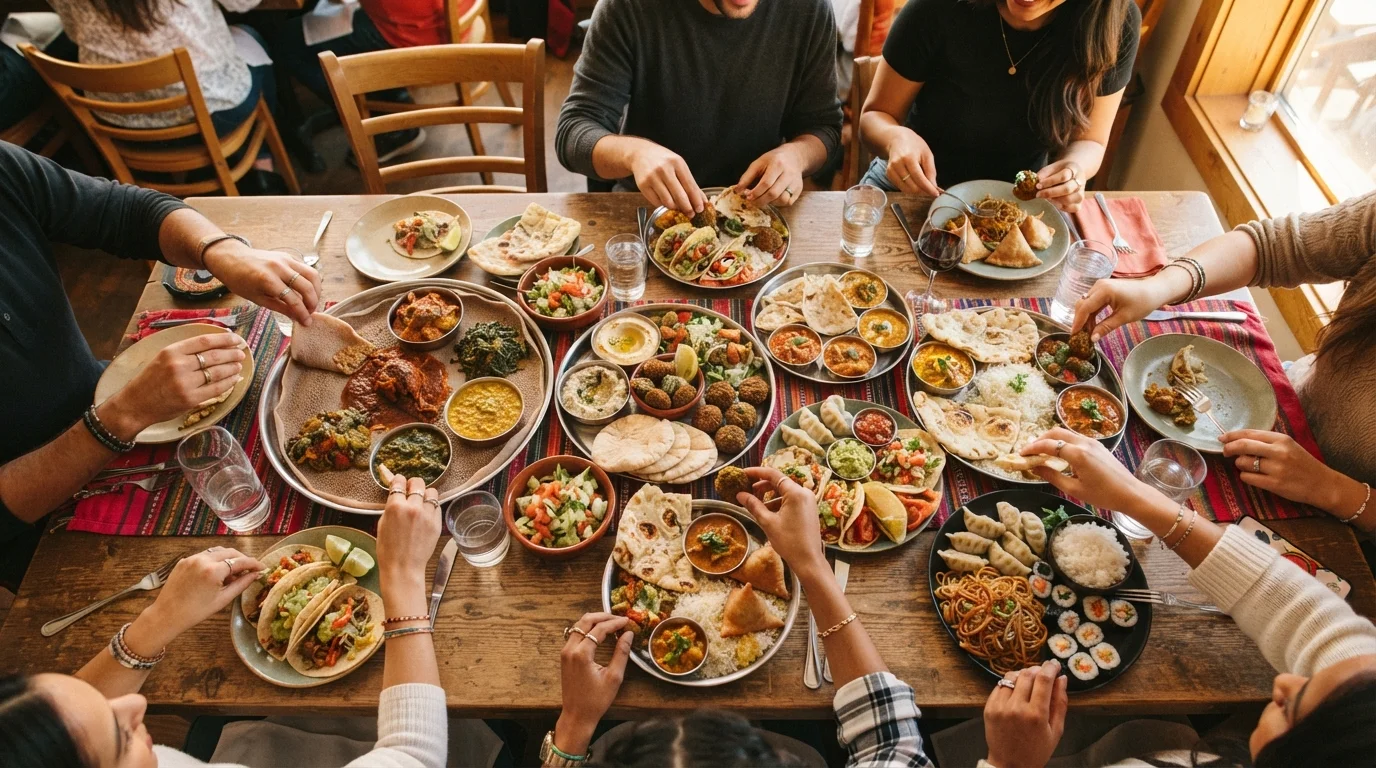
This structure also tells you about hospitality values. Menus offering many small shared plates often reflect cultures where communal eating is a social ritual. The social role of shared meals varies dramatically across cultures and shapes how menus are built.
Decode dish names and language choices
Dish names are a compressed history lesson. Names that reference a region, city, or village point to dishes tied to specific local identities. Names drawn from foreign languages often mark dishes introduced through trade, colonisation, or migration. A menu written in multiple languages - or heavily annotated in a tourist-facing language - is itself a cultural signal about who the restaurant is serving and how it positions its own cuisine.
Pay attention to which dishes get long, romantic descriptions and which are listed plainly. That editorial choice tells you which dishes the kitchen considers prestigious or in need of explanation for outsiders. For a nuanced look at how ideas of prestige in food shift by culture, explore what counts as fine dining around the world.
Look for signs of historical exchange and adaptation
Few menus represent a cuisine in isolation. Look for ingredients or techniques that seem geographically out of place - tomatoes in Italian cooking, chillies in Thai cuisine, or potatoes in Irish stew. These are all imports that became inseparable from their adopted cuisines. Their presence signals a history of trade, colonisation, or migration that reshaped what people ate.
A menu that blends two distinct culinary traditions - Peruvian-Japanese fusion being one well-documented example - is showing you a documented historical migration story on a plate. For a frank discussion of how authenticity in food is more complicated than it first appears, see our article on food authenticity myths.
Go Beyond the Familiar Sections
On unfamiliar menus, pay special attention to sections you might skip - offal, fermented sides, or unlabelled specials. These often represent the most deeply rooted parts of a culinary tradition, the dishes eaten long before tourism or export markets shaped what gets served to outsiders.
Menus Don't Tell the Whole Story
Restaurant menus - especially those aimed at tourists - are often edited for outside audiences. A dish's representation on a menu may differ significantly from how it's prepared and eaten at home. Treat menus as one useful starting point, not a complete or definitive picture of a food culture.
Street-level food also carries cultural meaning that restaurant menus sometimes obscure. For a comparison of the two, street food vs. restaurant culture offers useful framing.
Context Matters More Than Assumptions
Reading a menu as a cultural document is an exercise in curiosity, not judgment. Avoid projecting assumptions onto unfamiliar cuisines - instead, let the ingredients and structures prompt questions. What you find may challenge preconceptions about what a culture values or how it lives.