
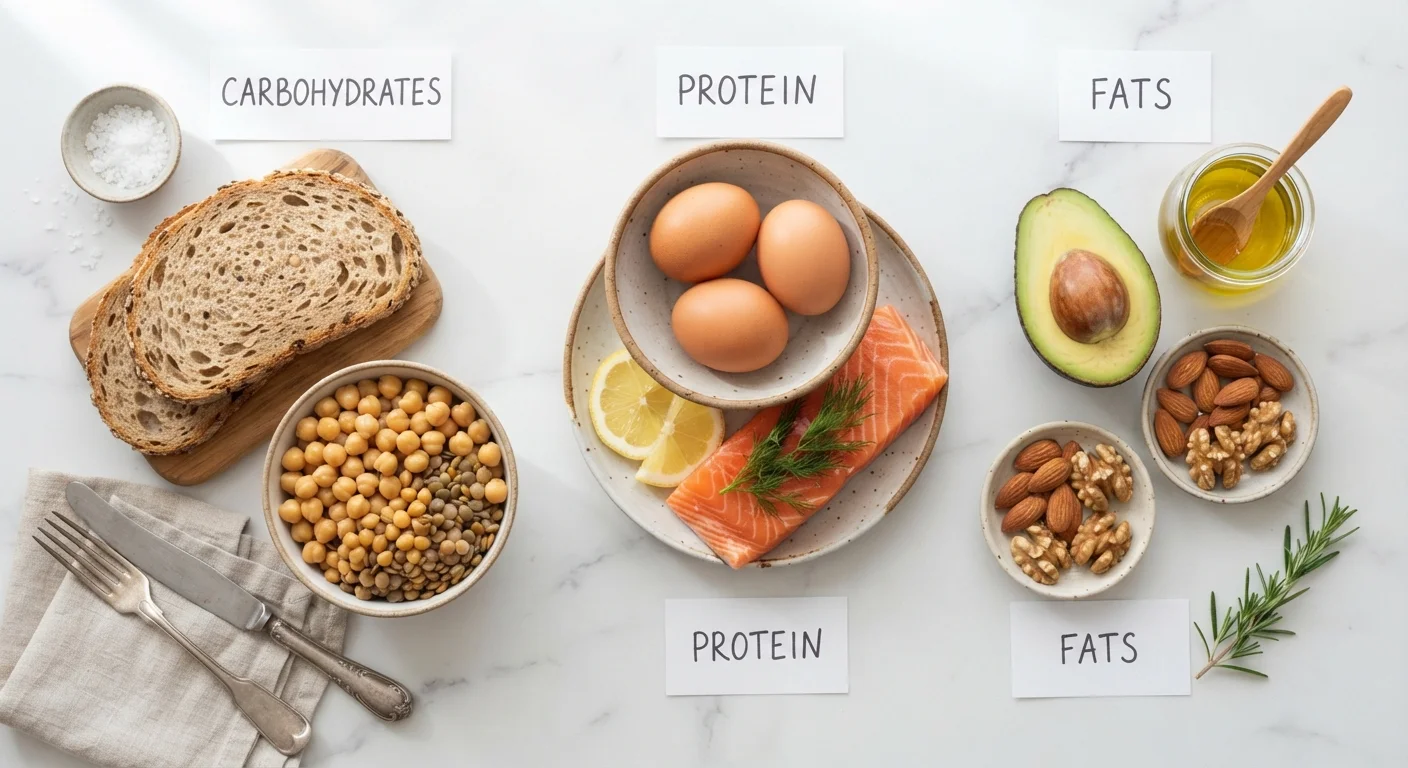
Why Macronutrients Matter
Every time you eat, your body gets to work extracting what it needs. At the broadest level, food is made up of macronutrients - compounds your body requires in relatively large quantities to function. Understanding what carbohydrates, proteins, and fats actually do helps you see past diet trends and make more grounded choices.
This article is part of a broader look at food and nutrition. For a thorough overview of how macronutrients fit into the full nutritional picture, including meal planning and label reading, see this complete nutrition overview.
4 kcal/g
Energy from carbohydrates and protein
Both carbohydrates and protein yield approximately 4 kilocalories per gram when metabolized, according to standard nutritional chemistry.
9 kcal/g
Energy from dietary fat
Fat is the most energy-dense macronutrient, providing more than twice the calories per gram compared to carbohydrates or protein.
9
Essential amino acids humans must obtain from food
Of the 20 amino acids used by the human body, 9 cannot be synthesized internally and must come from dietary protein sources.
Carbohydrates: Your Body's First Choice for Fuel
Carbohydrates are broken down into glucose, which circulates in the bloodstream and powers cells - including, critically, the brain. When you eat bread, rice, fruit, or legumes, your digestive system converts those carbohydrates into glucose for immediate use or stores them in the liver and muscles as glycogen for later.
Not all carbohydrates behave the same way. Dietary fiber - a type of carbohydrate the body cannot fully digest - plays a separate but important role, supporting gut health and helping regulate blood sugar levels. Whole grains, vegetables, and legumes provide fiber alongside their energy content, making them nutritionally denser choices than highly refined alternatives.
The idea that carbohydrates are universally harmful is one of the most persistent nutrition myths. Current dietary evidence consistently shows that carbohydrate quality - rather than quantity alone - is what matters most for health outcomes.
Choose Whole Food Carbohydrate Sources
When selecting carbohydrate-rich foods, prioritize those that come with fiber, vitamins, and minerals intact - such as whole grains, legumes, fruits, and vegetables. These provide more sustained energy and greater nutritional value compared to heavily refined options. Small shifts, like choosing whole grain bread or brown rice over their refined counterparts, can meaningfully improve the nutritional quality of everyday meals.
Proteins: Building Blocks With Many Jobs
Proteins are made up of smaller units called amino acids. Your body uses these amino acids to build and repair muscle tissue, produce enzymes that drive chemical reactions, manufacture hormones, and support immune function. Without adequate protein, the body struggles to recover from exercise, heal injuries, or maintain muscle mass over time.
Nine of the twenty amino acids your body needs are considered 'essential' - meaning your body cannot synthesize them and must obtain them from food. Animal foods such as meat, fish, eggs, and dairy contain all nine essential amino acids. Plant sources like soy and quinoa also provide complete amino acid profiles, while other plant foods can be combined to meet needs across a day's meals.
Fats: Essential, Not the Enemy
Dietary fat has a long history of being misunderstood. Fat is essential for absorbing vitamins A, D, E, and K - all of which are fat-soluble, meaning they cannot enter the bloodstream without fat present. Fat also provides insulation, cushions organs, and is the raw material from which many hormones are produced.
Different types of fat have different effects in the body. Unsaturated fats - found in olive oil, nuts, seeds, and oily fish - are broadly associated with cardiovascular health in the scientific literature. Saturated fats, common in animal products and some plant oils, are still the subject of ongoing research regarding their role in heart health. Trans fats, created through industrial hydrogenation, are widely considered harmful and have been restricted or banned in many countries.
To understand how macronutrients compare with the micronutrients your body also depends on, this guide to vitamins and minerals provides a useful companion read.
“There are no good or bad foods, only good or bad diets. A balanced intake of all three macronutrients, drawn from a variety of whole foods, remains the most evidence-supported foundation for long-term health.”
— Marion Nestle, Professor Emerita of Nutrition, Food Studies, and Public Health, New York University
Putting It All Together
No single macronutrient works in isolation. A meal containing all three - say, a grain bowl with legumes, vegetables, and a drizzle of olive oil - provides sustained energy, supports tissue repair, and enables your body to absorb the micronutrients also present in that food. The practical takeaway is less about hitting precise ratios and more about ensuring variety and food quality across meals.
For a closer look at how each macronutrient is processed inside the body, this detailed breakdown goes further into the physiology. And if you're curious about the nutrients your body needs in smaller but equally important amounts, micronutrients explained covers vitamins and minerals in accessible detail.
This article is for general informational purposes only and does not constitute medical or dietary advice. For guidance tailored to your individual health needs, consult a qualified healthcare professional or registered dietitian.