
Why Nutrition Labels Feel Confusing - and How to Fix That
Nutrition facts panels pack a lot of information into a small space, and without a clear reading order, it is easy to focus on the wrong numbers. Most readers instinctively look at calories first, then perhaps fat - yet the most useful starting point is often the least glamorous: the serving size.
This guide walks through each part of the label in a logical sequence, so you build an accurate picture of what a food actually contains. If you are new to thinking about nutrition in general, the foundation guide for everyday eaters covers the underlying concepts - macronutrients, micronutrients, and balance - before you start comparing labels.
What you will need
Nutrition Facts Panel
The standardised label printed on packaged foods showing nutrient content per serving.
Ingredients List
The full list of ingredients on the product package, ordered by weight from highest to lowest.
Calculator or smartphone
Useful for scaling nutrient values when your portion differs from the listed serving size.
Step-by-Step: Reading the Panel
Follow the steps below using any packaged food you have on hand. Working through a real label as you read makes each point tangible.
Start with the serving size
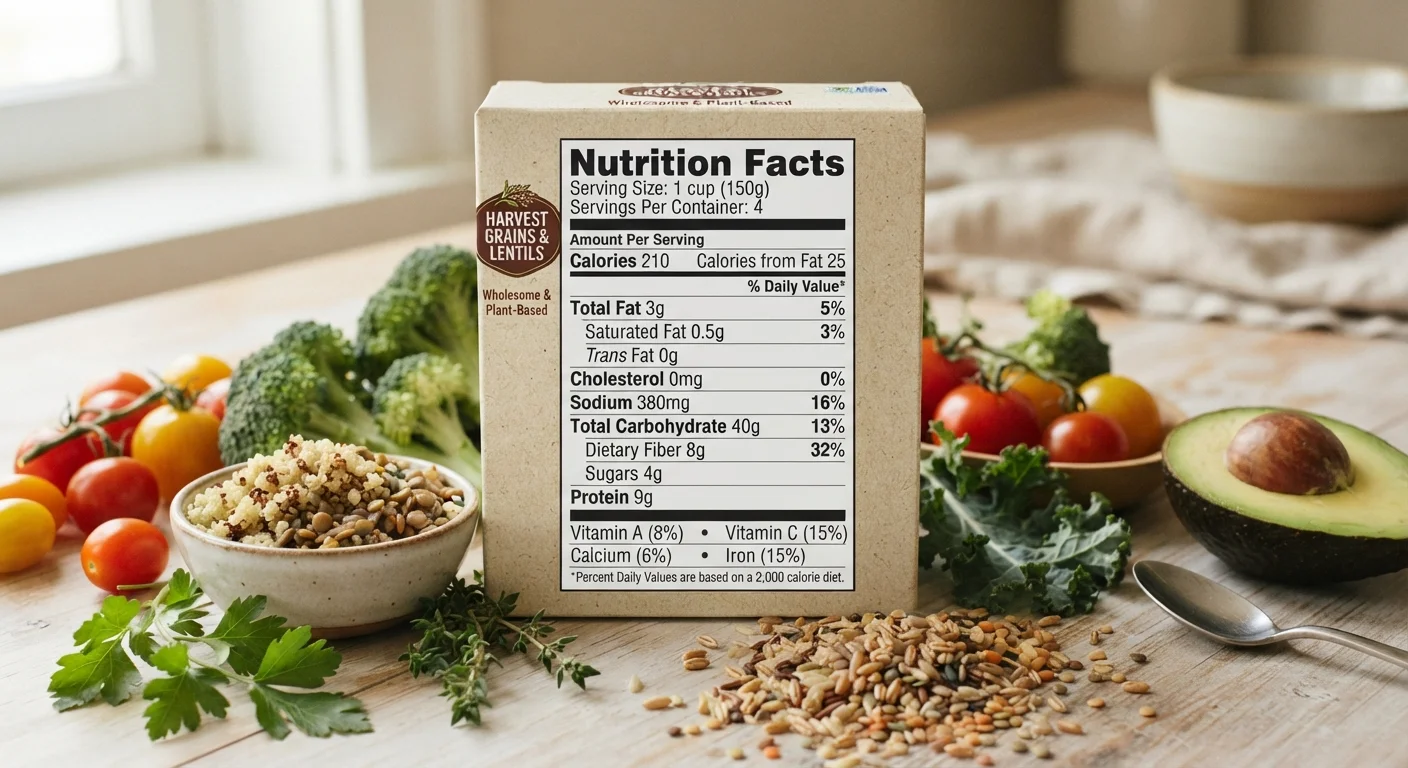
The serving size is printed at the very top of the nutrition facts panel, usually expressed in grams and a common household measure (e.g. "30 g / about 1/3 cup"). Every number that follows - calories, fat, sodium, vitamins - refers to this amount only, not the whole package.
Before reading anything else, compare the listed serving size to how much you actually eat. If you consume twice the serving size, every nutrient value doubles accordingly.
Read the calorie count in context
Calories tell you how much energy one serving provides. As a general orientation, nutrition guidance often uses 2,000 calories per day as a reference point - though individual needs vary based on age, body size, and activity level.
Rather than fixating on the calorie number alone, use it alongside the nutrient breakdown to understand what kind of energy the food provides (e.g. mostly fat, mostly carbohydrate).
Understand the Daily Value percentages
To the right of most nutrients you will see a percentage marked %DV (Daily Value). This figure shows how much one serving contributes toward a general daily reference intake for that nutrient, based on a 2,000-calorie diet.
- 5% DV or less is generally considered low for that nutrient.
- 20% DV or more is generally considered high.
Use %DV to compare products quickly or to check whether a food is a meaningful source of a specific nutrient - for example, calcium or fibre.
Distinguish total sugars from added sugars
The label lists total sugars - which includes naturally occurring sugars from fruit or dairy - and, indented below it, added sugars. Added sugars are those incorporated during processing and provide energy without additional nutrients.
Nutrition authorities in many countries, including Germany's Deutsche Gesellschaft für Ernährung (DGE), recommend limiting added sugar intake. Checking this line helps you distinguish naturally sweet foods from products with significant sugar added during manufacturing.
Scan the ingredients list strategically
Ingredients are listed in descending order by weight. The first two or three ingredients make up the bulk of the product. If water, whole grain, or a vegetable appears first, the product is predominantly that ingredient. If a sweetener or refined grain appears first, that dominates instead.
Look for ingredients you recognise. Some additives (emulsifiers, preservatives) have unfamiliar names but established safety records. The goal is not to avoid every complex-sounding ingredient, but to understand what you are consuming.
Note nutrients that are easy to overlook
Beyond the headline figures, pay occasional attention to:
- Sodium: Processed foods can be high in sodium even when they don't taste salty. The %DV is a useful check.
- Fibre: Many people consume less fibre than recommended. A product with 5 g or more per serving is a meaningful source.
- Saturated fat: Listed separately from total fat - useful for those monitoring cardiovascular health on the advice of a healthcare professional.
Compare Products Using %DV, Not Grams
When choosing between two similar products, the %DV column makes comparison straightforward without requiring mental arithmetic. A quick scan down the right-hand column shows at a glance which product is higher in fibre or lower in sodium - far faster than trying to evaluate raw gram figures.
Common Mistakes and What They Cost You
Even readers who consult labels regularly make a few recurring errors. The most frequent is ignoring the serving size and treating a multi-serving package as a single serving - a mistake that can cause nutrient intake to be significantly underestimated.
Another common error is treating the %DV as a personal target. Because it is based on a 2,000-calorie reference diet, someone with substantially different calorie needs will find the percentages less directly applicable. For a deeper look at the thinking errors that make nutrition harder than it needs to be, see Nutrition Information Overload.
Front-of-Pack Claims Can Mislead
Words like 'light', 'reduced fat', or 'natural' on the front of a package are marketing terms with varying legal definitions. Always flip the package and check the nutrition facts panel and ingredients list for an accurate picture. A product labelled 'reduced fat' may still be high in added sugars or sodium.
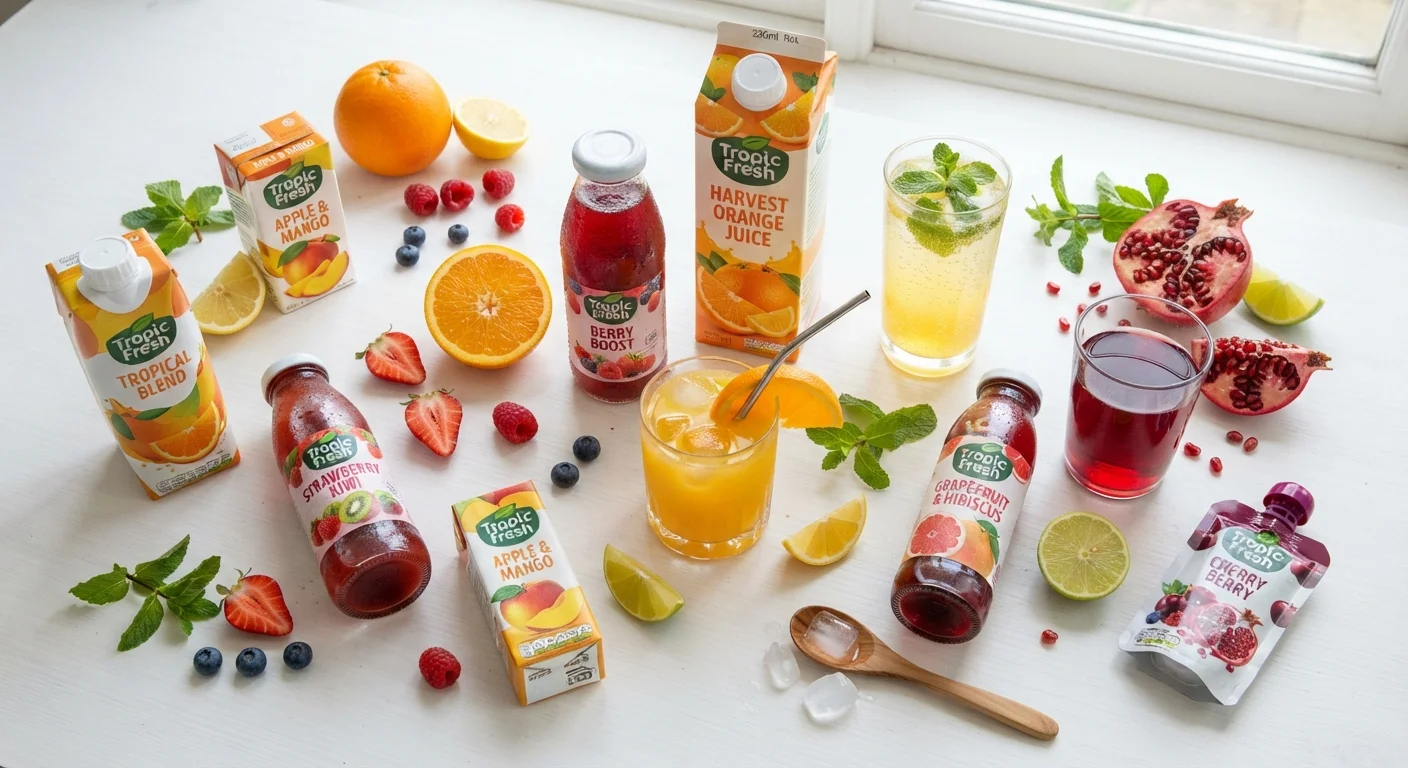
Labels on beverages follow the same structure, but drink products carry additional labelling quirks. If you regularly buy fruit drinks or juices, what food labels on drinks are really telling you explains what terms like 'nectar' or 'juice drink' signal about actual fruit content.
It is also worth knowing that the difference between portion size and serving size is not just semantic - it changes how every number on the label applies to what you actually eat.
Labels Are a Guide, Not a Prescription
Nutrition labels provide standardised reference information based on population-level averages. They are not tailored to your individual health status, age, or medical conditions. If you have a specific health condition or dietary concern, consult a qualified healthcare professional or registered dietitian before making significant changes to your diet.