
Two Different Numbers on the Same Label
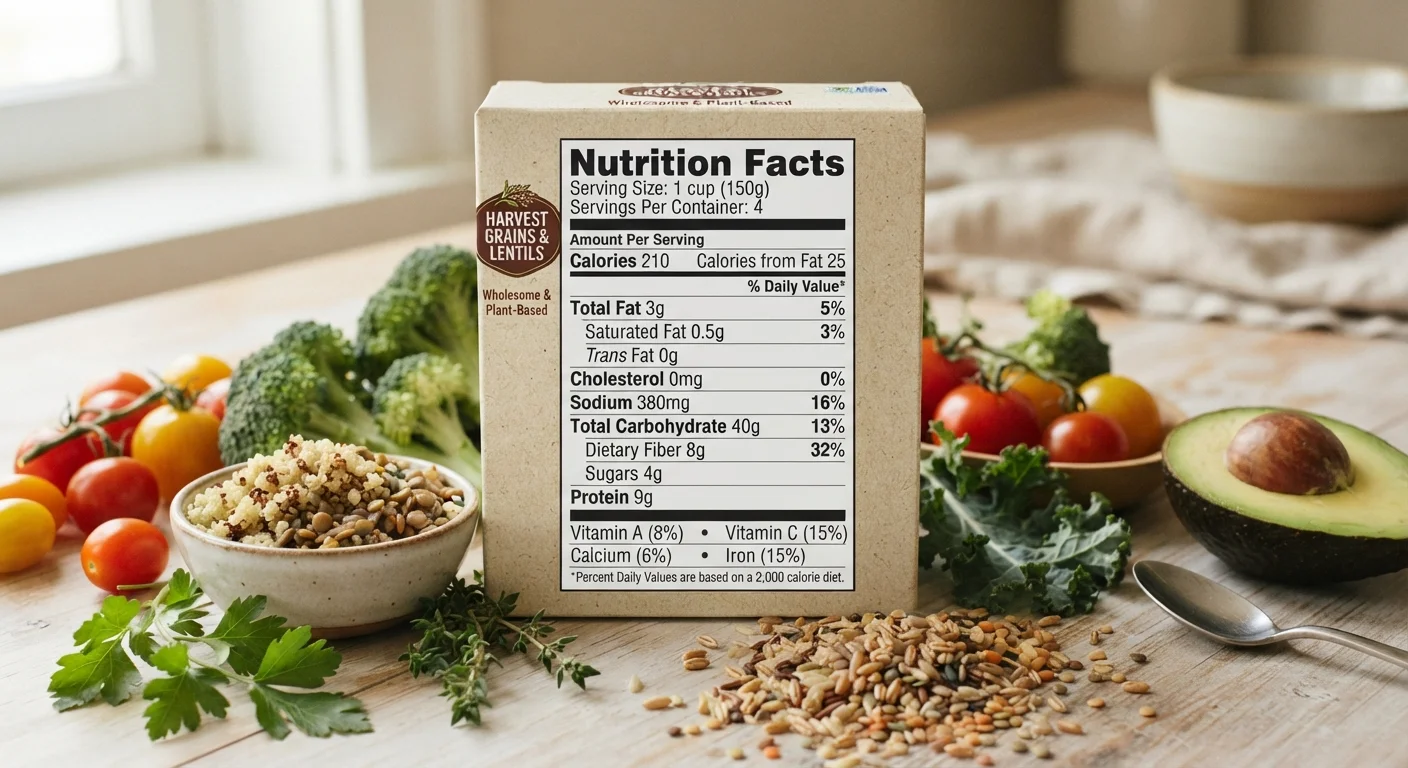
Open nearly any packaged food and you will find a nutrition facts panel. Near the top, it lists a serving size - say, 30g of granola or 250ml of juice. Many readers assume this figure represents a recommended amount. It does not.
The serving size is a standardised reference quantity, set so that nutritional data is presented on a consistent basis across all similar products. It allows you to compare two different cereals or two different yogurts side by side. Your portion size - the amount you actually scoop into a bowl - may be double, triple, or half that reference number.
This is not a trivial distinction. If a label lists 200 calories per 50g serving and you eat 150g, you have consumed 600 calories - but only the label's serving size figure was visible at a glance. Understanding this gap is foundational to reading food data accurately. See our guide to reading nutrition labels for a full walkthrough of what each section of the panel actually means.
Labels are a tool, not a prescription
Nutrition labels are designed to inform, not to dictate how much you should eat. They provide a standardised way to compare products and understand nutrient content. Individual food needs vary based on age, activity level, health status, and many other factors. For personal dietary guidance, consult a qualified nutrition professional or dietitian.
Where Serving Sizes Come From
Regulatory bodies - the FDA in the United States, and equivalent authorities in the EU - define serving sizes based on reference amounts customarily consumed. These figures come from dietary survey data collected across large population samples, reflecting typical eating habits at the time of the survey.
This means serving sizes are descriptive, not prescriptive. They describe what people have historically tended to eat in one occasion, averaged across a population. They are not derived from dietary guidelines, health recommendations, or ideal nutritional targets.
The practical consequence: serving sizes can feel small or arbitrary. A single serving of pasta may be listed as 75g dry - a modest portion for many adults. That is not a suggestion to eat less. It is simply the reference unit chosen to make the label's numbers comparable across brands.
2-3×
How much more people often eat vs. label serving
Research published in nutritional epidemiology journals consistently finds that self-reported portions for common foods exceed standardised label serving sizes by a factor of two to three for items like pasta, cereal, and snack foods.
100g
EU standard reference unit on nutrition labels
European Union food labelling regulations require nutritional values to be expressed per 100g (or 100ml), providing a consistent comparison unit regardless of package size or suggested portion.
Why the Confusion Matters in Practice
When people treat serving sizes as eating guides, several misunderstandings follow. Daily value percentages listed on a label - such as "15% of your daily sodium" - are calculated for the stated serving size only. Eat more, and that percentage climbs proportionally. Eat less, and it falls. The percentage is not a fixed fact; it scales with your actual intake.
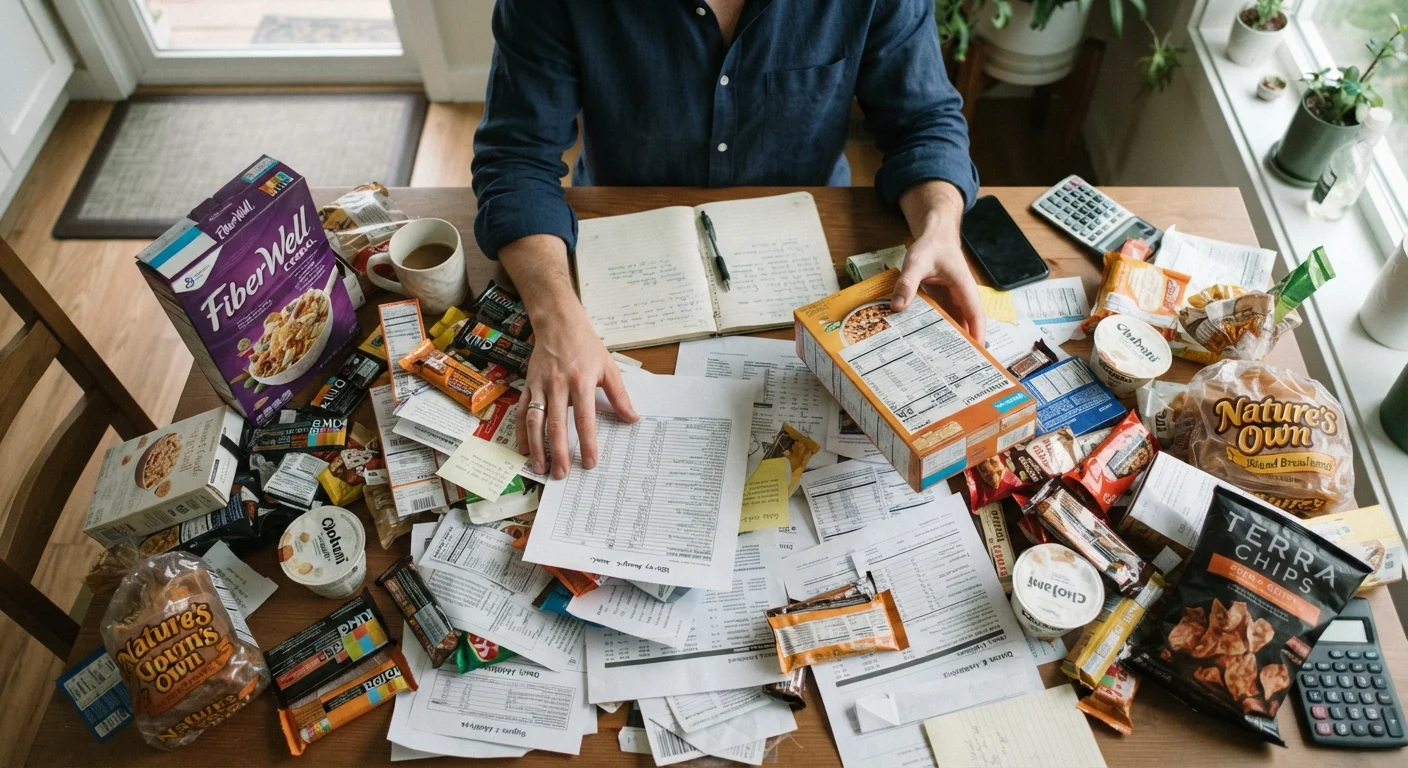
This is one of the most common errors in nutrition label reading, as explored in our article on nutrition information mistakes that lead people astray. Treating a label's per-serving data as the full picture of what you consumed can lead to significant underestimates of calories, sodium, or sugar - particularly with foods where portions in practice far exceed the label reference.
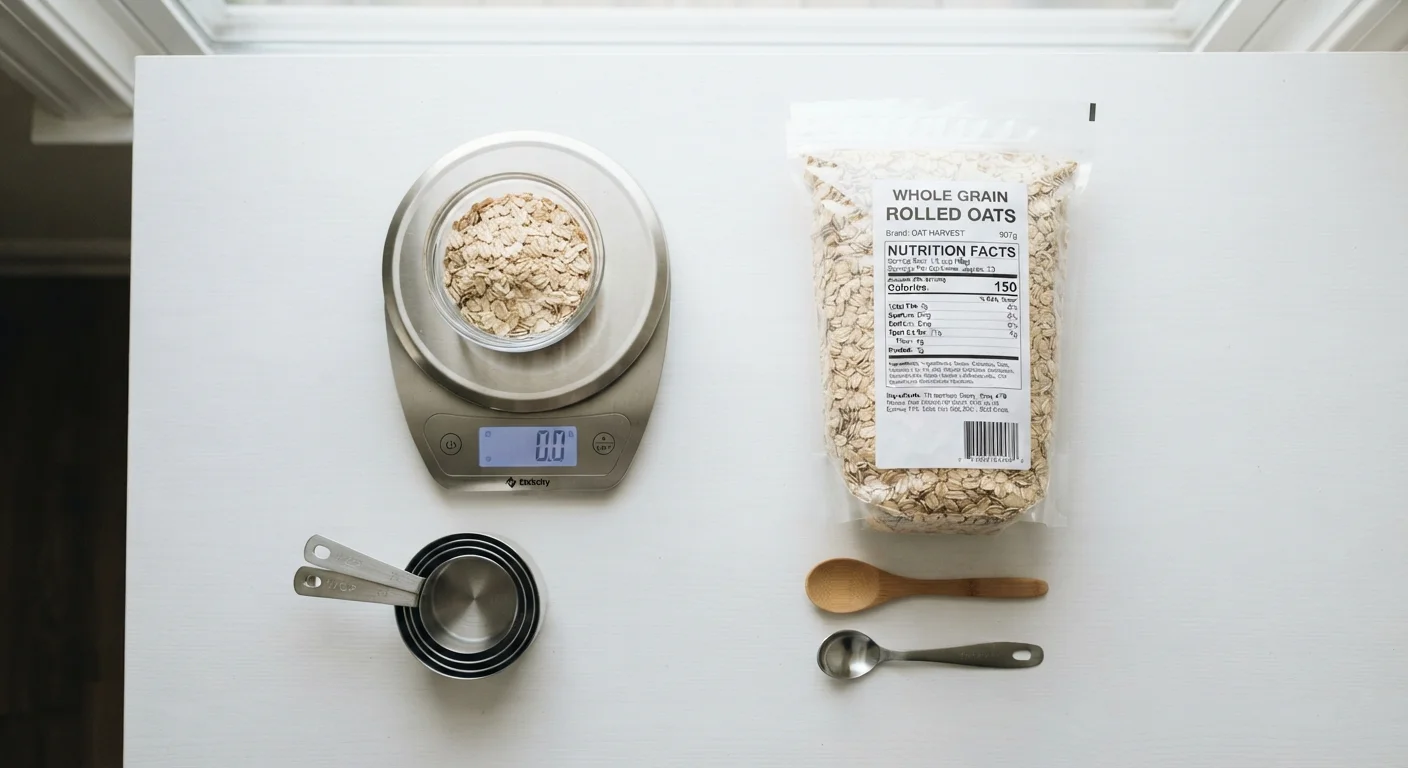
Use a kitchen scale occasionally
Weighing your typical portions just a few times - rather than every meal - helps you calibrate your instincts. Once you know that your usual bowl of cereal is 90g rather than the 40g on the label, you can apply that adjustment mentally going forward without constant measuring.
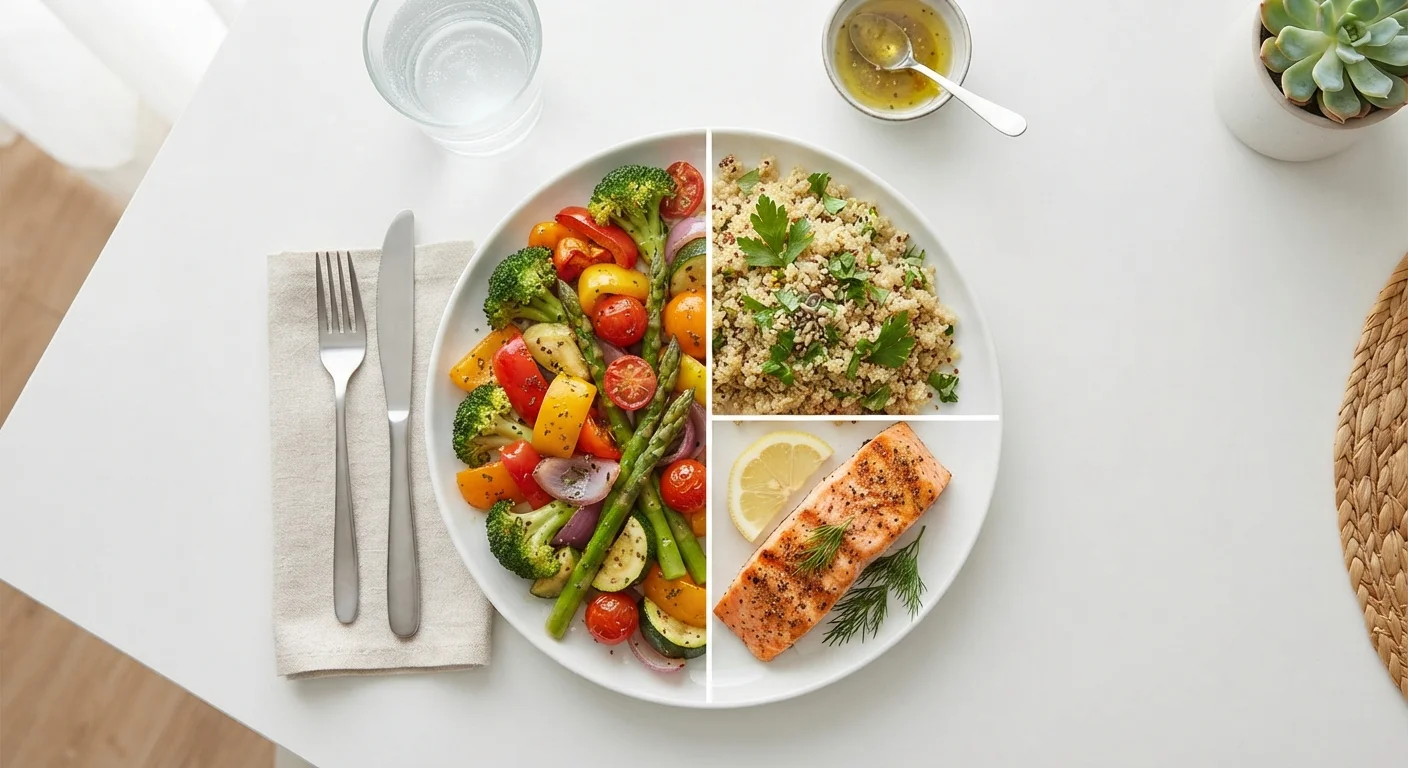
For anyone working toward a more balanced approach to eating, getting comfortable with portion awareness is a practical first step. Our article on building a balanced plate offers a useful starting framework without rigid rules.
A Simple Way to Use Labels Accurately
The most reliable approach is to weigh or measure your actual portion, then calculate accordingly. If you eat 1.5 times the label's serving size, multiply every nutrient value by 1.5. This takes an extra moment but gives you genuinely useful data rather than a rough approximation.
For everyday cooking, you do not need to weigh every meal. But developing a sense of how your typical portions compare to label serving sizes - especially for calorie-dense or sodium-heavy foods - makes the label a practical tool rather than a misleading one.
Reading nutrition labels clearly becomes much easier once you stop treating the serving size as a recommendation and start treating it as a conversion factor. The label tells you nutrients per unit. You supply the units.