
Why Nutrition Labels Are Worth Your Attention
Nutrition labels exist to give consumers consistent, factual information about what they are eating. In the EU (and therefore in Germany), the format and required fields are standardised by regulation, which means once you understand the structure on one product, you can apply that knowledge universally.
The problem is not the label itself - it is that most of us were never explicitly shown how to read one. The result is that people either ignore labels entirely or focus on the wrong numbers. Understanding even the basics can help you compare products more accurately and avoid the thinking errors covered in Nutrition Information Overload.
Labels Inform - They Don't Prescribe
The information on a nutrition label is a reference tool, not a personal dietary prescription. Individual nutritional needs vary based on age, health status, activity level, and medical conditions. If you have specific dietary requirements or health concerns, consult a qualified healthcare professional or registered dietitian.
What you will need
A packaged food product
Provides the actual nutrition facts panel you will practise reading.
Pen and notepad (or phone notes)
Useful for jotting down key numbers when comparing multiple products.
How to Read a Nutrition Label Step by Step
Start with the serving size
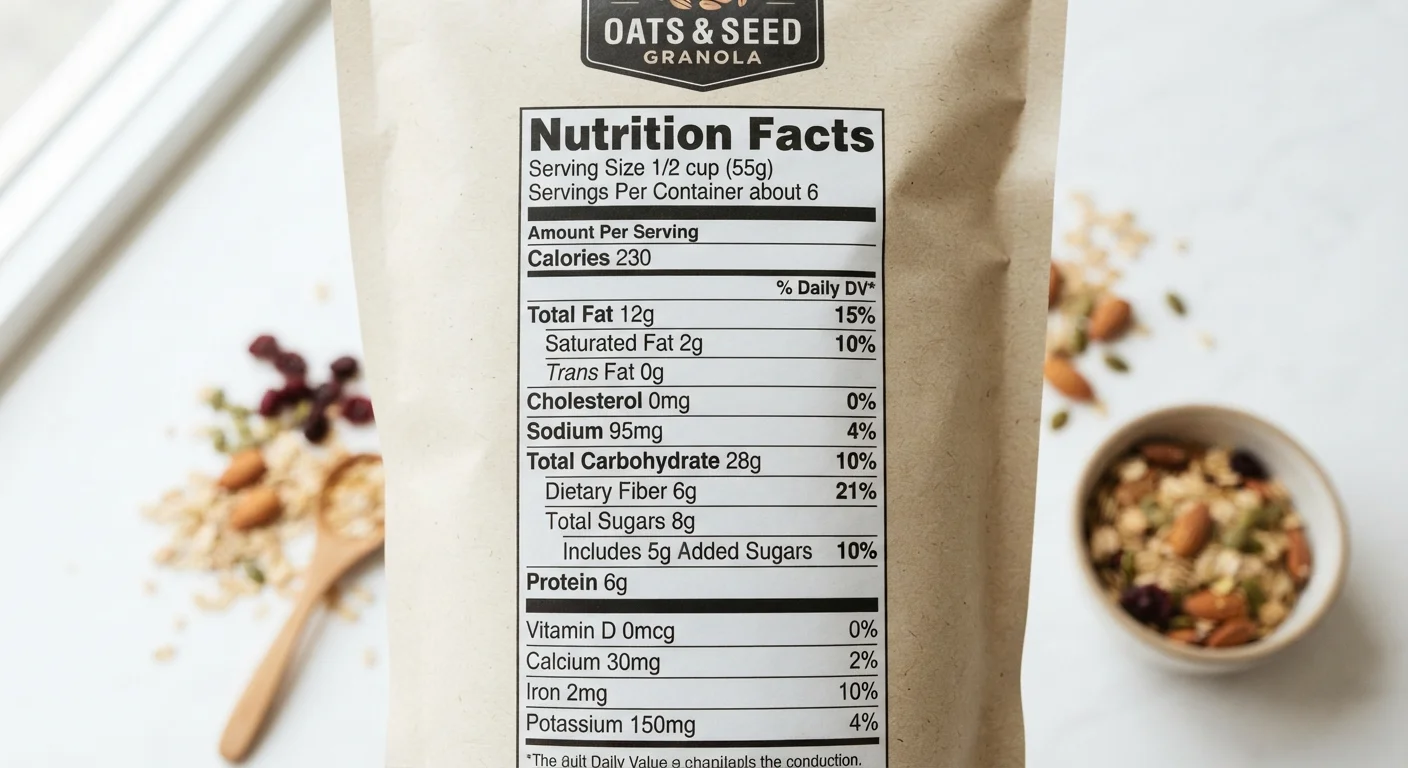
Every single number on a nutrition label - calories, fat, sugar, everything - refers to one serving as defined on that label. Find the Serving Size line at the very top and note both the amount (e.g. 30 g) and how many servings are in the whole package.
If a bag of crisps lists 30 g as one serving but the bag contains three servings, eating the whole bag means tripling every figure shown. This single step prevents the most common label-reading mistake.
Check the calorie count in context
Calories (in Germany and the EU, usually listed as kilocalories / kcal alongside kilojoules / kJ) tell you the energy content per serving. This number is useful for general awareness, but energy needs differ significantly between individuals.
Rather than fixating on calories alone, use the figure as one data point alongside the nutrients below it. A food that is calorie-dense may still be nutritionally valuable - and vice versa.
Scan the macronutrients: fat, carbohydrates, and protein
The next section breaks down the three macronutrients (energy-providing nutrients):
- Fat - typically subdivided into saturated and unsaturated fats. Saturated fat is the figure most guidelines recommend limiting.
- Carbohydrates - look for the of which sugars sub-line, and where listed separately, added sugars. Total carbohydrates include starches and fibre alongside sugars.
- Protein - shown as a total figure per serving.
Understanding what these macros do is covered in depth in the complete nutrition overview.
Read the % Daily Value column
The % Daily Value (%DV) column translates raw grams or milligrams into a percentage of a standard daily reference intake. This makes it easy to compare products at a glance without needing to memorise target amounts for each nutrient.
[tip_callout]Pay particular attention to sodium: many processed foods supply a large proportion of the daily reference amount in a single serving, which is easy to overlook when the gram figure looks small.
Check the micronutrients
Below the macros, labels typically list selected micronutrients - vitamins and minerals such as vitamin D, calcium, iron, and potassium. These are shown as %DV only, since the actual milligram amounts are very small and less intuitive.
These entries help identify foods that contribute meaningfully to micronutrient intake, which matters if your diet tends to be limited in variety. For a broader look at how these nutrients interact with overall eating patterns, the Nutrition Basics hub offers a range of useful context.
Read the ingredients list
Ingredients are listed in descending order by weight - the ingredient present in the largest amount appears first. A quick scan of the first three to five ingredients gives you a reliable picture of what a product mainly consists of.
Look out for multiple forms of sugar listed under different names (glucose syrup, fructose, dextrose, etc.), which can collectively add up even if no single entry appears near the top. For practical context on how label language can be used strategically, see our guide on what fruit-drink labels are really telling you.
Front-of-Pack Claims Can Mislead
Words like 'light', 'natural', or 'high in protein' on the front of a package are marketing terms and are not always tightly regulated. Always turn the package over and read the actual nutrition facts panel and ingredients list before drawing conclusions about a product's nutritional profile.
Once you have worked through a label a few times, the process becomes quick and intuitive. For a deeper look at how serving sizes specifically distort perception, see our article on why portion size and serving size are not the same thing.
This article is for general informational and educational purposes only and does not constitute medical or dietary advice. Consult a qualified healthcare professional or registered dietitian for guidance tailored to your personal health circumstances.