
Why the Setting Actually Matters
Where you train shapes far more than convenience. Research in exercise psychology consistently shows that environmental cues - from equipment availability to social atmosphere - directly influence motivation, consistency, and even workout intensity. Before settling on one approach, it helps to understand what each setting genuinely offers, and where it falls short.
If you're new to structured exercise, a plain-language glossary of fitness terms can help you decode the language used in workout plans across both settings. And if you're weighing myths about needing a gym to get results, several common fitness beliefs don't hold up to scrutiny.
Advantages and Disadvantages of Home Workouts
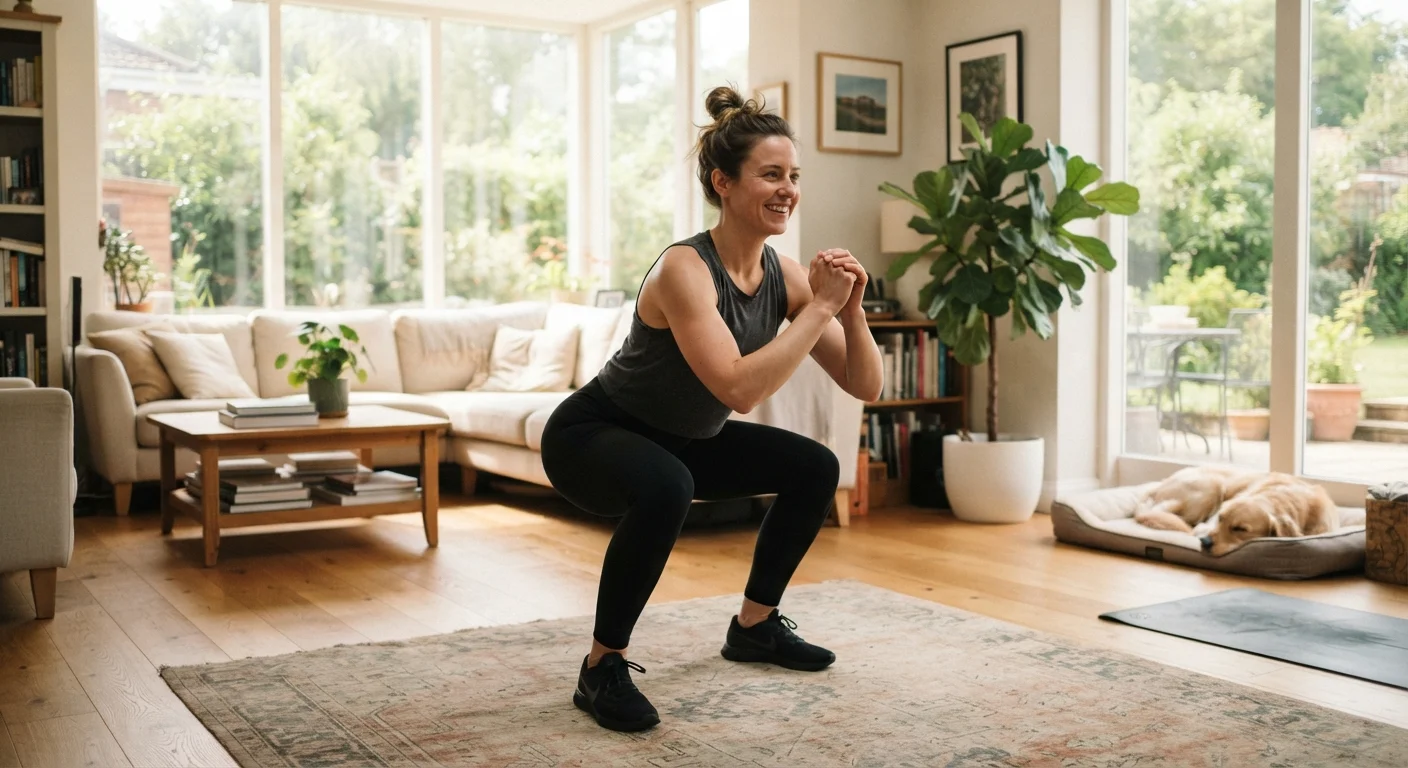
Training at home removes nearly every logistical barrier: there's no commute, no membership fee, and no waiting for equipment. For people managing busy schedules, those saved hours often translate directly into workout consistency.
No commute or travel time required
Eliminating the journey to and from a gym can save 30-60 minutes per session, making it far easier to train consistently on busy days.
No ongoing membership costs
A modest investment in basic equipment - a mat, resistance bands, or a set of dumbbells - replaces recurring monthly fees, reducing a common barrier to long-term commitment.
Complete scheduling flexibility
Home training can happen at any hour, removing dependency on gym opening times, class schedules, or peak-hour queues.
Private, low-pressure environment
For beginners or those uncomfortable exercising in public, training at home removes social anxiety entirely, which research suggests meaningfully improves adherence.
The limitations are equally real, however. Without a structured environment, motivation can drift - and without varied equipment, certain training goals (particularly muscle hypertrophy requiring progressive overload) become harder to achieve over time. Beginners may also lack guidance on form, increasing injury risk.
Limited equipment constrains progression
Without access to progressive resistance, it becomes increasingly difficult to apply the principle of progressive overload - a cornerstone of strength and muscle development - over the long term.
Domestic distractions reduce session quality
Family members, household chores, and digital devices compete for attention in ways that rarely occur inside a dedicated gym environment.
No professional guidance on technique
Without access to trained staff or coaches, beginners may develop poor movement habits that increase injury risk or limit effectiveness over time.
Motivation can erode without external accountability
The absence of a training community or scheduled environment means that on low-energy days, it's considerably easier to skip a session entirely.
For those interested in understanding how training for real-world movement fits into a home context, functional fitness principles translate particularly well to bodyweight-focused home routines.
What the Gym Environment Adds - and Costs
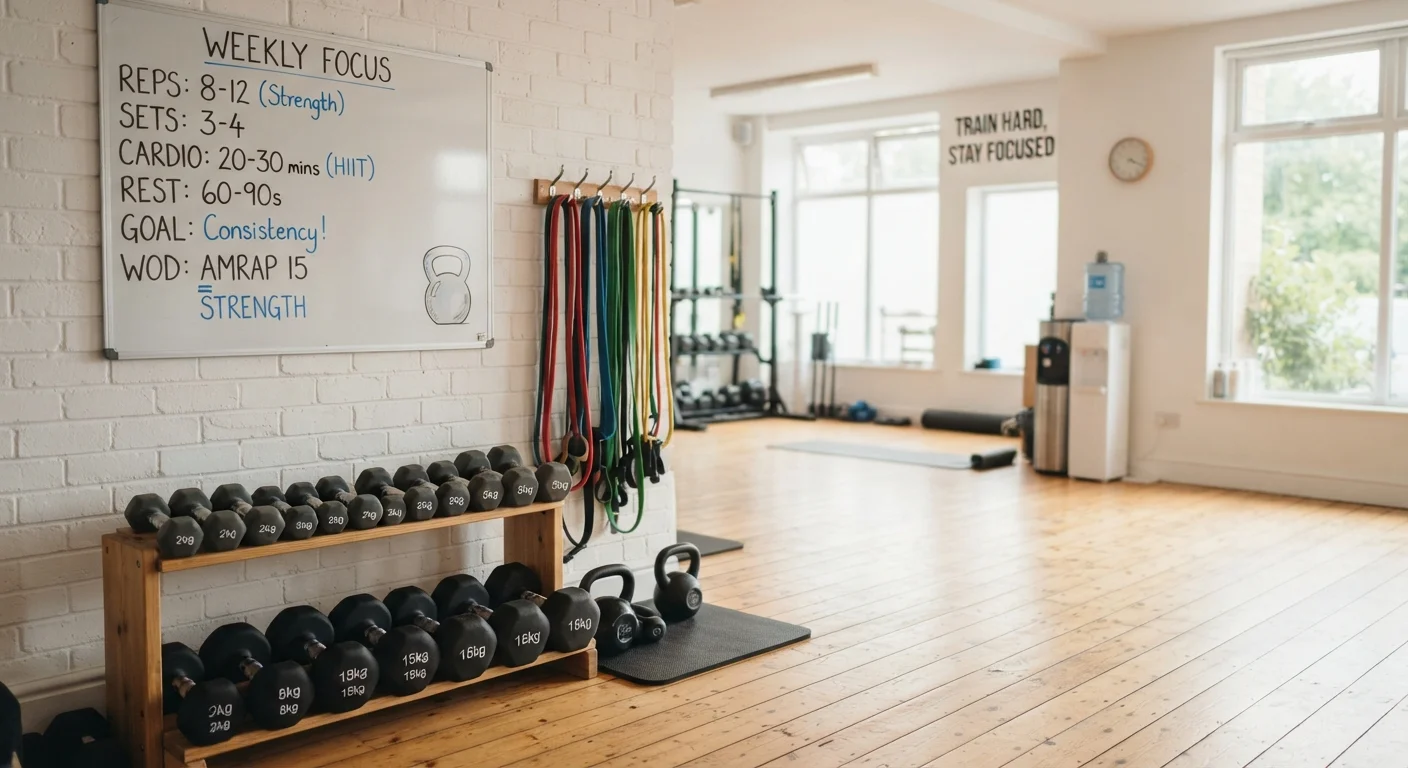
A well-equipped gym removes the ceiling on physical progression. Access to free weights, resistance machines, cardio equipment, and often qualified staff creates an environment purpose-built for adaptation across a wide range of fitness goals.
~50%
Adults who cite cost as a gym barrier
Surveys on exercise participation in Europe consistently find affordability among the top reported barriers to gym membership uptake.
6-12 weeks
Typical timeframe to establish an exercise habit
Habit formation research, including work published in the European Journal of Social Psychology, suggests new behaviours take roughly this range to become automatic.
Social dynamics also play a meaningful role. Many people report training harder and more regularly when surrounded by others working toward similar goals - a phenomenon exercise scientists refer to as the Köhler effect, where individuals push beyond what they'd achieve alone. On the other hand, gym costs, travel time, and crowded peak hours are genuine deterrents that cause many people to lapse.
Gym Etiquette Reduces the Learning Curve
First-time gym visitors often feel uncertain about unwritten norms - wiping down equipment, re-racking weights, or respecting personal space. Most facilities offer an introductory orientation session. Taking advantage of this can significantly reduce early discomfort and help new members make the most of the available equipment from day one.
If you're deciding between emphasising strength or cardio in a gym setting, the two approaches can complement rather than compete with each other.
Building a Routine That Actually Sticks
Consistency over months and years matters far more than the perfection of any single session. Whether at home or in a gym, the fundamentals remain identical: progressive challenge, adequate recovery, and sustainable frequency.
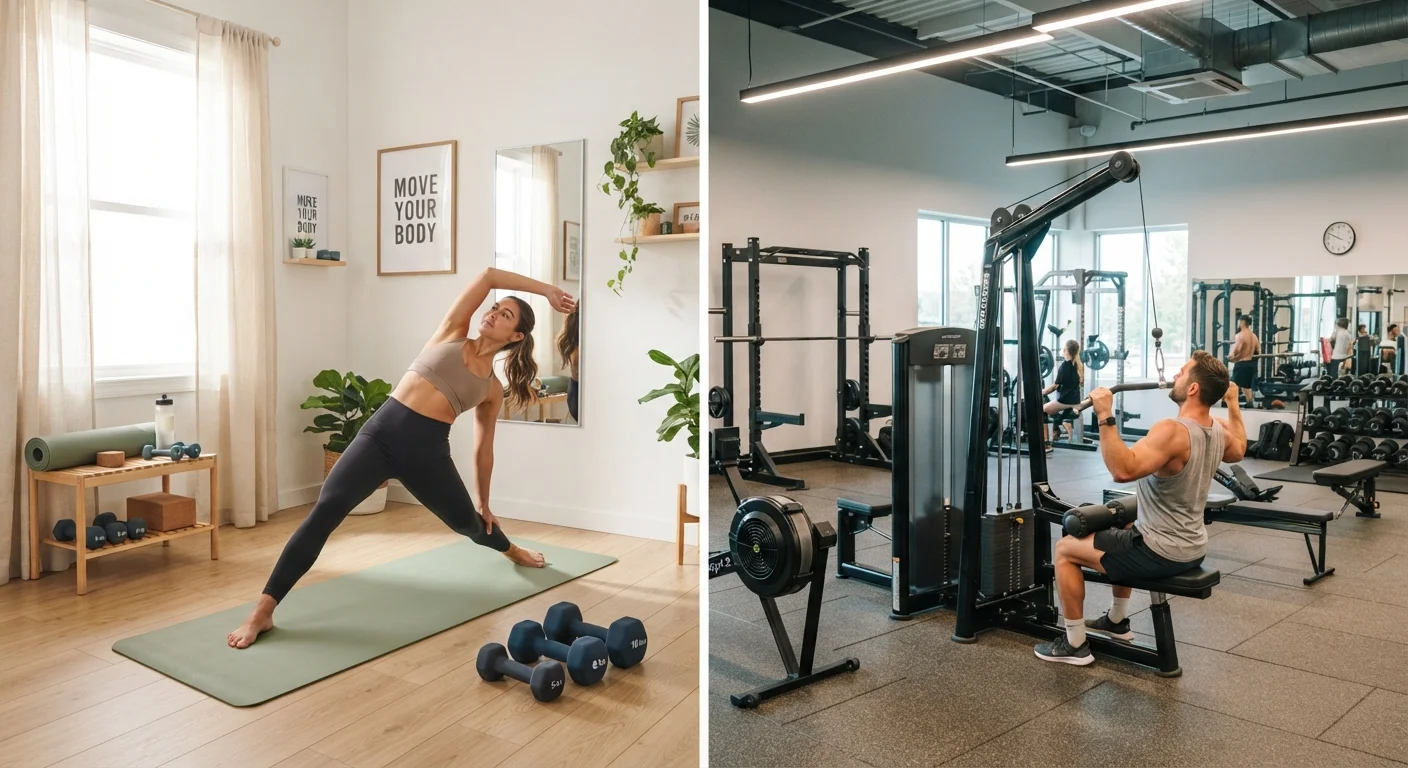
Recovery is a built-in part of any effective movement routine, not an afterthought - and this applies equally whether your gym is a spare bedroom or a fully equipped facility. Many people ultimately settle on a hybrid model: gym sessions for heavier strength work, home sessions for shorter cardio or mobility work on time-pressed days.
Before beginning any new physical activity programme, it's worth consulting a healthcare professional, particularly if you have existing health conditions. A practical pre-start checklist covers what to consider before committing to any training approach.
This article is for informational purposes only and is not a substitute for professional medical or fitness advice. Consult a qualified healthcare provider before beginning a new exercise programme.