
What Sets These Two Concepts Apart
Pet owners frequently use the words exercise and enrichment interchangeably, but they address distinct aspects of an animal's welfare. Exercise works the body: it builds cardiovascular endurance, maintains healthy weight, and supports joint and muscle function. Enrichment works the mind: it gives the animal something cognitively meaningful to do, satisfying instincts that evolved over millions of years.
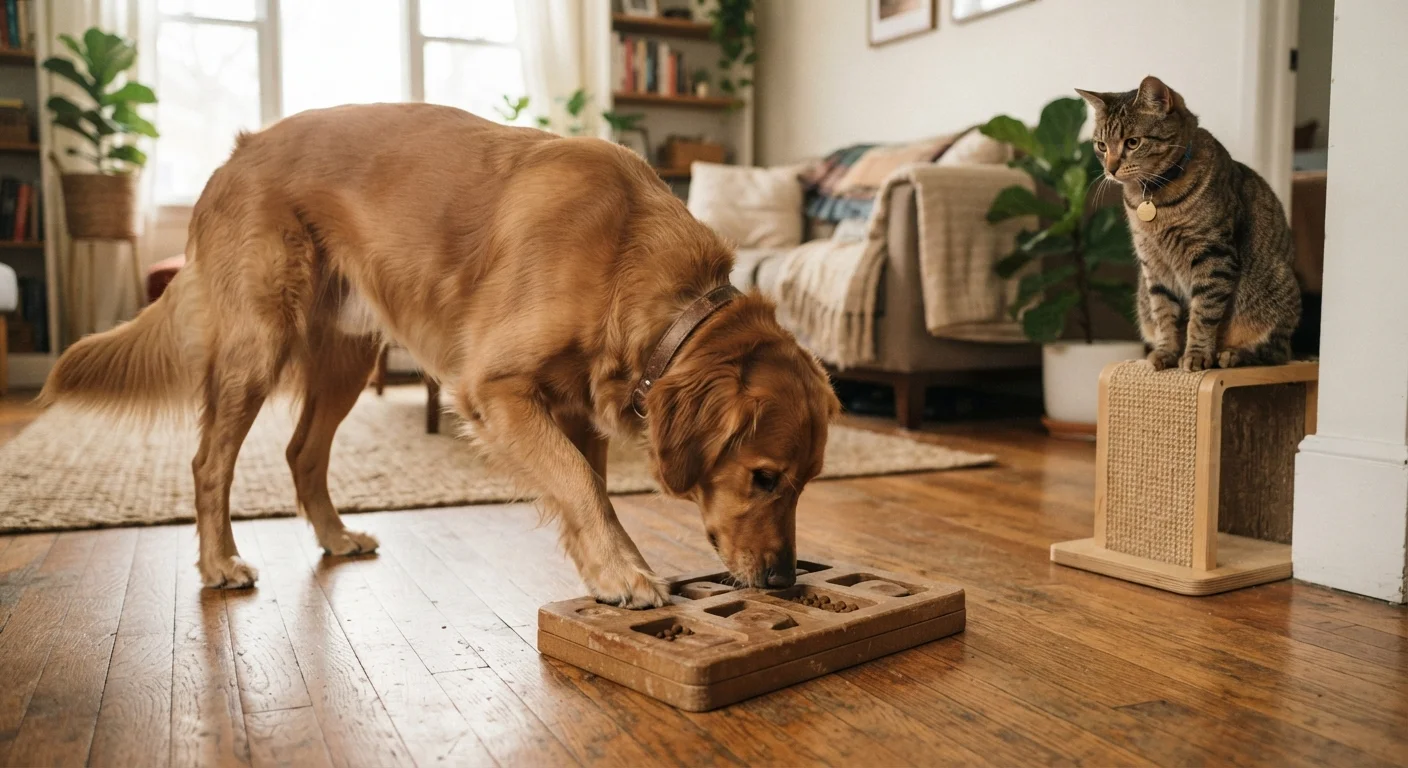
A border collie that runs five miles daily but returns to an empty, unchanging home is physically conditioned but mentally understimulated. A house cat with climbing towers, food puzzles, and rotating toys has enrichment but still needs active play to maintain muscle tone. Neither element compensates for the absence of the other.
Enrichment Is Not a Substitute for Veterinary Care
Behavioral changes - including sudden increases in destructive behavior, lethargy, or obsessive actions - can signal underlying medical conditions, not just enrichment deficits. If your pet's behavior changes noticeably, consult a veterinarian before attributing it solely to boredom or understimulation.
The Science Behind Enrichment
Behavioral research conducted in zoo, laboratory, and domestic animal settings consistently shows that environmental complexity reduces stress-related behaviors and promotes psychological wellbeing. Enrichment works by providing animals with agency - the ability to make choices, investigate novelty, and perform species-typical behaviors.
For dogs, this often means scent work, foraging, and problem-solving. Dogs possess roughly 300 million olfactory receptors compared to about 6 million in humans; engaging that system through nose-based activities provides deep cognitive satisfaction that a fetch session alone cannot replicate. For cats, enrichment that mimics hunting sequences - stalking, pouncing, catching - fulfills predatory drive even in a pet that never encounters real prey.
“Providing an animal with the opportunity to perform natural behaviors is not merely a welfare improvement - it is a basic biological requirement for psychological health.”
— Temple Grandin, Animal behavior researcher and professor at Colorado State University
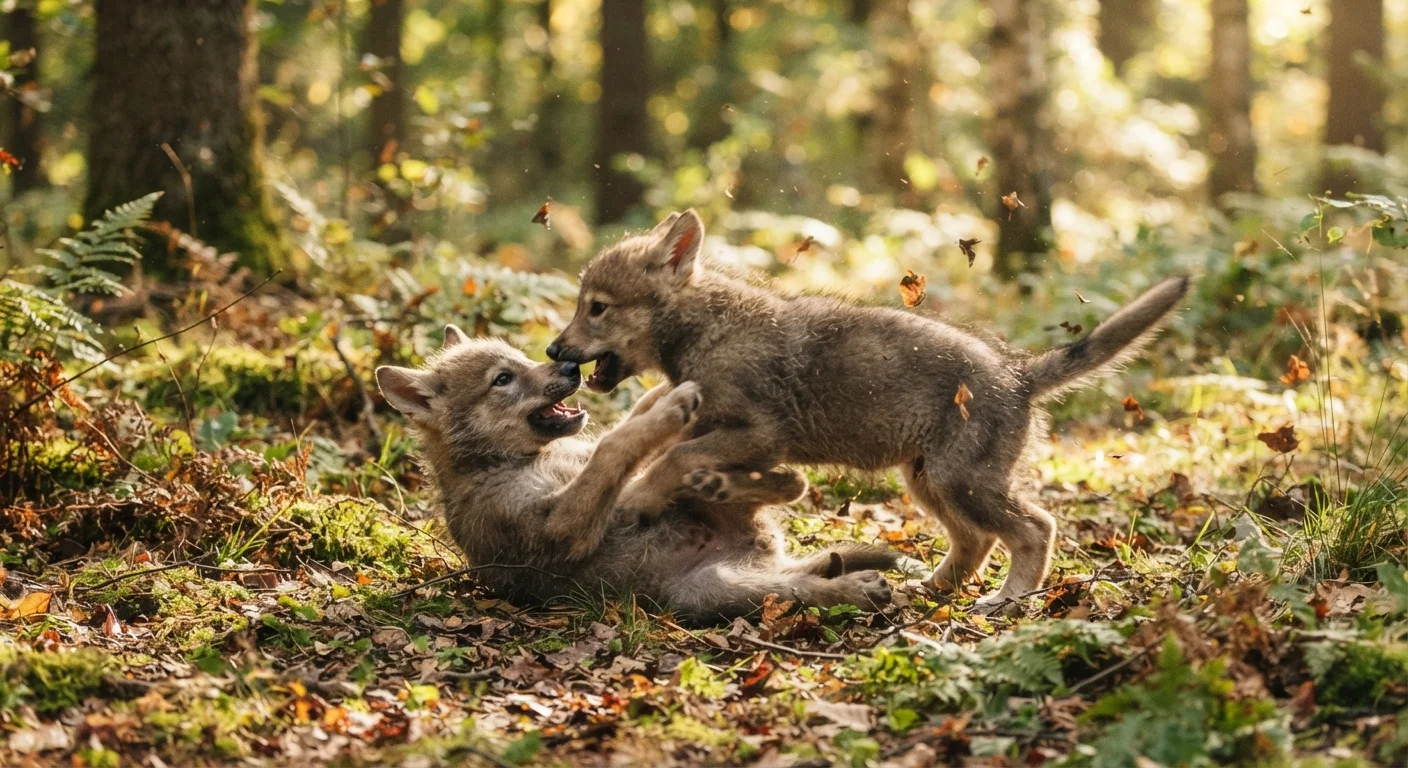
Understanding what drives your pet's behavior is foundational. The biology of mammalian play reveals why these seemingly simple activities carry significant developmental and behavioral weight.
Practical Enrichment Across Species
Effective enrichment doesn't require expensive equipment. The core principle is matching the activity to the animal's natural behavioral repertoire.
Rotating which enrichment tools are available - rather than leaving the same puzzle out indefinitely - preserves novelty, which is itself a powerful motivator for curious animals. Paying attention to how your pet responds to different activities also helps; reading your pet's body language is essential for gauging whether an enrichment activity is engaging or stressful.
Balancing Both Needs Over a Pet's Lifetime
The ratio of exercise to enrichment - and the intensity of each - is not fixed. Puppies and kittens often require more physical play, but their developing brains are also highly plastic and benefit enormously from exploratory enrichment. Senior animals may need scaled-back exercise due to joint limitations, but their cognitive needs remain substantial.
Start Simple, Then Layer In Complexity
If your pet has had little enrichment exposure, introduce one new activity at a time and observe how they respond. Sudden environmental complexity can be overwhelming for anxious animals. Build up gradually - a single foraging puzzle before adding scent trails or interactive toys.
As outlined in research on pet care across the lifespan, both exercise and enrichment requirements evolve - and responsible ownership means reassessing them at each life stage. Combining daily physical activity with consistent cognitive engagement is not a luxury; it is the foundation of a behaviorally healthy pet.
Even small adjustments, such as feeding meals through a puzzle feeder instead of a bowl or varying your dog's walking route, can meaningfully increase enrichment without adding time to your day. The goal is not to overwhelm - it is to give your pet a life that engages the full animal it is.