What Play Actually Is - and What It Isn't
For decades, play in animals was dismissed as surplus energy expenditure - behavior that happened simply because young animals had calories to burn. Modern behavioral science has overturned that view entirely. Play is now recognized as a structured, purposeful category of behavior with its own neurological substrate and developmental logic.
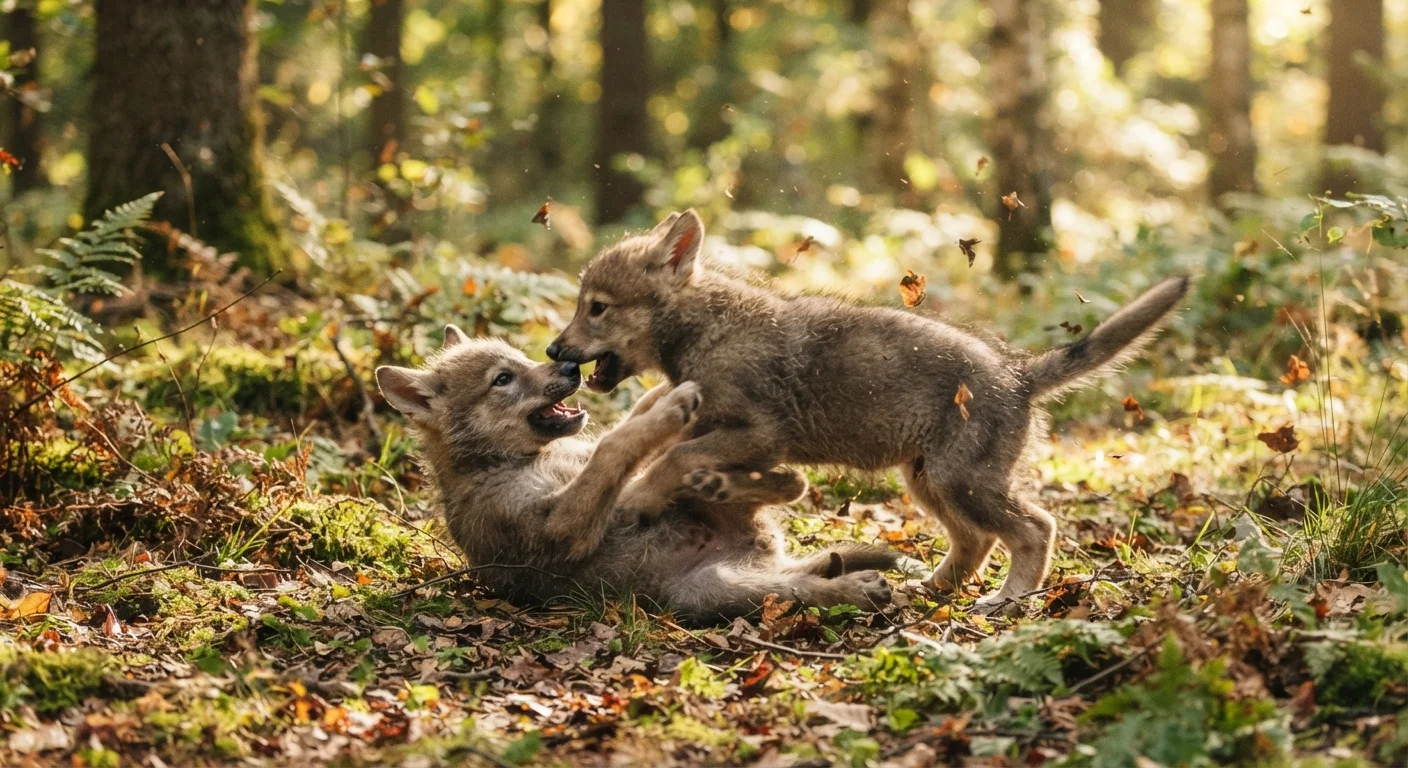
What separates play from other activity is a cluster of defining features. Play is voluntary and is initiated only when basic needs are met. It borrows the form of serious behaviors - chasing, biting, mounting - but modifies them in ways that signal non-serious intent: movements are exaggerated, sequences are reversed, and dedicated signals are inserted. A dog that drops its chest to the ground with its rear elevated is performing a "play bow" - a well-documented signal that says, in effect, what follows is not a threat. Understanding these signals is central to reading animal body language accurately.
Play also falls into three broadly recognized categories: locomotor play (running, leaping, somersaulting), object play (manipulating items), and social play (interaction with conspecifics). Each type appears to train different physical and cognitive systems.
Play Is Distinct From Other Exploratory Behavior
Researchers draw a careful line between play and exploration. Exploration is driven by novelty and anxiety-reduction - an animal investigating an unfamiliar object to assess its threat level. Play, by contrast, occurs once familiarity is established and the animal is relaxed. The two behaviors can look similar but serve entirely different functions and are governed by different motivational systems.
The Neuroscience Behind Why Play Matters
Play is not just behavioral exercise - it actively sculpts the developing brain. Research in rodents, particularly work by neuroscientist Jaak Panksepp, identified a dedicated "PLAY" circuitry in mammalian subcortical brain regions. When this circuitry is activated, it drives animals to seek social play with near-compulsive urgency, independent of hunger, fear, or sex drive.
During social play, the prefrontal cortex - the region governing impulse control, decision-making, and social judgment - receives intensive stimulation. Studies in rats have shown that social play experience during juvenile periods produces measurable changes in prefrontal cortical synaptic density. Animals denied this experience show lasting deficits in behavioral flexibility and emotional regulation.
~1%
Energy budget devoted to play in many mammal species
Research compiled by Gordon Burghardt estimates that even in species with intensive play, the energetic cost rarely exceeds 1-3% of total daily energy expenditure, making the developmental payoff exceptionally efficient.
30-40%
Of active time young primates spend in social play
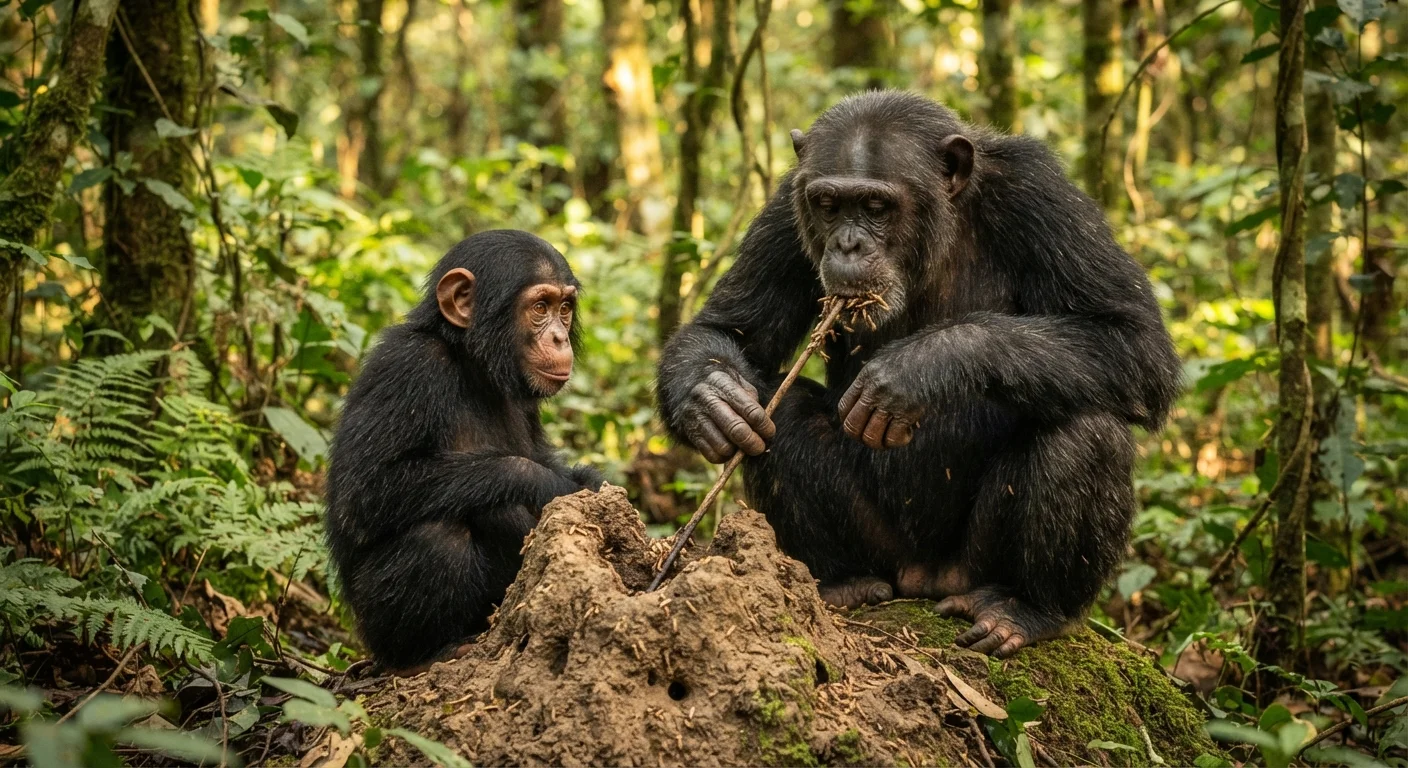
Observational field studies of juvenile chimpanzees and other great apes document that social play occupies a substantial fraction of daily active hours during juvenile development.
15+ orders
Mammalian orders with documented play behavior
Play has been systematically documented across carnivores, primates, rodents, cetaceans, ungulates, and marsupials, among others, supporting its status as a near-universal mammalian trait.
These findings have direct implications for how we understand animal cognition more broadly. Play isn't a byproduct of excess capacity - it appears to be a primary driver of the cognitive flexibility that distinguishes mammals from many other vertebrate groups.
Social Play and the Architecture of Animal Communities
Beyond individual development, play serves a critical social function: it builds and tests the relationships that underpin group cohesion. In species that live in complex social groups - wolves, primates, elephants, dolphins - juveniles spend substantial portions of their active time in social play. This is where rank is negotiated, tolerance is practiced, and the cooperative behaviors essential for adult life are rehearsed.
Crucially, play requires a degree of self-handicapping. Larger or stronger animals routinely hold back during play with smaller partners, allowing bouts to continue rather than dominating them outright. This self-regulation is not mere politeness - animals that repeatedly fail to self-handicap lose play partners and, researchers have observed, suffer poorer social integration as adults. The capacity to regulate one's own behavior for social benefit is, arguably, one of the most sophisticated outcomes of mammalian play. This dynamic plays directly into questions about what drives species toward social versus solitary lifestyles.
Recognizing Play Signals in the Field
When observing mammals - wild or domestic - look for exaggerated, bouncy movements, role reversals between partners, and species-specific invitations like the canid play bow or primate play face. These signals distinguish genuine play from conflict or predatory behavior. If a larger animal repeatedly pauses and waits for a smaller partner to re-engage, you are almost certainly watching play.
Play Across the Lifespan - and What It Means for Pet Owners
While juvenile animals play most intensively, play does not stop at maturity in many species. Adult primates, canids, and cetaceans engage in play throughout their lives, particularly in low-stress conditions. This suggests play's function shifts over time - from building foundational skills to maintaining social bonds and cognitive agility.
For domestic animals, this has practical significance. A dog or cat that lacks opportunities for social play and object manipulation is not simply bored; it may be experiencing a genuine developmental or psychological deficit. Enrichment and exercise serve different needs, and play - especially interactive play - addresses a dimension that physical exercise alone cannot. Providing structured play opportunities is not anthropomorphizing; it reflects what the science of animal behavior consistently shows about mammalian developmental needs.
Understanding play as a functional biological process rather than mere entertainment allows us to make better decisions - for the animals we keep, and for the wild populations we study and protect.