
Why Stress Signals Get Missed
Pet owners are often attuned to dramatic signs of distress - a dog cowering during a thunderstorm, or a cat hissing at a stranger. But chronic, low-grade stress tends to surface far more quietly, through shifts in behaviour that are easy to rationalise away. An animal that eats less, withdraws to a favourite hiding spot, or grooms excessively might simply be described as "picky," "independent," or "fastidious" - when in fact these are recognised stress responses documented across companion animal species.
Understanding stress in pets requires moving beyond anthropomorphic interpretations. Animals communicate discomfort through behaviour, posture, and physiology, not language. The more fluent owners become in reading these signals, the earlier they can intervene - before acute stress becomes chronic. For a deeper look at how posture and body position carry meaning, see how to interpret your pet's body language.
Unexplained Changes in Appetite
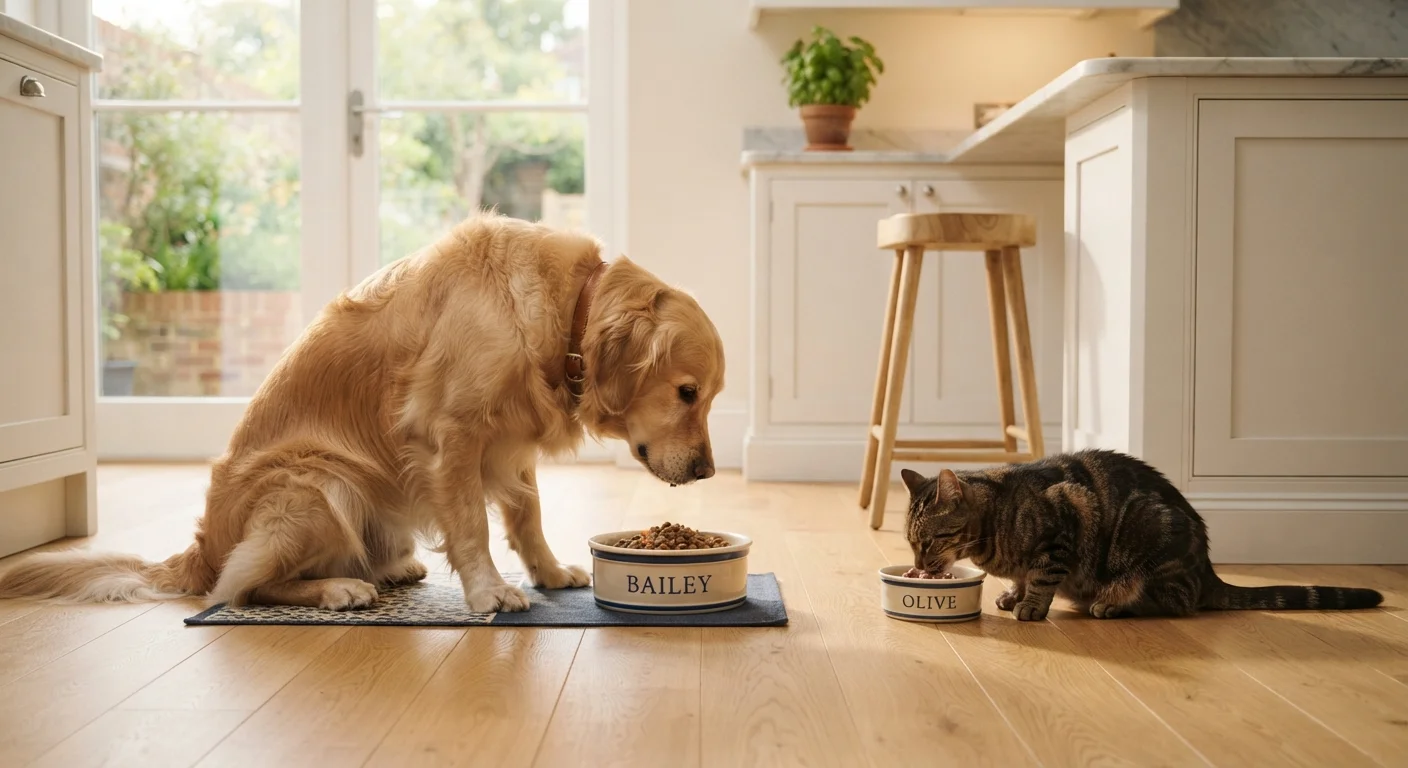
A sudden drop in food intake - or, conversely, compulsive overeating - is one of the first physiological markers of stress in domestic animals. In cats and dogs, the hypothalamic-pituitary-adrenal (HPA) axis, which governs the stress response, directly influences hunger regulation. Rabbits and birds are similarly sensitive; a rabbit that stops eating hay or a parrot that abandons a previously favourite food may be responding to social or environmental stress rather than boredom with its diet.
The key indicator is change from baseline. A pet that has always been a modest eater is less concerning than one whose appetite has noticeably shifted over a short period.
Appetite shifts are often the earliest physiological signal of stress, not a dietary preference.
Excessive or Displaced Grooming
Cats groom themselves frequently as a normal behaviour, but over-grooming - defined as licking, biting, or scratching to the point of hair loss or skin irritation - is a well-documented response to stress. Known clinically as psychogenic alopecia, this pattern often produces symmetrical bald patches along the belly, inner thighs, or flanks.
Dogs may engage in equivalent displacement behaviours: excessive paw licking, flank sucking, or repetitive scratching at a single site. In birds, feather-destructive behaviour (sometimes called feather plucking) can similarly reflect psychological distress. Dermatological causes must always be ruled out first, but when physical examination is unremarkable, stress is a primary consideration.
Repetitive grooming that causes hair loss is a clinical stress indicator, not a cleanliness behaviour.
Hiding and Withdrawal from Social Interaction
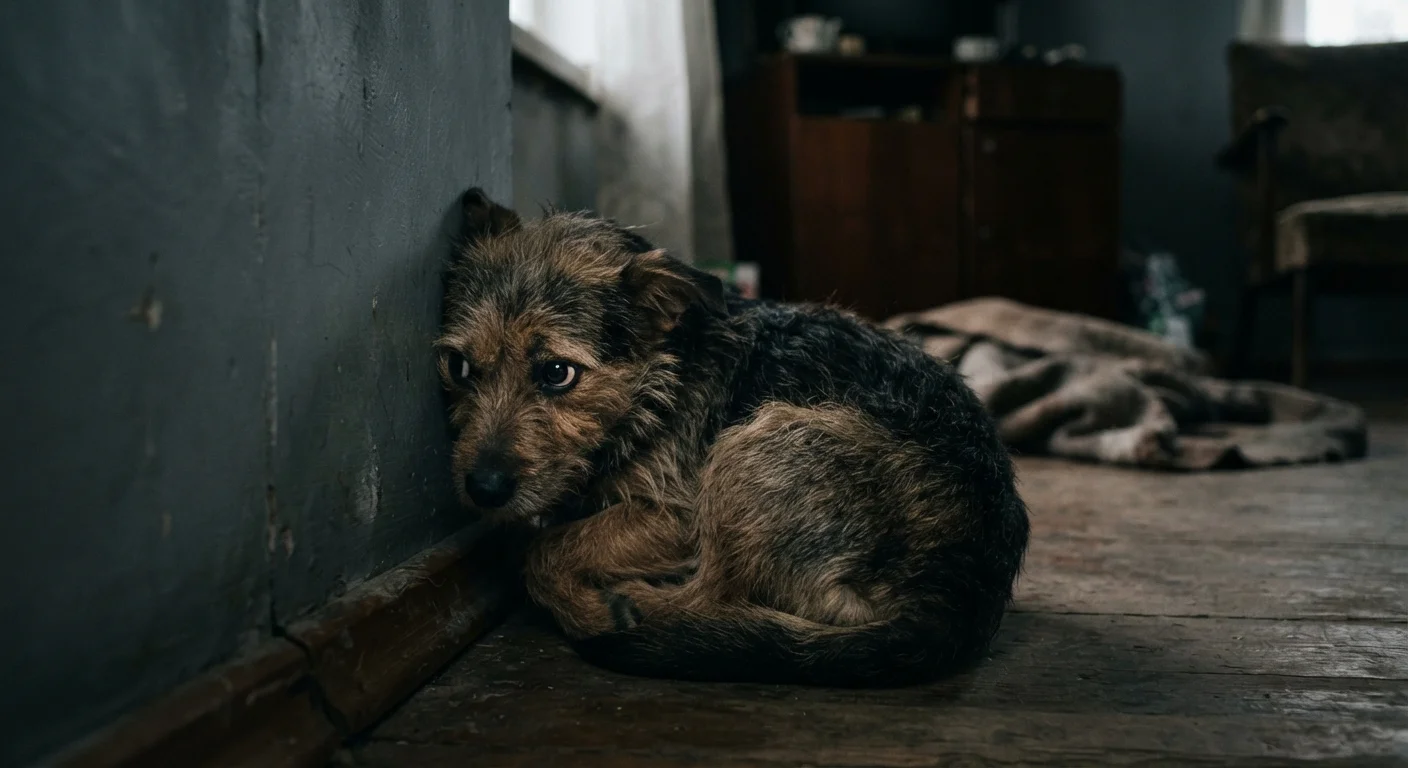
A sociable pet that begins seeking isolation - retreating to under the bed, behind furniture, or into unused rooms - is displaying a withdrawal response consistent with both fear and chronic stress. This is particularly significant in cats, which may be misread as "just being independent" when they are actively avoiding stimuli they find threatening.
In prey species such as rabbits and guinea pigs, hiding carries additional weight. Because these animals instinctively mask vulnerability, visible withdrawal or prolonged absence from normal activity areas often signals a stress level significant enough to override their usual concealment instinct.
Hiding in a previously sociable pet is a withdrawal response, not a personality trait.
Changes in Elimination Habits
House-trained dogs that begin having indoor accidents, or litter-trained cats that start eliminating outside the box, are frequently displaying stress-related behavioural changes rather than a lapse in training. Feline idiopathic cystitis - a stress-linked condition causing urinary urgency and discomfort - is a well-established example of how psychological stress directly precipitates physical illness in cats.
Any change in elimination frequency, location, or consistency warrants veterinary attention first to exclude urinary or gastrointestinal conditions. If medical causes are ruled out, the behaviour is often a reliable indicator that the animal's environment is generating ongoing stress.
Elimination outside normal areas can signal stress-triggered illness, not a regression in training.
Displacement Behaviours and Repetitive Actions
Displacement behaviours are actions that appear contextually out of place - a dog that yawns repeatedly during a tense interaction, sniffs the ground during a stressful greeting, or shakes off as though wet after a fearful encounter. These are calming signals, a concept developed in ethological research on canine communication, used to de-escalate perceived threat.
Repetitive or stereotypic behaviours - pacing the same route, tail-chasing, or shadow-chasing - can indicate a more entrenched stress response, particularly in animals with insufficient environmental enrichment or a history of confinement. These patterns are worth discussing with a veterinarian or accredited animal behaviourist, as they can be difficult to extinguish once established.
Repetitive pacing or contextually odd behaviours are displacement signals, not quirks to ignore.
Vocalisation Changes
An increase or decrease in vocalisation relative to a pet's established baseline can reflect emotional dysregulation. A previously quiet cat that begins yowling at night, a dog that develops persistent whining or barking in situations that previously caused no reaction, or a parrot that goes uncharacteristically silent - all represent departures from normal communicative behaviour that may indicate elevated stress.
In senior animals, vocalisation changes may overlap with cognitive decline, making separating myth from medical reality particularly important. Age-related changes should always be assessed by a veterinarian rather than assumed to be purely behavioural.
Vocalisation that diverges significantly from a pet's normal pattern is a behavioural red flag.
What to Do When You Notice These Signs
Recognising stress is only the first step. The next is identifying the trigger - a change in routine, a new household member, an underlying health condition, or an environmental stressor like noise or confinement. Stress and illness often share overlapping symptoms, which is why a veterinary assessment is important before assuming a purely behavioural cause.
Keep a Simple Behavioural Log
Tracking when unusual behaviours occur - including time of day, household events, and any environmental changes - helps a veterinarian or behaviourist identify patterns that may not be apparent from a single consultation. Even a brief daily note on appetite, elimination, and activity level can significantly improve diagnostic accuracy and speed up appropriate intervention.
It's also worth considering how feeding routines interact with stress. Appetite suppression and altered eating patterns are among the earliest physiological responses to chronic anxiety in many species. Daily feeding habits can play a meaningful role in your pet's overall resilience and emotional baseline. Similarly, stress tolerance often shifts across a pet's life - needs change significantly from puppyhood to senior age, and older animals may be more sensitive to environmental disruption.
This article is for general informational purposes only and does not constitute veterinary advice. If your pet displays persistent or worsening behavioural changes, consult a qualified veterinarian.