
What Hibernation Actually Is - and Isn't
Few natural phenomena are as widely misunderstood as hibernation. Popular culture presents it as a deep, uninterrupted winter sleep, but the biological reality is considerably more nuanced. True hibernation is a physiologically distinct state characterized by a dramatic reduction in metabolic rate, core body temperature, heart rate, and respiratory function - and not all animals that "sleep through winter" qualify.
Scientists distinguish between several overlapping states: true hibernation, torpor, and brumation. Each serves a similar ecological purpose - surviving resource scarcity - but the underlying physiology differs significantly. Understanding these distinctions dismantles some of the most durable myths about winter dormancy, and reveals just how extraordinary these adaptations truly are. For a broader look at extreme animal survival strategies, see our guide to remarkable animal adaptations.
Myth
Bears hibernate just like other animals, entering a deep, unresponsive sleep all winter.
Fact
Bears undergo torpor, a lighter dormancy in which body temperature drops only slightly and they can be roused relatively easily.
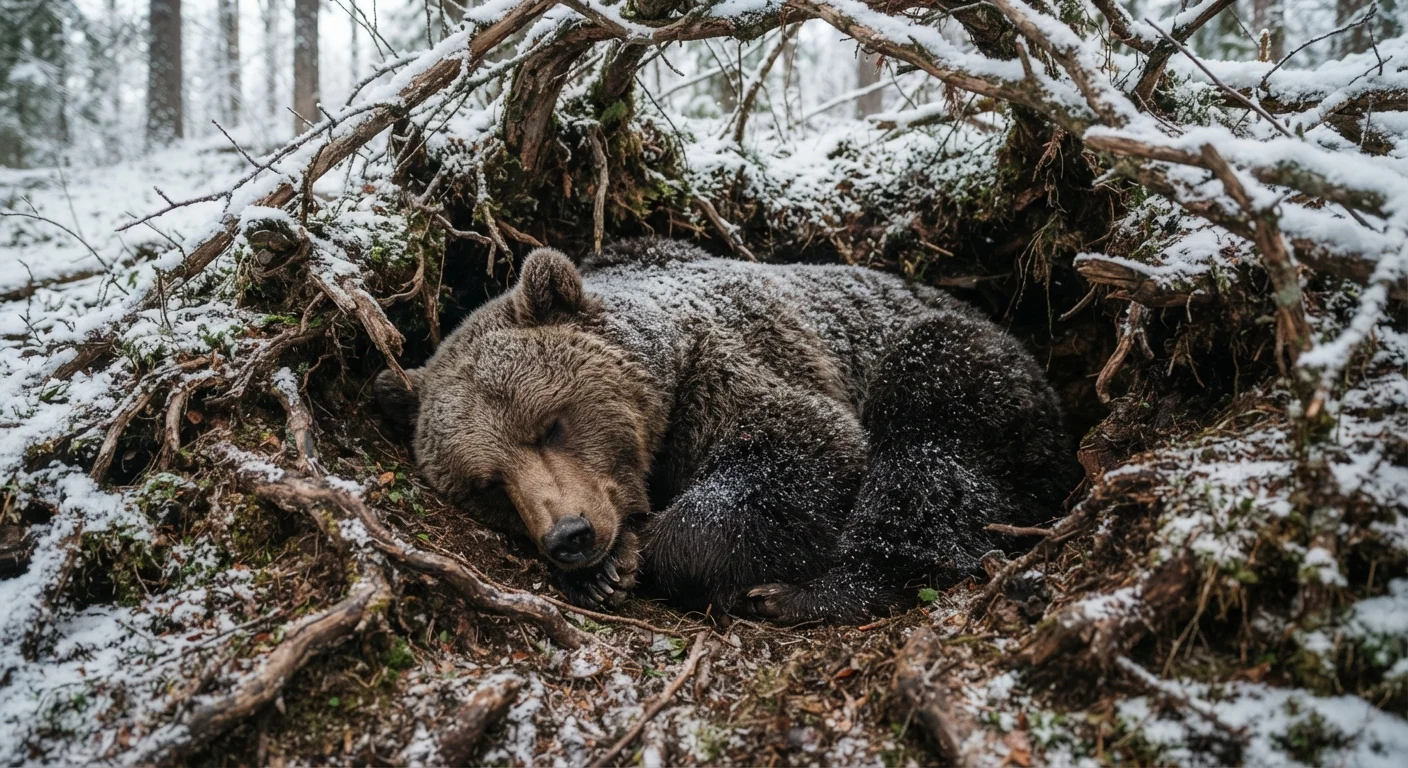
American black bears and grizzly bears reduce their metabolic rate by roughly 50-75% during winter denning, but their core body temperature typically drops by only 3-5°C - compared to drops of 30°C or more in true hibernators like ground squirrels. A bear can wake and respond to disturbances within minutes. Female bears even give birth and nurse cubs during this period, something impossible in true deep hibernation.
Myth
Groundhog Day is just a folk tradition with no connection to real animal behavior.
Fact
Groundhogs (woodchucks) are among North America's most textbook true hibernators, making them biologically relevant to the seasonal transition.
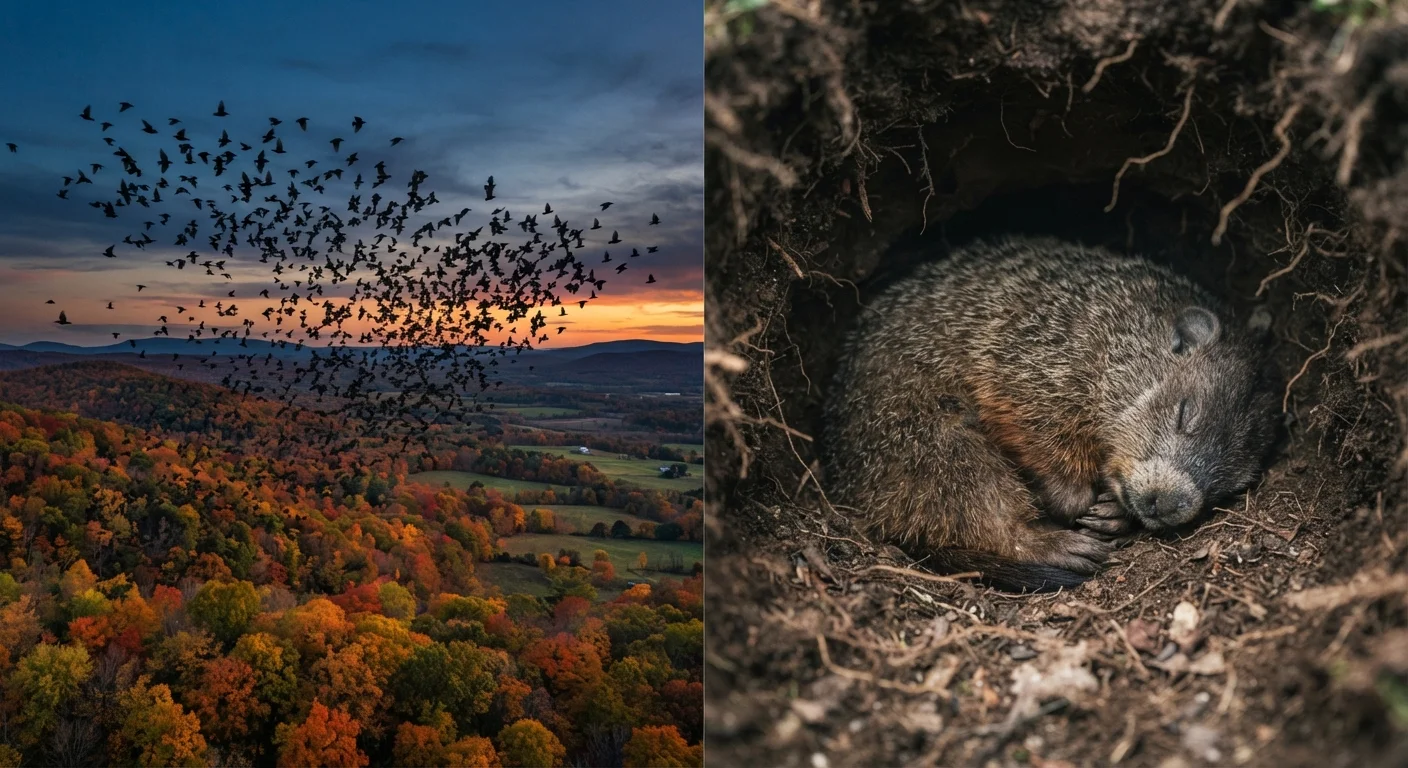
Groundhogs (Marmota monax) are genuine hibernators. Their heart rate drops from around 80 beats per minute to as few as 5, their body temperature approaches ambient environmental levels, and they are extremely difficult to rouse. They typically emerge in late winter or early spring as their internal rhythms signal the season's change - lending the folk observation at least a biological foothold, even if the weather-prediction element is not scientifically supported.
Myth
Reptiles and amphibians hibernate the same way mammals do.
Fact
Cold-blooded vertebrates undergo brumation, a distinct dormancy state governed by different physiological mechanisms.
Brumation, the winter dormancy of ectotherms (animals that rely on external heat sources to regulate body temperature), differs from mammalian hibernation in key ways. Brumating animals such as turtles, snakes, and frogs do not build fat reserves in the same manner. Instead, their metabolism slows passively with ambient temperature. Many brumating reptiles wake periodically to drink water - something true hibernating mammals do not need to do. The distinction matters practically: a reptile found motionless in winter is not necessarily dead or ill.
Myth
Hibernating animals do not eat, drink, or produce waste at all during dormancy.
Fact
True hibernators generally do not eat or drink, but some physiological processes - and exceptions - exist across species.
Most true hibernators suppress urination and defecation almost entirely, recycling metabolic waste products - a remarkable feat of biochemistry. However, some species, including certain bat species, wake periodically during winter to drink or reposition. Bears, in their lighter torpor, may occasionally emerge briefly. Hibernators rely on pre-winter fat stores for energy, and the efficiency with which they conserve resources varies by species and environmental conditions.
Myth
All hibernating animals sleep in the same type of shelter.
Fact
Hibernation sites vary enormously - from underground burrows to submerged lake mud, hollow logs, and cave systems.
Hibernation microhabitats are as diverse as the animals that use them. Groundhogs excavate complex burrow systems. Little brown bats cluster in caves or abandoned mine shafts. Wood frogs (Rana sylvatica) overwinter beneath leaf litter and survive partial freezing of their body tissues - one of the most extraordinary cold-survival mechanisms known in vertebrates. Bears den in rocky outcrops, root cavities, or depressions. Each site reflects the species' specific thermal and humidity requirements for surviving dormancy safely.
The Biology Behind Winter Dormancy
Hibernation is not simply a response to cold weather - it is orchestrated by internal biological timing systems known as circannual rhythms. Animals begin preparing weeks or months before conditions become harsh, accumulating fat reserves, adjusting hormone levels, and altering gene expression. Research has shown that some hibernators, such as arctic ground squirrels, will enter hibernation even when kept at warm temperatures in a laboratory, demonstrating that the trigger is primarily internal rather than environmental.
−2°C
Arctic ground squirrel body temperature during hibernation
Research published in the journal <cite>Science</cite> documented arctic ground squirrels cooling below freezing without ice crystal formation in their tissues - a feat unique among warm-blooded animals.
~8 months
Duration of hibernation for some alpine marmots
Alpine marmots in the European Alps may remain in hibernation for up to eight months, one of the longest documented dormancy periods among mammals.
50-75%
Metabolic rate reduction in denning bears
Studies of black and grizzly bears show metabolic suppression of this magnitude during winter denning, despite minimal core body temperature change.
The process of waking from hibernation is itself energetically costly and physiologically stressful. Animals must shiver intensely to rewarm their bodies, burning significant caloric reserves in the process. This is why disturbing a hibernating animal mid-winter can be genuinely harmful - it forces the animal to burn critical energy stores it may not be able to replenish before spring. This biology also connects to why migration and hibernation represent such divergent evolutionary paths; the comparison between migration and hibernation reveals just how differently evolution has solved the same seasonal problem.
Never Disturb a Hibernating Wild Animal
Encountering a dormant animal in winter - whether a bat in a cave, a snake beneath debris, or a bear in a den - may seem like a harmless observation opportunity. In reality, forced arousal burns critical fat reserves and can be fatal to the animal before spring food sources are available. Maintain distance, minimize noise, and report sightings to local wildlife authorities rather than intervening.