
Evolution's Most Inventive Solutions
Every biome on Earth poses a distinct set of survival challenges - killing cold, punishing heat, saltwater saturation, or near-total darkness. Over millions of years, natural selection has produced animals with extraordinary solutions to these pressures. The adaptations documented below are not curiosities; they are the product of rigorous evolutionary pressure and reflect deep biological ingenuity.
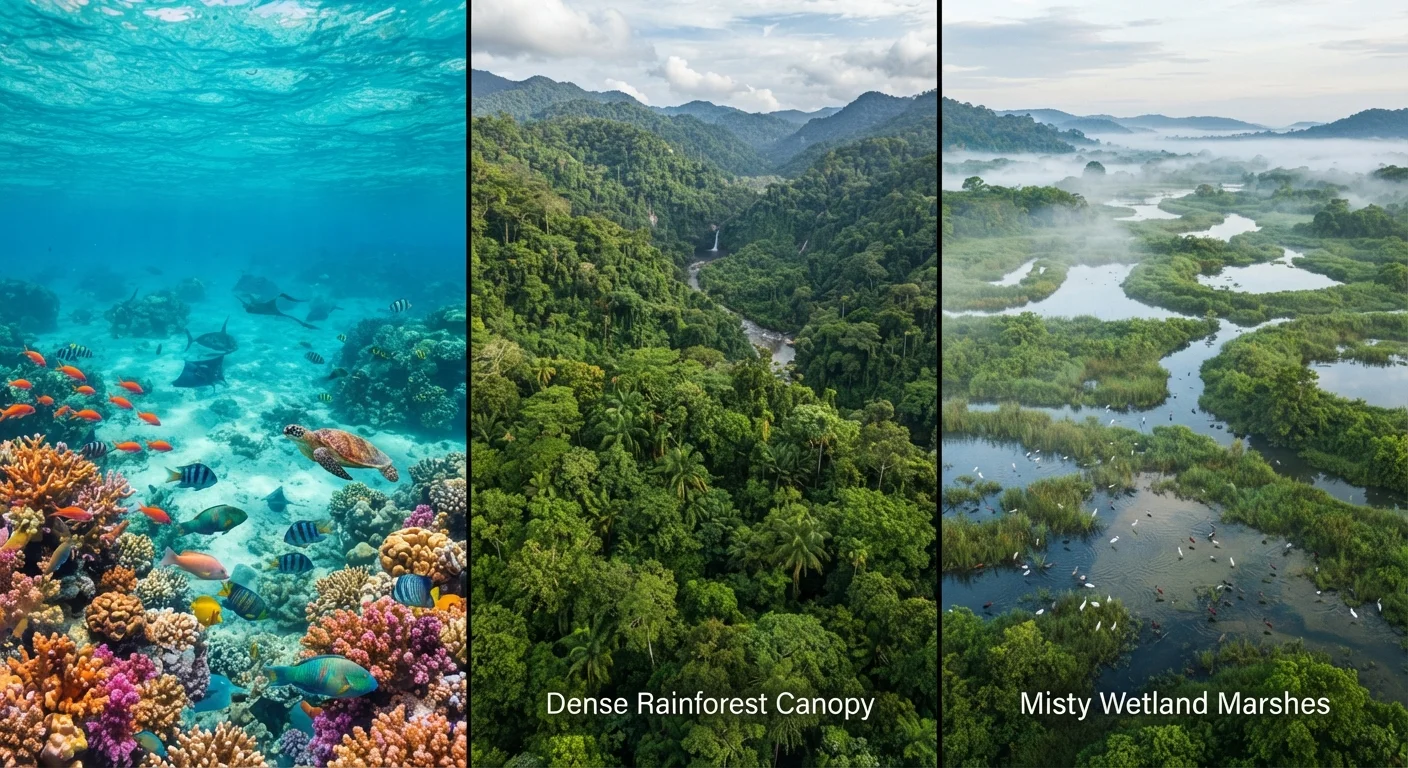
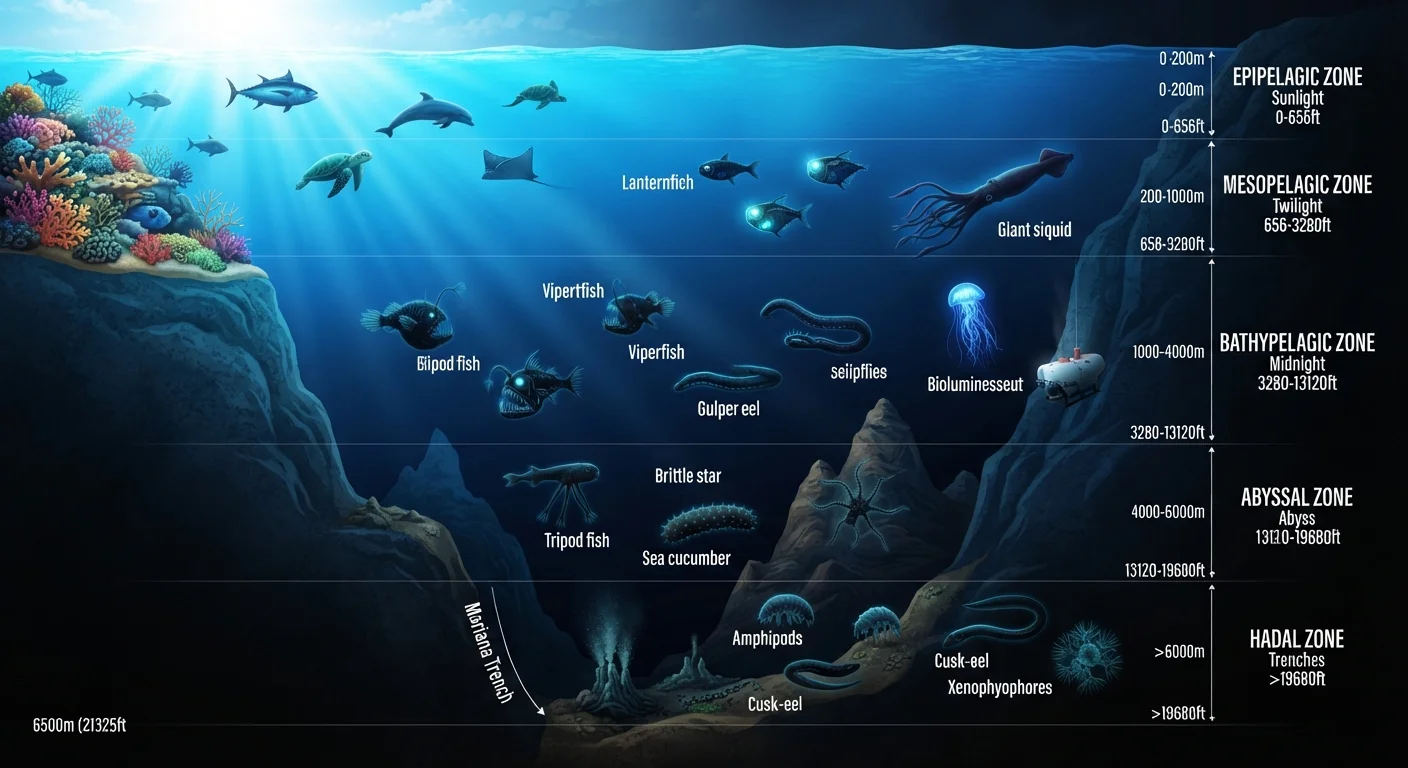
For broader context on the ecosystems that host this diversity, see our comparison of coral reefs, rainforests, and wetlands. And if you're interested in how the deep ocean shapes its own remarkable fauna, explore our guide to ocean zones and their inhabitants.
Arctic Fox: Seasonal Coat and Counter-Current Circulation
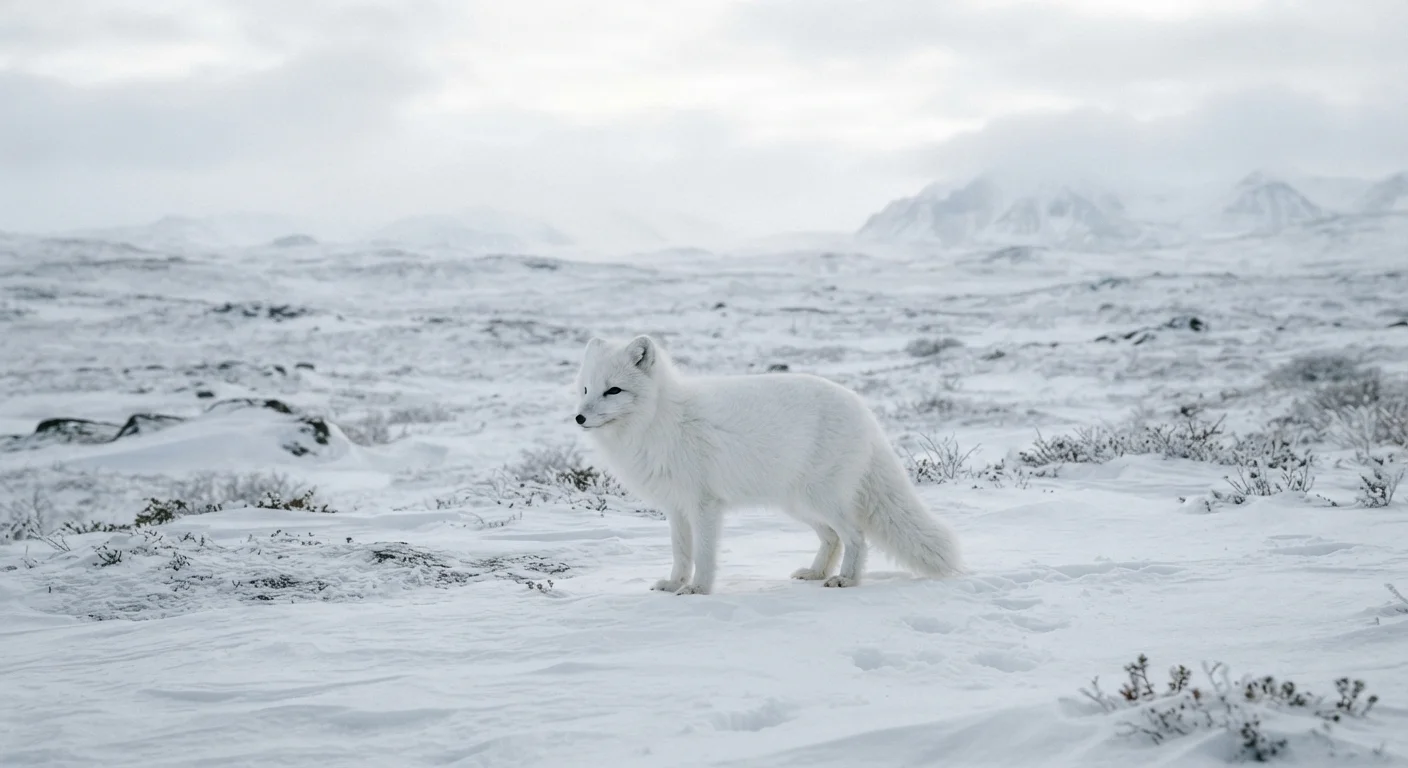
The Arctic fox (Vulpes lagopus) inhabits one of the harshest terrestrial biomes on Earth - the circumpolar tundra - where temperatures regularly drop below −50°C. Its double-layered coat shifts from brown-grey in summer to dense white in winter, serving both thermal insulation and camouflage. The underfur can trap an air layer that provides insulation comparable to some synthetic materials.
Equally impressive is the fox's counter-current heat exchange system in its legs. Warm arterial blood flowing to the paws passes alongside cool venous blood returning from them, transferring heat before it reaches extremities. This mechanism keeps paw-pad temperature just above freezing - enough to prevent tissue damage - while conserving core warmth. This same circulatory principle appears independently in penguins and caribou, a striking example of convergent evolution.
The Arctic fox's counter-current circulation keeps its paws just above freezing without sacrificing core warmth.
Namib Desert Beetle: Fog Harvesting on a Bumpy Back
The Namib Desert receives as little as 13 mm of rainfall per year, yet the fog-basking beetle (Stenocara gracilipes) thrives there by harvesting moisture directly from coastal fog. Its back surface features a pattern of hydrophilic (water-attracting) bumps surrounded by hydrophobic (water-repelling) waxy troughs. When the beetle faces into the prevailing fog-laden wind at dawn, water droplets accumulate on the bumps and, once large enough, roll down the waxy channels toward the beetle's mouth.
Research published in Nature identified this surface microstructure as the functional mechanism, and it has since inspired biomimetic engineering research into fog nets and water-collection surfaces. For the beetle, the adaptation is existential: without it, survival in one of the driest environments on Earth would be impossible.
The fog beetle's bumpy back is a microscale water-collection system refined over millions of years of desert evolution.
Mangrove Crab: Salt Regulation in a Brackish World
Mangrove forests occupy the intertidal zone where freshwater rivers meet saline ocean water - an environment where salinity can fluctuate dramatically within a single tidal cycle. The mangrove crab (genus Ucides, among others) possesses highly efficient gill-based ion-transport systems that actively regulate internal salt concentrations regardless of external salinity. This osmoregulation prevents cellular dehydration in high-salinity water and dilution in low-salinity conditions.
Beyond physiology, mangrove crabs play a critical ecological role: by burrowing into sediment and processing leaf litter, they accelerate nutrient cycling within the mangrove system. Their adaptation is thus not merely individual survival - it sustains the productivity of one of the most carbon-dense ecosystems on the planet.
Mangrove crabs actively regulate their internal salt balance, enabling survival across dramatic tidal salinity swings.
Wood Frog: Surviving Being Frozen Solid
Most vertebrates cannot survive the freezing of their body tissues - ice crystals rupture cell membranes. The North American wood frog (Rana sylvatica) is a documented exception. During winter, up to 70% of its body water can freeze solid, its heart stops beating, and breathing ceases entirely. Yet it survives.
The mechanism involves rapid mobilization of glucose from the liver into cells as a cryoprotectant. This high intracellular glucose concentration depresses the freezing point of cytoplasm and protects membranes from ice damage. When temperatures rise in spring, the frog thaws and resumes normal function within hours. This adaptation is closely related to the broader phenomenon of winter dormancy - see our in-depth look at animal hibernation science for how this compares to true and torpor-based strategies.
The wood frog floods its cells with glucose before winter, enabling it to survive being literally frozen solid.
Star-Nosed Mole: The Fastest Forager in the Wetlands
The star-nosed mole (Condylura cristata) inhabits the dark, saturated soils of North American wetlands and riparian zones. Its defining feature - 22 pink, fleshy appendages radiating from its snout - is one of the most sensitive tactile organs in the vertebrate world. Each ray is densely packed with Eimer's organs, specialized mechanoreceptors that detect prey through touch at extraordinary speed.
Neurological studies indicate the star-nosed mole can identify and consume prey in as little as 120 milliseconds, making it the fastest-foraging mammal documented. This adaptation compensates for the near-zero visibility of its underground and subaquatic foraging environment. Sensory hypertrophy of this kind - a body part evolving exceptional sensitivity - is also seen in species covered in our exploration of nocturnal animal senses.
The star-nosed mole can detect, identify, and consume prey in under 120 milliseconds using touch alone.
What These Adaptations Reveal
Across biomes, a consistent theme emerges: no single adaptation operates in isolation. The Namib beetle's fog-harvesting relies on a synergy of surface chemistry, body posture, and behavior. The mangrove crab's salt tolerance depends on coordinated physiological systems. Adaptations are architectures, not features.
Look for Convergent Evolution
When studying adaptations, note how unrelated species in similar environments often evolve analogous solutions - counter-current heat exchange in foxes, penguins, and fish; fog harvesting in beetles and desert-adapted plants. Convergent evolution is one of the strongest signals that a given environmental pressure reliably drives a particular biological response. Recognizing this pattern deepens appreciation for both the constraints and creativity of natural selection.
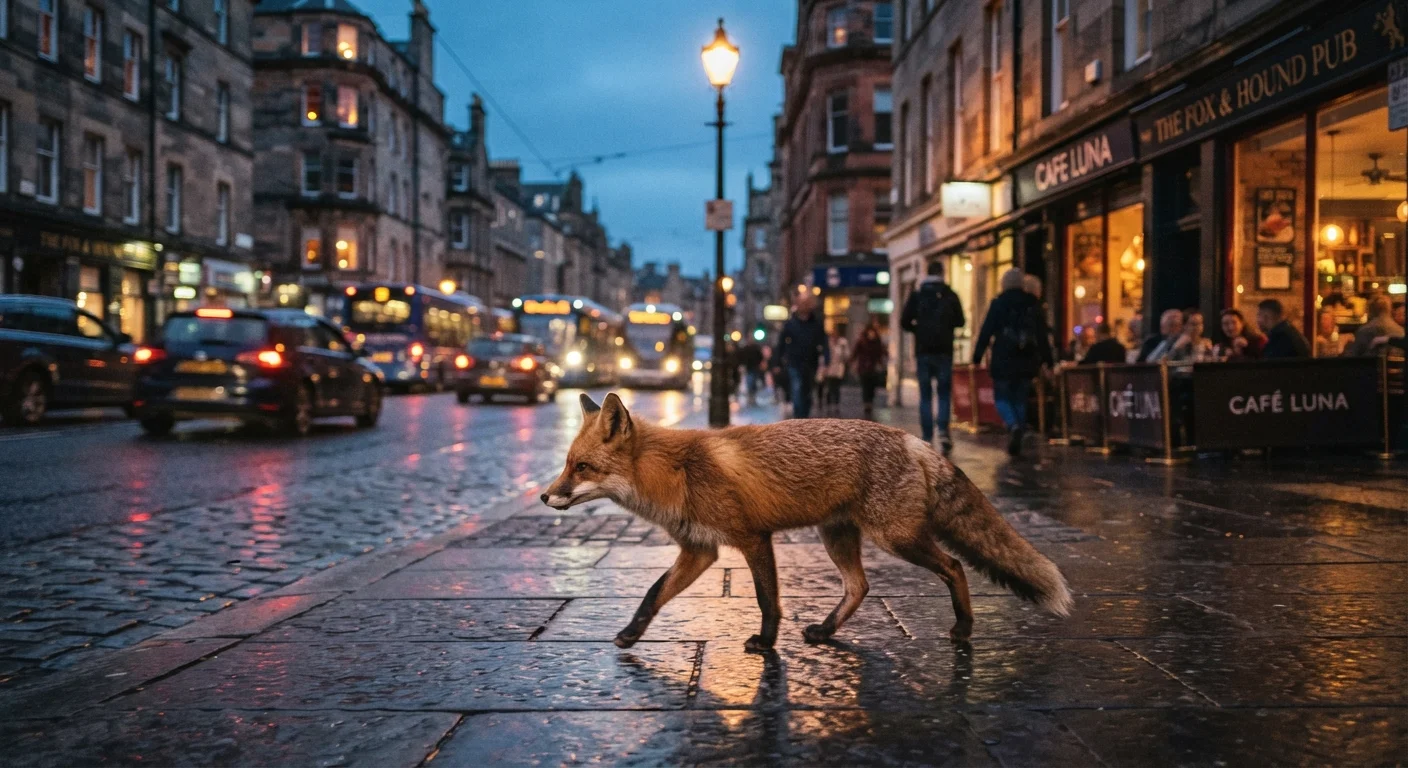
This interplay also highlights how sensitive specialized animals are to habitat disruption. A species evolved over millions of years for a precise environmental niche has limited capacity to adjust when that niche shifts rapidly. For a complementary perspective on behavioral flexibility, see how some wildlife is adapting to urban environments - a contrast that underscores just how unusual rapid behavioral shifts are in ecological time.