
Same Problem, Radically Different Solutions
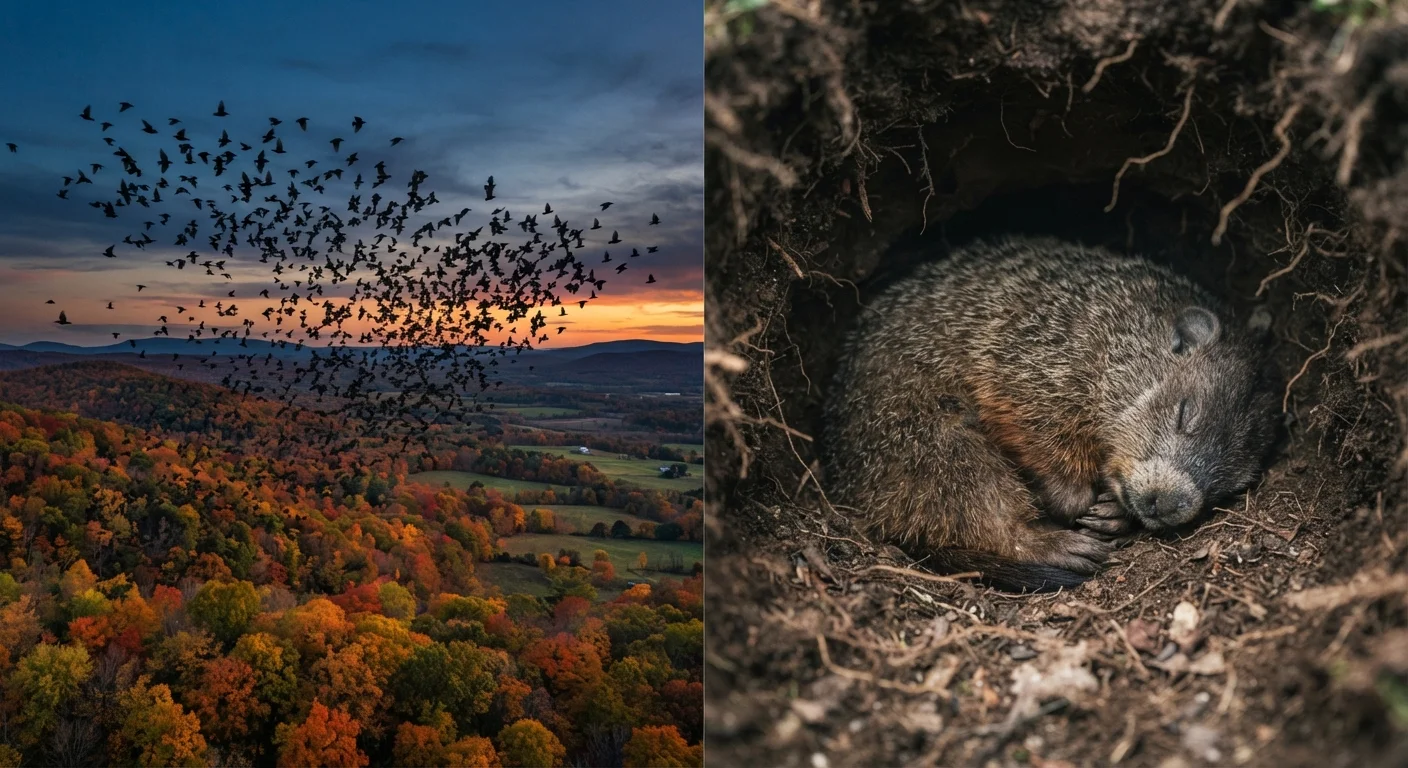
When food becomes scarce and temperatures drop, animals face a fundamental survival challenge. Evolution has produced two dominant solutions: leave, or wait it out. Migration and hibernation both solve the problem of seasonal resource scarcity, but the biology, risks, and physiological demands behind each could hardly be more different.
Migration is an active behavioral strategy - animals expend enormous energy traveling to environments where conditions are more favorable. Hibernation, by contrast, is primarily a physiological phenomenon: the animal remains in place but dramatically reduces its metabolic demands, surviving on stored fat until conditions improve. Understanding the distinction between these strategies illuminates some of the most extraordinary adaptations in the natural world. For a broader view of how animals have evolved to endure extremes, see our guide to remarkable animal adaptations.
| Criterion | Migration | Hibernation |
|---|---|---|
| Core strategy | Active movement to favorable habitat | Metabolic suppression in place |
| Energy use | Extremely high - sustained output | Extremely low - fat reserves consumed slowly |
| Body temperature | Maintained or elevated during travel | Drops to near-ambient in true hibernators |
| Primary trigger | Photoperiod and hormonal cues | Photoperiod and hormonal cues |
| Duration | Days to months of travel | Weeks to months of dormancy |
| Key risk | Predation, weather, exhaustion, starvation | Insufficient fat stores, premature arousal |
| Example species | Bar-tailed godwit, monarch butterfly, humpback whale | Groundhog, little brown bat, Arctic ground squirrel |
The Physiology of Hibernation: More Than Just Sleep
True hibernation - as seen in groundhogs, little brown bats, and Arctic ground squirrels - involves a coordinated suppression of virtually every major physiological system. Core body temperature can fall to within a degree or two of ambient temperature. Heart rate drops from a normal 200-300 beats per minute in small mammals to as few as 3-10 beats per minute. Oxygen consumption falls by more than 90% in some species. This state is called torpor, and it is regulated by specific hormonal and neurochemical signals, not simply by getting cold.
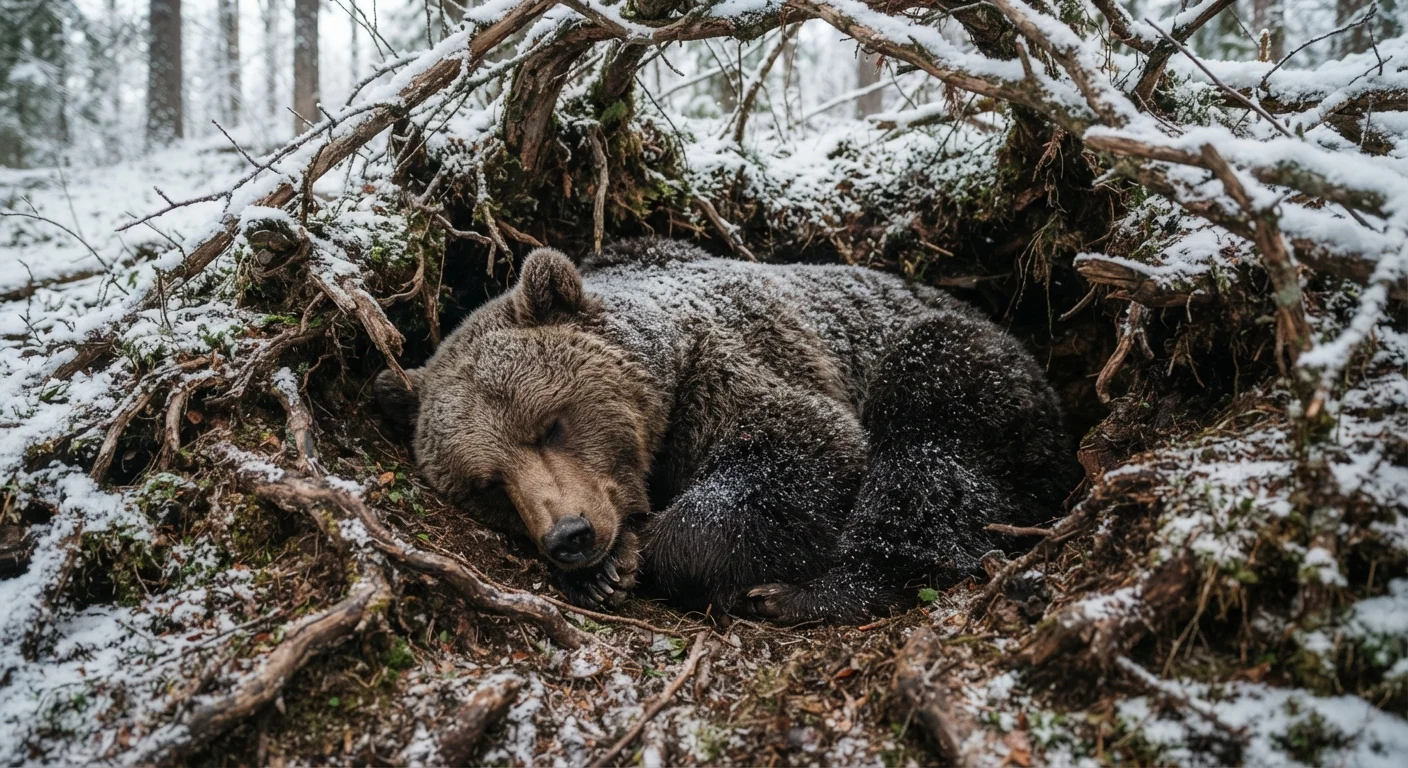
It's worth clarifying a common misconception: bears do not enter true hibernation. They experience a lighter form of winter dormancy in which body temperature drops only modestly and they can be roused relatively quickly. Groundhogs, by contrast, are among the most committed true hibernators. For a full breakdown of which animals actually hibernate - and which do not - see our science-based explainer on hibernation myths.
Torpor vs. True Hibernation: A Key Distinction
Not all winter dormancy qualifies as true hibernation. Scientists distinguish between shallow torpor - brief, reversible drops in metabolic rate lasting hours to days - and deep, prolonged hibernation lasting weeks or months. Bears exemplify shallow torpor; groundhogs and Arctic ground squirrels exemplify true hibernation. Understanding this distinction matters because the physiological mechanisms and ecological consequences differ substantially between the two states.
The Physiology of Migration: A Biological Marathon
Migration demands the opposite of metabolic economy - it requires sustained, high-intensity output over days, weeks, or months. Before departure, migratory birds undergo hyperphagia, a phase of compulsive overeating that nearly doubles their body mass in fat stores. During flight, some species remain airborne continuously for days; the bar-tailed godwit has been recorded flying more than 11,000 kilometers nonstop across the Pacific Ocean.
The energetic costs are staggering. Organs not essential for flight - including parts of the digestive tract - may actually shrink before migration to reduce body weight, then regrow on arrival. Navigation relies on a sophisticated integration of the Earth's magnetic field, star patterns, polarized light, and learned landmarks. The full physiological cost of avian migration reveals just how extreme these demands become at the cellular level.
11,000+ km
Bar-tailed godwit nonstop flight distance
Satellite tracking studies have confirmed bar-tailed godwits flying more than 11,000 km across the Pacific without landing - the longest known nonstop avian migration.
>90%
Metabolic rate reduction in true hibernators
Research on Arctic ground squirrels and similar species shows oxygen consumption can fall by more than 90% during deep torpor compared to active metabolic rates.
~2×
Body mass increase before migration
Many long-distance migratory birds nearly double their body mass through hyperphagia - intensive pre-migration feeding - to fuel transcontinental or transoceanic journeys.
Triggers, Timing, and the Role of Photoperiod
Both strategies are initiated by environmental cues rather than by temperature alone - a critical distinction. The primary trigger for most migratory and hibernating species is photoperiod: the changing ratio of daylight to darkness as seasons shift. This signal is processed through the hypothalamus and pineal gland, driving hormonal cascades that prepare the animal for either departure or dormancy well before conditions become truly harsh.
This reliance on day length - rather than weather - means both strategies are vulnerable to climate disruption. When temperatures warm earlier than expected, migratory birds may arrive before insect prey has peaked, a mismatch with documented population consequences. Hibernating species may emerge prematurely and find food resources unavailable. The precision of these biological clocks, honed over millennia, is proving difficult to recalibrate quickly enough to track shifting seasons.
Some species blur the boundary between the two strategies. Several bat species in temperate regions migrate south in autumn but also enter torpor on cold nights throughout their winter range. This behavioral flexibility - explored further in our overview of nocturnal animal adaptations - suggests that migration and hibernation are not mutually exclusive endpoints but points on a broader continuum of seasonal survival tactics.