
Why Household Admin Creates So Much Friction
Running a shared home - whether with a partner, family members, or housemates - involves a surprising volume of small, repetitive decisions: who buys milk, whose turn it is to pay the internet bill, where that insurance document ended up. When these tasks live only in someone's head, things get dropped, debts go untracked, and resentment quietly builds.
Digital tools don't replace communication, but they do give everyone a shared source of truth. Instead of relying on memory or informal agreements, a household can create systems that work in the background. The tools below are grouped by function - pick the categories that match where your household friction actually is.
Most Tools You Need Already Exist on Your Phone
Many of the most effective household tools are built into smartphones that most people already own - shared notes, calendar sharing, and basic reminders are standard features on both Android and iOS. Before downloading dedicated apps, it's worth checking whether your existing apps already support sharing. Dedicated apps are worth exploring when built-in options lack a feature you genuinely need, such as automated expense balancing.
Five Categories of Tools That Make a Real Difference
Shared grocery and shopping lists
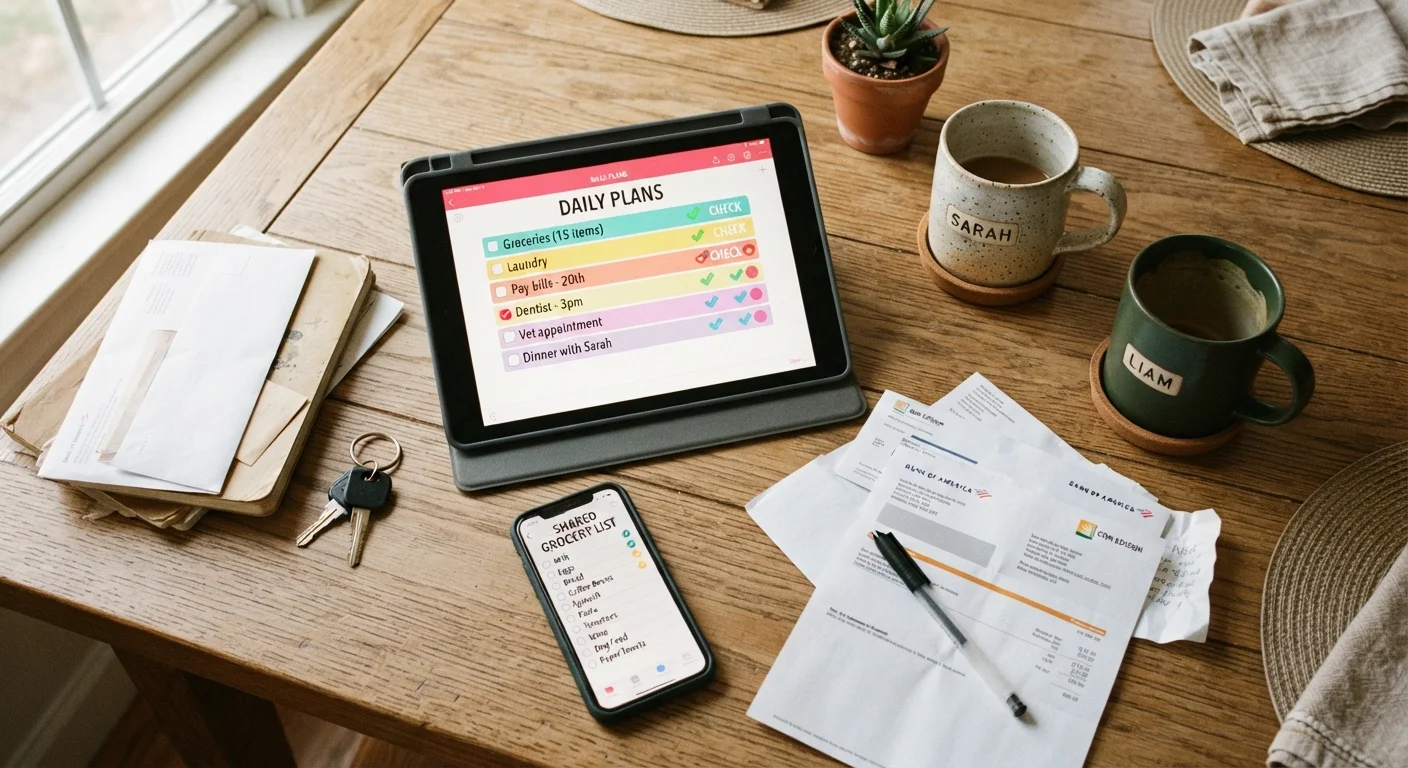
A shared, real-time shopping list solves one of the most common household annoyances: buying duplicate items or forgetting essentials because only one person had the list. Most smartphones already include a basic list app that syncs across devices when shared with a household member. Dedicated apps offer additional features like categorizing items by aisle or carrying forward recurring items automatically.
The key habit is adding items as soon as you notice they're running low - not just before a shopping trip. When everyone in the household contributes to the same list, nobody has to play coordinator.
Adding items as you notice them - not before a trip - is what makes shared lists actually work.
Expense-splitting and bill-tracking apps
Money is one of the most common sources of friction in shared living. Expense-splitting apps let you log shared costs - groceries, utilities, a takeaway - and automatically calculate who owes whom. They maintain a running balance, so small amounts don't get lost in a fog of informal agreements.
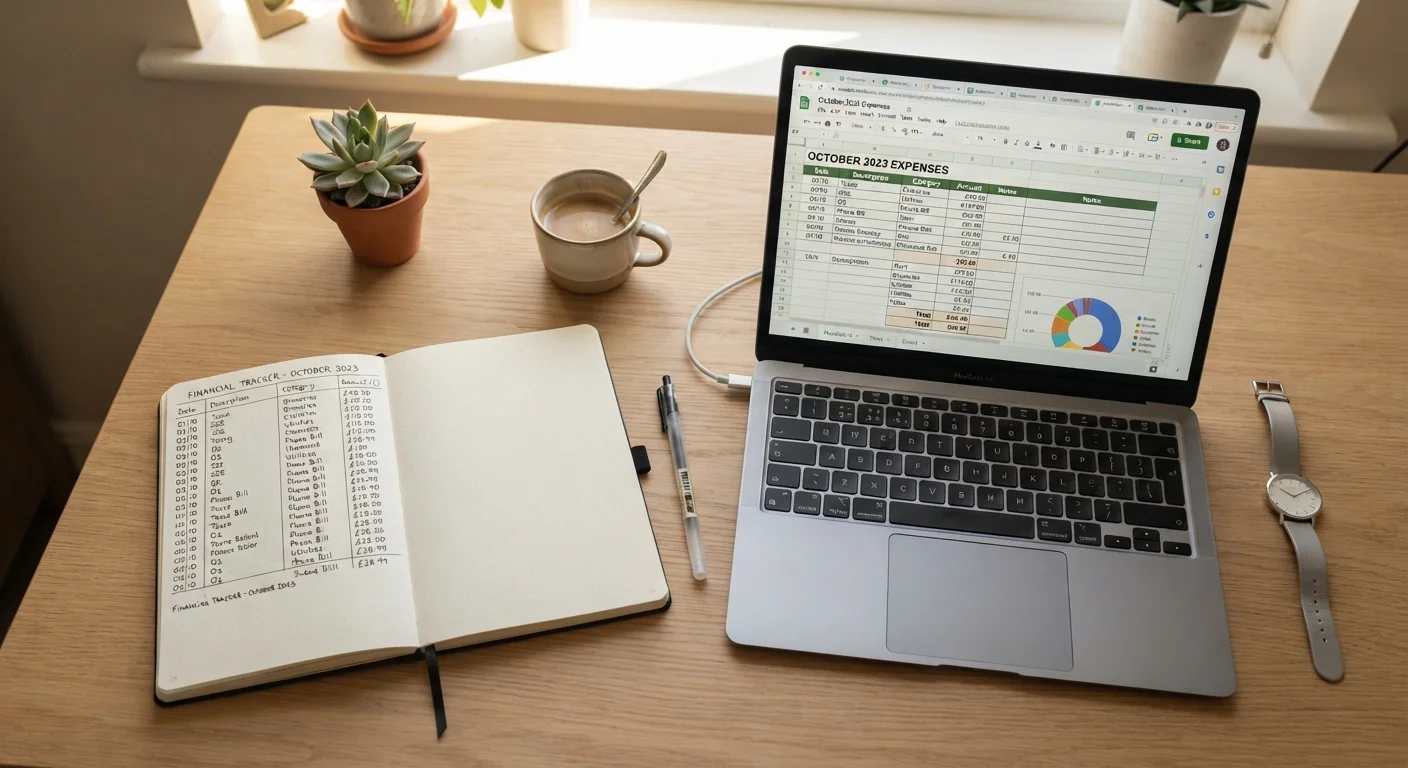
Some households use these alongside a shared spreadsheet for fixed monthly bills like rent and internet. If you want a more structured approach to what the household is actually spending, auditing overlooked household expenses is a useful companion exercise. For the general principles, tracking spending with a spreadsheet vs. a notebook outlines when each approach works best.
Expense-splitting apps maintain a running balance, so small debts don't quietly accumulate into bigger ones.
Shared digital calendars
A household calendar - separate from personal work calendars - gives everyone visibility into deliveries expected, maintenance appointments, lease renewals, and social commitments that affect shared space. Most calendar apps allow you to create and share a separate calendar within your existing account, so you're not handing over access to private events.
The practical benefit is fewer scheduling conflicts: a plumber booked for Tuesday morning is visible to whoever works from home that day. Getting started with digital calendars walks through the setup process if you're new to syncing and sharing.
A shared household calendar gives everyone visibility without merging private and communal schedules.
Cloud document storage for household files
Insurance policies, tenancy agreements, appliance manuals, and warranty documents are frequently needed in moments of stress - when something breaks or a dispute needs resolving. Storing scanned or digital copies in a shared cloud folder means any household member can access them without searching through someone else's email or paperwork piles.
Create a simple folder structure (e.g., Insurance / Utilities / Appliances) and make it a habit to add documents as they arrive. This is a one-time setup that pays dividends repeatedly. For broader file organisation principles, organising your digital life offers a practical framework.
Shared cloud folders mean critical household documents are accessible to everyone who needs them, not buried in one inbox.
Task and chore management tools
Chore distribution is a perennial source of household tension, often because the mental load of remembering and assigning tasks falls unevenly. Simple task apps - or even a shared note with recurring items - make responsibilities visible and explicit. Some apps support recurring tasks and allow you to assign items to specific people, removing the need for repeated conversations about whose turn it is.
The goal isn't rigid enforcement but shared clarity. When both people can see what's pending and who has agreed to handle it, the work of coordination decreases noticeably. If disagreements still surface, approaches to communicating across disagreement may help address the underlying dynamics.
Making chore responsibilities visible and explicit removes the mental load of constant re-negotiation.
Start With One Tool, Not Five
Resist the urge to overhaul your entire household system at once. Pick the single category causing the most friction right now and introduce one tool for it. Once it becomes habit - typically after a few weeks of consistent use - add the next. Gradual adoption is far more durable than an ambitious rollout that fades within a month.
Building Habits Around the Tools You Choose
The biggest reason digital household systems fail isn't the tools themselves - it's inconsistent adoption. If one person updates the grocery list and the other shops from memory, the system collapses. Agree upfront on which tools you'll use for which purpose, and keep the total number small. Two or three well-used apps outperform six half-used ones.
For a broader look at managing your digital setup without letting it become its own burden, keeping your app library lean is worth reading alongside this. And if shared finances are a particular pain point, exploring budgeting basics can help you build a cleaner financial picture for the whole household.