
What Is a Gigabyte, and How Far Does It Go?
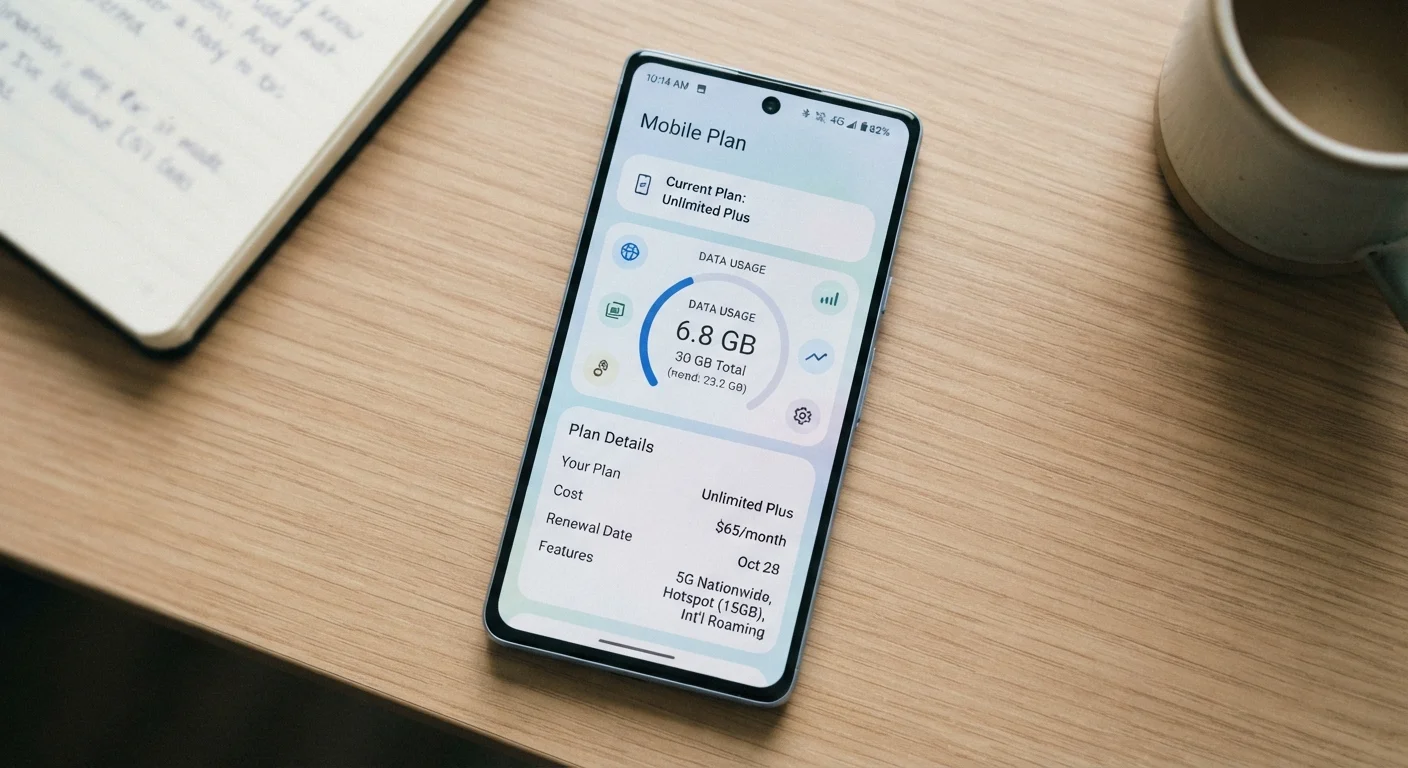
When a mobile plan advertises "5 GB" or "20 GB," it's describing a data allowance - the total amount of information your phone can send and receive over the mobile network in a billing period. A gigabyte (GB) is a unit of digital data. One GB equals roughly 1,000 megabytes (MB).
| Data for 1 hour SD video streaming | ~1 GB |
| Data for 1 hour HD video streaming | ~3 GB |
| Data for 1 hour music streaming | ~150-200 MB |
| Typical 4G LTE real-world download speed | 20-100 Mbps |
| Megabytes in one gigabyte | ~1,000 MB |
| Megabits in one megabyte | 8 Mb |
In practical terms, one gigabyte is enough to stream around 4-6 hours of music, browse the web for several hours, or send hundreds of emails with attachments. Video streaming uses far more: standard-definition video on a platform like YouTube or Netflix can consume 1 GB per hour, while high-definition video uses 3 GB or more per hour.
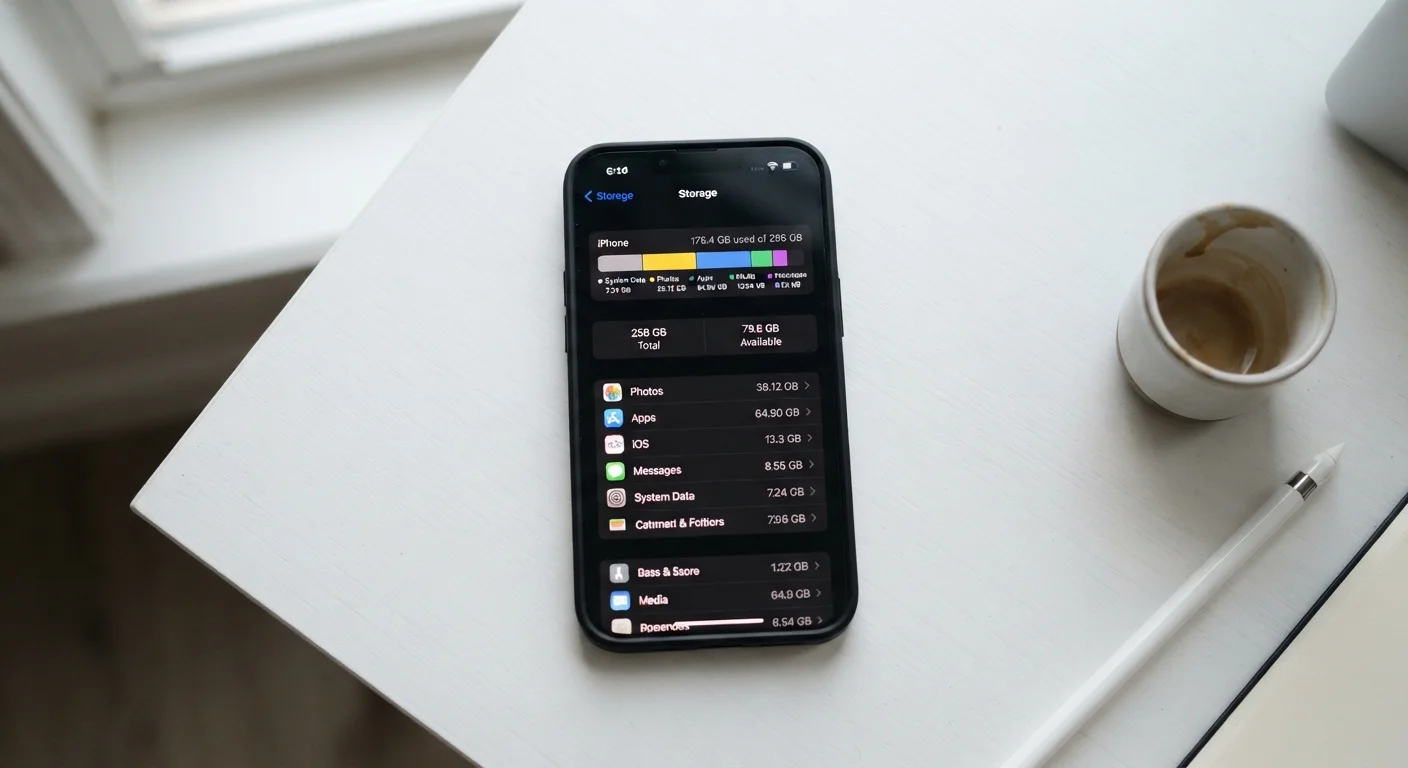
If you're unsure how much data you actually use, check your phone's built-in data usage tool - both Android and iOS show you a breakdown by app. This is the most reliable way to match a plan to your real habits. For more on how your device handles storage and memory, see our guide to smartphone storage.
4G, 5G, LTE: What the Network Labels Mean
Mobile networks are built in generations, each offering faster speeds and better capacity than the last. The number - 3G, 4G, 5G - simply refers to which generation of wireless technology your phone is using at that moment.
Gigabyte (GB)
A unit measuring the volume of digital data. One gigabyte equals approximately 1,000 megabytes. Mobile plans use GB to define how much data you can use per month.
4G LTE
The fourth generation of mobile network technology, refined under the LTE standard. It offers reliable speeds for streaming, browsing, and video calls in most urban and suburban areas.
5G
The fifth generation of mobile networks, offering significantly higher potential speeds and capacity than 4G. Coverage is still expanding in many regions, including parts of Germany.
Mbps (Megabits per second)
A measure of data transfer speed. Higher Mbps means faster loading and streaming. Note that megabits and megabytes are different units - 8 megabits equal 1 megabyte.
Throttling
The intentional slowing of your mobile data speed by a provider, typically after you exceed a fair-use data threshold on an "unlimited" plan.
Roaming
Using your mobile data plan in a country other than where the plan is registered. EU regulations mean most German plans include some roaming data for use across EU member states.
4G LTE is the standard most people in Germany use daily. LTE stands for Long-Term Evolution and is a refinement of 4G technology. It delivers download speeds typically ranging from 20 to 100 Mbps (megabits per second) in real-world conditions, which is fast enough for HD video calls, music streaming, and most app activity without noticeable lag.
5G is the newest generation. In ideal conditions, it can reach speeds several times faster than 4G. However, 5G coverage in Germany is still expanding, and actual speeds vary significantly depending on your location, the type of 5G your provider uses, and network congestion. A 5G-capable phone automatically falls back to 4G when a 5G signal isn't available.
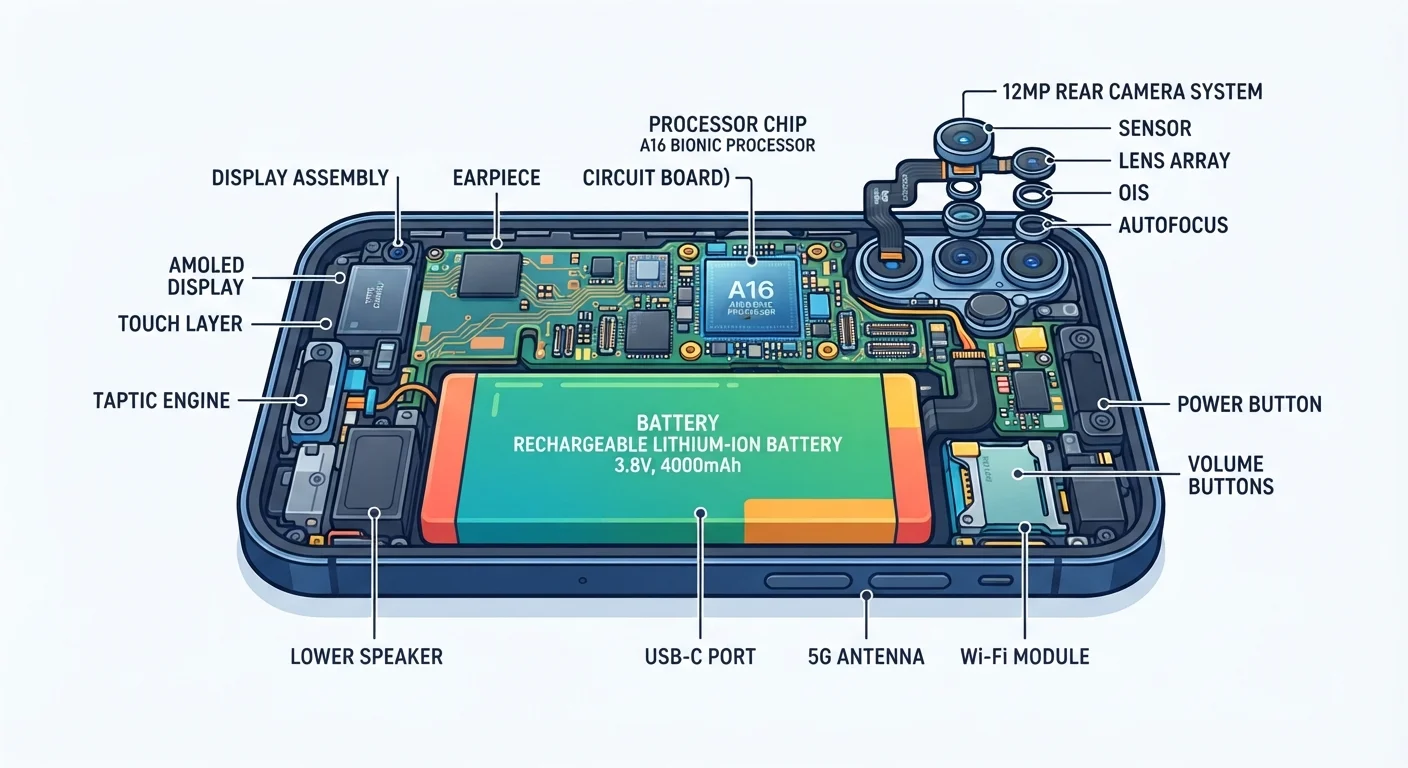
For a broader look at how all your phone's components work together - including how it connects to networks - the full smartphone overview is a useful companion read.
Other Numbers You'll See on Plan Descriptions
Beyond GB and network generation, mobile plan descriptions often include several other figures worth understanding.
- Download speed (Mbps): How quickly data arrives at your device. Streaming, browsing, and downloading files all depend on this. Most everyday tasks run fine at 10-25 Mbps.
- Upload speed (Mbps): How quickly data leaves your device. Relevant for video calls, sending large files, or posting photos.
- Fair-use threshold: Some plans advertise "unlimited" data but include a clause - often around 40-50 GB - after which speeds are reduced significantly. This is sometimes called throttling. Read the fine print carefully.
- Roaming allowance: Many plans include a data allowance for use in other EU countries. The number shown (e.g., "5 GB EU roaming") is often smaller than your domestic allowance.
"Unlimited" Doesn't Always Mean Unlimited
Many mobile plans marketed as unlimited include a fair-use clause that reduces your data speed after a set threshold - sometimes as low as 10 GB. Once throttled, speeds may drop to 3G levels or slower, making video streaming and fast browsing difficult. Always check the specific fair-use limit in a plan's terms and conditions before signing up.
Comparing plans becomes much simpler once you know your actual monthly usage in GB and understand which network generation is available in the areas where you spend most of your time. Both pieces of information are easy to check before committing to a contract.