
The Core Rule: Rechts vor Links
At the heart of German right-of-way law is a principle every driver must know: Rechts vor Links - traffic from the right has priority. Codified in StVO §8, this rule applies at any intersection or junction that is not controlled by traffic lights, signs, or road markings. If you approach an unmarked crossroads, the vehicle arriving from your right proceeds first, regardless of road width or vehicle size.
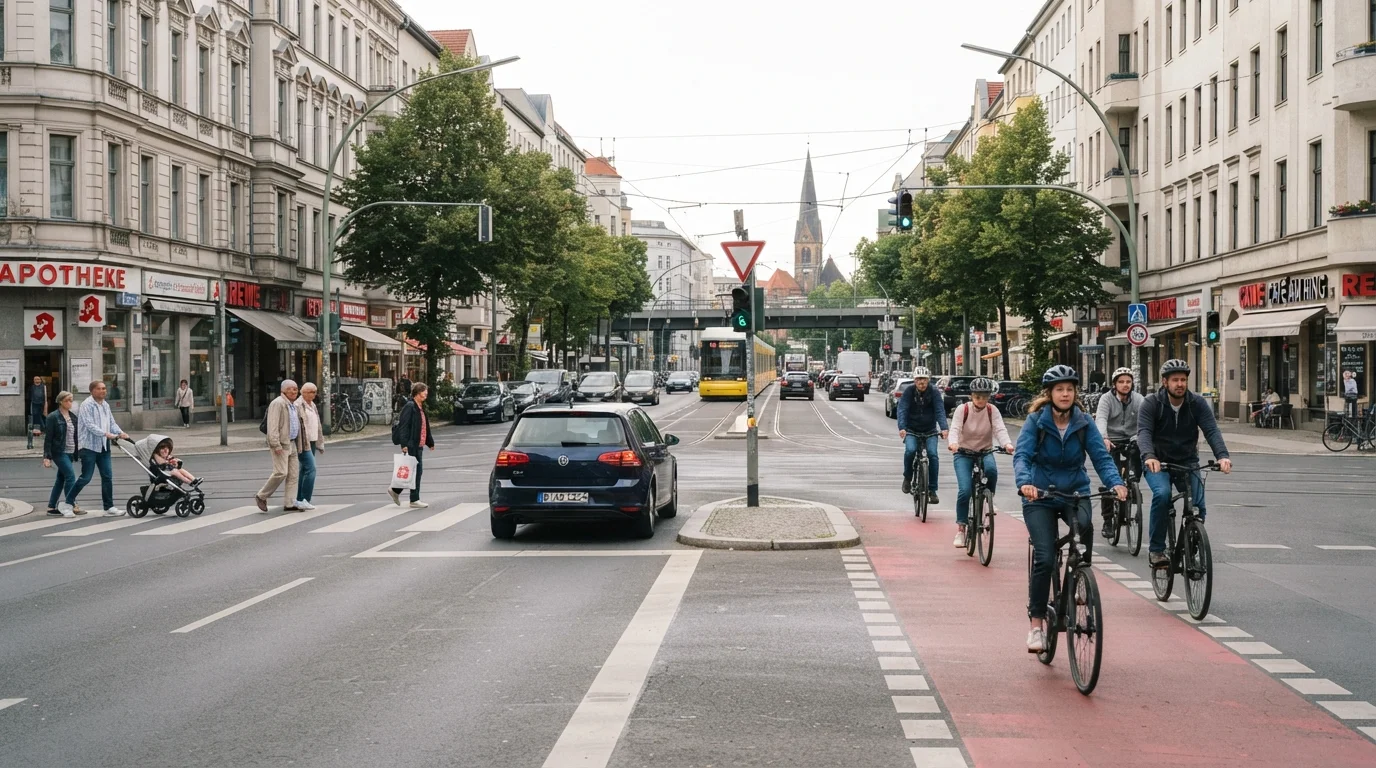
This rule catches many drivers off-guard, particularly in residential areas and older city districts where unmarked intersections are common. A practical reminder: before entering any uncontrolled junction, scan right first. If a vehicle is approaching from that direction - even on what appears to be a minor road - it has the right of way over you.
Rechts vor Links does not apply when a priority road (Vorfahrtstraße) is marked with sign 306 (a yellow diamond), or when a yield sign (sign 205, an inverted triangle) or stop sign (sign 206) instructs you to give way. In those cases, the signage overrides the default rule. For a full breakdown of German road sign meanings, see Germany's Road Sign System Explained.
| Default right-of-way rule | Rechts vor Links (right before left) (§8 StVO (Straßenverkehrs-Ordnung)) |
| Priority road sign | Yellow diamond - sign 306 (StVO Anlage 2) |
| Roundabout priority | Circulating traffic has right of way over entering vehicles (Amended StVO, 2001) |
| Tram priority basis | §19 StVO - trams generally override other road users (§19 StVO) |
| Emergency vehicle rule | All drivers must immediately clear the road and stop (§38 StVO) |
| Rettungsgasse obligation | Mandatory on multi-lane roads when traffic is stationary (§11 Abs. 2 StVO) |
Roundabouts, Trams, and Special Cases
German roundabouts have been governed by a clear rule since 2001: traffic inside the roundabout has priority over vehicles entering, unless signs indicate otherwise. When approaching a roundabout marked with sign 215 (circular arrow) combined with sign 205 (yield), you must give way to circulating traffic before merging. Do not assume a vehicle in the circle will slow - the priority firmly favours those already in it.
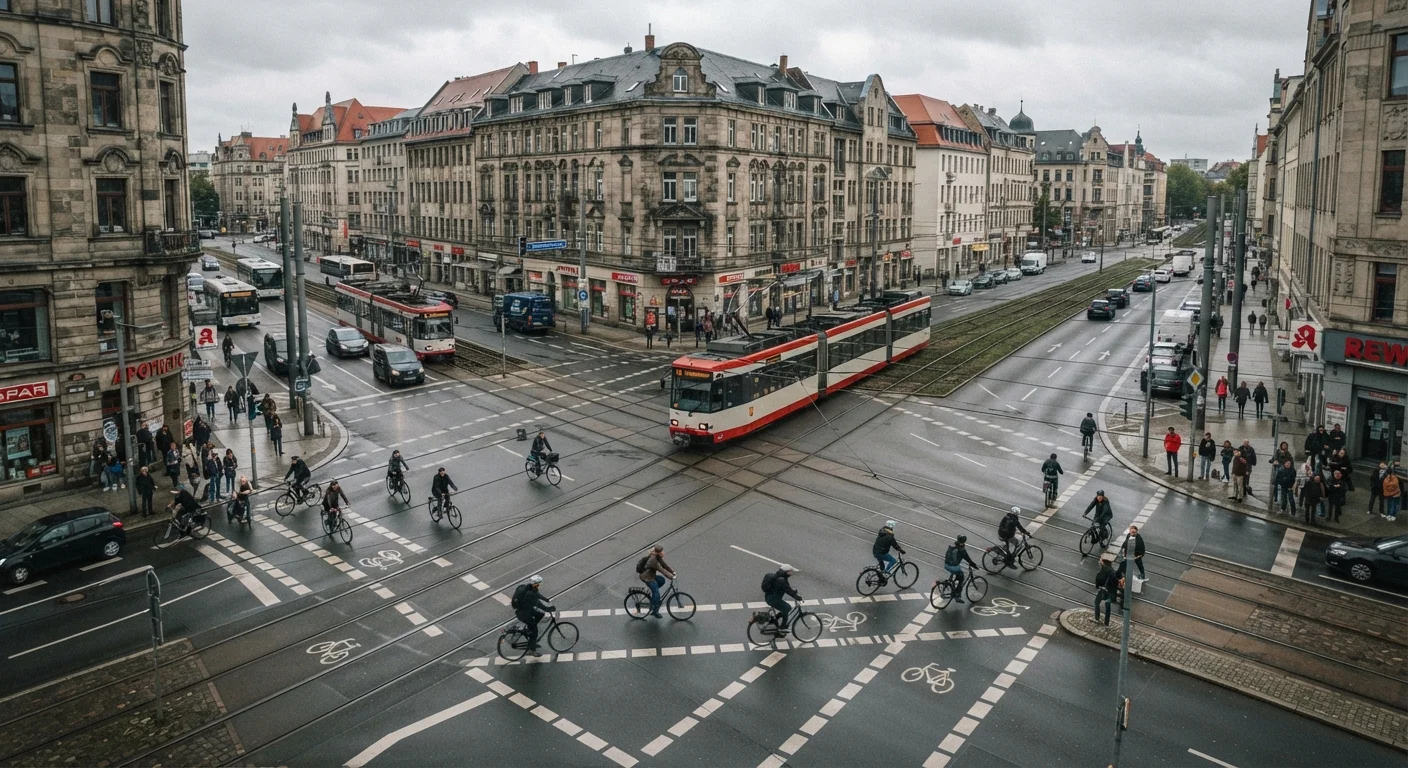
Trams require particular attention. Under §19 StVO, trams generally have priority over other road users when travelling on shared or adjacent roads. When a tram is stopping at a designated halt and passengers are boarding or alighting, drivers must stop and wait - even if no pedestrians are visibly crossing. Overtaking a stationary tram on the right side is only permitted if a traffic island or raised platform separates pedestrians from traffic; otherwise, you must wait until the tram departs and passengers have cleared the road.
Trams turning or crossing an intersection also take precedence over turning vehicles. A car turning left, for example, must yield to an oncoming tram travelling straight - even if the car has a green light. This is a frequent source of confusion in cities such as Munich, Berlin, and Frankfurt where tram networks are extensive. For broader guidance on navigating city traffic safely, City Driving vs. Rural Driving in Germany outlines additional urban hazard patterns worth knowing.
Rechts vor Links
The German right-of-way rule meaning 'right before left.' At uncontrolled intersections, the vehicle approaching from the right has priority. It is the default rule when no signs, signals, or markings override it.
Vorfahrtstraße
A priority road, marked by the yellow diamond sign (sign 306). Drivers on a Vorfahrtstraße have right of way over traffic joining from side roads, regardless of direction.
Rettungsgasse
The emergency corridor that drivers on multi-lane roads must create immediately when traffic comes to a standstill. Vehicles in the left lane move left; all other lanes move right, opening a clear path for emergency services.
StVO
Straßenverkehrs-Ordnung - Germany's Road Traffic Regulations. This federal law defines road user behaviour, including speed limits, right-of-way rules, parking, and obligations toward emergency vehicles.
Haltestelleninsel
A raised tram stop platform or traffic island that physically separates waiting passengers from the carriageway, allowing drivers to pass a stopped tram on the right without endangering pedestrians.
Emergency vehicles - police, fire, and ambulance - hold absolute priority under §38 StVO. On hearing sirens or seeing blue lights, drivers must move to the nearest edge of the road and stop immediately, including on multi-lane roads where forming a Rettungsgasse (emergency corridor) is legally required. Rules for shared roads with cyclists and pedestrians are covered in detail in Shared Roads: Cyclists, Pedestrians, and Drivers in German Traffic Law.