
Speed Limits: What the Law Sets as Default
Under the German StVO (Road Traffic Regulations), speed limits are not uniform across road types - they follow a tiered default system tied to environment.
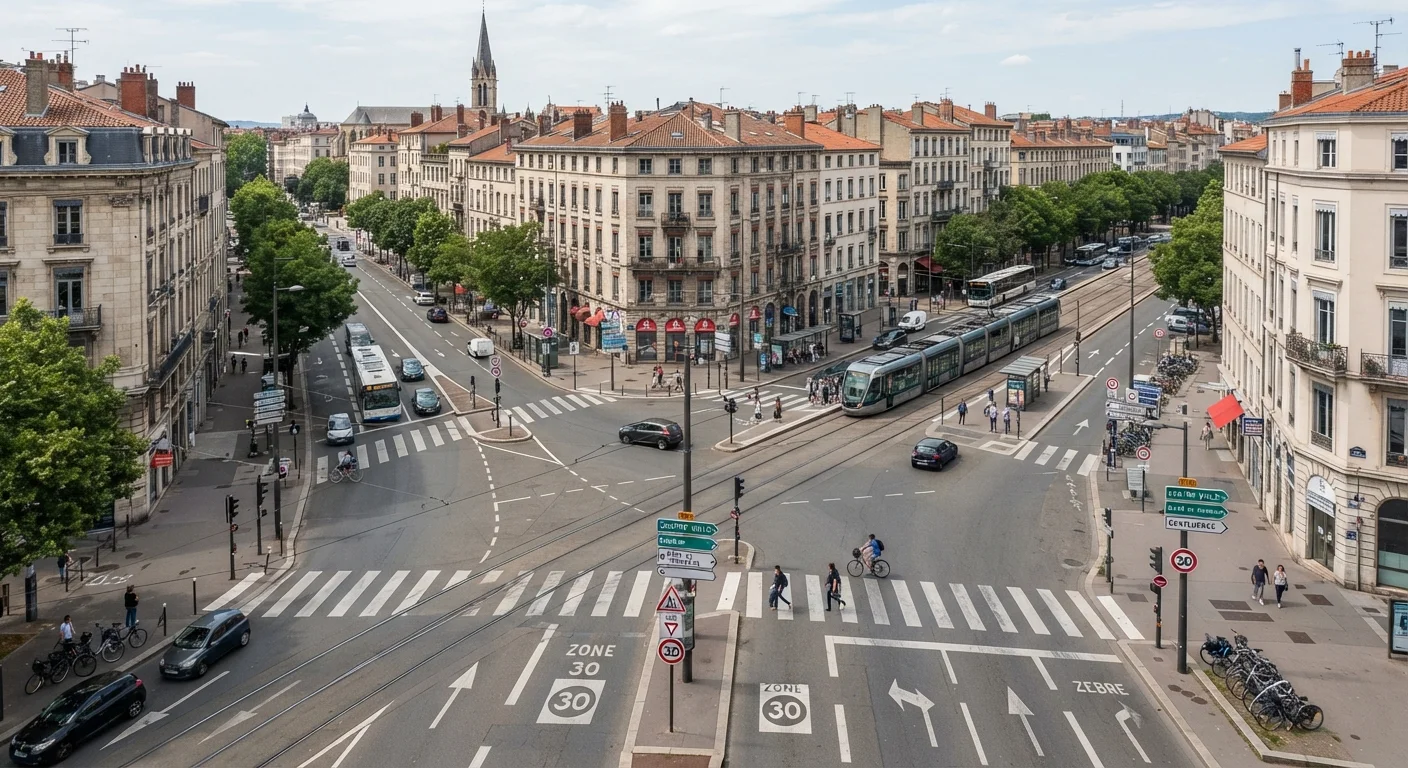
Inside built-up areas, the default limit is 50 km/h. Municipalities may reduce this further: Tempo 30 zones are common near schools, residential streets, and pedestrian-heavy areas. Some city centres operate Verkehrsberuhigte Bereiche (traffic-calmed zones) where pedestrians have full priority and the limit drops to walking pace - roughly 7 km/h. For a full picture of how these limits compare internationally, see urban speed limits across Europe.
Outside built-up areas on rural roads (Landstraßen), the default rises to 100 km/h for cars without trailers. However, this is a ceiling, not a target - road condition, visibility, weather, and advisory signs all affect the appropriate speed. Drivers are legally required to travel at a speed from which they can stop safely within their visible range.
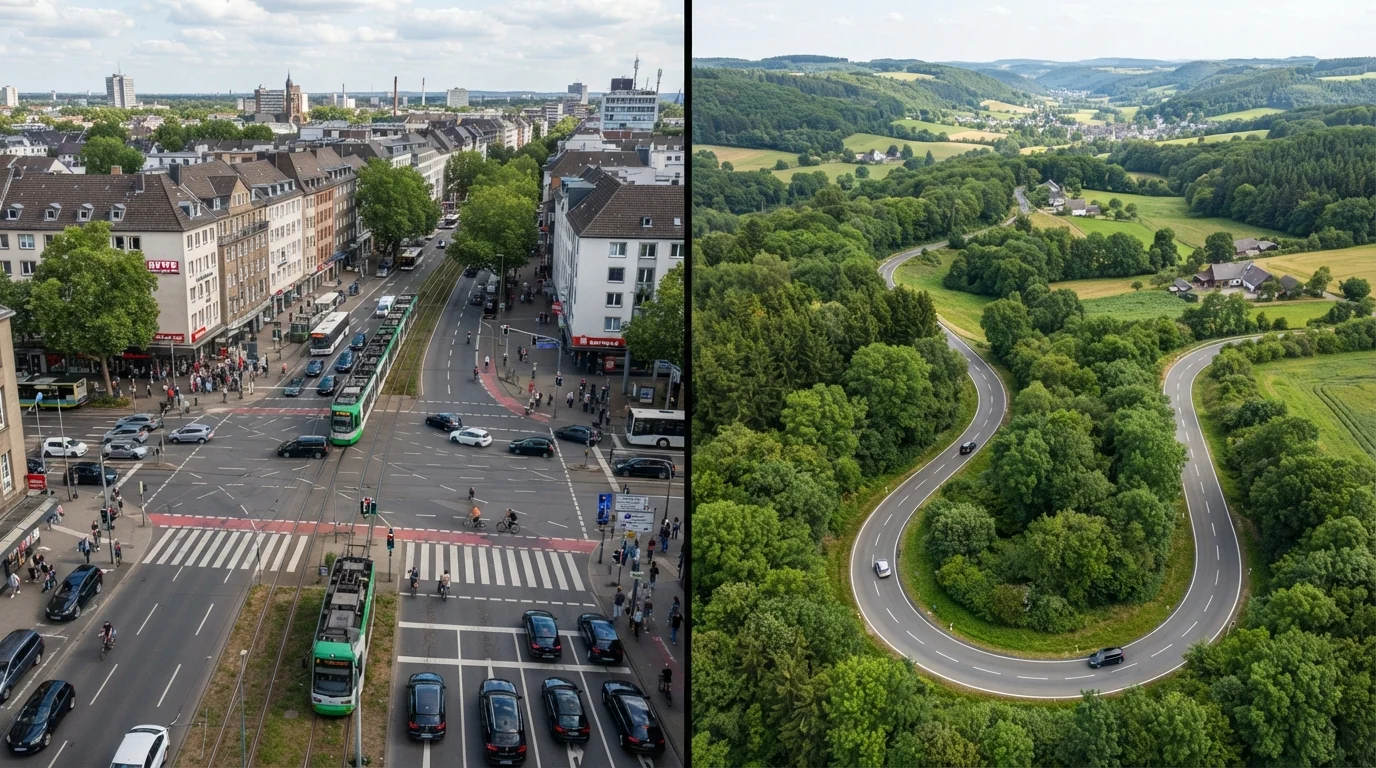
| Criterion | City Driving | Rural Driving |
|---|---|---|
| Default speed limit | 50 km/h (30 km/h in many zones) | 100 km/h for cars |
| Primary hazards | Pedestrians, cyclists, trams | Wildlife, farm vehicles, overtaking |
| Intersection control | Traffic lights and explicit signs | Often unmarked; rechts vor links applies |
| Road markings | Dense: lanes, zones, parking lines | Sparse; sometimes absent on narrow roads |
| Sign density | High - multiple signs per block | Lower; longer gaps between guidance |
| Overtaking rules | Rarely permitted; restricted lanes | Permitted where marked safe; high risk |
| Winter road clearance | Faster gritting and ploughing | Slower; ice persists longer |
| Environmental restrictions | Umweltzonen may restrict older vehicles | No low-emission zone restrictions |
Road Users and Hazard Patterns
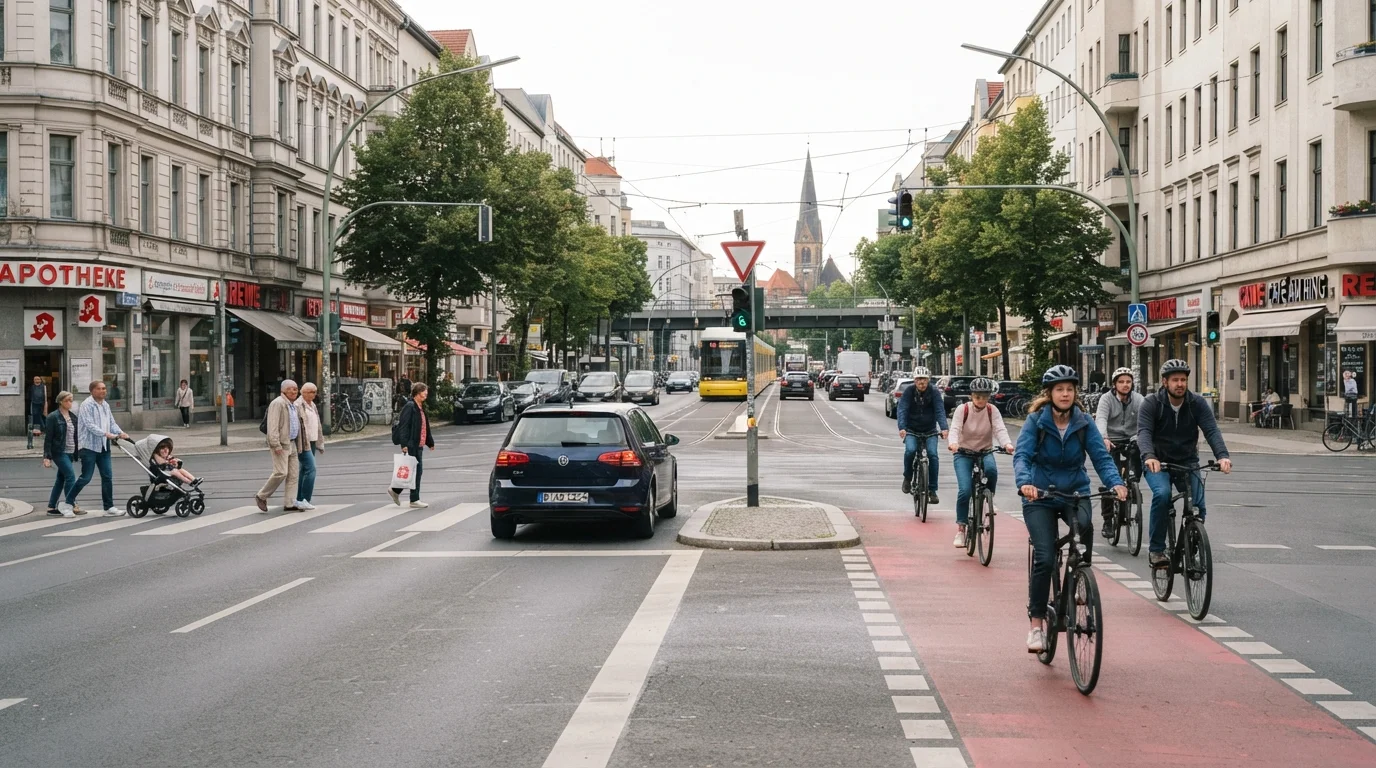
City roads in Germany are genuinely shared spaces. Trams (Straßenbahnen) have priority over most other traffic; failing to yield to a tram is both illegal and dangerous. Cyclists may have dedicated lanes, mixed-use lanes, or share the carriageway - each scenario requires different driver behaviour. Pedestrians have right of way at zebra crossings, and jaywalking, while common, demands driver vigilance regardless of fault. Shared road rules for cyclists, pedestrians, and drivers are worth reviewing before driving in any German city.
Rural roads present a different hazard profile. Wildlife crossings - particularly deer (Rehe) - are most dangerous at dawn and dusk. Agricultural vehicles move slowly and may occupy most of a narrow lane. Village sections within rural routes can appear abruptly, with built-up-area signs reducing the limit immediately to 50 km/h. Missing that sign is a frequent and costly error.
~60%
Rural share of German road fatalities
German Federal Statistical Office (Destatis) data consistently shows rural roads account for roughly 60% of traffic fatalities despite carrying less traffic than urban roads.
30 km/h
Zones covering large parts of German city centres
Many German municipalities have expanded Tempo-30 zones significantly in recent years as part of urban road safety programmes.
Overtaking is another key difference. City overtaking opportunities are limited and tightly regulated. On rural two-lane roads, drivers may overtake - but only when the road ahead is clearly visible, the manoeuvre is safe, and no solid centre line prohibits it. Misjudging oncoming distance at 90-100 km/h is a leading cause of rural head-on collisions.
Signs, Markings, and Navigation Differences
Urban environments in Germany are sign-dense: parking restrictions, zone-entry markers, pedestrian priority indicators, and bus-lane markings accumulate rapidly. Drivers must process multiple sign types within seconds at intersections. Understanding Germany's road sign system is essential groundwork before navigating cities.
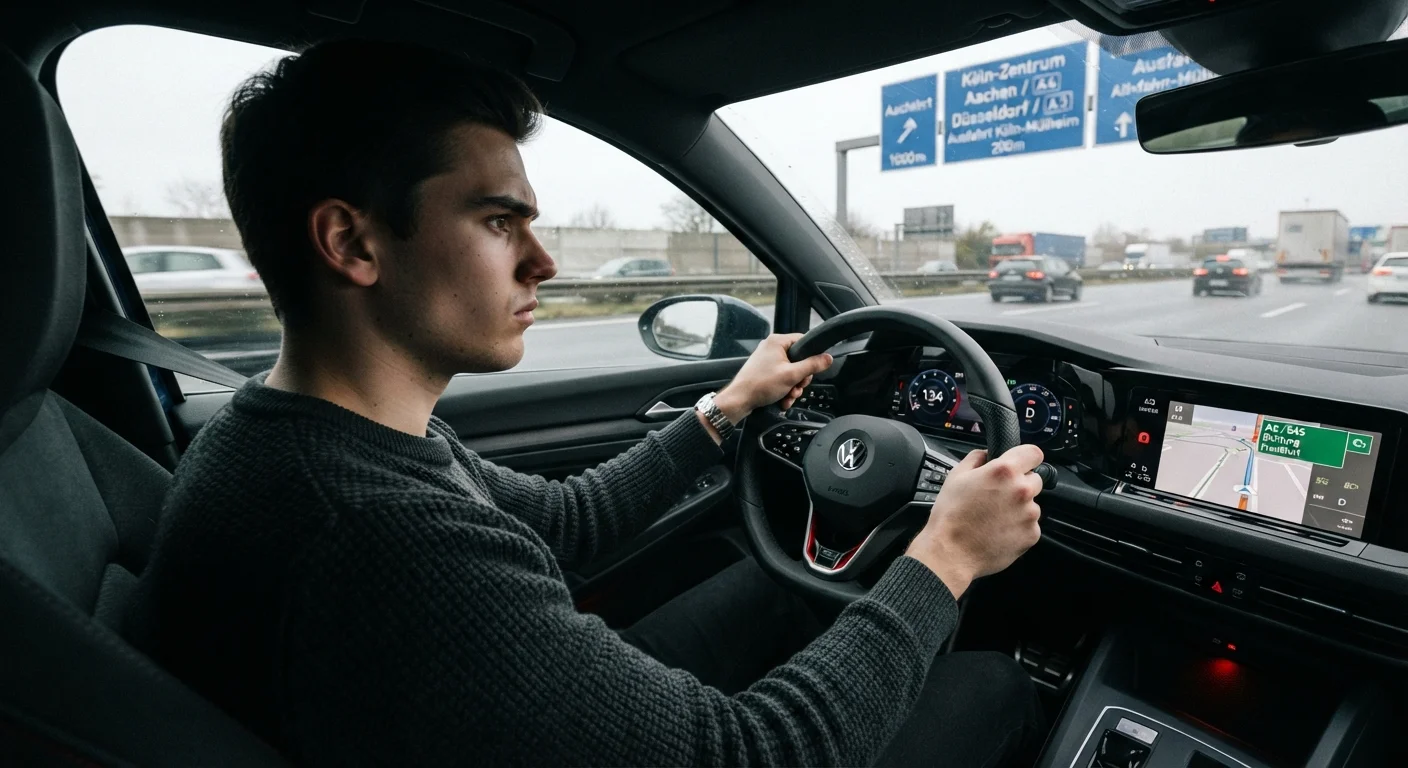
Rural road markings are often simpler but carry high stakes. A broken centre line permits overtaking; a solid line does not. Many rural roads have no centre markings at all on narrower stretches, meaning drivers must self-regulate lateral position. Directional signage may be sparse between villages, and GPS reliance can lead to missed priority roads or unexpected junctions.
Intersection priority also varies. Urban junctions are typically controlled by traffic lights or explicit yield signs. Rural crossroads, by contrast, may be unmarked - reverting to the rechts vor links (right before left) rule, which catches many drivers off guard. Right of way rules at German intersections explains this system in full.
The Rechts vor Links Rule in Rural Areas
At unmarked rural junctions - no traffic lights, no yield signs, no priority road markings - the default German rule applies: traffic from the right has priority. This rule is frequently forgotten on unfamiliar routes. If approaching an unmarked crossroads at rural speeds, reduce your speed sufficiently to yield if required. When in doubt, slow down and look right before proceeding.
Seasonal and Environmental Considerations
Winter conditions affect both environments but in distinct ways. City roads are gritted and ploughed more quickly; rural roads - especially forest sections and elevated routes - can remain icy for hours after urban roads clear. Germany's situational winter tyre requirement means you must fit appropriate tyres whenever conditions demand it, regardless of calendar date. Winter tyre rules in Germany outlines exactly when compliance is required.
Reduced visibility is another rural-specific risk. Fog settles more persistently in valleys and open farmland than in heat-retaining urban areas. Driving in fog at rural speeds without adequate adjustment is a significant safety hazard. German law requires drivers to use fog lights only when visibility drops below 50 metres - misuse carries a fine.
City drivers contending with environmental zones (Umweltzonen) face a different seasonal concern: low-emission zone restrictions that may prohibit older vehicles from entering certain urban areas. These do not apply on rural roads but are a practical reality for city access.
This article provides general information about driving conditions in Germany. Always consult current official regulations (StVO) and local authorities for the latest requirements, as road rules and zone restrictions can change.