
How the Badge System Works
Germany introduced the Umweltplakette system in 2008 to reduce particulate matter and nitrogen oxide concentrations in densely populated urban areas. Vehicles are placed into one of four pollutant groups based on their engine technology and exhaust standard, with each group assigned a colour:
- Category 1 (no badge): Vehicles that do not meet even the minimum threshold - these are effectively barred from all Umweltzonen.
- Category 2 - Red badge: Older vehicles with relatively high emissions; banned from most active zones.
- Category 3 - Yellow badge: Vehicles with moderate emissions; also excluded from most current zones.
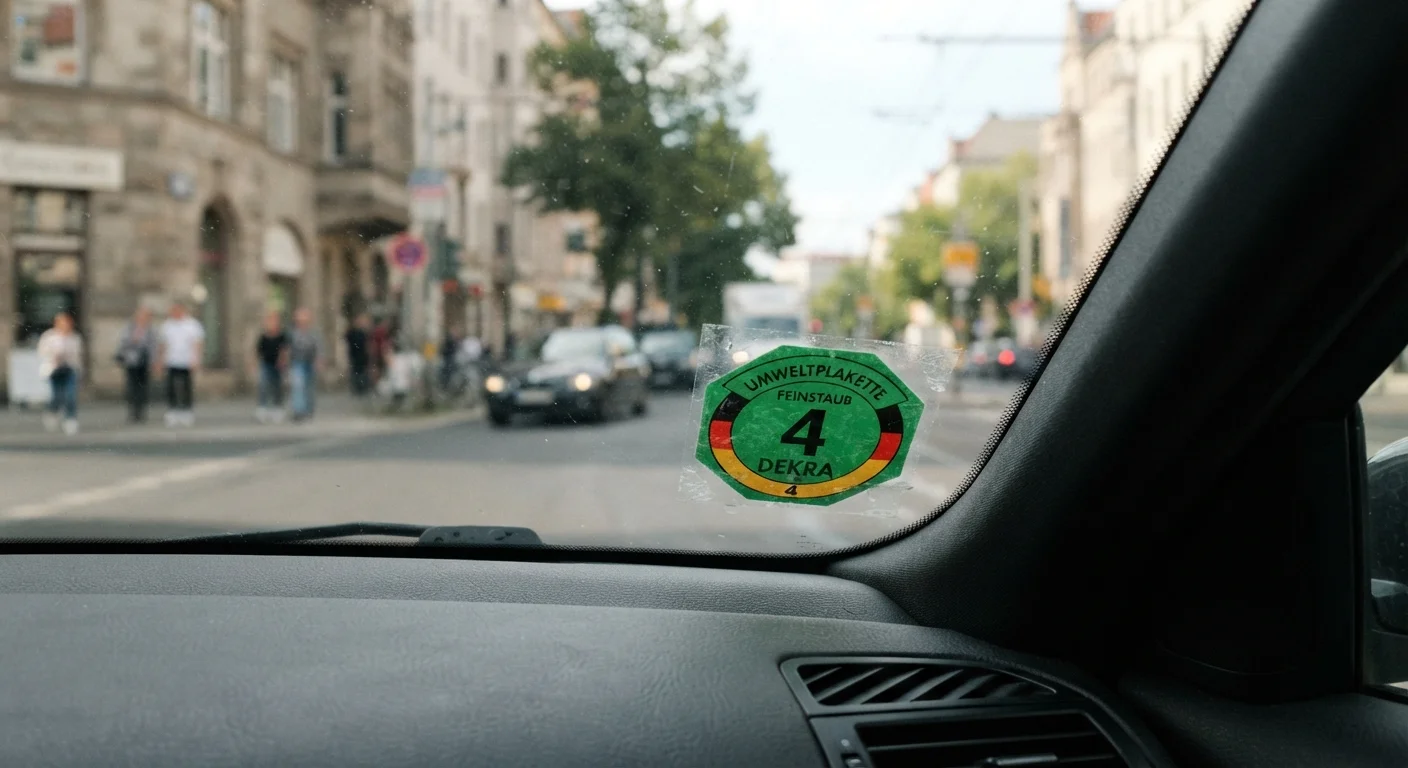
- Category 4 - Green badge: The cleanest petrol and diesel engines, plus alternative-fuel vehicles; accepted in all active Umweltzonen.
The sticker itself displays the category number, a portion of the vehicle's licence plate, and a validity seal from the issuing body. It must be affixed to the inside of the windshield, clearly visible from outside the vehicle. Recognising the road signs that mark zone boundaries is equally important - a circular blue sign with the Umweltzone logo indicates where restrictions begin and end.
Motorcycles Are Generally Exempt
Two-wheeled motor vehicles (motorcycles and scooters) are typically exempt from Umweltplakette requirements and do not need a badge to enter Umweltzonen. This exemption is based on their different emissions profile relative to four-wheeled vehicles. However, local rules can vary, so checking zone-specific regulations for your destination remains advisable.
Which Cities Have Active Umweltzonen?
At their peak, over 70 German cities operated Umweltzonen. A number have since lifted restrictions after air quality targets were met, but major urban centres - including Berlin, Munich, Frankfurt, Cologne, Stuttgart, and Hamburg - continue to operate zones requiring the green badge. Zone boundaries are not always intuitive: some cover entire inner-city areas, while others are limited to specific streets or districts.
Stuttgart stands out as a city that has gone further than the Umweltplakette alone, introducing additional diesel driving bans on certain roads for vehicles not meeting Euro 5 or Euro 6 standards. These bans operate as a separate legal instrument and are not resolved by displaying a green badge. Drivers planning routes through Stuttgart or other cities with supplementary restrictions should consult the relevant municipal authority's guidance before travel.
70+
German cities that have operated Umweltzonen
At their peak, more than 70 municipalities introduced low-emission zones; a number have since removed restrictions after air quality targets were met.
€80
Standard fine for entering without correct badge
Set by the German Bußgeldkatalog (traffic offence catalogue), this fixed penalty applies to all drivers regardless of nationality or vehicle registration country.
2008
Year Germany's Umweltplakette system launched
The scheme was introduced under the 35th Federal Immission Control Ordinance to address urban particulate matter and nitrogen oxide pollution.
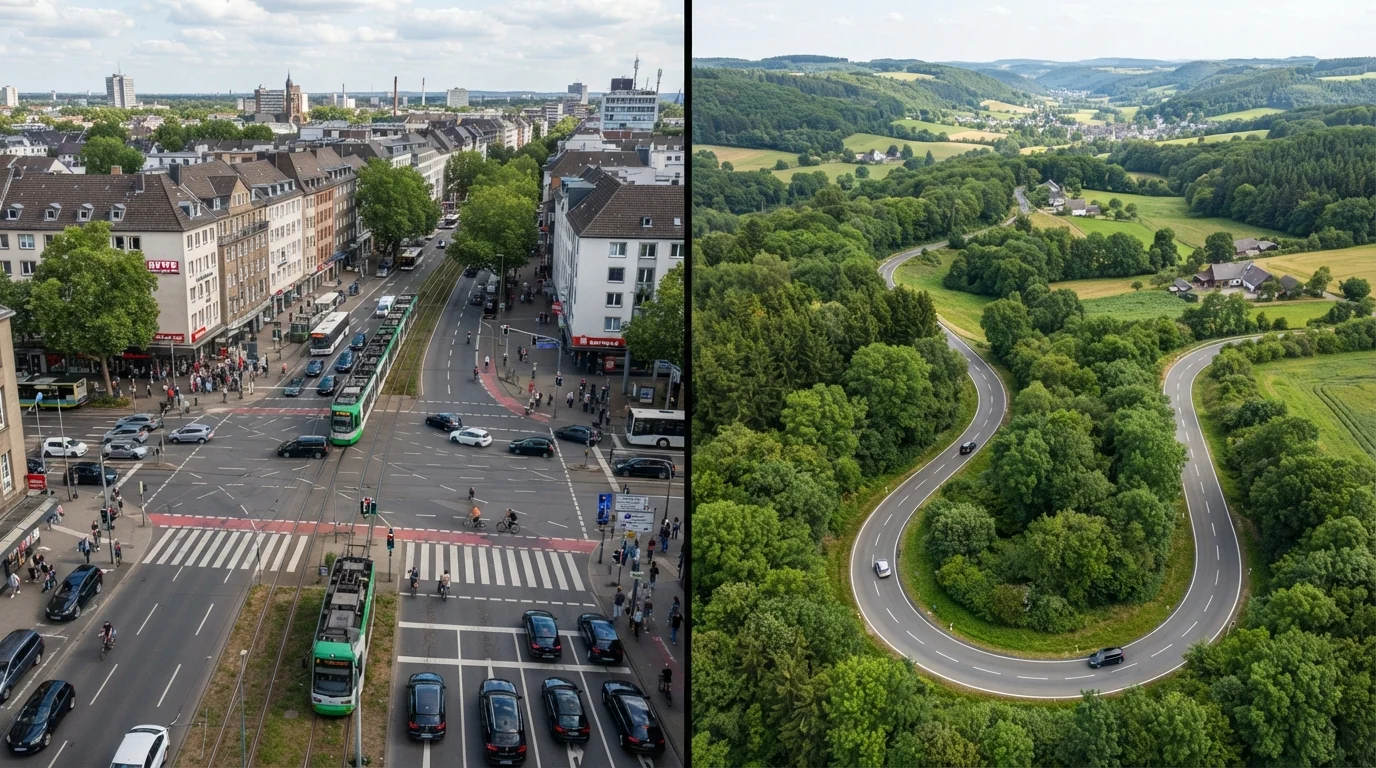
For context on broader urban driving rules - speed limits, pedestrian crossings, and road markings that change significantly in city environments - see our guide to city versus rural driving in Germany.
Obtaining a Badge and Practical Considerations
Getting the correct badge is straightforward for most drivers. Bring your vehicle registration document (Fahrzeugschein or Zulassungsbescheinigung Teil I) to a TÜV, DEKRA, GTÜ, or KÜS inspection station, an authorised workshop, or select petrol stations and post offices. The fee is typically a few euros and the sticker is issued on the spot. Online postal services also exist for drivers who want to prepare before arriving in Germany.
Check Zone Status Before You Travel
Because some cities have lifted their Umweltzone restrictions while others have added supplementary diesel bans, it is worth verifying the current status of your destination's zone before travel. The German Federal Environment Agency (Umweltbundesamt) maintains an online map of active Umweltzonen that is regularly updated. This takes only a few minutes and removes any uncertainty about whether a badge is needed.
Foreign drivers should be aware that the emissions category assigned to a vehicle corresponds to its engine and exhaust specification, not simply its Euro standard label. A vehicle registered abroad is assessed by the same technical criteria. If documentation is in a language other than German, inspection staff can usually work with standard EU registration certificates.
Once obtained, a badge does not expire and does not need to be renewed unless the vehicle changes hands or is significantly modified. There is no digital or app-based equivalent - the physical sticker on the windshield remains the only accepted proof of compliance when enforcement officers check vehicles inside a zone.
Fines, Enforcement, and Edge Cases
Enforcement is carried out by municipal traffic wardens and police. A fixed penalty of €80 applies to any vehicle found inside an Umweltzone without the required badge - or displaying a badge for which that particular zone does not qualify. No licence penalty points are incurred. However, for foreign visitors, the fine can be pursued through cross-border enforcement mechanisms that apply within the EU, so assuming it will go uncollected is not a reliable strategy.
A handful of exemptions exist, but they are narrowly defined. Emergency vehicles, vehicles used for historic events, and certain agricultural machines may be excluded by local regulation. Drivers with disabilities are sometimes granted dispensations by the relevant authority. In all cases, an exemption must be applied for and documented in advance - it cannot be claimed after the fact during an enforcement stop.
Understanding how German road law works more broadly helps drivers navigate these rules with confidence. Our explainer on Autobahn rules covers the legal obligations that apply on Germany's motorway network, complementing the city-centre picture presented here.