
The Speed Advisory: What 'No Limit' Actually Means
Germany's Autobahn is widely associated with unrestricted driving, but the legal picture is more nuanced than the popular image suggests. Approximately 70% of the network does carry posted speed limits - either permanent signs or dynamic limits displayed on overhead gantries. The remaining sections operate under a Richtgeschwindigkeit (advisory speed) of 130 km/h, established by the German Road Traffic Regulations (StVO).
Critically, this is a recommendation, not a maximum. Driving faster is not automatically illegal on unrestricted sections - but it is legally consequential. German courts have consistently found that drivers who exceed 130 km/h and are involved in a collision bear increased liability, even if they were not the primary cause. This doctrine is known as Betriebsgefahr (operational risk), and it can result in partial fault being assigned regardless of circumstances.
~70%
Autobahn sections with posted speed limits
Contrary to popular belief, the majority of Germany's motorway network has defined speed restrictions, according to the German Federal Highway Research Institute (BASt).
130 km/h
Recommended advisory speed on unrestricted sections
The Richtgeschwindigkeit is a legal recommendation under German StVO - exceeding it does not automatically create an offence but significantly affects liability in accidents.
€320
Maximum fine for blocking an emergency corridor
Germany strengthened Rettungsgasse penalties in 2017; offenders also receive 2 points and may face a driving ban in serious cases.
For foreign drivers unfamiliar with the system, the key distinction is: no speed limit sign does not mean no risk or no rules. Vehicle condition, weather, visibility, and traffic density all impose practical and legal limits on what speed is appropriate. Driving faster than conditions safely allow is an offence under §3 StVO irrespective of posted limits.
Lane Discipline: The Rules Are Strict
Germany enforces lane discipline more rigorously than many other countries. Under §7 StVO, drivers must keep to the rightmost lane that their speed and traffic allow. The left lane is for overtaking only - occupying it while not actively passing another vehicle is a violation, even at high speed.
This means that if the right and middle lanes are clear, you must move back regardless of how fast you are travelling. Lane-hogging carries fines ranging from €80 for blocking the passing lane to higher amounts when it causes danger or delay to other road users. Repeated or serious violations can result in points on the German driving licence register (Fahreignungsregister, formerly known as the Flensburg points system).
Check your mirrors before moving left to overtake - on unrestricted sections, vehicles can approach significantly faster than expected. A two-second mirror check may not be enough; extend it to three or four seconds.
Speed differentials between vehicles on unrestricted Autobahn sections can exceed 100 km/h, making closing distances deceptively rapid. This is a leading cause of rear-end collisions on unrestricted stretches.
Signal your intention to return to the right lane as soon as you have completed an overtake - don't wait until you are fully alongside the slower vehicle.
Early signalling communicates intent to drivers behind you who may themselves be travelling at high speed, reducing the risk of aggressive following behaviour and giving everyone adequate reaction time.
Equally prohibited is undertaking - overtaking on the right. §5 StVO bans passing a slower vehicle by moving to a lane on its right. This applies even in slow-moving traffic queues, where instinct might suggest switching to a faster-moving right lane. The only lawful exception is when the left lane is moving slower than the right in congested conditions, where slight differential movement in parallel queues is permitted - but this is a narrow exception, not a loophole.
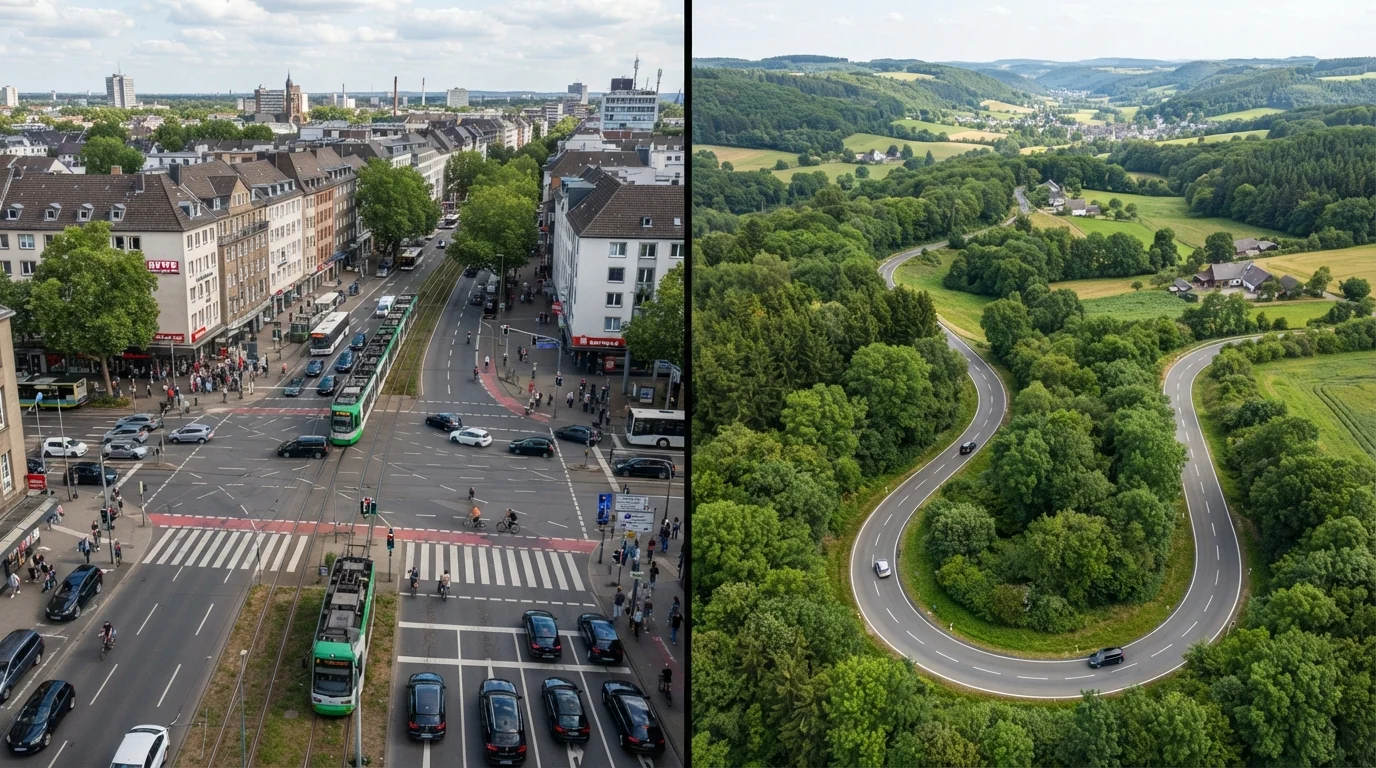
For a broader picture of how German road rules govern different environments, see our comparison of city and rural driving rules.
Minimum Speed, Overtaking, and What's Prohibited
Not all vehicles may use the Autobahn. Mopeds, agricultural machinery, bicycles, and pedestrians are prohibited. Vehicles that cannot sustain at least 60 km/h are also excluded, as they pose a hazard to faster-moving traffic.
Overtaking manoeuvres must be completed promptly. Drivers are not permitted to pull alongside a slower vehicle and match its speed - this constitutes Nötigung (coercion) under German law and can result in criminal proceedings rather than a simple fine. Flashing headlights to pressure another driver to move over is similarly prohibited and treated as aggressive conduct.
Never Reverse or Turn on the Autobahn
If you miss your exit, do not stop, reverse, or attempt a U-turn under any circumstances. Continue to the next junction and double back. Reversing on a motorway or its slip roads is a serious criminal offence under §18 StVO and poses an extreme risk to life - both yours and that of other road users travelling at speed.
It is also worth noting that stopping, turning, and reversing are strictly forbidden on the Autobahn and its entry and exit slip roads. If you miss an exit, you must continue to the next one - attempting to reverse even a short distance is illegal and extremely dangerous at motorway speeds.
Hard Shoulder and Emergency Corridor Rules
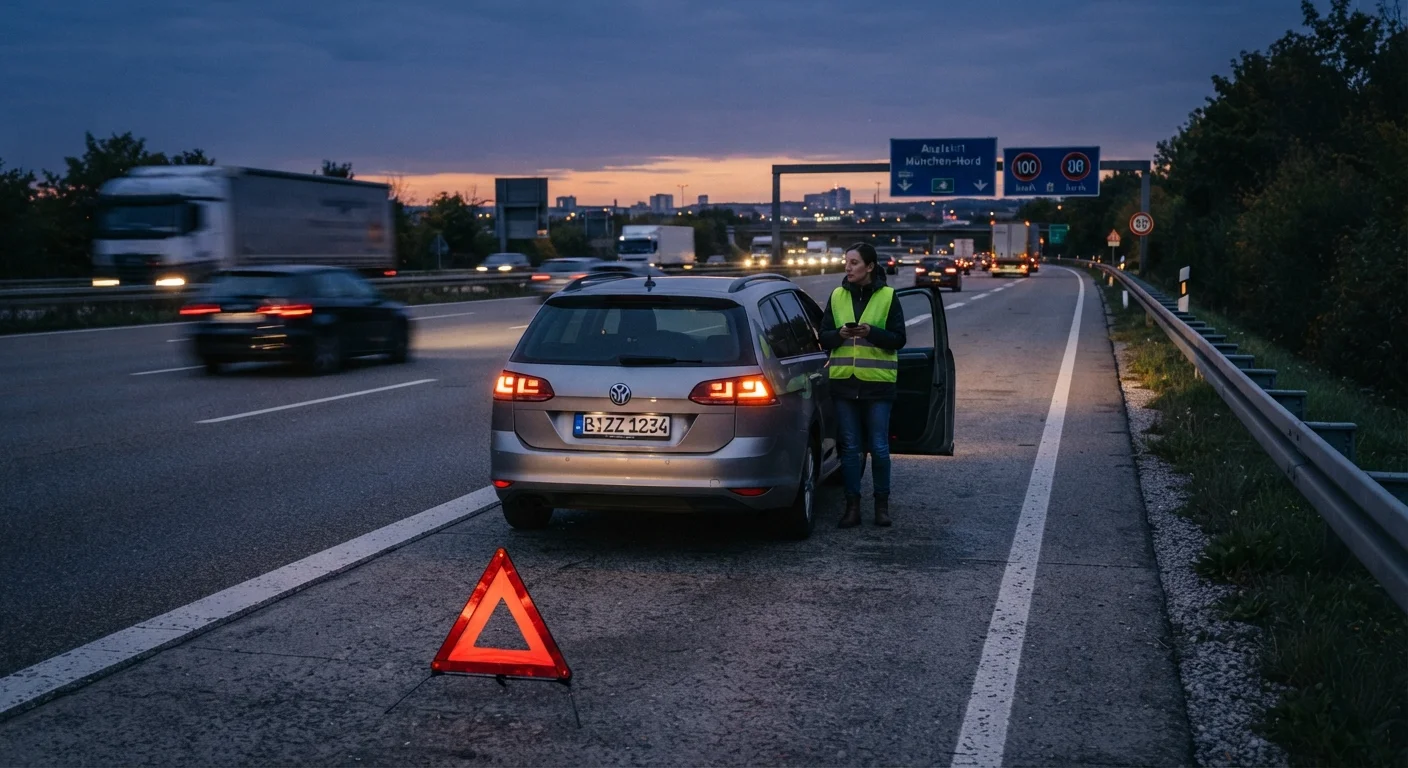
The hard shoulder (Standstreifen) is reserved exclusively for genuine breakdowns and emergencies. Using it as a rest stop, to bypass a queue, or to take a phone call is illegal and punishable by fines. If your vehicle becomes undriveable, pull as far left onto the hard shoulder as safely possible, switch on hazard lights immediately, and place a warning triangle at a minimum of 100 metres behind the vehicle. Our dedicated guide on motorway breakdown procedures covers the full legal sequence.
Since 2017, all drivers in Germany are legally required to form a Rettungsgasse (emergency corridor) whenever traffic comes to a standstill on a motorway or multi-lane road. Vehicles in the leftmost lane move as far left as possible; all other lanes move right, creating a clear passage down the middle for emergency services. The corridor must be formed as soon as traffic stops - waiting until sirens are audible is too late and carries a fine of up to €320 plus two points.
Form the Emergency Corridor Early
The legal obligation to form a Rettungsgasse applies the moment traffic comes to a complete standstill - not when you hear sirens. As soon as vehicles ahead of you stop, begin moving to your respective side immediately. Pre-positioning correctly ensures emergency services can pass without delay and keeps you compliant from the outset.
Variable Speed Limits and Gantry Signals
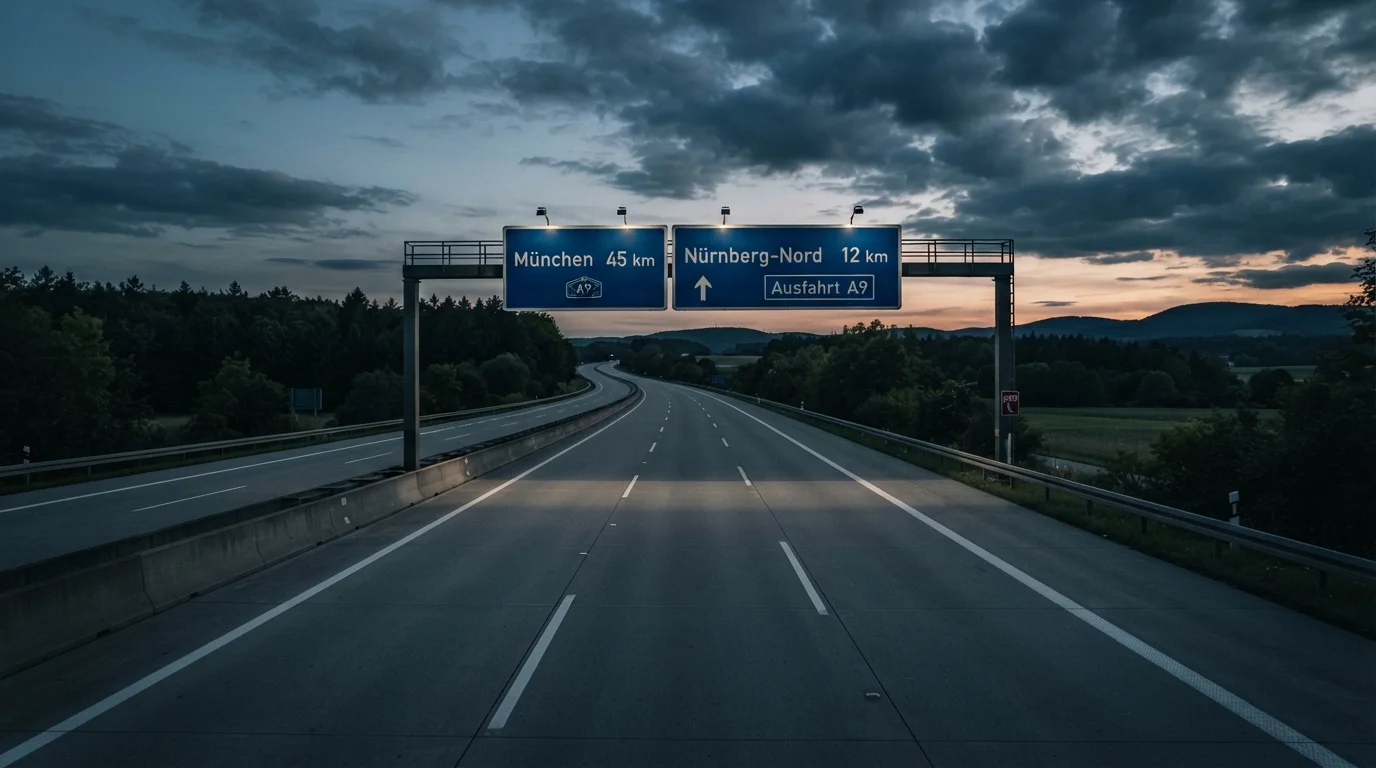
Sections of the Autobahn - particularly around major cities and high-traffic corridors - are equipped with overhead gantry signs capable of displaying dynamic speed limits, lane closures, and hazard warnings. These limits are legally binding the moment they are displayed and are typically enforced by fixed speed cameras mounted on or near the gantries.
A red cross above a lane means that lane is closed and must not be used. A flashing yellow light signals a hazard ahead - reduce speed and increase following distance immediately. When the gantry clears and shows no symbol or a raised limit, normal rules apply again. Ignoring gantry signals is treated as seriously as ignoring fixed road signs.
Gantry Limits Apply Even When Roads Look Clear
Dynamic limits displayed on overhead gantries are frequently activated in response to incidents or hazards that are not yet visible to the driver. Do not assume an empty-looking road means the limit is unnecessary - fixed cameras enforce these limits automatically, and penalties apply from the moment the sign is illuminated. Always comply immediately.
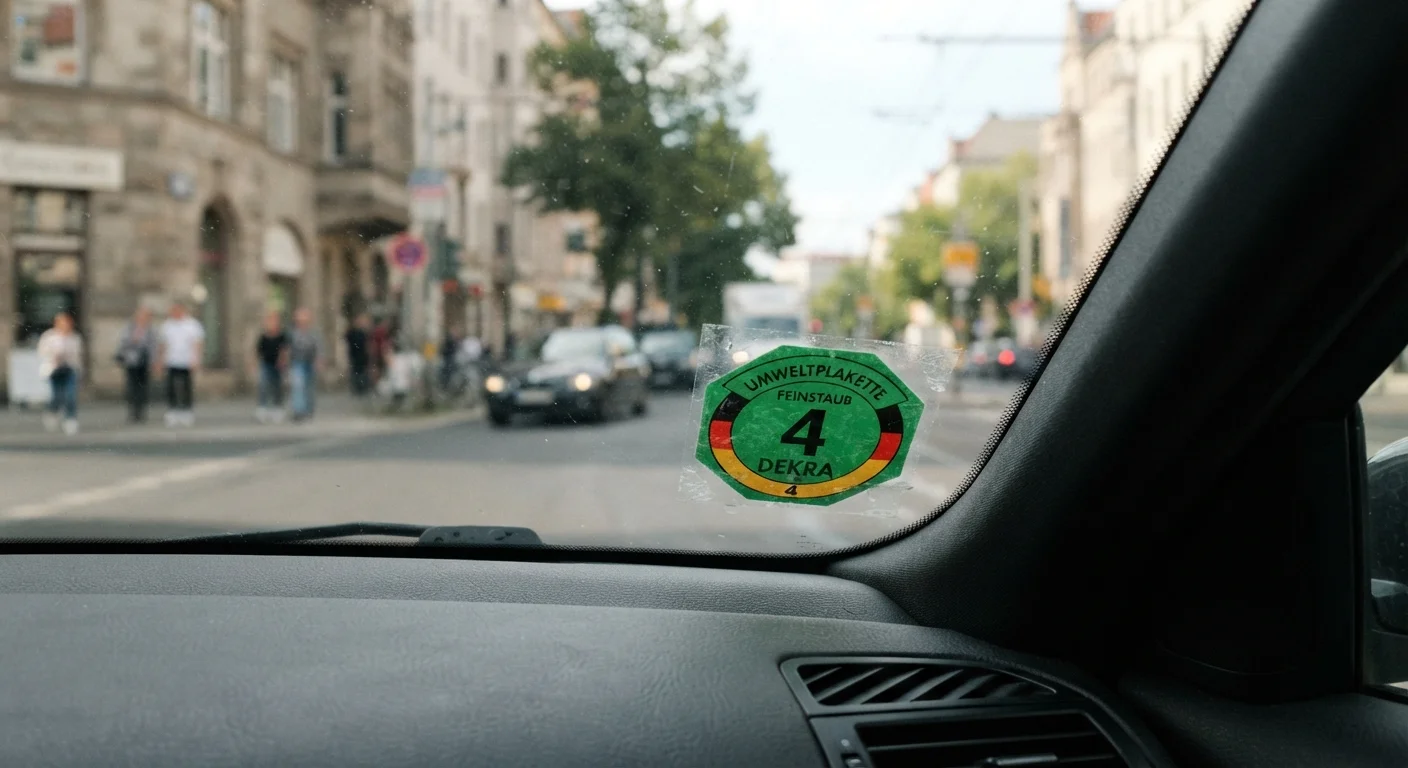
Variable limits are also used to manage pollution episodes: some urban Autobahn sections reduce permitted speeds during high-particulate-matter conditions to curb emissions. This intersects with Germany's broader environmental zoning system - for context on how vehicle emissions are regulated on urban roads, see our article on the Umweltplakette environmental badge.
What Drivers Must Carry and Check Before Joining
German law requires all drivers to carry a valid driving licence, vehicle registration document (Zulassungsbescheinigung Teil I), and proof of current liability insurance. Foreign drivers using an EU licence are generally permitted to drive in Germany without an International Driving Permit, though non-EU licence holders should verify requirements specific to their country of issue.
Vehicle equipment matters too. A warning triangle and first-aid kit are compulsory in all vehicles in Germany. High-visibility vests are not currently mandated for private car occupants under German law (unlike in some neighbouring countries), but they are strongly recommended - particularly given hard-shoulder breakdown situations. During winter months, winter tyre requirements apply situationally and must be met before driving on any German road, including the Autobahn.
For new licence holders, Autobahn entry can feel daunting. Understanding the rules in advance - including right-of-way conventions on approach roads - significantly reduces risk. A broader review of first-year driving errors is also worth consulting before any long motorway journey.
This article provides general information about German road traffic law and is not a substitute for official legal or regulatory guidance. Laws and enforcement practices may change; consult official sources such as the German Federal Motor Transport Authority (Kraftfahrt-Bundesamt) or a qualified legal professional for advice specific to your situation.