
The Law: What Section 2(3a) StVO Actually Says
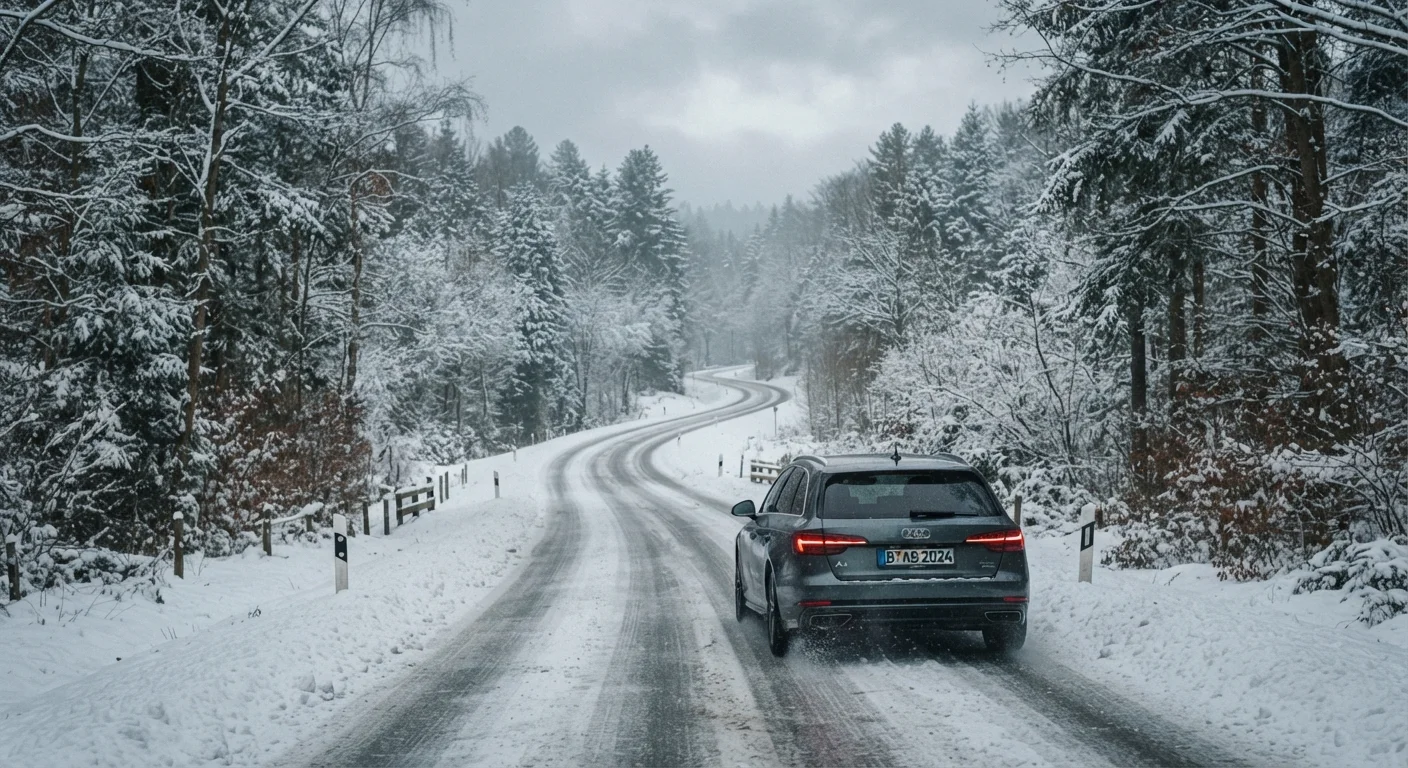
Germany's winter tyre rule is enshrined in Section 2(3a) of the Straßenverkehrs-Ordnung (StVO), the national road traffic code. The provision does not name a start or end date. Instead, it states that when roads are covered by ice, snow, slush, or frost, vehicles must be equipped with tyres that are suitable for those conditions.
This situational framing is significant. A cold snap in late October triggers the requirement just as firmly as a blizzard in February. Equally, a dry and mild December means no legal obligation applies - though most safety experts still recommend fitting winter tyres as a precaution once temperatures consistently drop below 7°C, because rubber compound performance degrades noticeably below that threshold.
Penalties for non-compliance are relatively modest by European standards - a €60 fine, or €80 if your vehicle causes a traffic obstruction - but the larger financial risk lies elsewhere. If you are involved in an accident on wintery roads while running summer tyres, your insurer can invoke contributory negligence, potentially reducing your claim payout significantly. See also our guide on Autobahn rules and legal obligations for a broader picture of road law in Germany.
No Fixed Winter Dates in German Law
Unlike some European countries - such as Finland or Sweden - Germany does not legislate specific calendar dates for mandatory winter tyres. The obligation is purely conditional on road surface state. This means a driver can technically use summer tyres throughout December if roads remain dry and frost-free, though this is rarely advisable given unpredictable weather patterns.
Which Tyres Qualify: M+S, 3PMSF, and All-Season
Not every tyre labelled for winter use meets Germany's legal standard equally. Understanding the sidewall markings is essential.
- Three-Peak Mountain Snowflake (3PMSF): The gold standard. This symbol - a snowflake inside a mountain outline - indicates the tyre has passed a standardised performance test on snow. It fully satisfies the StVO requirement in all scenarios.
- M+S only (Mud and Snow): Tyres manufactured before January 1, 2018 bearing only this marking were grandfathered in. Those produced from that date onward require the 3PMSF symbol alongside M+S to be considered fully compliant. Many budget all-season tyres carry only M+S; check the production date (DOT code on the sidewall) if uncertain.
- All-season (four-season) tyres: Legally acceptable in wintery conditions provided they carry the 3PMSF snowflake. They are a practical choice for drivers in regions with mild winters, though dedicated winter tyres typically outperform them in severe snow and ice.
€60
Standard fine for non-compliant winter tyres
Under Section 2(3a) StVO, driving without appropriate tyres in wintery conditions incurs a €60 fine, rising to €80 if the vehicle causes a traffic obstruction.
4 mm
Recommended minimum winter tyre tread depth
While the legal minimum is 1.6 mm, the ADAC and major tyre safety bodies recommend at least 4 mm tread depth on winter tyres for effective braking on snow and ice.
7°C
Temperature threshold for winter tyre performance
Below 7°C, summer tyre rubber compounds harden measurably, reducing grip - a key reason tyre experts advise switching before the first frost or snowfall.
Minimum tread depth under German law is 1.6 mm for all tyres, but tyre safety bodies and the ADAC (Germany's largest automobile association) consistently recommend a minimum of 4 mm for winter tyres to maintain safe braking distances on cold, wet, or snowy surfaces.
Practical Timing: When to Swap and What to Watch For
Because the law is condition-based, drivers bear the responsibility of monitoring forecasts and road conditions. The informal German rule of thumb - "O bis O" (October to Easter) - offers a useful seasonal guide but is not a legal substitute for reading actual road conditions.
In practice, the safest approach is to switch to winter or all-season tyres with the 3PMSF rating once daily temperatures regularly fall below 7°C. At that point, summer tyre rubber stiffens, extending braking distances even on dry roads. Waiting for the first snowfall is too late: a sudden overnight frost can make roads hazardous before any visible snow accumulates.
Switch Before the First Frost, Not After
Don't wait for visible snow to fit winter tyres. Black ice forms when temperatures drop to or below 0°C on damp roads - often before any snowfall. Fitting winter or 3PMSF all-season tyres when forecasts consistently show temperatures below 7°C gives you a safety margin and keeps you legally protected from the moment conditions change.
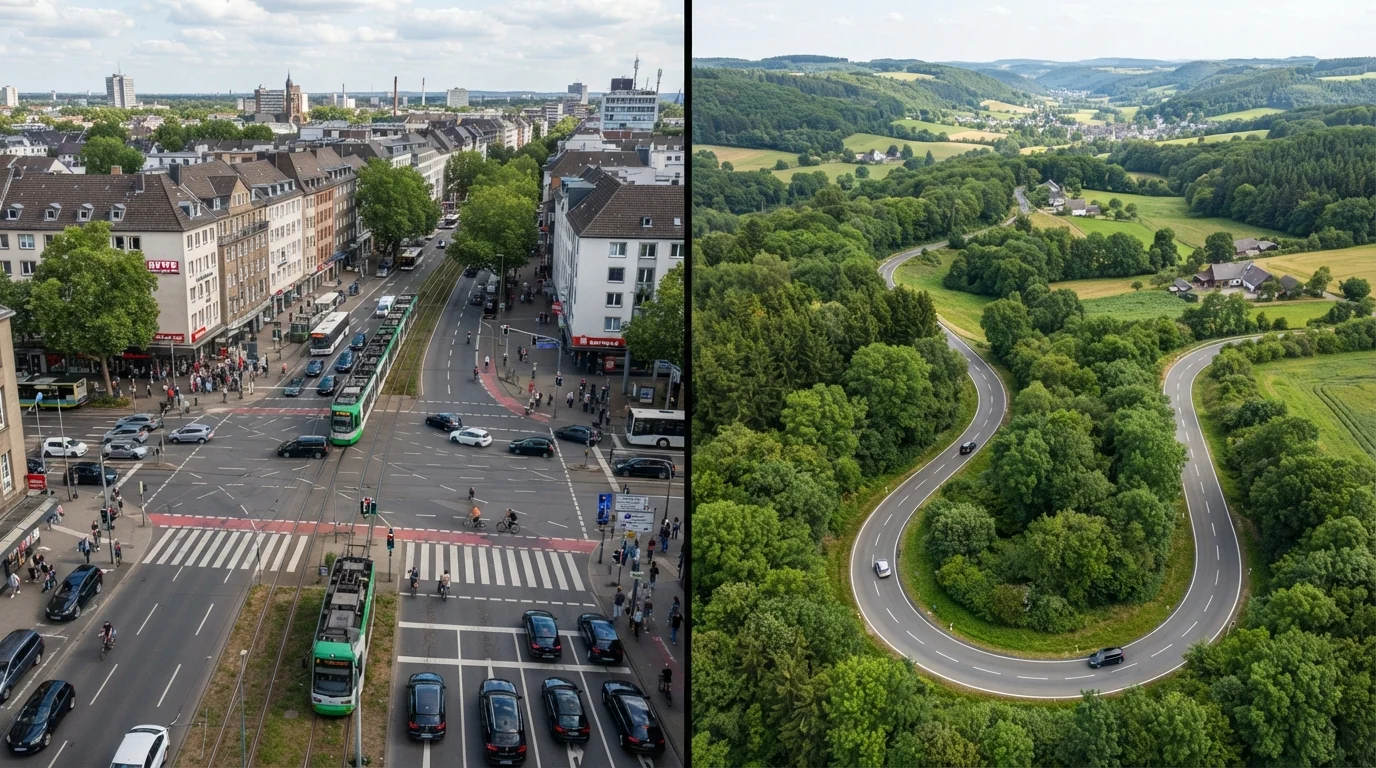
Drivers travelling through varied German landscapes - such as crossing from the Rhine Valley into the Black Forest or the Bavarian Alps - should account for rapid elevation-related weather changes. Rural and urban driving conditions in Germany differ considerably, and rural mountain roads can be icy when city streets are clear.
Foreign drivers transiting Germany are subject to the same situational obligation. Countries such as Austria and Switzerland operate separate but comparably strict tyre and chain requirements, so cross-border planning matters.
Insurance, Liability, and the Contributory Negligence Risk
The €60 fine is, for most drivers, the least concerning consequence of non-compliance. The more significant risk is civil liability. Under German tort law, if an accident occurs and investigators determine that inappropriate tyres contributed to the outcome, the driver can be found partially or substantially at fault - even if another party was the primary cause.
This contributory negligence finding can affect both third-party liability (Kfz-Haftpflicht) and comprehensive (Vollkasko) insurance claims. While insurers cannot legally void third-party cover entirely for this reason, they can - and do - seek to recover a portion of paid claims from the at-fault driver. The exact reduction depends on the circumstances and the degree to which tyre condition contributed to the incident.
Keeping documentation - such as receipts showing when tyres were fitted and tread depth readings - provides useful evidence should a dispute arise. If your vehicle breaks down in winter conditions, review our guide on motorway breakdowns and your legal obligations to understand the additional safety steps required.
This article provides general legal and safety information about German road regulations and is not a substitute for personalised legal or insurance advice. Regulations may be updated; always verify current requirements with an official source or qualified adviser.