

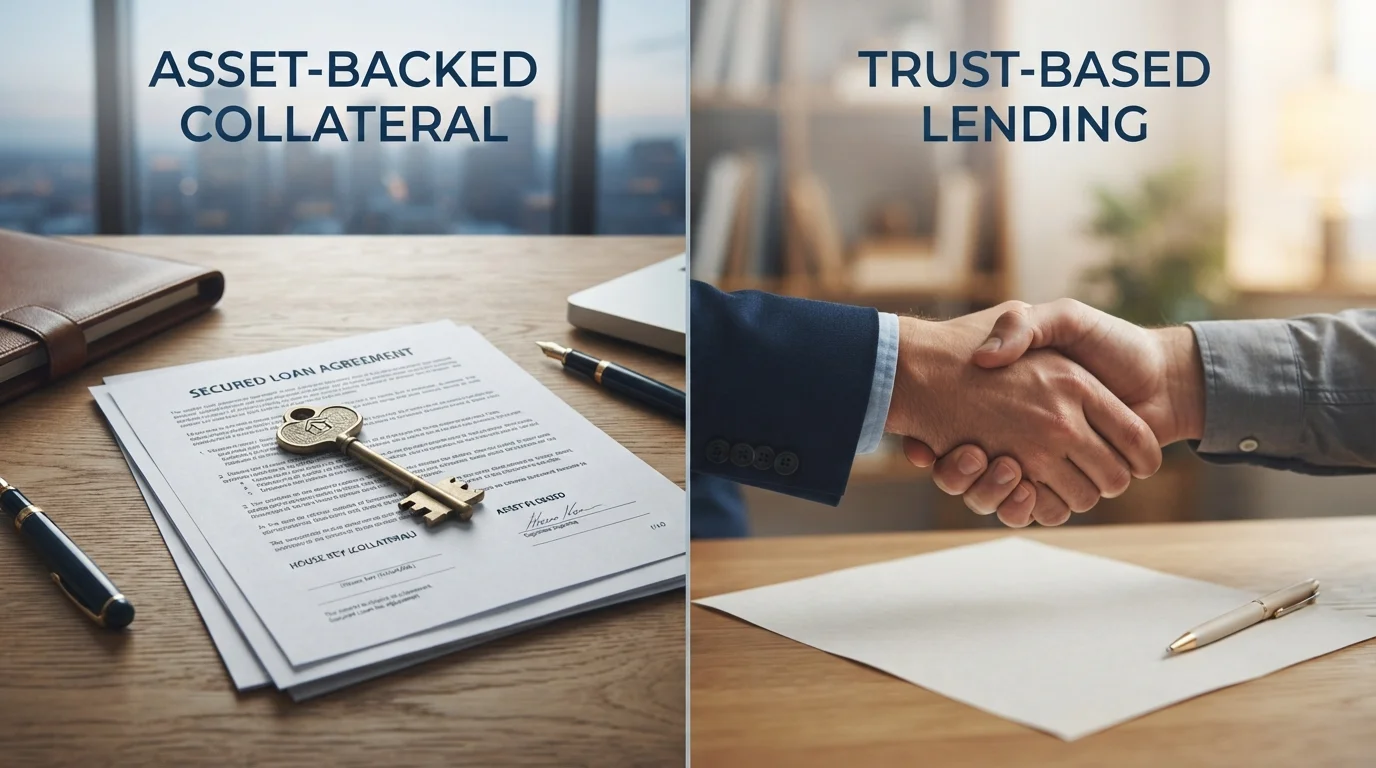
The Core Distinction: What Collateral Actually Does
At its simplest, the difference between secured and unsecured debt comes down to one question: has the borrower pledged an asset to back the loan? If yes, the debt is secured. If no, it is unsecured.
Collateral is an asset - a home, a vehicle, a savings deposit - that a lender can legally claim if the borrower stops repaying. That claim is formalised through a lien, a legal right attached to the asset until the debt is paid off. Because the lender has a concrete fallback, they face less risk and are typically willing to offer lower interest rates and longer repayment terms.
Unsecured debt involves no such pledge. The lender extends credit based on the borrower's credit history, income, and overall financial profile. If repayment fails, the lender cannot automatically seize property - they must instead pursue the borrower through legal or collections channels, which is slower, less certain, and more costly for the lender. That extra risk is passed on to borrowers in the form of higher interest rates.
For a plain-language foundation on how debt works more broadly, see our introduction to how debt functions.
| Criterion | Secured Debt | Unsecured Debt |
|---|---|---|
| Collateral required | Yes - asset pledged to lender | No - credit profile only |
| Typical interest rates | Generally lower | Generally higher |
| Lender's remedy on default | Repossession or foreclosure | Collections, legal judgment |
| Common examples | Mortgages, auto loans | Credit cards, personal loans |
| Approval criteria | Asset value + creditworthiness | Creditworthiness and income |
| Risk to borrower | Asset loss if default occurs | Credit damage, legal action |
Common Examples in Everyday Life
Understanding these categories is easier with real examples.
Secured debt in practice
- Mortgages: The home itself serves as collateral. If payments stop, the lender can initiate foreclosure to recover the property.
- Auto loans: The vehicle is the collateral. Lenders can repossess it if the borrower defaults.
- Secured credit cards: Backed by a cash deposit, often used to build or repair credit history.
Unsecured debt in practice
- Credit cards: No asset is pledged. Rates are higher to compensate lenders for the elevated risk.
- Personal loans: Issued based on creditworthiness; no collateral required.
- Student loans: Typically unsecured, though government-backed versions carry their own rules and repayment structures.
These categories often intersect with the broader structure of major consumer debt types, where the secured or unsecured nature of a loan shapes its terms significantly.
~65%
US households carrying some form of debt
Federal Reserve survey data consistently shows that the majority of American households hold at least one form of debt, with mortgages being the most common secured category.
3-10%+
Typical rate gap between secured and unsecured loans
The interest rate difference between secured products like mortgages and unsecured products like personal loans or credit cards can be substantial, reflecting the lender's differing risk exposure.
What Default Looks Like Under Each Structure
Default - failing to meet repayment obligations - plays out very differently depending on whether debt is secured or unsecured.
With secured debt, default gives the lender the right to act against the collateral. For a mortgage, this means foreclosure proceedings that can result in losing a home. For an auto loan, repossession can happen relatively quickly. These outcomes are serious and can be financially destabilising, which makes it particularly important to understand what you're pledging before signing.
With unsecured debt, there is no direct asset to claim. Lenders typically escalate through a sequence: internal collections, sale of the debt to a third-party collections agency, and ultimately a court judgment. A judgment can lead to wage garnishment or bank account levies in some jurisdictions, so unsecured debt is not without serious consequences - it simply follows a different path.
Both outcomes damage your credit record, which affects future borrowing capacity. Our article on how debt, credit scores, and credit reports connect explains this relationship in more detail.
Secured Debt and Bankruptcy: A Key Nuance
In bankruptcy proceedings, secured and unsecured debt are treated differently. Secured creditors generally have priority access to the pledged asset, while unsecured creditors may recover far less. Bankruptcy law is complex and varies by jurisdiction. If you are facing serious debt difficulties, consulting a qualified legal or financial professional is strongly advisable before taking any action.
How to Think About This When Borrowing
Neither secured nor unsecured debt is inherently better - each fits different situations and carries different trade-offs worth evaluating carefully.
When considering secured borrowing, ask yourself what it means to put that asset on the line. A lower interest rate is only a benefit if repayment is realistic. If circumstances change and repayment becomes difficult, the collateral - often something of significant personal or financial value - is directly at risk.
With unsecured debt, the absence of collateral risk does not mean lower stakes. Higher interest rates compound over time, and missed payments on unsecured debt still result in serious credit and legal consequences.
It can also help to consider how the type of debt fits your overall borrowing picture. Your debt-to-income ratio - how much of your monthly income goes toward debt repayment - matters to lenders regardless of whether a loan is secured or not. And if you're wondering how secured and unsecured debt compare structurally to revolving versus instalment products, our piece on revolving credit vs. instalment debt covers that distinction clearly.
This article is for general informational and educational purposes only. It does not constitute personalised financial, legal, or investment advice. For guidance specific to your situation, consult a qualified financial professional.