
Why Caffeine Numbers Are Confusing
Most people have a rough sense that coffee is stronger than tea, and that energy drinks are potent. But the actual milligram figures - and what they mean for the body - are rarely explained clearly. A single espresso shot and a large energy drink can contain similar amounts of caffeine, yet they feel very different to drink. Understanding why starts with looking at the numbers honestly.
| Caffeine in one espresso shot | 60-80 mg (EFSA Comprehensive European Food Consumption Database) |
| Caffeine in a standard 250 ml energy drink | 75-80 mg (Typical product specification; varies by brand) |
| Caffeine in matcha (whisked, 150 ml) | 50-80 mg (Varies by grade and quantity of powder used) |
| EFSA general daily reference point for adults | Up to 400 mg (EFSA Scientific Opinion on caffeine safety, 2015) |
| Caffeine in cola (355 ml can) | 30-45 mg (Typical formulation; check product label for exact figure) |
| Highest caffeine per serving (common drinks) | Cold brew, 100-200 mg (Depends heavily on brew ratio and steep time) |
Caffeine content in beverages depends on several factors: the type of plant the caffeine comes from, how the drink is prepared, the serving size, and whether caffeine has been added artificially. This last point matters for label-reading. If you want to dig deeper into what drink labels are actually telling you, see our guide to fruit drink labelling for an example of how packaging language shapes perception.
A Drink-by-Drink Breakdown
Here is a factual overview of typical caffeine ranges for the most commonly consumed drinks. These are approximate figures based on published food science references - individual products and preparation methods vary.
| Drink | Typical Serving | Caffeine Range (mg) |
|---|---|---|
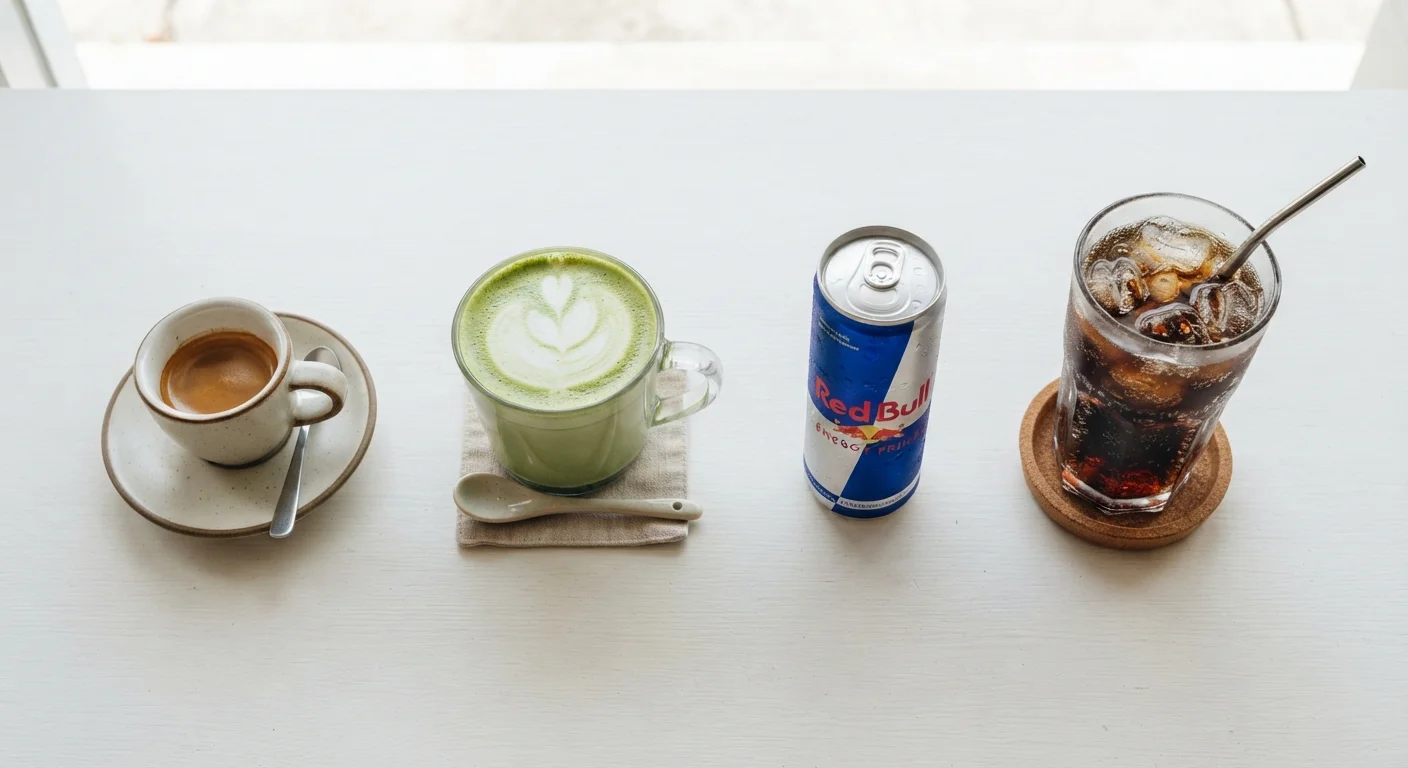
| Espresso | 30 ml (1 shot) | 60-80 mg |
| Filter/drip coffee | 240 ml | 80-140 mg |
| Cold brew coffee | 240 ml | 100-200 mg |
| Black tea | 240 ml | 40-70 mg |
| Green tea | 240 ml | 20-45 mg |
| Matcha (whisked) | 150 ml | 50-80 mg |
| Cola (standard) | 355 ml can | 30-45 mg |
| Energy drink | 250 ml can | 75-80 mg |
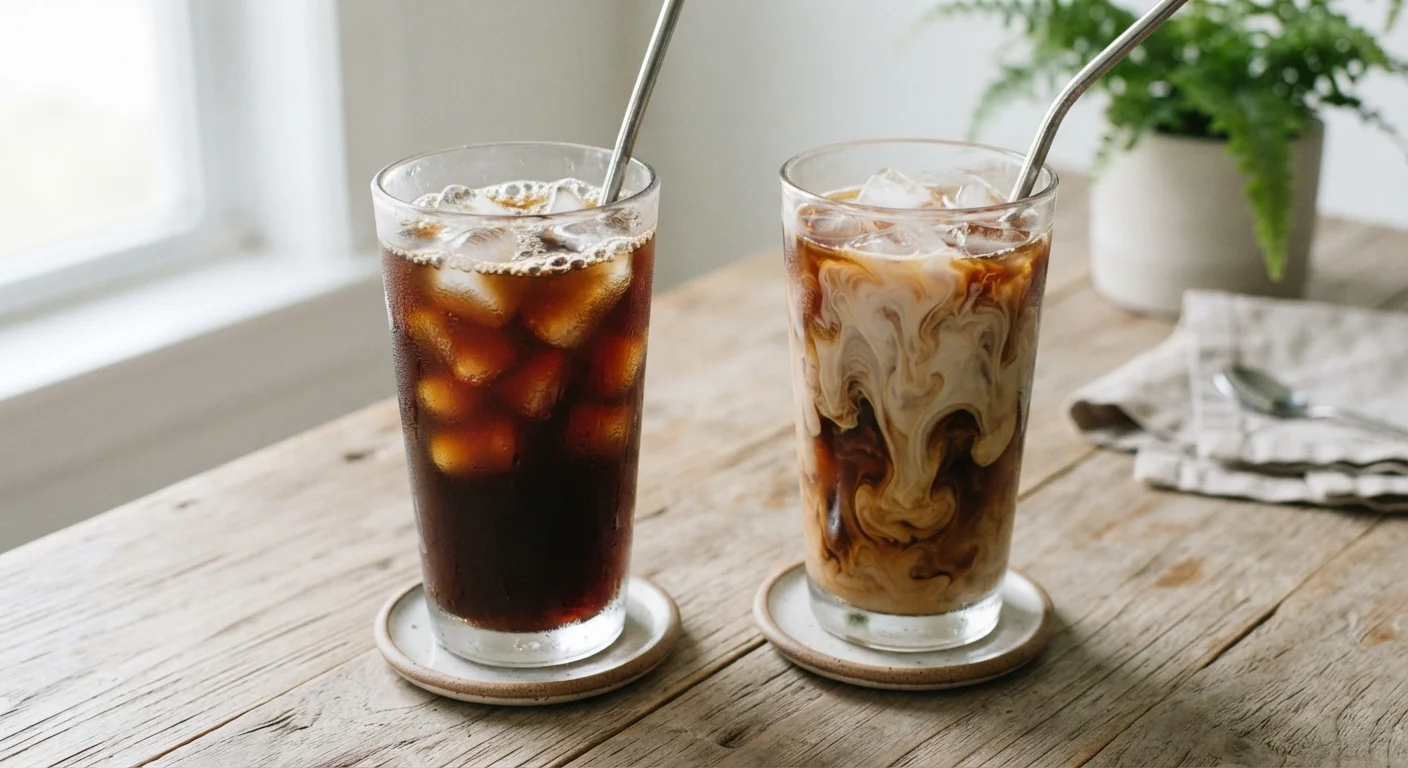
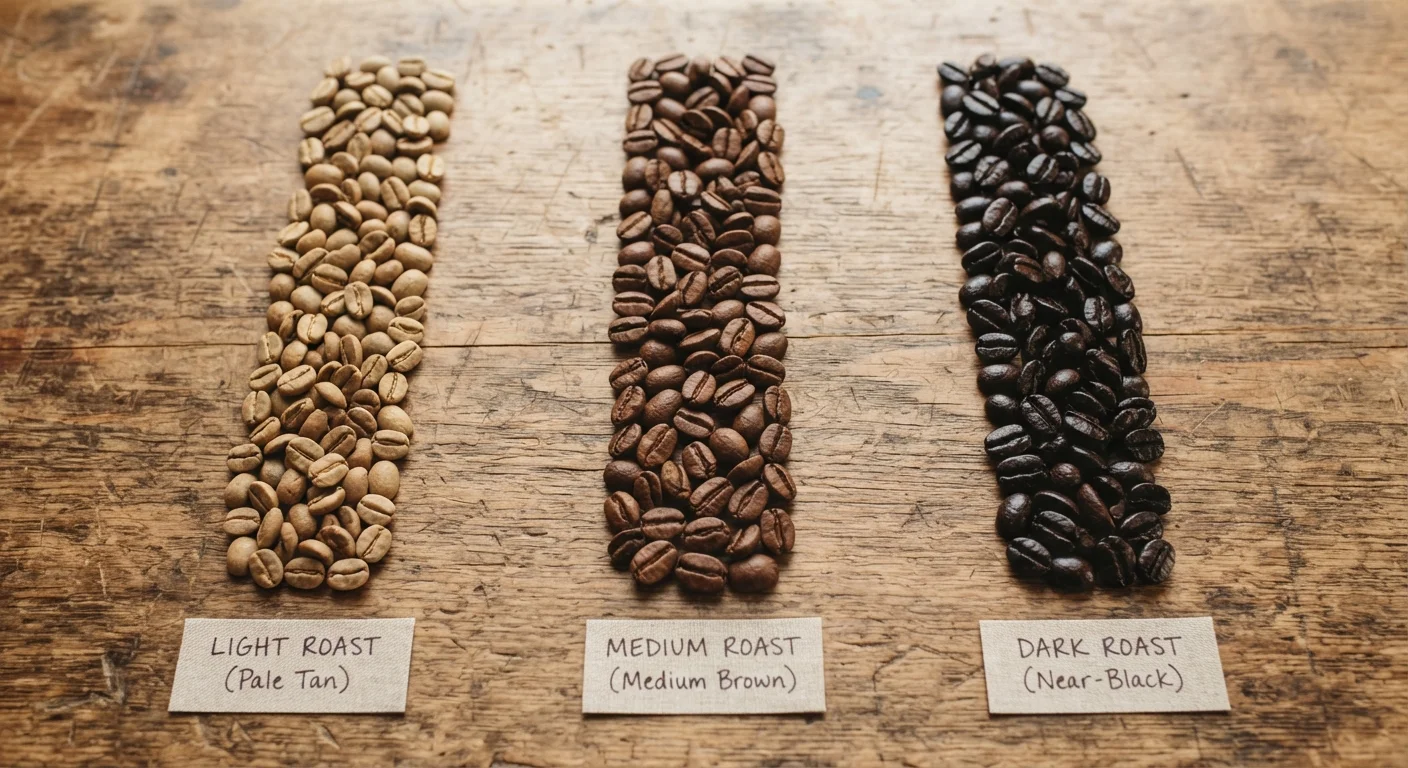
Cold brew stands out because its long, cold extraction time pulls more caffeine from the grounds. Our comparison of cold brew and iced coffee explains this process in full detail. Similarly, roast level affects caffeine in filter coffee - a common misconception unpacked in our article on coffee roast levels and flavour.
Caffeine
A naturally occurring stimulant compound found in coffee beans, tea leaves, cacao, and other plants. It works by temporarily blocking adenosine receptors in the brain, reducing the sensation of tiredness.
L-theanine
An amino acid found predominantly in tea leaves, often studied for its potential interaction with caffeine. Research suggests it may contribute to a more gradual stimulant effect, though findings are still evolving.
Extraction
The process by which water draws soluble compounds - including caffeine - out of coffee grounds or tea leaves. Temperature, contact time, and grind size all influence how much caffeine ends up in the final drink.
EFSA
The European Food Safety Authority. An EU agency responsible for assessing food-related risks and providing scientific guidance on issues including caffeine intake for the general population.
What the Numbers Actually Tell You
The European Food Safety Authority (EFSA) has assessed caffeine and suggests that for most healthy adults, up to 400 mg of caffeine per day is unlikely to raise safety concerns - though individual sensitivity varies considerably. This is general population-level guidance, not a personal prescription. People who are pregnant, breastfeeding, or managing certain health conditions should consult a healthcare professional about their caffeine intake.
400 mg
Daily caffeine reference point for healthy adults
According to a 2015 scientific opinion published by the European Food Safety Authority (EFSA).
2×
Cold brew vs. drip coffee caffeine difference
Cold brew can contain roughly twice the caffeine of a standard filter coffee of the same volume, depending on preparation.
~30 mg
Caffeine in a standard cola can
Considerably less than coffee or tea, though cola is often consumed in larger quantities across the day.
One common misconception is that espresso is the strongest coffee drink. Per shot, its caffeine content is moderate - but espresso-based drinks like triple-shot lattes or large Americanos can accumulate well beyond 200 mg. Portion size is the key variable most people overlook. If you are in the habit of checking nutrition information, our guide to reading nutrition labels covers how to locate and interpret caffeine listings where they appear.
Caffeine from tea, particularly green tea and matcha, is often described as producing a calmer alertness. This is linked to the presence of L-theanine, an amino acid that occurs naturally in tea leaves and is thought to moderate the stimulant effect of caffeine. The science here is still developing, and this should not be interpreted as a health claim.
This article is for general informational purposes only and does not constitute medical or nutritional advice. If you have questions about caffeine and your health, speak with a qualified healthcare professional.