
What Actually Happens During Roasting
A raw, green coffee bean is dense, grassy-smelling, and not particularly pleasant to brew. Roasting transforms it through a series of chemical reactions - most importantly, the Maillard reaction and caramelisation - that develop the hundreds of aromatic compounds responsible for flavour, body, and aroma.
As heat rises inside the drum roaster, beans lose moisture, expand, and eventually crack. Roasters listen for these audible milestones:
- First crack (around 196-205 °C): Beans expand rapidly and release steam. This marks the beginning of drinkable light roasts.
- Second crack (around 224-230 °C): Cell walls begin to fracture, oils migrate to the surface. Dark roasts begin here or shortly after.
The longer and hotter the roast, the more the bean's original character is altered - a fact that has real consequences for your cup. Water chemistry also plays a role in how roast compounds are extracted, as explained in this guide to brewing water quality.
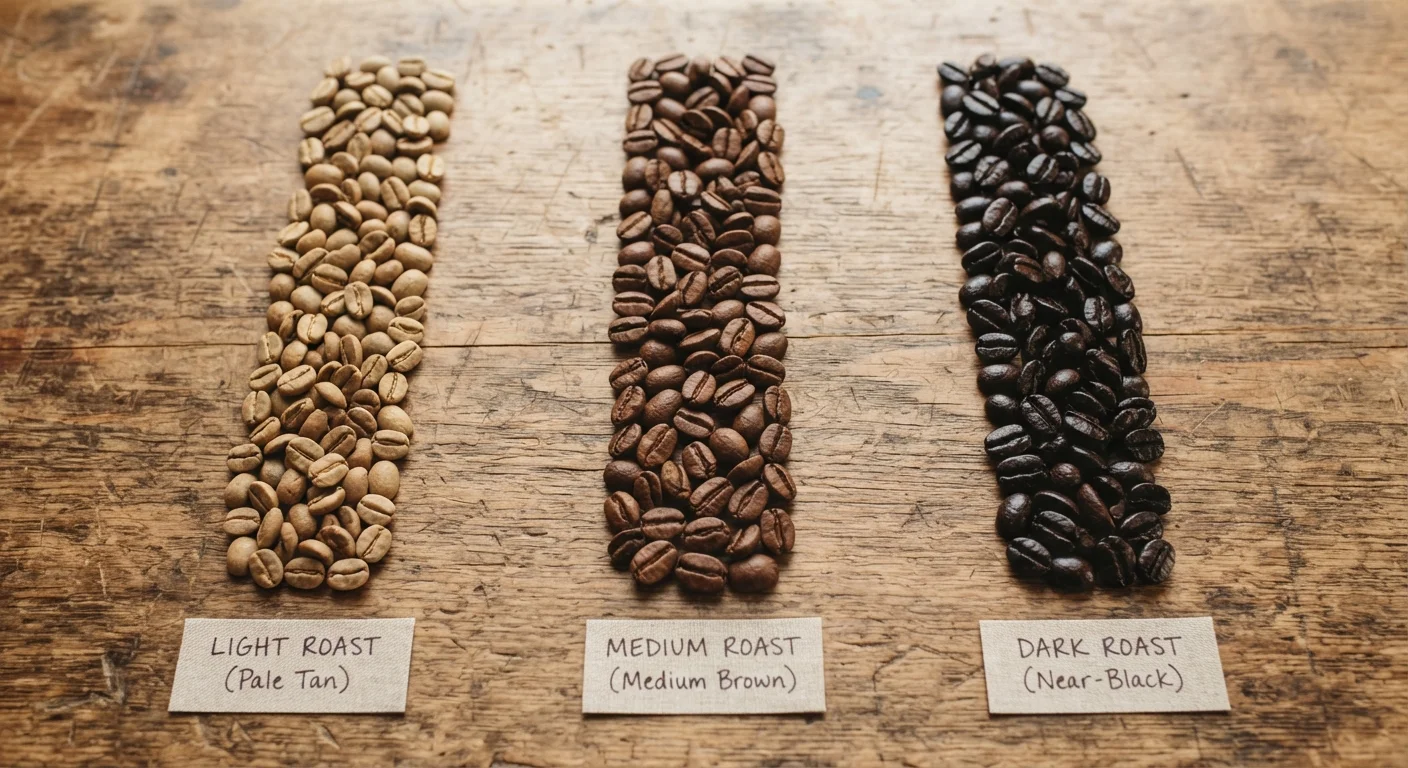
| Light roast colour | Pale to medium brown, dry surface |
| Medium roast colour | Medium brown, little to no oil |
| Dark roast colour | Dark brown to near-black, oily surface |
| First crack temperature (approx.) | 196-205 °C (Specialty Coffee Association guidelines) |
| Second crack temperature (approx.) | 224-230 °C (Specialty Coffee Association guidelines) |
| Acidity trend | Decreases as roast level increases |
The Three Main Roast Levels Explained
While specialty roasters use a spectrum of names, most coffee falls into three broad categories:
Maillard Reaction
A heat-driven chemical reaction between amino acids and sugars that creates hundreds of aroma and flavour compounds. It is central to the browning and flavour development in roasted coffee.
First Crack
An audible popping sound that occurs during roasting when built-up steam causes the bean to fracture and expand. It marks the start of usable light roast territory.
Second Crack
A second, quieter cracking sound at higher temperatures where the bean's cell structure begins to break down and oils emerge onto the surface. It signals the beginning of dark roast profiles.
Caramelisation
The thermal breakdown of sugars under heat. In coffee roasting, caramelisation contributes sweetness and body, becoming more pronounced as roast level increases.
Origin Character
The flavour traits that reflect where a coffee was grown - soil, altitude, and variety. Lighter roasts preserve more origin character; darker roasts diminish it in favour of roast-derived flavours.
Light Roast
Stopped just after first crack, light roasts retain much of the bean's original character. Expect higher acidity, floral or fruity notes, and a lighter body. Because less of the bean's mass has burned off, light roasts are often slightly denser and can test marginally higher in caffeine by weight - though the difference is modest in a typical cup.
Medium Roast
Roasted past first crack but well before second crack, medium roasts balance origin character with roast-developed sweetness. Acidity softens; body grows. Flavours often land in the chocolate, caramel, and nut range. This is the most widely sold roast level in Germany and much of Europe.
Dark Roast
Taken to or past second crack, dark roasts prioritise roast flavour over origin flavour. Oils gloss the surface; bitterness increases; acidity drops markedly. Think dark chocolate, smoke, and toasted grain. Espresso blends frequently use dark or medium-dark profiles because the intensity cuts through milk.
If caffeine content is something you track across beverages, see our breakdown of caffeine in common drinks for context beyond coffee alone.
Roast Level, Brewing Method, and Flavour Together
Roast level does not exist in isolation - it interacts with brewing method. A few principles worth knowing:
- Light roasts often shine with pour-over, filter, or Aeropress methods, where fine grind control and lower brew temperatures preserve delicate aromatics.
- Medium roasts are versatile across most home brewing equipment, including French press and drip machines.
- Dark roasts tolerate higher extraction and work well under espresso pressure, where bitterness and body are assets.
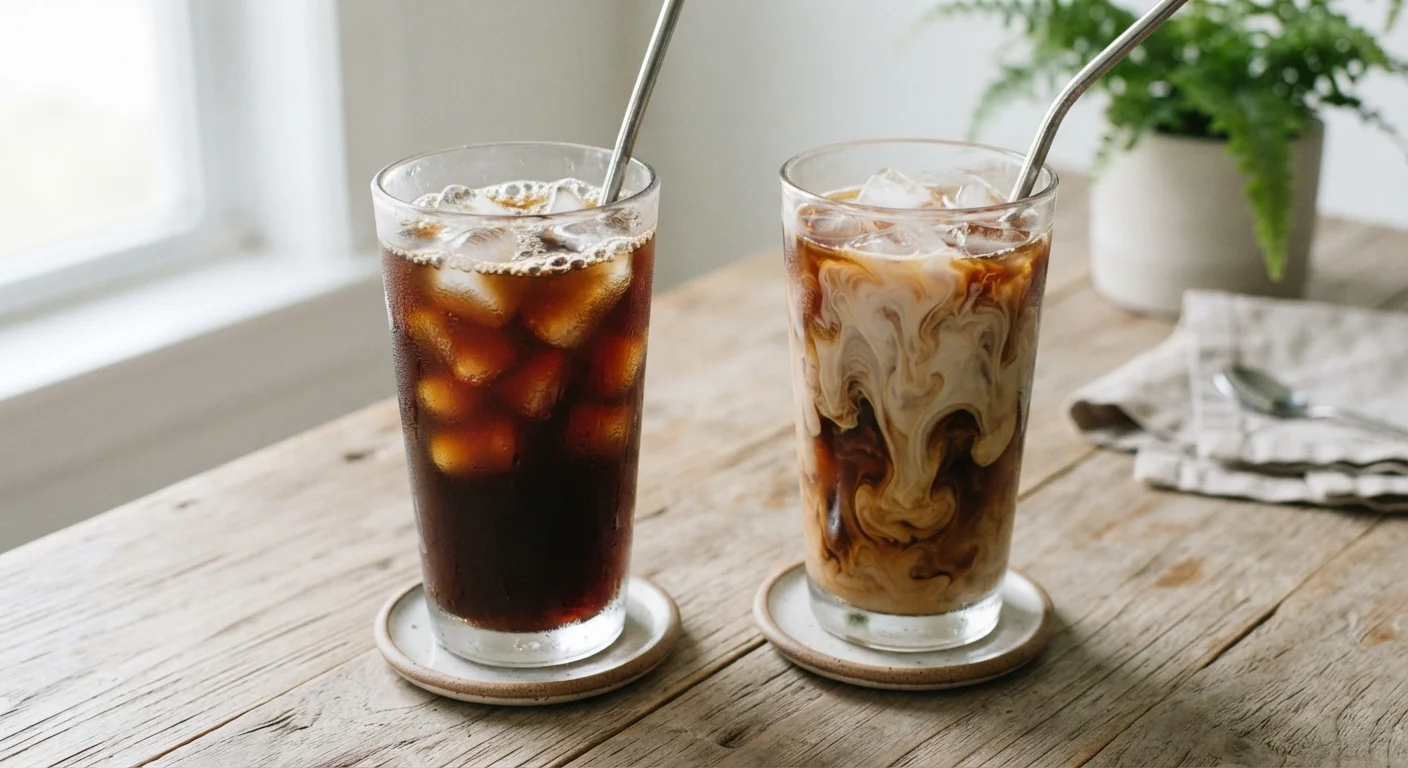
Cold brewing - a slow, low-temperature process - is another variable worth considering. Because cold brew extracts differently from hot methods, roast choice affects the result in its own way. Cold brew and iced coffee differ in more than temperature - the process itself shapes the final flavour profile.
800+
Aroma compounds in roasted coffee
Research in food chemistry has identified over 800 volatile compounds that form during the roasting process.
~15%
Weight lost during roasting
A green bean loses approximately 12-20% of its mass through moisture evaporation and gas release during a typical roast.
One practical note: label terminology is not standardised. Terms like blonde, Vienna, or French roast are used inconsistently across brands. When in doubt, look for roast colour descriptions or the origin notes on the packaging rather than relying on the name alone - similar advice applies when decoding tea labels.
Roast Date Matters More Than You Think
Coffee is most flavourful within two to four weeks of its roast date, when carbon dioxide - trapped during roasting - has partially off-gassed but aromatic compounds remain intact. A bag labelled with a roast date gives you much more useful information than a best-before date alone. Look for roast dates on specialty coffee packaging, especially for lighter roasts where freshness is most noticeable.