
What Street Food Actually Represents
Street food is rarely just a cheap meal. In cities from Bangkok to Mexico City to Lagos, street stalls are the direct expression of what people actually eat day to day - shaped by migration, local agriculture, and economic realities rather than culinary trends or investor funding. The vendor selling bánh mì in Ho Chi Minh City or currywurst at a Berlin kiosk is operating within a food tradition built over generations, often passed down within families or migrant communities.
What makes street food culturally significant is its accessibility. It is food designed to reach everyone - the office worker, the schoolchild, the tourist, the pensioner. Prices are kept low not by cutting quality but by eliminating overhead: no dining room, no waiting staff, no printed menu. This democratic quality means street food often preserves dishes that would never survive on a restaurant menu because they are too regional, too unfamiliar to outsiders, or too labor-intensive to scale profitably.
Street food is also a living archive of immigration. Many of the dishes now considered emblematic of a city arrived with migrant communities and were first sold from carts or market stalls. Diaspora kitchens frequently take root on the street before they ever reach a restaurant table.
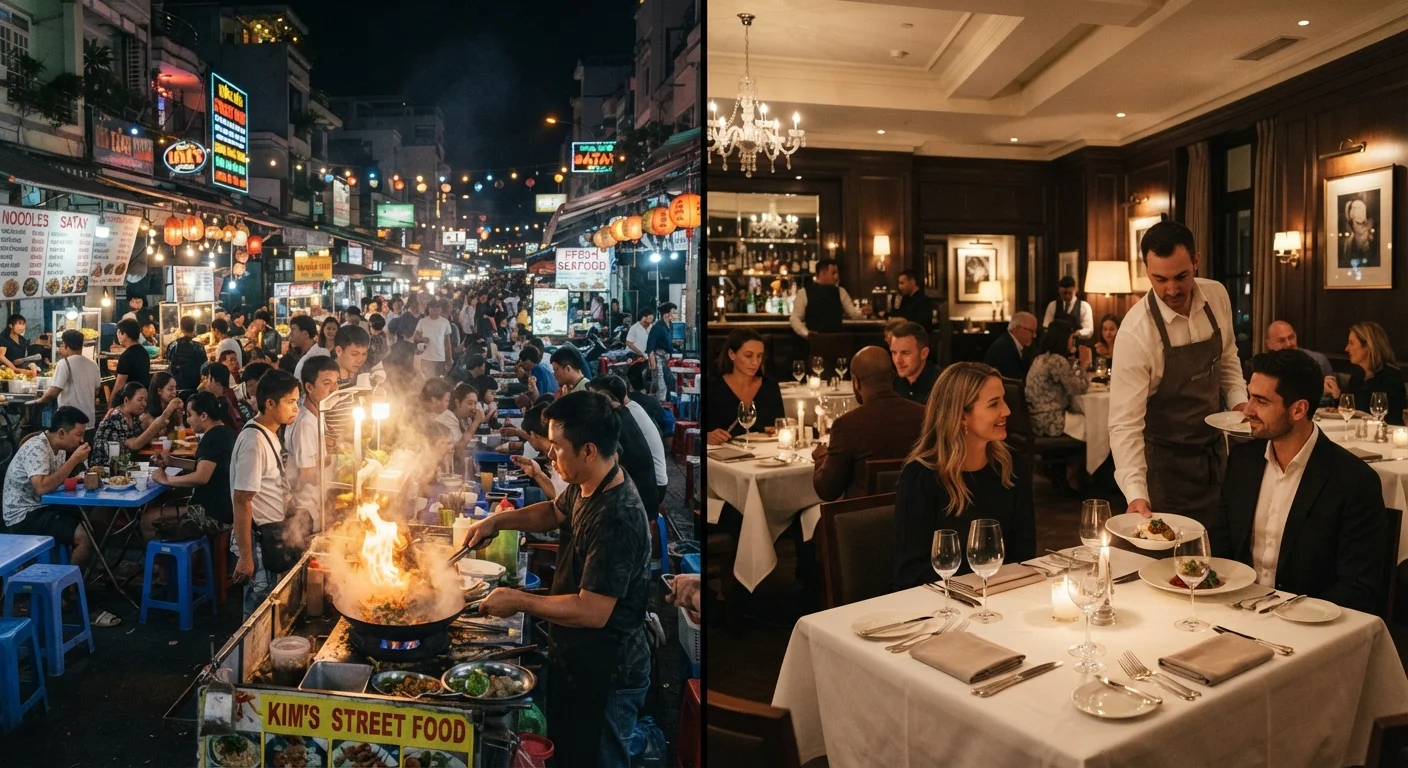
| Criterion | Street Food Culture | Restaurant Culture |
|---|---|---|
| Primary setting | Outdoors, markets, kiosks | Indoor dining rooms |
| Price point | Generally low-cost | Wide range, often higher |
| Social dynamic | Informal, communal, spontaneous | Structured, occasion-oriented |
| Cultural role | Grassroots, daily sustenance | Culinary formalization and curation |
| Accessibility | Open to all income levels | Variable; can exclude by cost |
| Recipe transmission | Informal, family or community-based | Institutional, documented |
| Connection to migration | Frequently direct and visible | Present but often abstracted |
What Restaurant Culture Adds to a City's Food Identity
Restaurants do something street food generally cannot: they create a stage. A sit-down dining room frames food as an event - something to be anticipated, discussed, and remembered. This framing shapes how a city's cuisine gets perceived both locally and internationally. When a city's restaurants earn global recognition, they become ambassadors for an entire food culture, even if the dishes they serve are refined versions of what grandmothers once made at home.
Restaurant culture also institutionalizes culinary knowledge. Professional kitchens train cooks, document recipes, and develop consistent standards. This formalization has real cultural consequences: it can preserve dying techniques, elevate regional ingredients to national prominence, or - depending on the establishment - strip a dish of its context and present it in ways that feel disconnected from its origins. Food authenticity is always more complicated than it appears, and restaurants sit at the center of that tension.
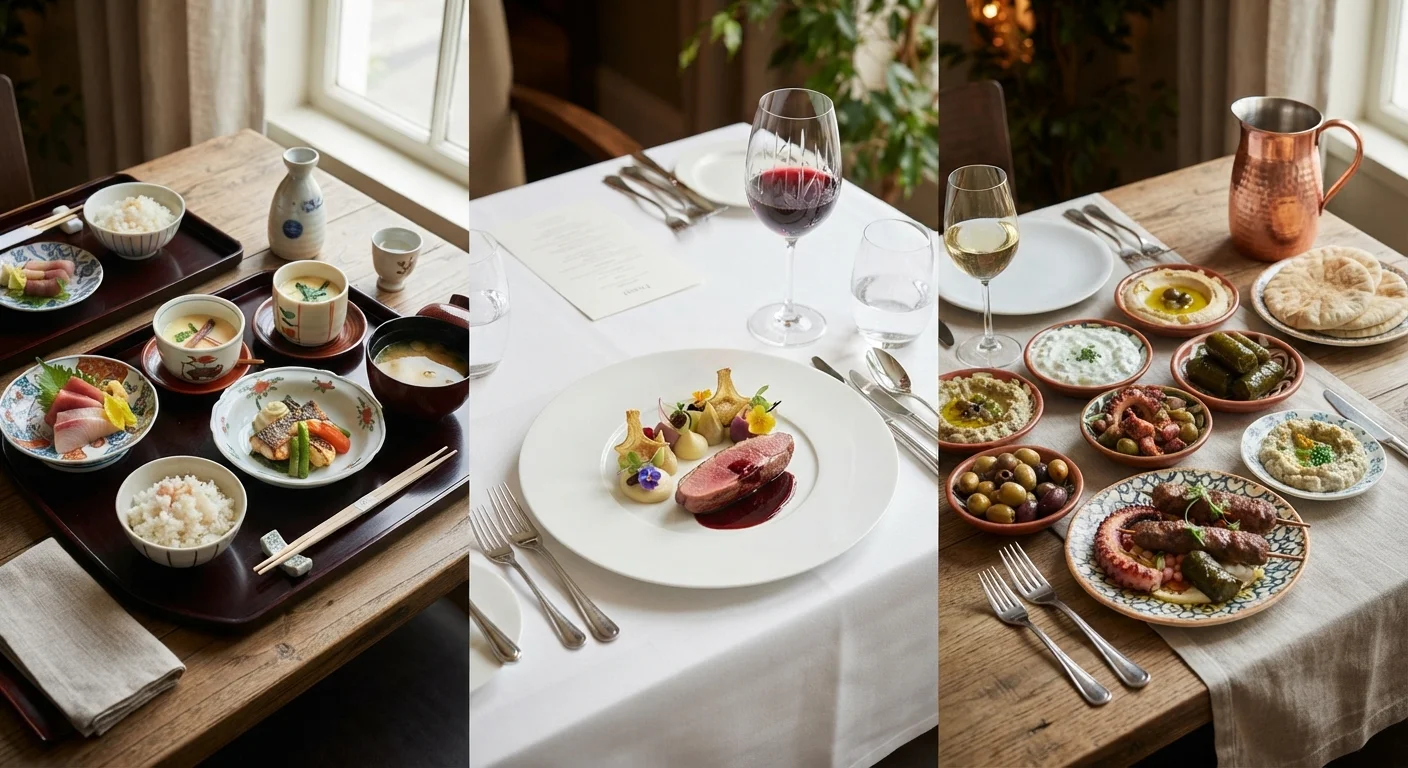
It is also worth noting that what counts as fine dining varies enormously by culture. Culinary prestige looks different in Tokyo than in Paris or Oaxaca - and understanding those differences reveals a great deal about a society's values around food, class, and hospitality.
2.5 billion
People eating street food daily worldwide
The Food and Agriculture Organization of the United Nations has estimated that approximately 2.5 billion people consume street food each day globally.
~70%
Urban food budgets spent on street food in some Asian cities
Research from various urban food studies suggests that in several Southeast Asian cities, a significant majority of daily food expenditure goes toward informal street vendors rather than restaurants.
How the Two Formats Shape Each Other
In practice, street food and restaurant culture are not opposites - they form a conversation. Dishes frequently travel between the two. A street taco becomes a restaurant centerpiece; a fine-dining technique filters down to a market vendor. Cities with the richest food identities tend to be those where both formats thrive simultaneously and in dialogue with each other.
Social context matters here too. Eating at a street stall is rarely a solitary act - it involves proximity to strangers, shared condiment bottles, and improvised seating. This informality creates its own kind of social bond. Communal eating takes different forms depending on whether you are standing at a street cart or sitting at a restaurant table, but the underlying human function - sharing food as a way of building connection - remains consistent.
For travelers seeking to understand a city's food culture before arriving, recognizing the role of both formats is essential. Orienting yourself to local food culture means knowing when to pull up a plastic stool at a night market and when to book a table - and understanding what each experience is actually designed to give you. A city's food identity is never held in just one place; it lives in the full range of how people choose to feed themselves and each other.
Neither Format Owns 'Authenticity'
It is tempting to assume that street food is always more 'real' or 'authentic' than restaurant food - but this is an oversimplification. Both formats adapt over time, respond to new audiences, and evolve under economic pressure. A street dish can become commercialized just as a restaurant dish can be deeply rooted in tradition. The concept of food authenticity is genuinely contested territory, and neither cooking location guarantees cultural purity.