
The Assumption Hidden in the Phrase 'Fine Dining'
When most English-speaking audiences hear the phrase fine dining, a familiar picture forms: white tablecloths, a tasting menu of small composed plates, a sommelier, hushed interiors. That image largely descends from the French haute cuisine tradition that dominated European restaurant culture from the 19th century onward. But it is only one answer to the question: what does it mean to eat magnificently?
Culture shapes not just what people eat, but what they consider worth celebrating and who gets to define quality. As our article on food authenticity and cultural exchange explores, the standards we treat as universal often have very specific origins. Fine dining is no different.
Four Traditions, Four Definitions of Culinary Excellence
Comparing fine dining across cultures reveals how deeply values - not just technique - determine what counts as exceptional food.
| Japanese Kaiseki | French Haute Cuisine | Middle Eastern Meze | SE Asian Hawker | |
|---|---|---|---|---|
| Core value | Seasonal restraint | Technical mastery | Generosity and abundance | Decades of singular focus |
| Service style | Sequential individual courses | Formal individual tasting menu | Communal shared spread | Counter or stall, minimal service |
| Prestige signal | Ingredient purity and timing | Technique and elaboration | Volume and hospitality | Consistency and lineage |
| Setting | Quiet, minimalist interiors | Formal dining room | Home or festive table | Open-air stall or market |
| Price as status marker | High to very high | High to very high | Variable; abundance matters more | Often low; irrelevant to prestige |
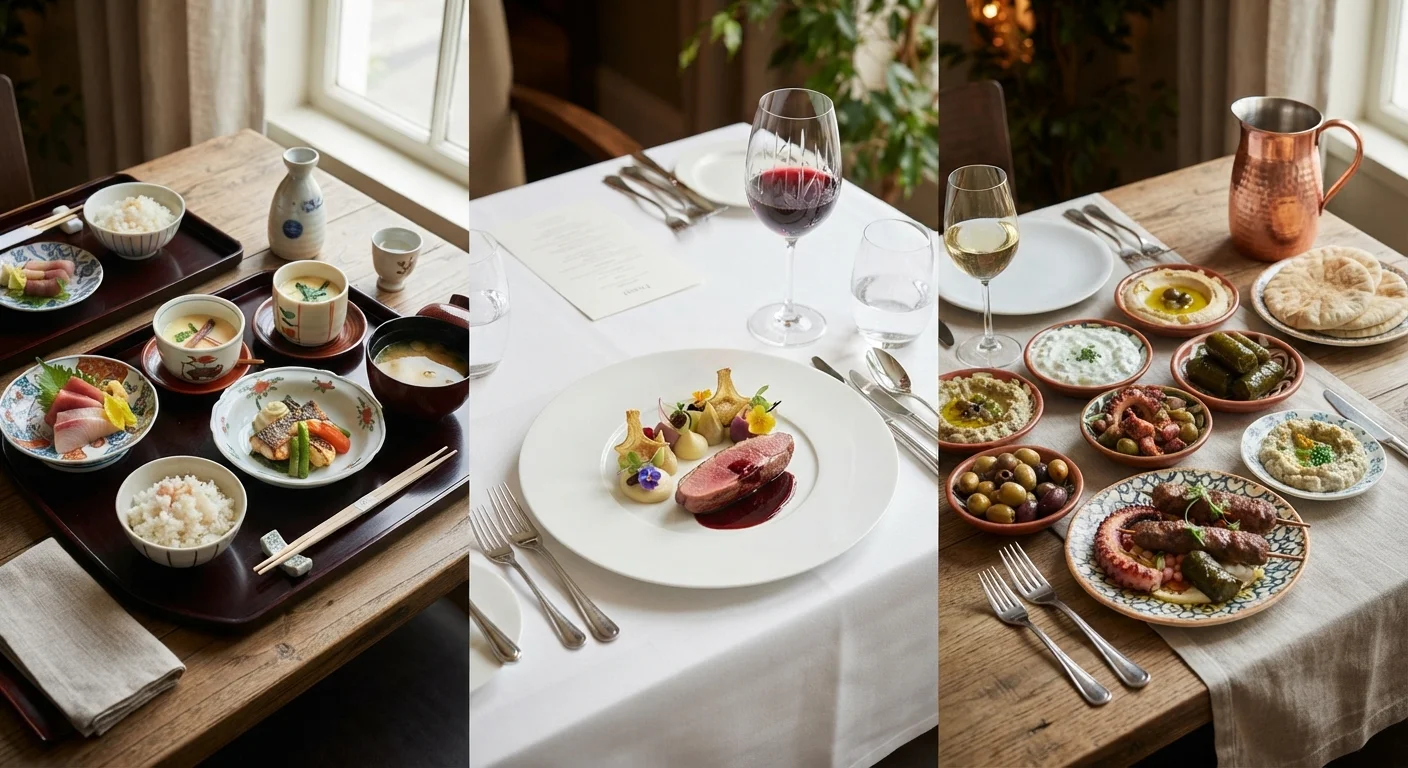
Japanese Kaiseki developed from the tea ceremony and is guided by the principle of shun - using ingredients at the precise peak of their season. A kaiseki meal may involve a dozen small courses served in lacquerware, ceramic, or bamboo vessels chosen to echo the season visually. Restraint is itself the skill: a chef who over-garnishes or masks a natural flavor is considered less accomplished, not more.
French Haute Cuisine prizes transformation. Technique - reduction, emulsification, classical sauce-making - is the measure of mastery. Elaboration signals effort and craft. Presentation is architectural. The diner is positioned as an individual connoisseur receiving a chef's considered statement.
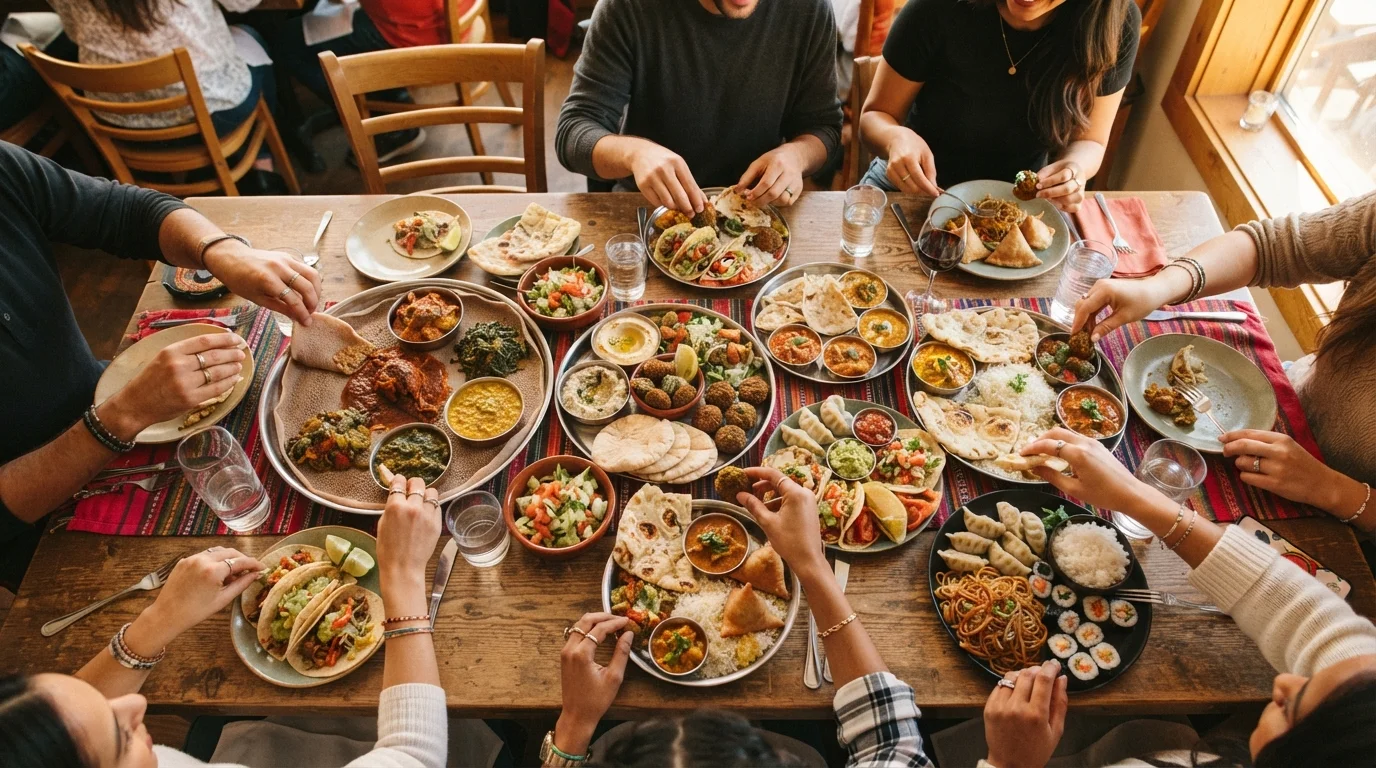
Middle Eastern and Mediterranean Meze Culture inverts many of these assumptions entirely. Prestige here often means abundance and generosity. A table crowded with shared dishes - dips, grilled meats, pickles, flatbreads, stuffed vegetables - communicates wealth, hospitality, and care for guests. The idea of a single small plate as a luxury experience would read as stinginess in many of these contexts. As our piece on shared meals and cultural identity discusses, communal eating often carries deep social meaning that individual service cannot replicate.
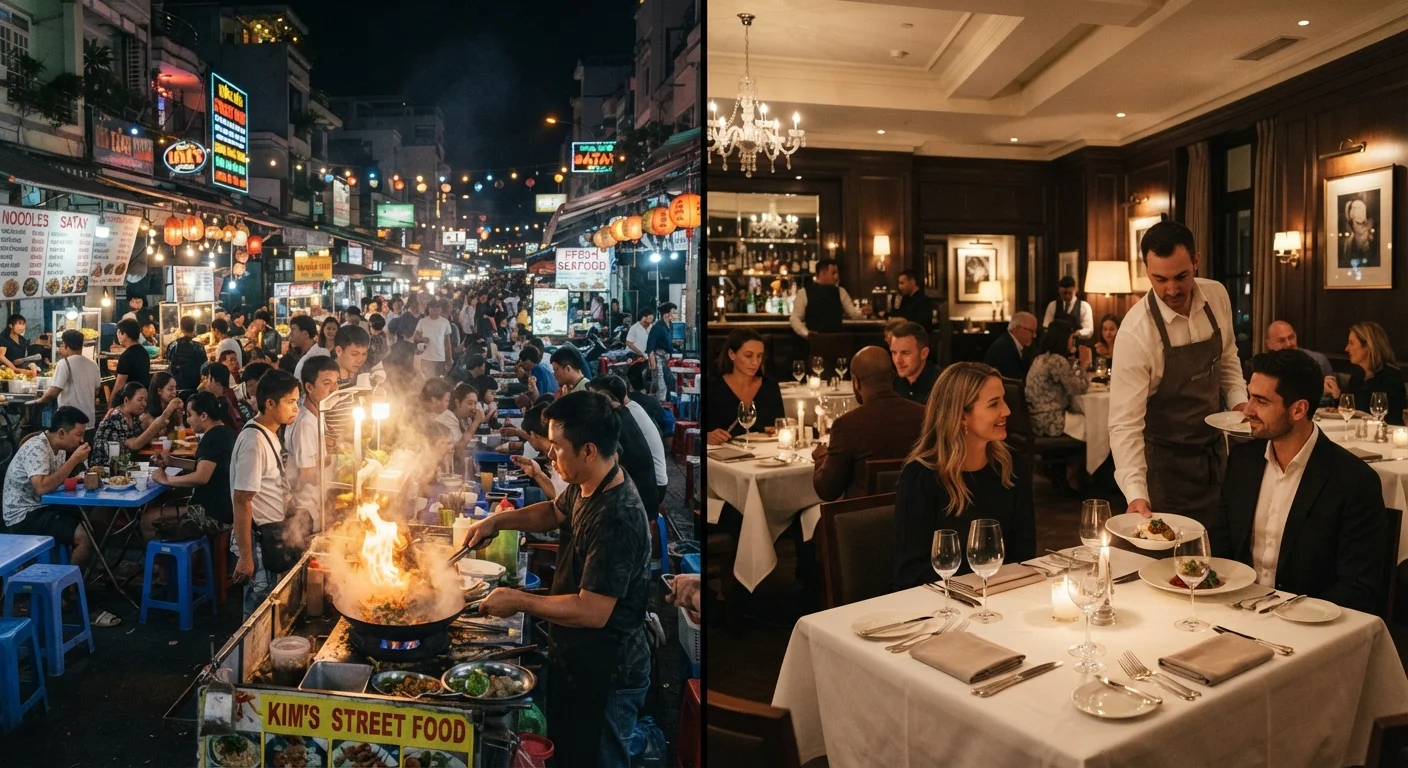
Southeast Asian Hawker Traditions offer perhaps the most striking challenge to Western fine dining assumptions. In Singapore, Malaysia, and parts of Thailand, stalls run by families over generations - producing a single dish perfected over decades - command long queues and deep cultural respect. Several hawker stalls have received international culinary recognition. Price is low; prestige derives from mastery, lineage, and consistency rather than setting or formality. This connects to a broader tension explored in street food versus restaurant culture.
Approaching Unfamiliar Dining Traditions
Before visiting a restaurant in a culture whose dining conventions you are unfamiliar with, research the expected pacing, ordering style, and etiquette. What reads as slow service in one context is deliberate sequencing in another. What appears to be a sparse plate may be an exercise in calculated restraint rather than a small portion. Approaching unfamiliar food traditions with curiosity rather than comparison tends to produce a much richer experience.
What These Differences Actually Reveal
These traditions are not simply aesthetic preferences - they encode social values. French haute cuisine historically positioned the chef as an artist and the restaurant as a cultural institution, reflecting Enlightenment ideas about individual genius. Kaiseki reflects Zen-influenced aesthetics in which ego is subordinated to nature and season. Meze culture reflects societies where hospitality and collective belonging define social standing more than individual connoisseurship does.
Understanding these distinctions matters practically. A traveler unfamiliar with local conventions may misread a lavish shared table as informal, or mistake a quietly served kaiseki course for underwhelming - both misreadings that come from applying one culture's standards to another's expression of excellence. Our guide on food culture before travel addresses exactly this kind of preparation.
Menus themselves often encode these values visibly, as our article on reading a menu as a cultural document explains - ingredient choices, course structure, and pricing all signal what a culture considers worthy of attention and investment.
The practical takeaway is not that all approaches are equivalent in execution, but that excellence is genuinely plural. Judging kaiseki by the standards of haute cuisine, or dismissing meze as not serious because it is shared and abundant, produces only confusion. Each tradition has its own internal logic, its own rigorous standards, and its own rewards for the attentive eater.