
What a Calorie Actually Measures
A calorie is a unit of energy. In nutrition, the term refers to a kilocalorie (kcal) - the amount of energy needed to raise one kilogram of water by one degree Celsius. Every food that contains carbohydrates, fat, or protein contributes calories because those macronutrients release energy when metabolised by the body.
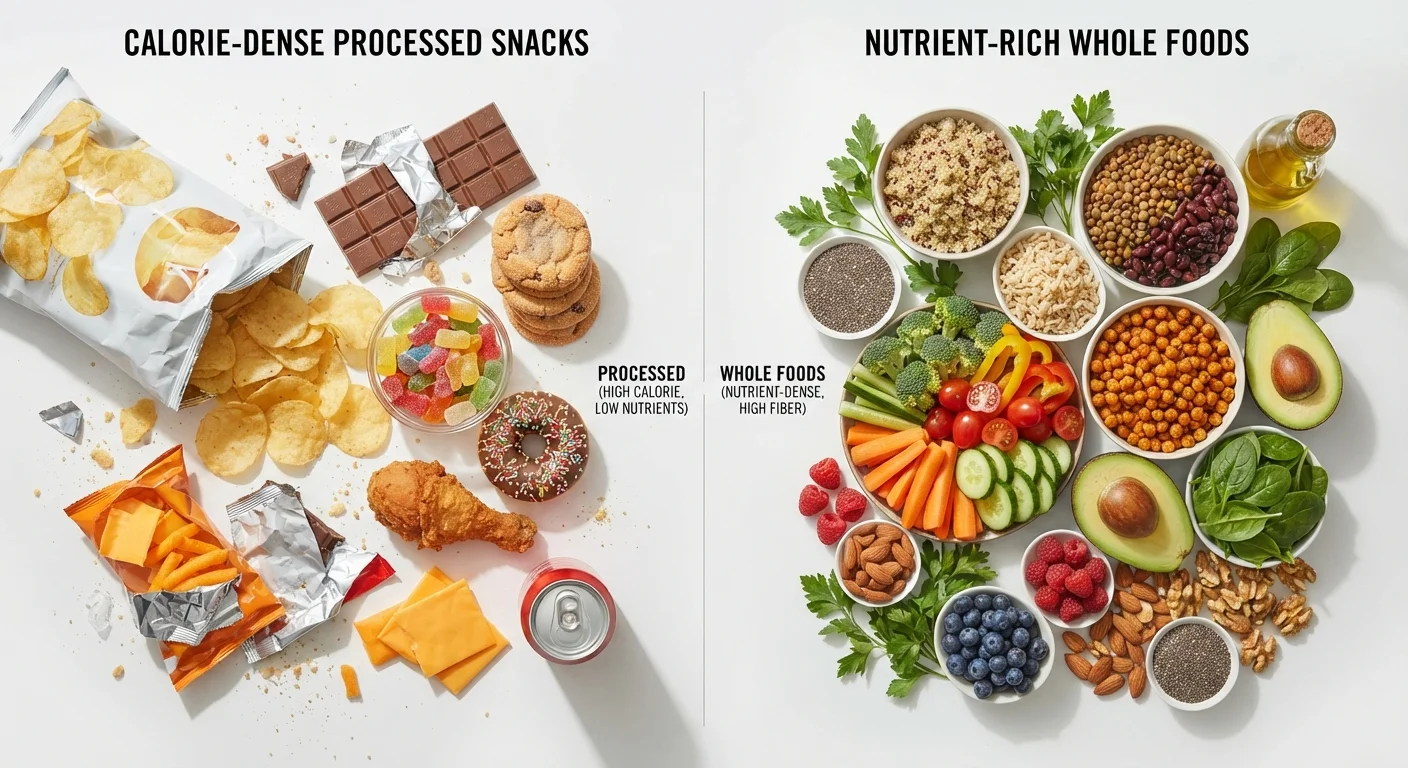
This energy-accounting function is real and useful. The body does need a minimum amount of energy to sustain basic functions - breathing, circulation, cell repair - and food provides it. But a calorie count tells you nothing about how that energy arrives or what else comes with it. A 100-calorie portion of almonds and a 100-calorie portion of a sugary hard candy deliver the same theoretical energy, yet they are nutritionally worlds apart.
~70%
Share of calories from ultra-processed foods in some Western diets
Research published in nutritional epidemiology journals suggests ultra-processed foods account for a large proportion of daily energy in several high-income countries, often with lower micronutrient density.
4 kcal/g
Energy per gram of protein and carbohydrate
Both protein and carbohydrate yield approximately 4 kcal per gram when metabolised, yet their biological roles and effects on satiety differ considerably.
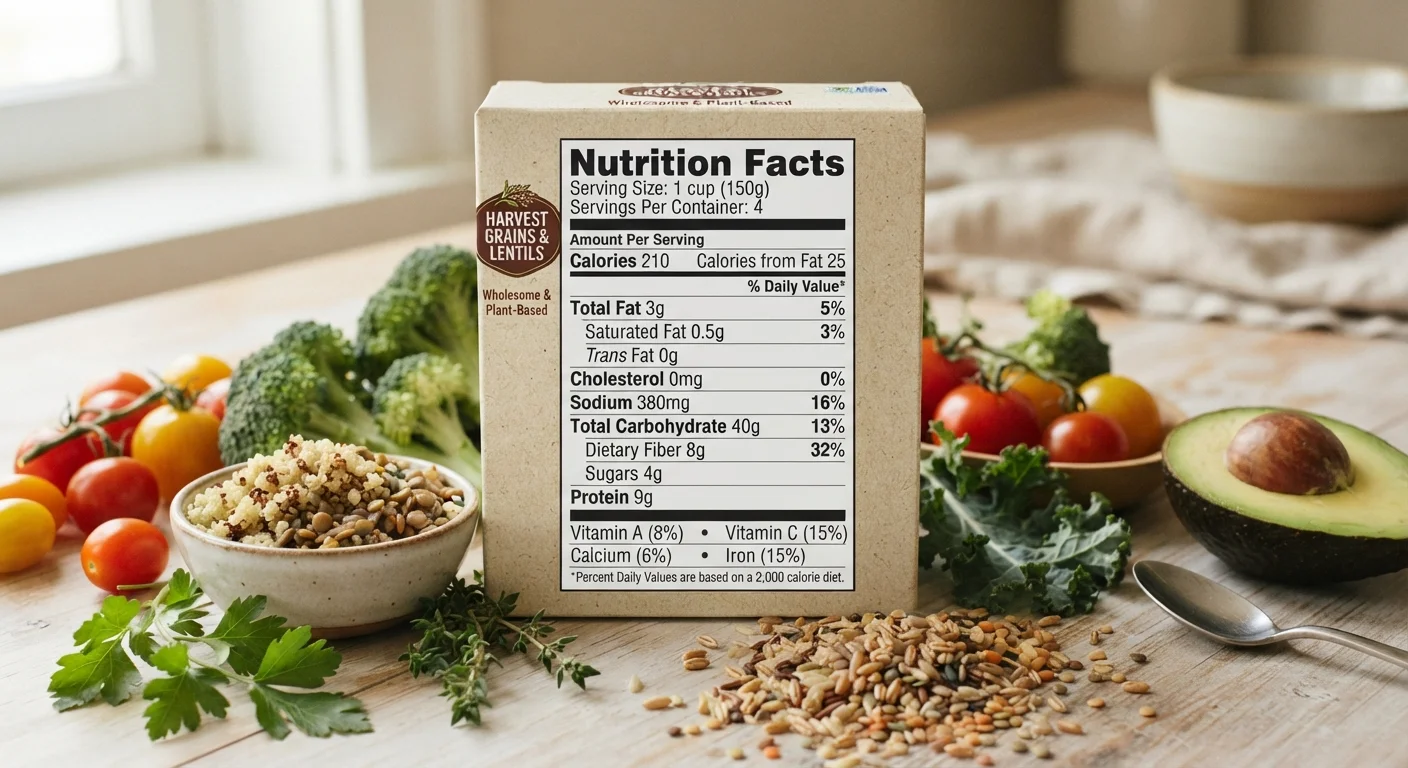
Understanding this distinction is the first step toward reading food more clearly. For a deeper look at how to interpret the numbers on packaging, see our guide to reading nutrition labels.
What Nutrients Actually Do
Nutrients are the compounds in food that the body uses to function. They fall into two broad categories:
- Macronutrients - carbohydrates, proteins, and fats - provide energy and serve as raw materials for tissue, hormones, and cell membranes.
- Micronutrients - vitamins and minerals - do not provide energy directly but are essential for virtually every biochemical process, from iron's role in oxygen transport to calcium's role in bone density.
Dietary fiber, though technically a carbohydrate, deserves its own mention: it feeds beneficial gut bacteria, slows glucose absorption, and supports digestive regularity - none of which show up in a calorie count. Water, meanwhile, carries no calories but is arguably the most critical nutrient of all.
| Criterion | Calories | Nutrients |
|---|---|---|
| What it measures | Energy content (kcal) | Functional compounds (vitamins, minerals, protein, fiber) |
| Unit | Kilocalories (kcal) | Varies: mg, µg, grams |
| Tells you about satiety | Indirectly, and poorly | Yes - fiber and protein affect fullness |
| Tells you about body function support | No | Yes - directly drives biological processes |
| Can two foods match on this metric but differ widely in health impact | Yes - frequently | Less often - nutrient profiles are more distinctive |
| Shown on standard nutrition labels | Prominently | Partially - some nutrients listed, not all |
This is why the concept of nutrient density matters: it describes how many useful nutrients a food provides relative to its calorie content. Leafy greens, legumes, and whole grains score high; many ultra-processed snacks score low.
Where Calorie-Focused Thinking Goes Wrong
Reducing food to its calorie value became a popular framework in the twentieth century, partly because it offered a simple, quantifiable metric. But several well-documented problems arise when calories become the only lens.
First, not all calories behave the same way metabolically. Protein requires more energy to digest than fat or carbohydrate - an effect known as the thermic effect of food. Fiber-rich carbohydrates release glucose more slowly than refined ones, affecting satiety and blood sugar differently. For a related discussion of how carbohydrate quality is measured, see what the glycaemic index measures and misses.
Second, chronic under-consumption of specific nutrients - even at adequate calorie levels - can lead to deficiencies. A diet built around low-calorie processed foods may technically "fit" an energy target while leaving gaps in iron, B vitamins, magnesium, or zinc.
Nutrient Density: A More Useful Frame
Nutrient density refers to the amount of beneficial nutrients a food provides per calorie. Foods like spinach, lentils, and oily fish are considered nutrient-dense because they deliver substantial vitamins, minerals, and protein relative to their calorie content. Using nutrient density as a guide can help shift focus from restriction to quality - a framing supported by major nutrition bodies worldwide.
Third, focusing narrowly on calories can distort eating behaviour in ways that are counterproductive. Researchers and nutrition professionals increasingly emphasise overall dietary patterns rather than single metrics. Why overall eating patterns matter more than individual foods explores this perspective in detail.
Using Both Lenses Together
The practical takeaway is not that calories are meaningless - they are one piece of useful information. The insight is that nutrient quality should take priority in everyday food decisions, with calorie awareness serving as supporting context rather than the main event.
A helpful mental shift: instead of asking "how many calories does this have?", try asking "what does this food contribute beyond energy?" Foods that provide fiber, complete or complementary proteins, and a range of micronutrients tend to support satiety and long-term health in ways that calorie-equivalent processed alternatives do not. For those exploring plant-forward diets, plant-based nutritional trade-offs worth understanding offers a clear-eyed view of where planning matters most.
Common thinking errors - like treating all "low-calorie" foods as healthy or all "high-calorie" foods as problematic - are worth recognising. Mistakes that lead people astray in nutrition addresses exactly these patterns.
This article is for general informational and educational purposes only. It does not constitute medical or dietary advice. For guidance tailored to your individual health needs, please consult a qualified healthcare or nutrition professional.