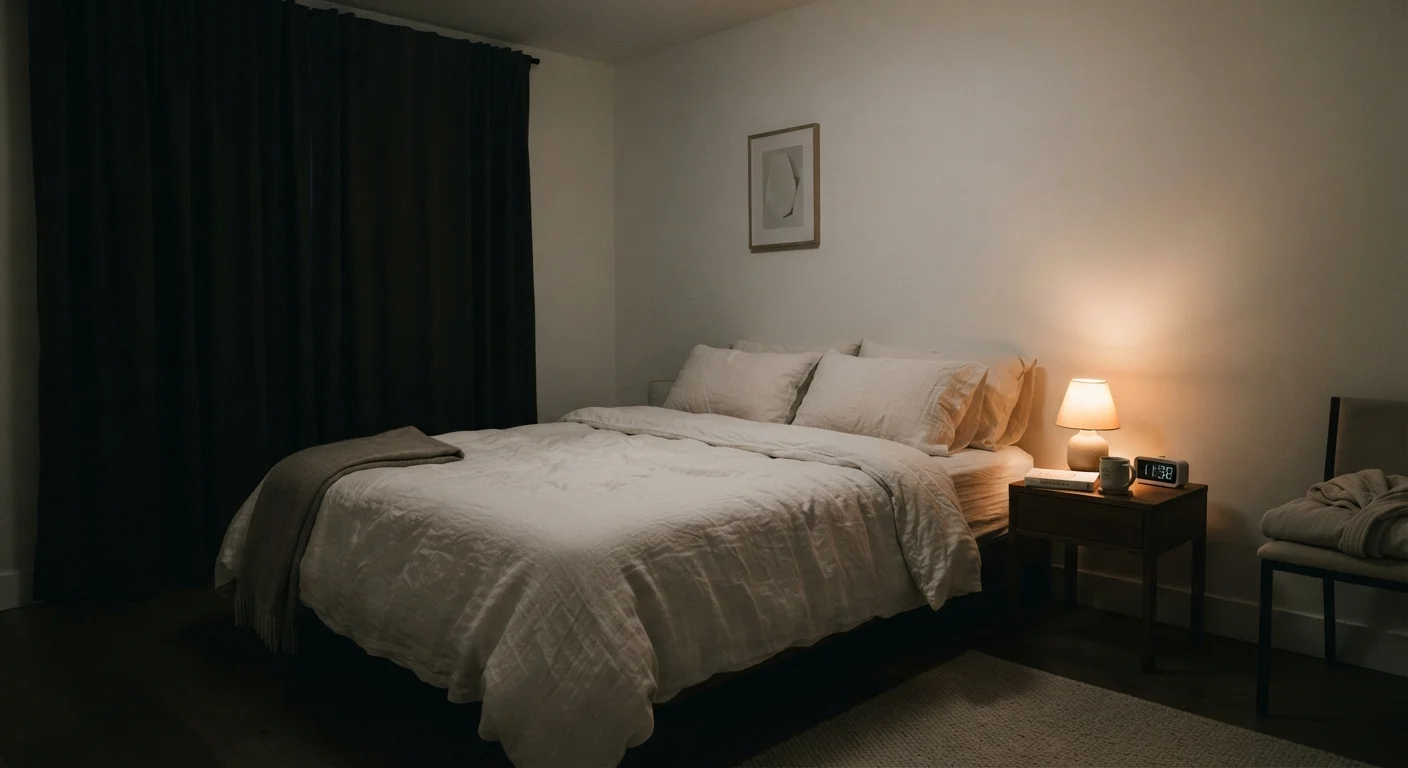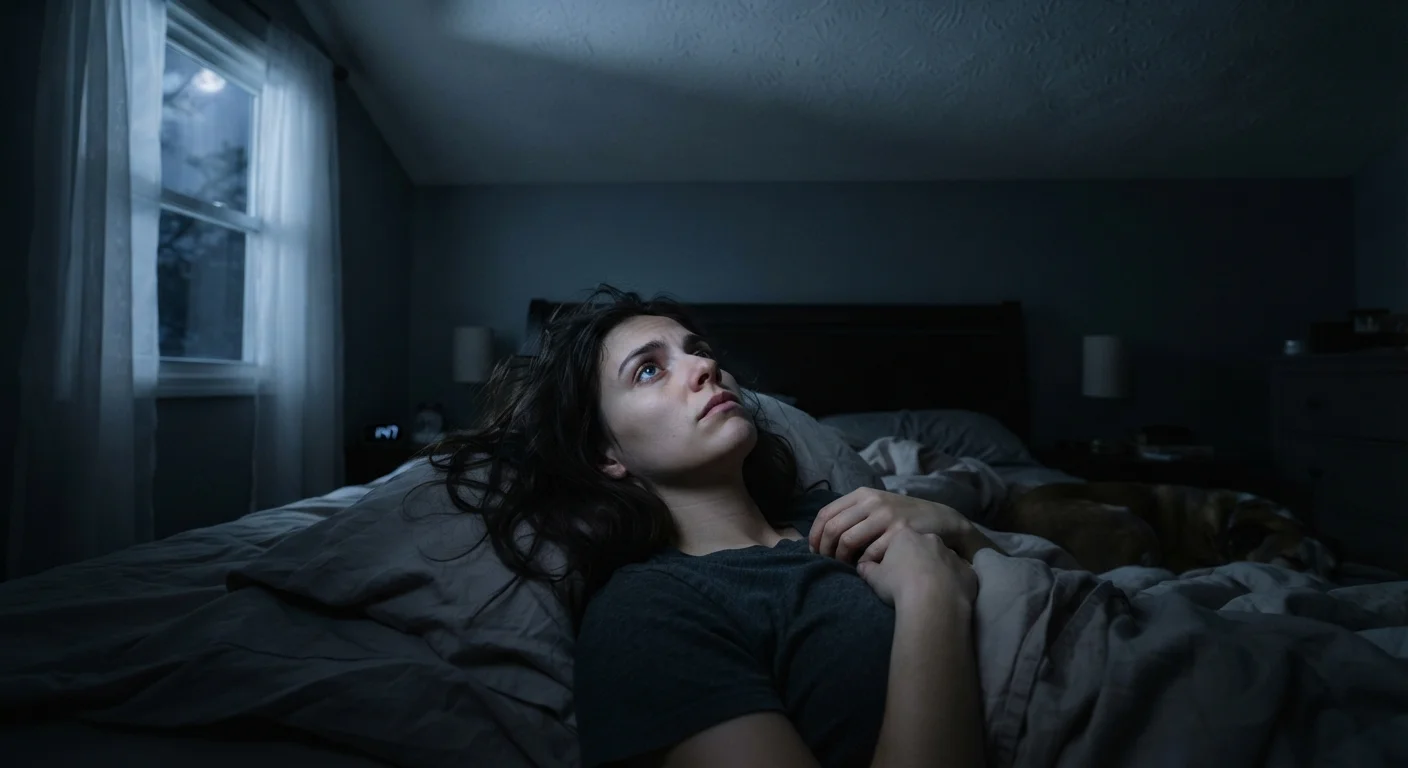

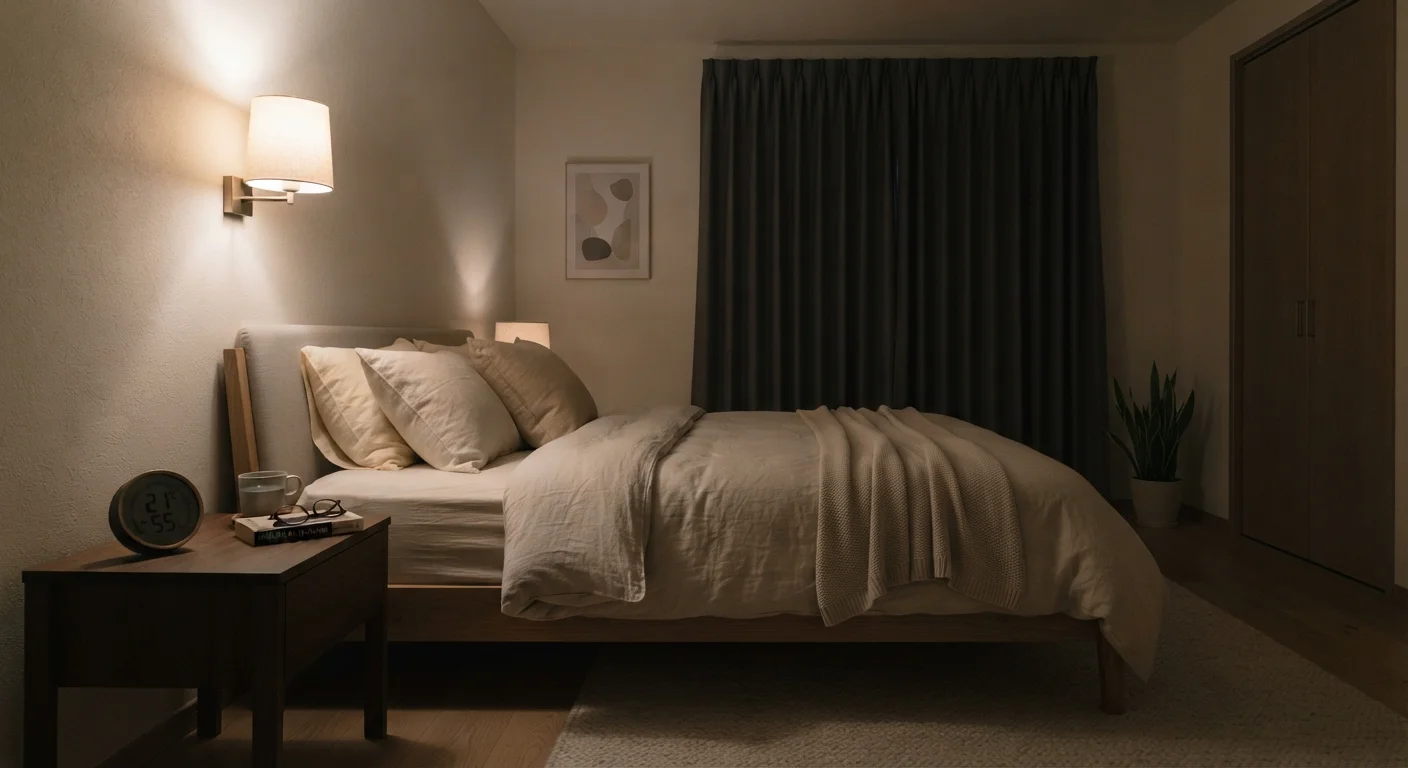
Why Your Bedroom Environment Matters More Than You Think
Many people who struggle with poor sleep focus almost entirely on habits-what they eat, when they exercise, how much caffeine they drink. These factors matter. But the physical space where you sleep can work quietly against you regardless of how disciplined your routine is. Light seeping under a door, a room that runs a few degrees too warm, a mattress that no longer supports your body evenly-these are the kinds of variables that rarely feel urgent but consistently erode rest quality over time.
This audit is designed to help you assess your bedroom systematically. It covers the four primary environmental domains that sleep research consistently highlights: light, noise, temperature, and your sleep surface. For context on how environment fits within broader sleep hygiene, see the complete sleep hygiene guide. Work through each section at your own pace-you don't need to address everything at once.
This Is General Information, Not Medical Advice
Environmental factors are one contributor to sleep quality, but persistent sleep difficulties can have underlying causes that require professional assessment. If you regularly struggle to fall asleep, stay asleep, or feel rested despite making environmental improvements, speak with a qualified healthcare professional. Do not delay seeking care based on the information in this checklist.
This article is general health information, not personalised medical advice. If you experience persistent or severe sleep difficulties, please consult a qualified healthcare professional.
Tools You May Find Useful
Most of this audit requires only your own observation, but a few low-cost items can make the assessment more precise.
Thermometer
Measure the actual temperature of your bedroom at sleep time rather than relying on a thermostat reading, which may not reflect conditions at bed level.
Smartphone decibel meter app
Provide a rough measurement of ambient noise levels in your bedroom to help identify sources that may not be consciously noticeable.
Torch or flashlight
Test how much light passes through your window coverings by shining it from behind the fabric in a darkened room.
Hygrometer (humidity meter)
Check indoor humidity levels, particularly relevant in heated rooms during winter or in climates prone to very dry air.
The Bedroom Environment Checklist
Work through each group below, noting any areas where your current setup falls short. Even one or two adjustments in the right category can produce a noticeable difference in how quickly you fall asleep and how rested you feel in the morning.
Light Control
Noise Assessment
Temperature and Air Quality
Sleep Surface and Bedding
Room Organisation and Psychological Cues
Don't Overlook Partners and Shared Spaces
If you share your bedroom with a partner, involve them in the audit-especially for temperature and noise. What feels comfortable to one person may be significantly disruptive for another, and finding a workable middle ground is easier when both people understand the reasoning behind the changes being considered.
If you share your bedroom with a partner, involve them in the audit-especially for temperature and noise. What feels comfortable to one person may be significantly disruptive for another, and finding a workable middle ground is easier when both people understand the reasoning.
Acting on Your Findings
Once you've worked through the checklist, prioritise the areas where you identified the most issues rather than trying to fix everything simultaneously. Light control and temperature tend to yield the most immediate improvements for the largest number of people, so they're a practical starting point if you're unsure where to begin.
Environmental changes work best when they're paired with consistent pre-sleep habits. The evening wind-down routines article outlines complementary behavioural steps that reinforce the physical environment you've set up. If you suspect that mental arousal or stress is also at play, understanding the cortisol-sleep connection is a useful next read. And if devices are part of your pre-bed routine, what the evidence actually shows about screen time offers a measured look at the research.
Give any single environmental change at least one to two weeks before drawing conclusions-sleep responds gradually to new conditions, and a single night is rarely a reliable indicator of whether an adjustment is helping.