
Why Animals Signal - and Why It Matters to Observe Carefully
Animal body language is not ornamental. It is a functional communication system shaped by millions of years of evolutionary pressure, allowing individuals to negotiate space, signal intent, coordinate group movement, and avoid costly physical conflict. Understanding it requires moving past anthropomorphism - the tendency to project human emotional frameworks onto nonhuman behavior - and toward what ethologists call behavioral ecology: reading signals in the context of the animal's biology and social environment.
Body language rarely operates as a single isolated signal. A dog's wagging tail, for instance, is widely misread as universal friendliness. Research published in Current Biology has shown that the direction of wag asymmetry - rightward versus leftward - correlates with different internal states, and other dogs respond to these differences measurably. Accurate observation means attending to whole-body posture, not just one feature. For a broader look at how animals layer multiple signal types, see our overview of animal communication systems.
Ethology
The scientific study of animal behavior in natural conditions, focusing on instinct, evolution, and ecological function. It forms the theoretical foundation for interpreting body language across species.
Piloerection
The involuntary raising of hair or feathers caused by muscle contractions beneath the skin. It signals heightened physiological arousal and can accompany fear, excitement, or threat states.
Appeasement signal
A behavior that reduces social tension by communicating non-threat to another individual. Examples include lateral body exposure in dogs and lip-licking, which are used to de-escalate potential conflict.
Calming signal
Behaviors that signal non-aggressive intent and invite relaxation in an interaction partner. Yawning, slow blinking, and turning the head away are common examples documented across domesticated species.
Meta-signal
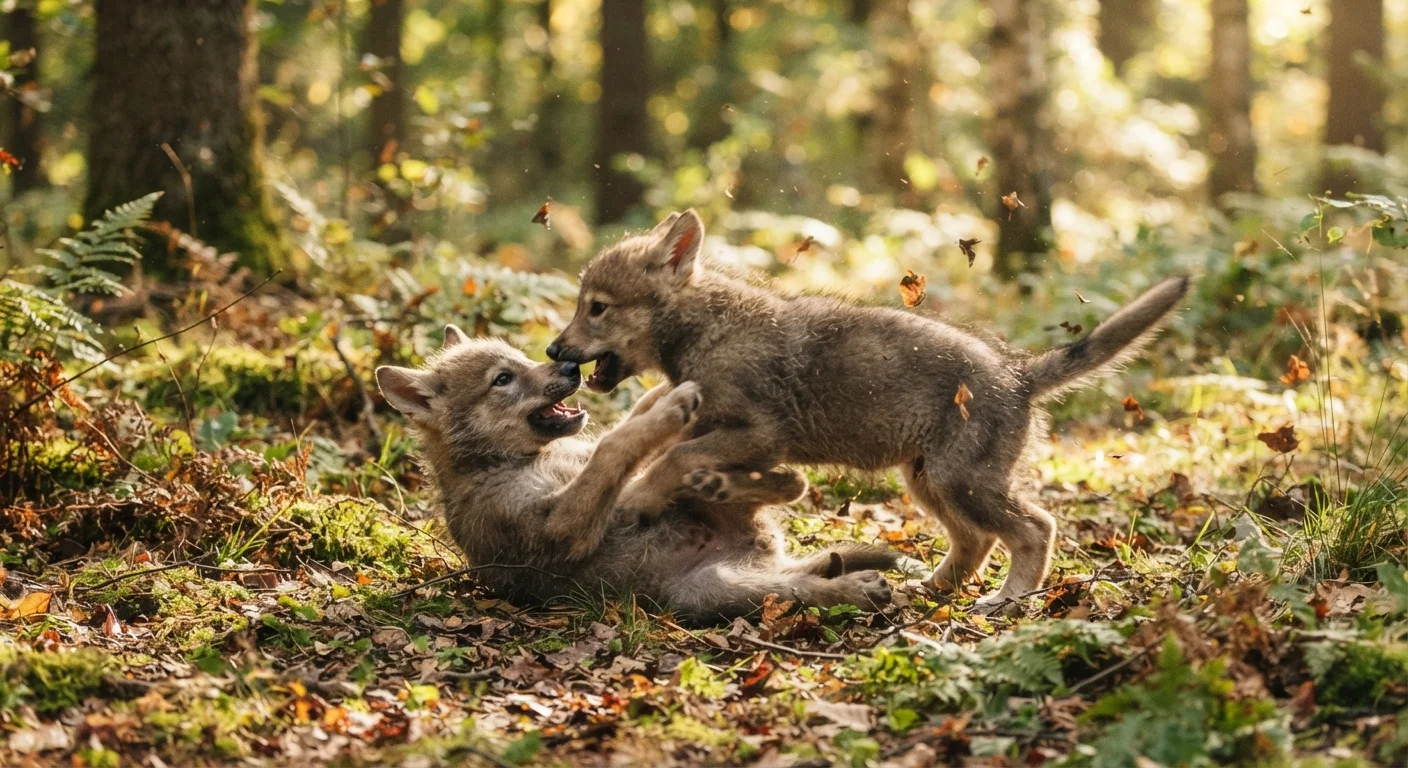
A signal that reframes the meaning of subsequent behaviors. The play bow in canids is a classic meta-signal - it communicates that what follows (chasing, mock biting) is play rather than genuine aggression.
Behavioral ecology
A field that studies how behavior is shaped by ecological and evolutionary pressures. It provides the framework for interpreting why animals signal the way they do, rather than just describing what they do.
Key Signals Across Common Species: A Reference Guide
The following patterns represent well-documented behavioral signals across domesticated and wild species. Context always modifies meaning - use these as starting points, not absolute rules.
| Primary communication channel studied | Visual posture and movement (kinesic signaling) |
| Number of distinct facial action units identified in dogs | 16 (DogFACS system) (Waller et al., 2013) |
| Tail wag asymmetry research | Rightward bias linked to positive arousal; leftward to negative arousal in dogs (Quaranta et al., Current Biology, 2007) |
| Key observer principle | Read whole-body context, never single signals in isolation |
| Species-specific caution | Primate 'smile' (teeth display) typically signals fear, not friendliness (Ethological consensus) |
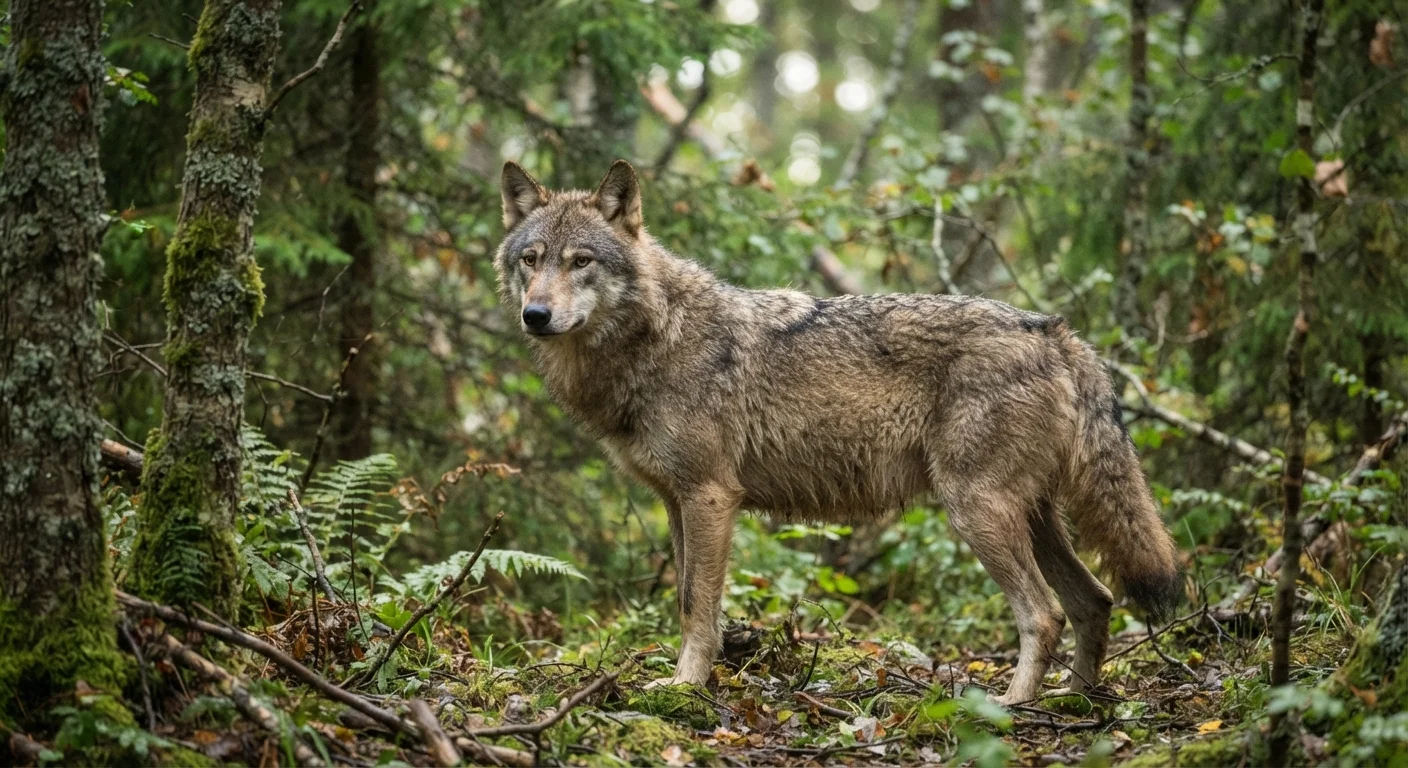
| Domestication effect | Dogs have evolved uniquely expressive eyebrow muscles absent in wolves (Kaminski et al., PNAS, 2019) |
Canids (Dogs, Wolves, Foxes)
- Piloerection (raised hackles): Involuntary activation of arrector pili muscles; signals heightened arousal, which may be fear, excitement, or aggression - context is essential.
- Play bow: Forequarters lowered, hindquarters raised. A ritualized meta-signal that reframes subsequent behavior (including mock biting) as non-threatening play. See what researchers have learned about play behavior in mammals.
- Lateral body exposure (rolling onto side): Appeasement or deference, not necessarily submission in a dominance hierarchy sense - a distinction ethologists emphasize.
Felids (Domestic Cats, Wild Cats)
- Slow blink: Associated with relaxed, non-threatening state. Often described as a feline affiliative signal.
- Tail flagging vertically: Upright tail in domestic cats typically signals confident, friendly approach; a hook at the tip may indicate mild uncertainty.
- Flattened ears + dilated pupils: Fear or defensive arousal. Avoid direct eye contact and sudden movement in this context.
Horses
- Ear position: Pinned flat back signals irritation or threat; forward-pricked ears indicate focused attention; ears rotating independently suggest the animal is monitoring multiple stimuli simultaneously.
- Licking and chewing: Often follows a period of tension; associated with a shift toward a calmer processing state.
Birds
- Feather fluffing: Can indicate thermoregulation, contentment, or illness - duration and accompanying signals distinguish them.
- Crest position in cockatoos/parakeets: Erect crest typically signals excitement or alertness; flattened crest may indicate fear or aggression.
Body language intersects with scent and color signals in complex ways. For the full picture, see how chemical, color, and tactile signals complement postural communication.
Common Misreadings and Observer Errors
Misinterpreting animal signals is not just an intellectual error - it can have real consequences for both observer and animal. Several patterns of misreading are especially common.
A Note on Applying These Observations Safely
Reading body language is a skill that develops with practice and should always be paired with appropriate caution, particularly around unfamiliar wild or semi-wild animals. Never approach a wild animal to observe signals more closely - behavioral observation from a respectful distance protects both the observer and the animal. For guidance on ethical field observation, see methods researchers use to observe wildlife without distorting behavior.
Single-signal reading: Isolating one feature (a wagging tail, an exposed belly) without reading the whole animal leads to systematic errors. Ethologists assess posture, muscle tension, gaze direction, ear position, and breathing rate together.
Species projection: Assuming signals mean the same thing across species is unreliable. A dog showing teeth may be threat-displaying; a chimpanzee showing teeth in a wide grin is often displaying fear, not joy. Humans frequently invert this meaning.
Habituation blindness: Familiar animals often produce signals owners stop noticing. Subtle stress indicators - lip licking, yawning, looking away - are well-documented calming or appeasement signals in dogs that are routinely overlooked. For a systematic look at overlooked stress signals, see signs of stress in pets that are easy to overlook.
Context collapse: The same posture means different things in different social and environmental contexts. A crouching cat in a hunting stalk looks superficially similar to a crouching cat in a fear response - the surrounding details differentiate them. For guidance on applying these principles to your own animals, the companion guide to reading your pet's body language covers practical day-to-day interpretation in depth.