Why Animals Need to Communicate
Communication - the transfer of information that influences the behaviour of a receiver - is one of the most fundamental activities in the animal kingdom. It underpins mate choice, territorial defence, predator warnings, and coordinated group movement. Understanding how animals signal to one another is central to the broader study of animal behavior, connecting physiology, ecology, and evolution in a single framework.
Every signalling system represents a trade-off. A loud call reaches distant receivers but may also attract predators. A scent mark persists over time but cannot be updated instantly. Visual displays are information-rich but useless in darkness or dense vegetation. Natural selection has therefore produced a strikingly diverse communication toolkit shaped by each species' habitat, sensory capabilities, and social structure.
20+ min
Duration of a single humpback whale song
Humpback whale songs are among the longest and most structurally complex vocalizations in the animal kingdom, documented by multiple cetacean research teams.
~1,000
Known pheromone-producing species studied in insects
Research across entomology literature has catalogued pheromone signalling systems across hundreds of insect orders, underscoring the modality's evolutionary ubiquity.
<1 sec
Time for cuttlefish to alter full-body skin pattern
Cephalopod chromatophore control is neurologically direct, enabling near-instantaneous pattern changes documented in laboratory studies on cuttlefish camouflage and signalling.
Acoustic Signals: The World of Sound
Sound travels well through air and water, making it one of the most widely used signalling channels among vertebrates. Humpback whale (Megaptera novaeangliae) song is among the most structurally complex vocalizations documented in any non-human animal: males produce sequences that can last more than 20 minutes, with hierarchical organisation at the levels of units, phrases, and themes. Research published in Science has shown that these songs change progressively across populations in a pattern consistent with cultural transmission.
Insects demonstrate the other end of the frequency spectrum. Male crickets stridulate - rubbing a file-and-scraper mechanism on their forewings - producing species-specific pulse rates that females recognise from metres away. Bats exploit ultrasound for echolocation and social calls simultaneously, as explored in our article on nocturnal sensory adaptations.
When observing wildlife vocalizations in the field, note the temporal structure - pulse rate and inter-note interval - not just pitch. These parameters often carry species-specific identity information more reliably than frequency alone.
Bioacoustics research consistently shows that temporal patterning is a primary cue in conspecific recognition across insects, amphibians, and birds.
To study chemical communication without disturbing animals, researchers recommend collecting substrate samples (e.g., scent-marked soil) for gas chromatography-mass spectrometry rather than attempting to observe marking behaviour directly.
Direct observation of marking events is rare; analytical chemistry has revealed the complexity of mammalian scent marks that behavioural observation alone would miss.
Chemical Communication: Scent and Pheromones
Chemical signals - collectively called semiochemicals - are arguably the most ancient communication modality. Pheromones (chemicals released by one individual that alter the physiology or behaviour of a conspecific) regulate everything from ant trail-following to mammalian reproductive cycles. Unlike sound or light, chemical signals do not require the sender to be present: a scent mark left by a wolf can convey territorial ownership hours after the animal has moved on.
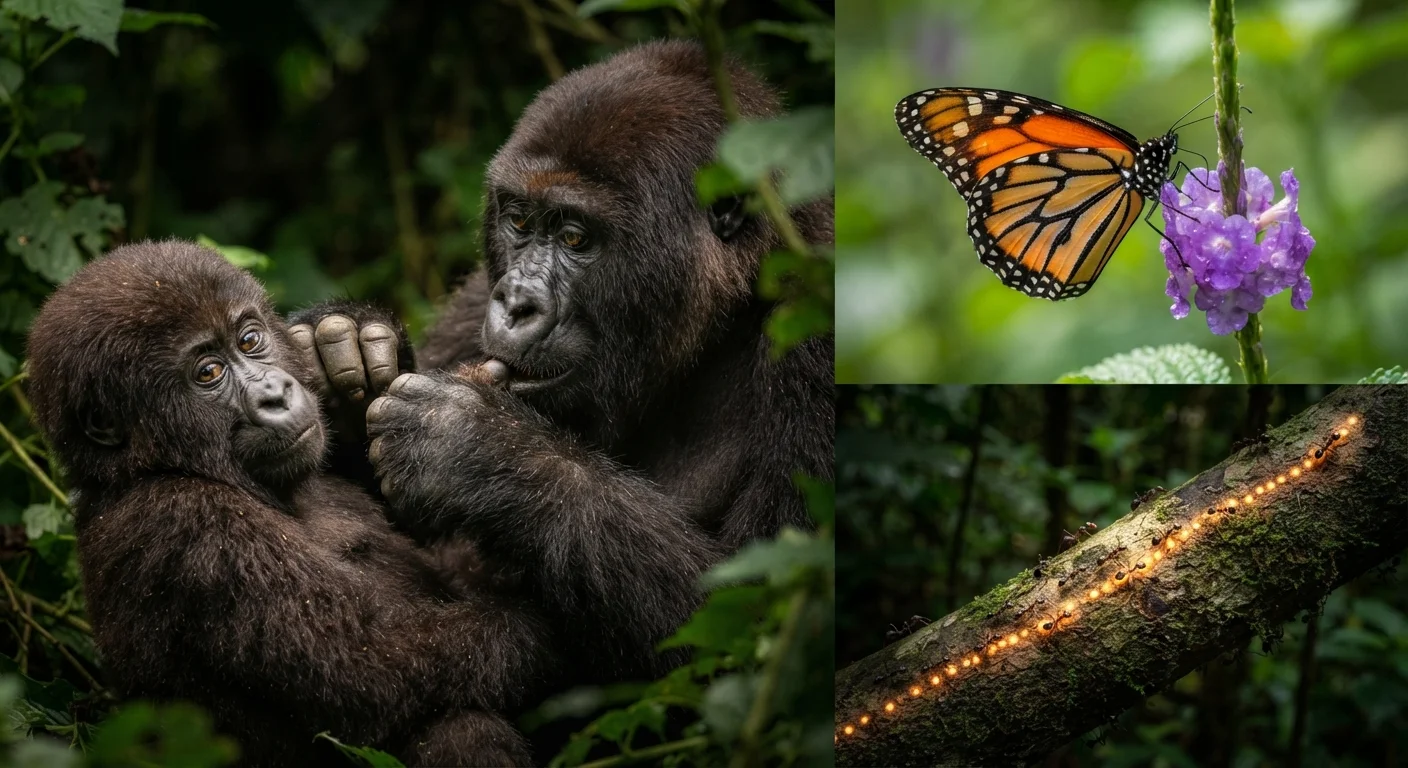
Moths provide a textbook example of chemical precision. Female Bombyx mori (silkworm moth) release bombykol; males detect as few as a handful of molecules per cubic centimetre using highly specialised olfactory receptors on feathered antennae. Among social insects, alarm pheromones spread rapidly through a colony, triggering defensive responses - a form of distributed warning system. For a broader look at how non-vocal signals carry complex messages, see chemical, colour, and touch signals explained.
Do Not Attempt to Handle Wildlife Using Chemical Lures
Synthetic pheromone lures are used in regulated pest-management and scientific research under strict protocols. Attempting to attract or handle wild animals using chemical attractants without proper training and permits can be illegal, unsafe, and ecologically disruptive. Always observe wildlife from a respectful distance.
Visual Signals: Colour, Pattern, and Movement
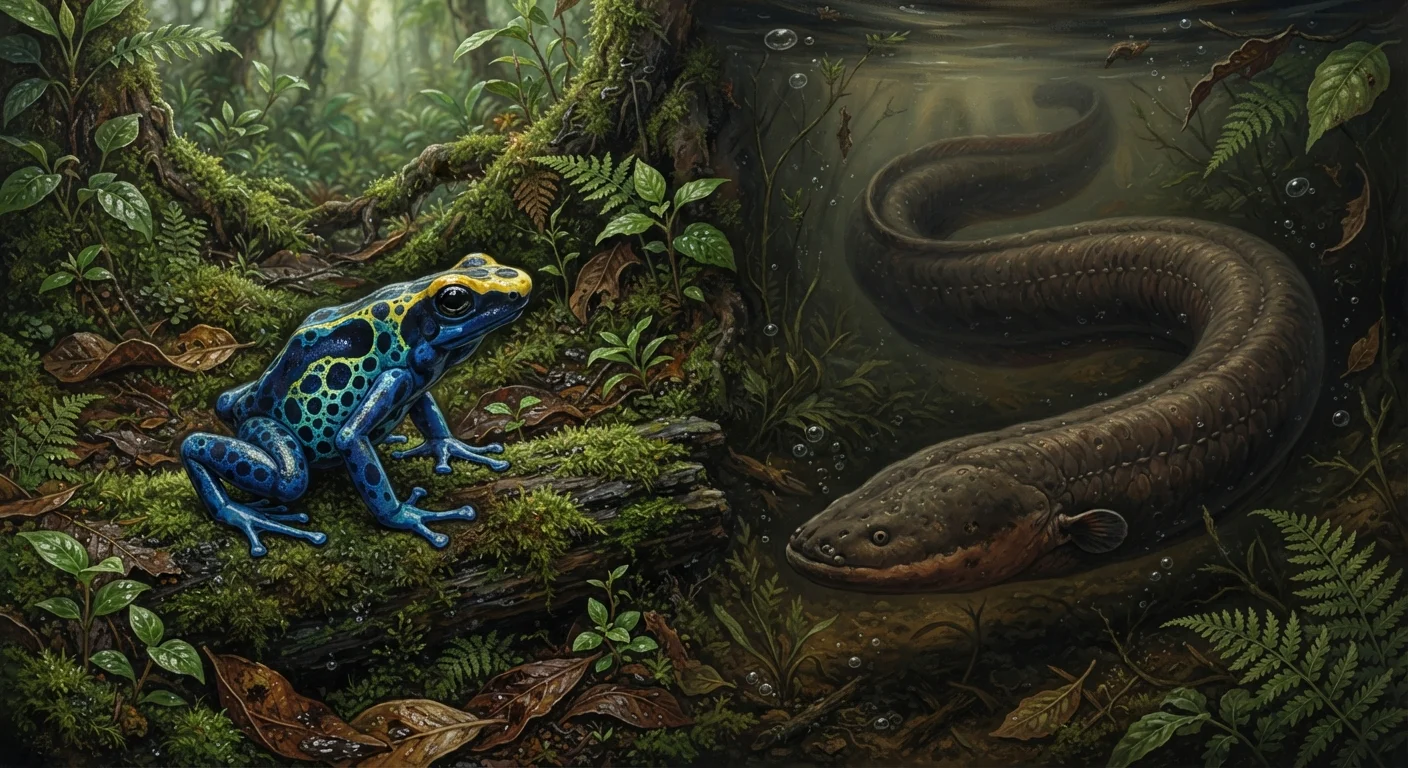
Visual communication is particularly conspicuous in species with well-developed colour vision and open habitats. Poison dart frogs (family Dendrobatidae) display vivid reds, blues, and yellows - a phenomenon called aposematism - to advertise toxicity to potential predators. Experimental studies have confirmed that naive predators learn to avoid brightly patterned prey after a single unpleasant encounter, meaning the signal's effectiveness increases within a population over time.
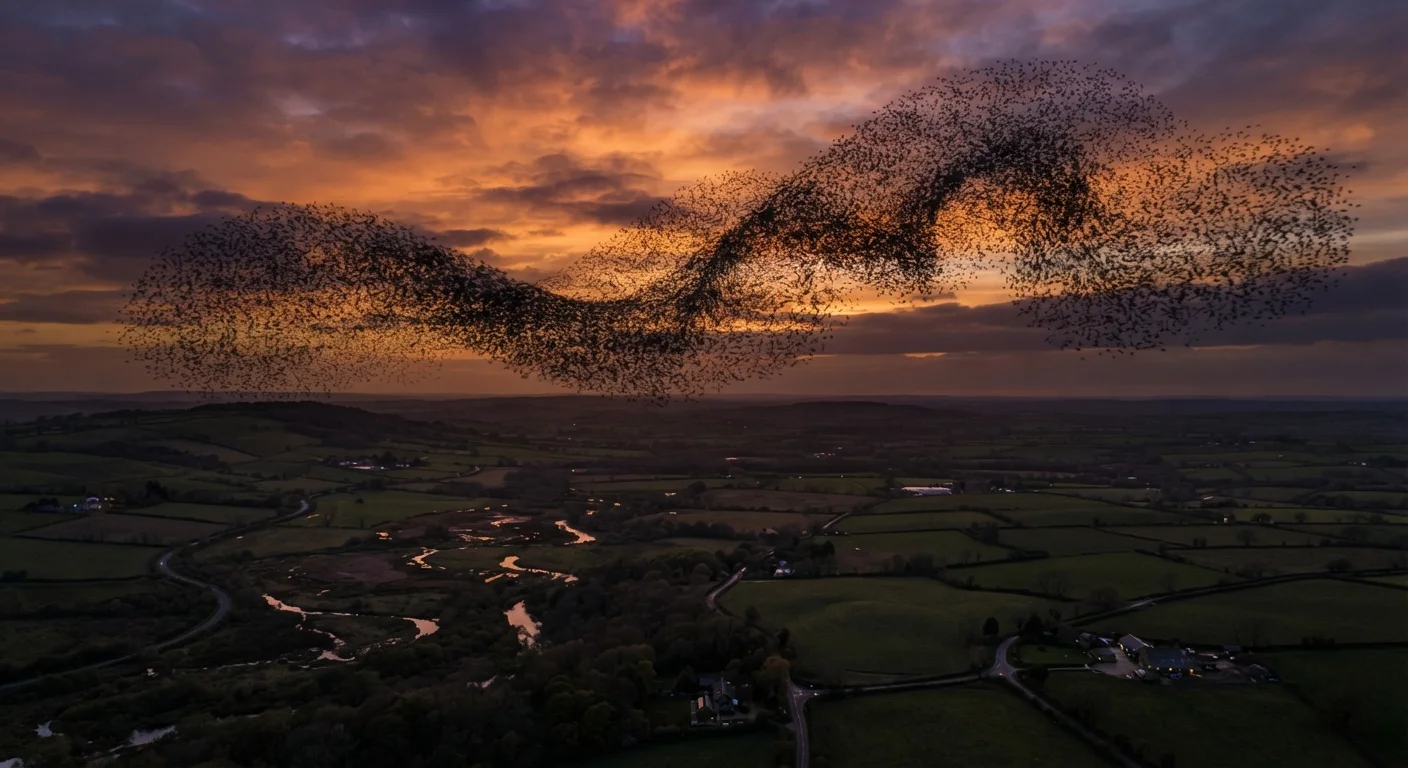
Cephalopods take visual signalling further: cuttlefish can produce dynamic skin patterns via chromatophores, iridophores, and papillae in under a second - a capability they retain even though they are functionally colour-blind. Dynamic movement also carries information; the coordinated movements of flocking birds can convey predator threat information across a murmuration in real time without any individual leading the response.
“The study of animal signals forces us to recognise that each species inhabits its own sensory world - an Umwelt - and that our human perceptual biases can systematically blind us to signals that are perfectly obvious to the intended receivers.”
— Jakob von Uexküll, Baltic German biologist and pioneer of biosemiotics, whose Umwelt concept remains foundational in animal communication research
Electroreception: Communication Through Electric Fields
Perhaps the most unfamiliar channel to human observers is electrocommunication - the use of self-generated electric organ discharges (EODs) to send signals. Weakly electric fish, including South American gymnotiform species such as Apteronotus leptorhynchus and African mormyrids like Brienomyrus brachyistius, produce low-voltage fields that encode species identity, sex, and individual identity in their waveform and frequency.
When two fish of the same species meet, they adjust their discharge frequencies to avoid overlap - a behaviour called the jamming avoidance response - which simultaneously prevents signal interference and communicates social status. Bioluminescence represents a related but light-based mechanism used by deep-sea species; our guide to how bioluminescence works covers those chemical light signals in depth.
Electroreception Is Absent in Humans
It is worth emphasising that humans possess no electroreceptive organ. We cannot perceive electric organ discharges directly, which means this entire communication channel was invisible to science until electrodes were placed in aquatic environments in the mid-20th century. This history is a reminder that animal communication systems may exist that remain undetected simply because we lack the sensory apparatus to notice them.
Multimodal Communication and What It Tells Us
In practice, most animals do not rely on a single channel. Research on fiddler crabs, jumping spiders, and songbirds has demonstrated that combining acoustic and visual signals simultaneously - multimodal communication - increases signal reliability and can convey more nuanced information than either channel alone. A male jumping spider (Habronattus coecatus), for example, produces substrate-borne vibrations with its abdomen while simultaneously displaying iridescent leg patches, with females responding more strongly to the combined display than to either component in isolation.
This integration of channels reflects evolutionary pressure toward accuracy and efficiency: where one channel degrades (e.g., sound absorbed by dense foliage), another may compensate. Understanding these systems deepens our appreciation of the sensory worlds animals inhabit - and reminds us that the natural world is far more communicatively rich than any single human sense can perceive.
Explore Multiple Sensory Channels When Watching Animals
Next time you observe wildlife, deliberately attend to channels beyond the obvious: watch for postural changes, note whether the animal is scent-marking a surface, and listen for substrate vibrations if possible. Many displays that appear silent to human ears are simultaneously rich in tactile and chemical information.
This article is for general educational purposes. Scientific understanding of animal communication continues to evolve; findings described reflect peer-reviewed evidence available at the time of writing.