
The Chemistry Behind Living Light
At its core, bioluminescence is a controlled oxidation reaction. The key players are luciferin, a small organic molecule that serves as the fuel, and luciferase, the enzyme that catalyzes its reaction with oxygen. When luciferin is oxidized, it enters an excited electronic state and then releases its extra energy as a photon of visible light as it returns to its ground state.
Crucially, this reaction produces almost no heat - which is why bioluminescent light is often called cold light. This efficiency matters enormously for living tissue, where excess heat would damage cells.
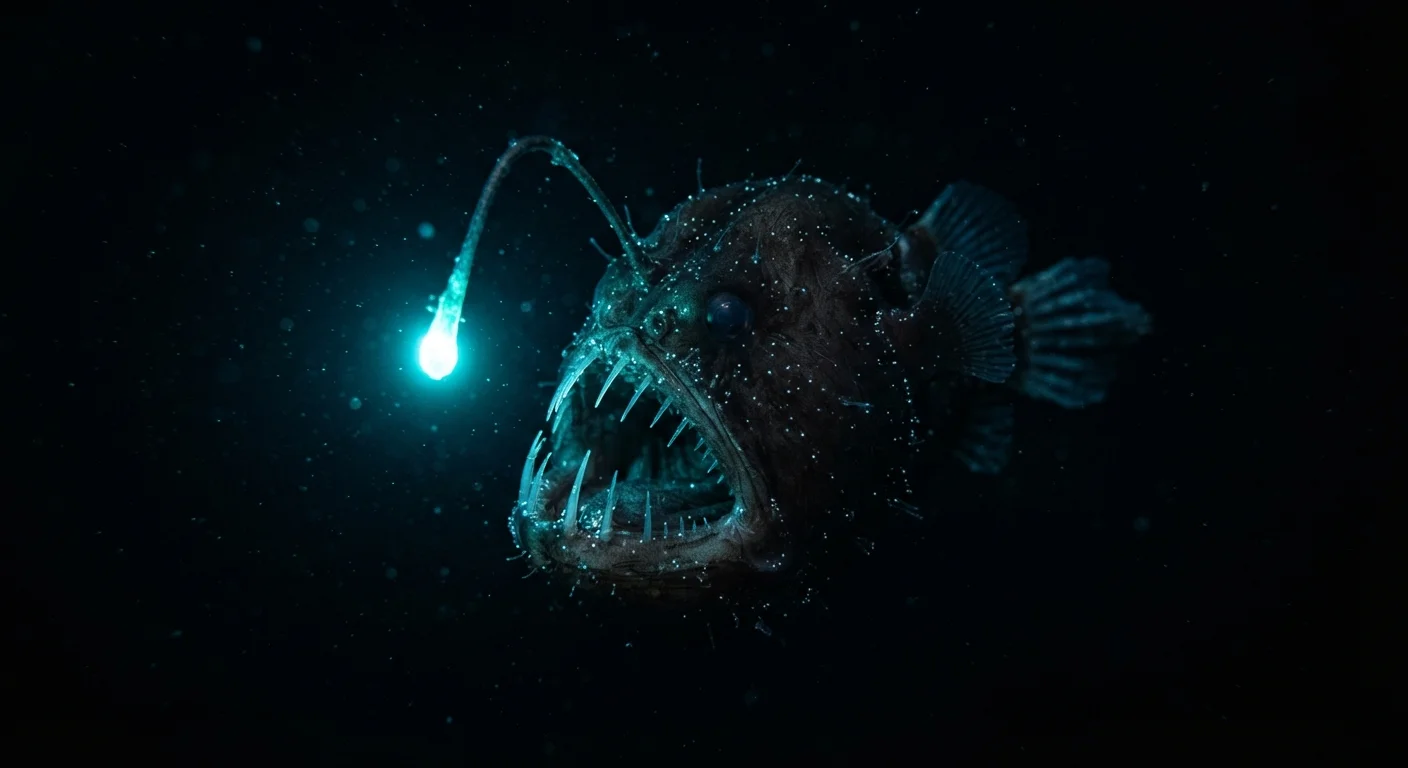
Different species use chemically distinct luciferins. Fireflies, marine bacteria, and dinoflagellates each rely on entirely different luciferin molecules, reflecting the fact that bioluminescence has evolved independently dozens of times. In some deep-sea fish, light is not produced by the animal's own cells at all - it is generated by colonies of symbiotic Aliivibrio fischeri bacteria housed in specialized light organs, a relationship that benefits both host and microbe.
Luciferin Diversity Across Species
There is no single 'bioluminescent molecule' - the term luciferin refers to a functional category rather than one specific compound. Firefly luciferin, coelenterazine (used by many marine organisms), and bacterial luciferin are chemically distinct molecules that happen to serve the same light-producing role. This molecular diversity is one reason scientists believe bioluminescence evolved separately so many times.
Why Animals Glow: Ecological Functions
Bioluminescence is not decorative - it serves clear survival functions, and different species have adapted it to solve remarkably different ecological problems.
- Predation: The anglerfish dangles a bioluminescent lure - a modified dorsal spine tipped with bacteria-filled tissue - directly in front of its mouth to attract prey in the lightless deep ocean. Flashlight fish use light organs beneath their eyes to illuminate and chase small crustaceans at night.
- Defense: Some squid species eject clouds of bioluminescent ink to dazzle or distract predators. The vampire squid (Vampyroteuthis infernalis) releases glowing mucus from the tips of its arm filaments to confuse attackers. Certain sea fireflies (ostracods) release a burst of blue light when disturbed, startling would-be predators.
- Counterillumination camouflage: Many midwater fish and squid - including the Hawaiian bobtail squid - emit light from their undersides to match the faint downwelling sunlight, erasing their silhouette from the view of predators hunting from below.
- Communication and mating: Fireflies use species-specific flash patterns to locate mates - a form of light-based signaling explored in depth in our article on animal communication systems.
76%
Deep-sea animal species capable of producing light
According to estimates from MBARI (Monterey Bay Aquarium Research Institute) researchers, approximately 76% of deep-sea animals are bioluminescent.
40+
Independent evolutionary origins of bioluminescence
A 2015 analysis of marine bioluminescence published in PLOS ONE found the trait has evolved independently more than 40 times in the oceans alone.
~2,000
Known firefly species worldwide
The Firefly Atlas and entomological literature estimate roughly 2,000 described species of fireflies (family Lampyridae) distributed across every continent except Antarctica.
Iconic Bioluminescent Species
Bioluminescence spans vast taxonomic distances, from single-celled organisms to complex vertebrates.
Dinoflagellates - microscopic marine plankton - are responsible for the famous 'glowing waves' seen on some coastlines, where mechanical disturbance triggers a flash of blue light. These flashes may deter zooplankton grazers.
Fireflies (Lampyridae) are the most familiar terrestrial example. Males flash in flight; stationary females respond from vegetation. Each species maintains a distinct pattern, reducing cross-species mating errors. There are roughly 2,000 known species of firefly worldwide.
Comb jellies (Ctenophora) are among the most visually striking bioluminescent animals - their rows of cilia refract light, producing rainbow-like rolling waves of color, while their bodies produce true bioluminescent pulses when disturbed.
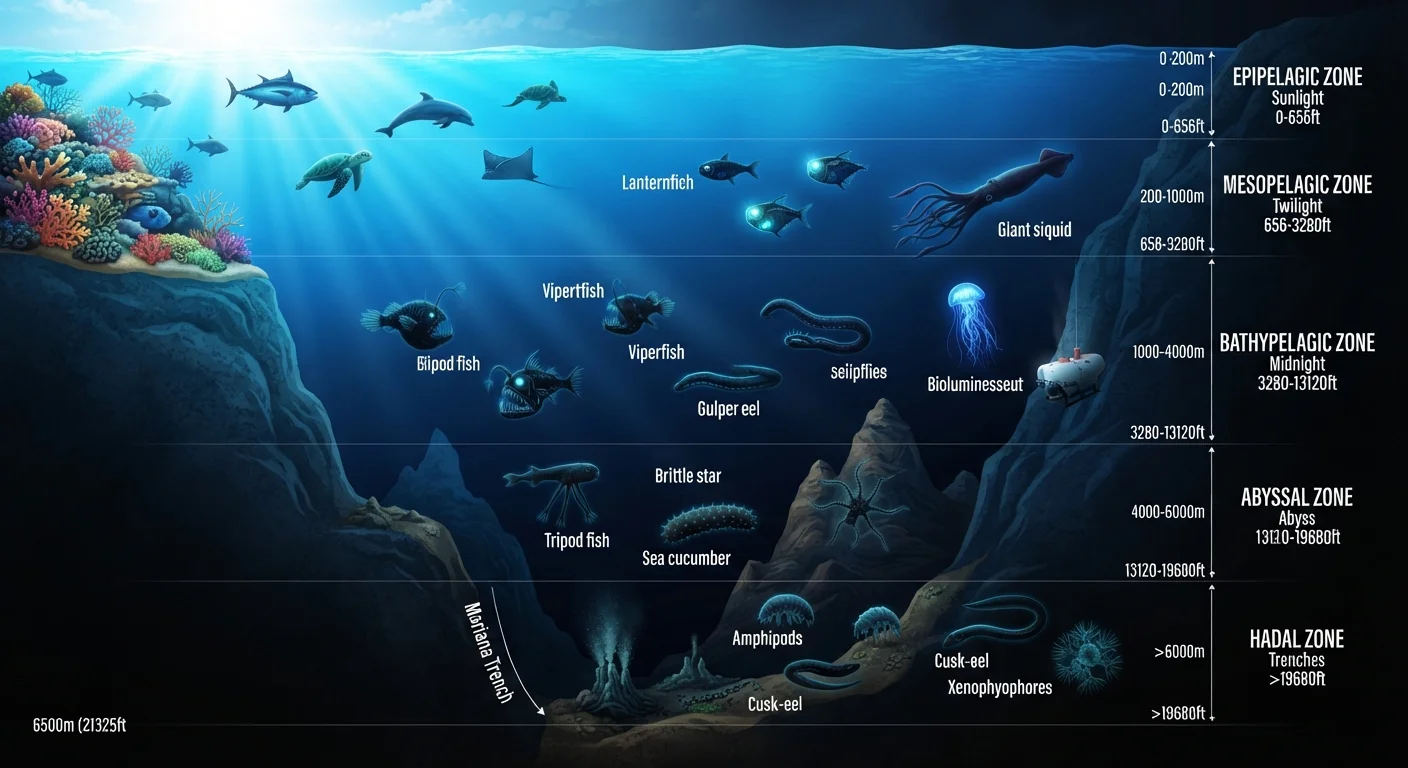
In the deep ocean - a realm detailed in our overview of ocean zones and their inhabitants - bioluminescence is effectively the dominant form of visual communication. The dragonfish (Aristostomias spp.) is unusual in producing far-red bioluminescence that most other deep-sea animals cannot perceive, giving it a private 'night-vision' advantage.
Convergent Evolution and Scientific Significance
Few biological traits demonstrate convergent evolution - the independent emergence of similar adaptations in unrelated lineages - more dramatically than bioluminescence. A landmark 2015 study published in PLOS ONE by Haddock, Moline, and Case estimated that bioluminescence has evolved independently more than 40 times across marine taxa alone. On land, independent origins are found in fireflies, click beetles, fungus gnats, and certain fungi.
This repeated evolution is strong evidence that light production confers substantial fitness advantages across wildly different ecological contexts. The same basic chemistry - luciferin plus luciferase plus oxygen - has been reinvented by life again and again, using different molecular ingredients each time.
For researchers, bioluminescent proteins have become indispensable laboratory tools. The luciferase gene isolated from fireflies is now routinely used in genetic research as a reporter gene - inserted alongside genes of interest so scientists can track gene expression in living cells by measuring light output. This application is entirely separate from the ecological story, but it underscores how deeply nature's chemistry permeates modern science.
“Bioluminescence is the most common form of communication on Earth, if you consider how much of the ocean is dark and how many organisms there use light to interact. It's just that most of it happens where we can't see it.”
— Edith Widder, Marine biologist and bioluminescence researcher, Ocean Research & Conservation Association
Understanding bioluminescence also enriches our appreciation of sensory adaptation - a theme explored further in our piece on how nocturnal animals navigate darkness. Whether flashing above a summer meadow or luring prey in the midnight zone, living light is one of evolution's most elegant inventions.