
Three Ecosystems, Three Blueprints for Life
When ecologists measure biodiversity, they look beyond raw species counts to examine structural complexity, trophic relationships, and ecosystem function. Coral reefs, tropical rainforests, and wetlands each achieve extraordinary species richness through fundamentally different mechanisms - and understanding those differences reveals why each is irreplaceable.
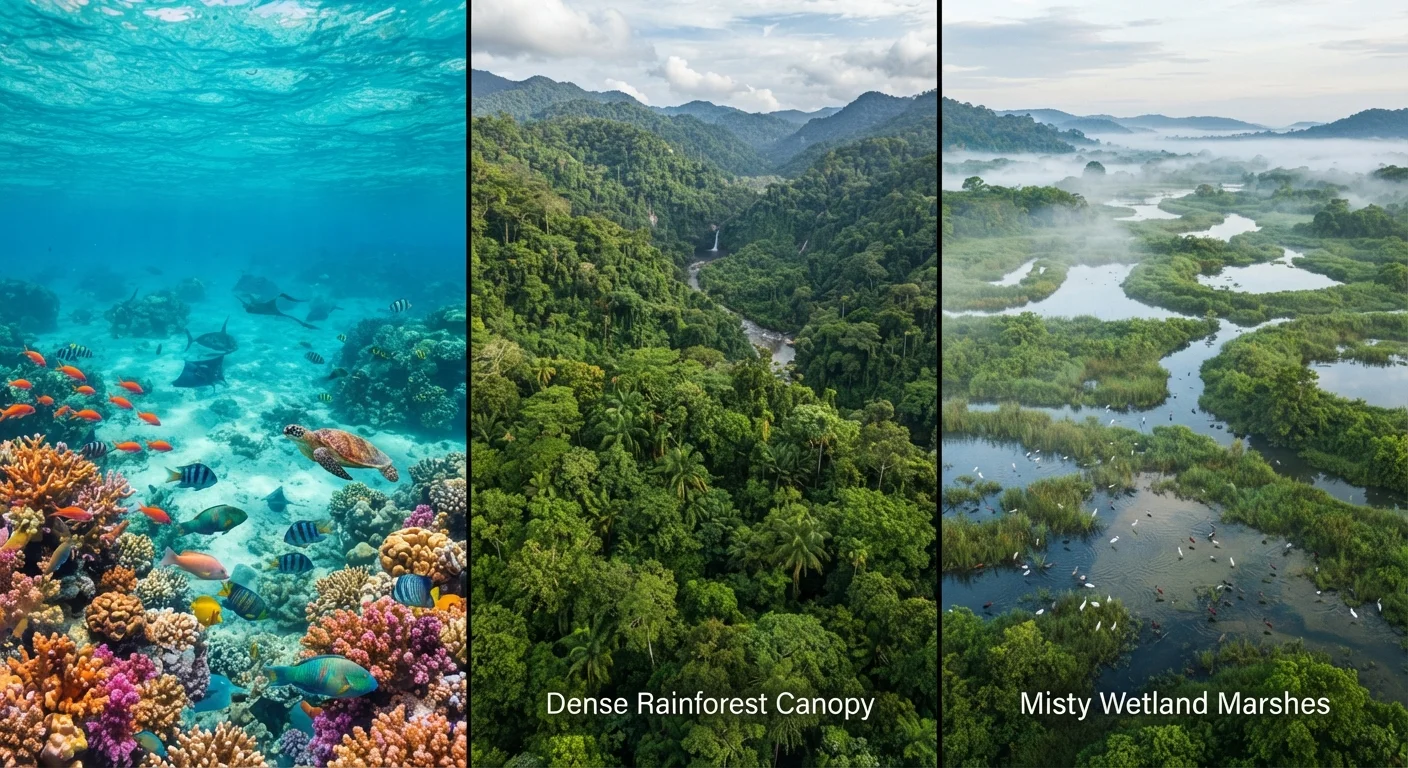
Coral reefs are underwater cities built by colonial animals. Rainforests stack life into vertical tiers from root mats to emergent canopy. Wetlands operate as dynamic transitional zones where aquatic and terrestrial systems overlap. To see how animals have evolved to thrive in these distinct environments, the structural architecture of each ecosystem is the starting point.
| Coral Reefs | Tropical Rainforests | Wetlands | |
|---|---|---|---|
| Global coverage | ~0.2% of ocean floor | ~6% of land surface | ~6% of land surface |
| Species supported | ~25% of marine species | ~50% of terrestrial species | ~40% of world's species |
| Primary biodiversity driver | Structural reef complexity | Vertical canopy stratification | Hydrological dynamics |
| Carbon storage role | Moderate (calcification) | High (forest biomass) | Very high (peatlands) |
| Primary threats | Ocean warming, acidification | Deforestation, fragmentation | Drainage, pollution, climate change |
| Recovery potential | Slow; decades to centuries | Moderate with protection | Relatively faster if hydrology restored |
Coral Reefs: Ocean Cities Under Pressure
Coral reefs are constructed by tiny polyps - cnidarians that secrete calcium carbonate skeletons over millennia. The resulting architecture creates thousands of microhabitats within a single reef structure. Roughly 25% of all described marine species depend on coral ecosystems at some point in their life cycle, according to estimates from the National Oceanic and Atmospheric Administration (NOAA).
The productivity of a reef rests on a symbiosis between coral polyps and photosynthetic algae called zooxanthellae. When ocean temperatures rise by as little as 1-2°C above seasonal norms, this partnership breaks down in a process known as coral bleaching. Mass bleaching events have increased dramatically in frequency since the 1980s, threatening reef systems from the Great Barrier Reef to the Caribbean.
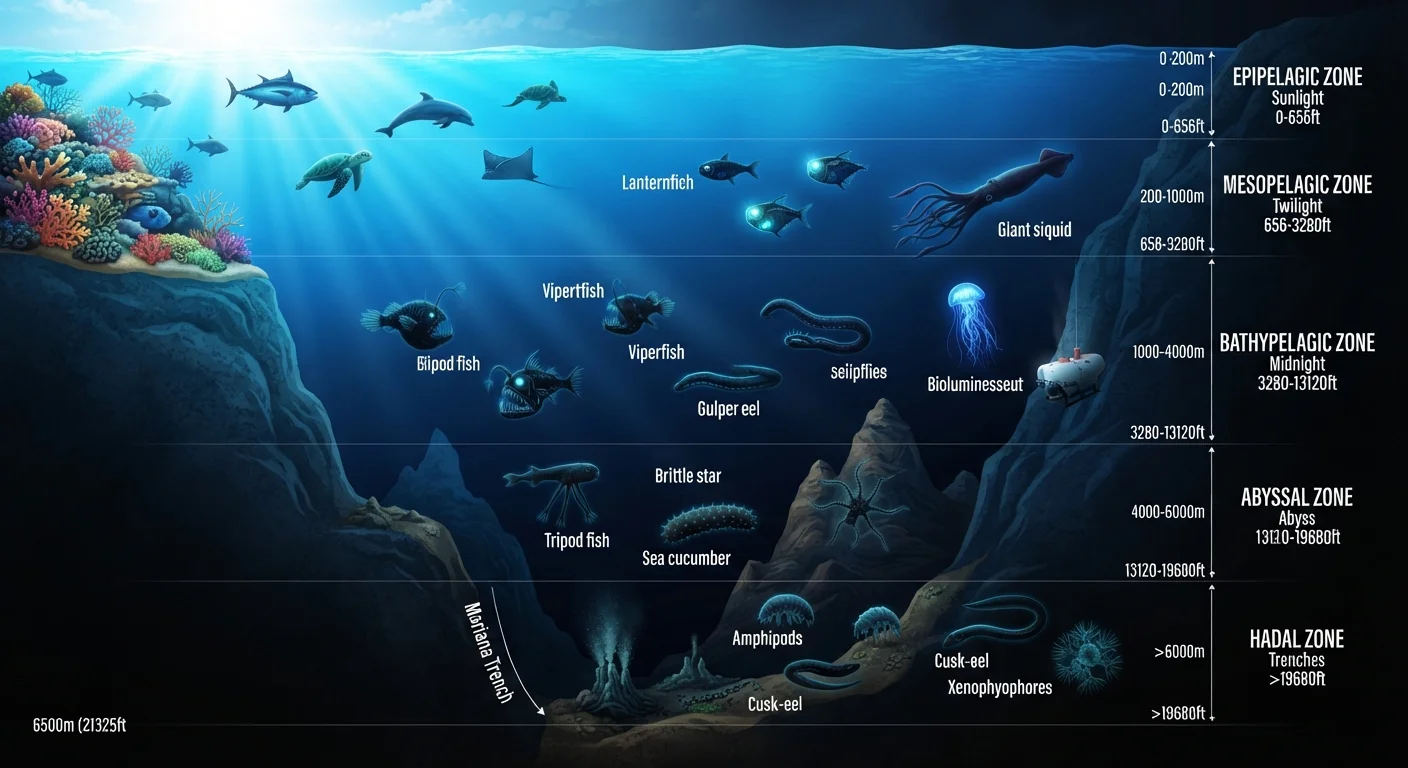
The layered structure of ocean zones provides important context: reefs are almost entirely confined to the photic zone, where sunlight penetrates enough to sustain zooxanthellae photosynthesis - typically within 30 meters of the surface.
25%
Marine species dependent on coral reefs
NOAA estimates roughly one quarter of all described marine species rely on coral reef ecosystems at some stage of their life cycle.
35%+
Wetland area lost since 1970
The Global Wetland Outlook reports more than a third of global wetland extent has disappeared in just over five decades.
50%
Terrestrial species in tropical rainforests
Despite covering less than 6% of land, tropical rainforests shelter an estimated half of all terrestrial plant and animal species according to the WWF.
Tropical Rainforests: Earth's Terrestrial Biodiversity Engine
Tropical rainforests occupy approximately 6% of Earth's land area yet shelter an estimated 50% of all terrestrial plant and animal species, according to the World Wildlife Fund. Their vertical stratification - forest floor, understory, canopy, and emergent layer - creates ecological niches that have driven speciation over millions of years.
The Amazon Basin alone contains more than 40,000 plant species, 1,300 bird species, and over 3,000 freshwater fish species. This richness is driven partly by stable climatic conditions over geological time, which allowed lineages to diversify without periodic mass extinction events common at higher latitudes.
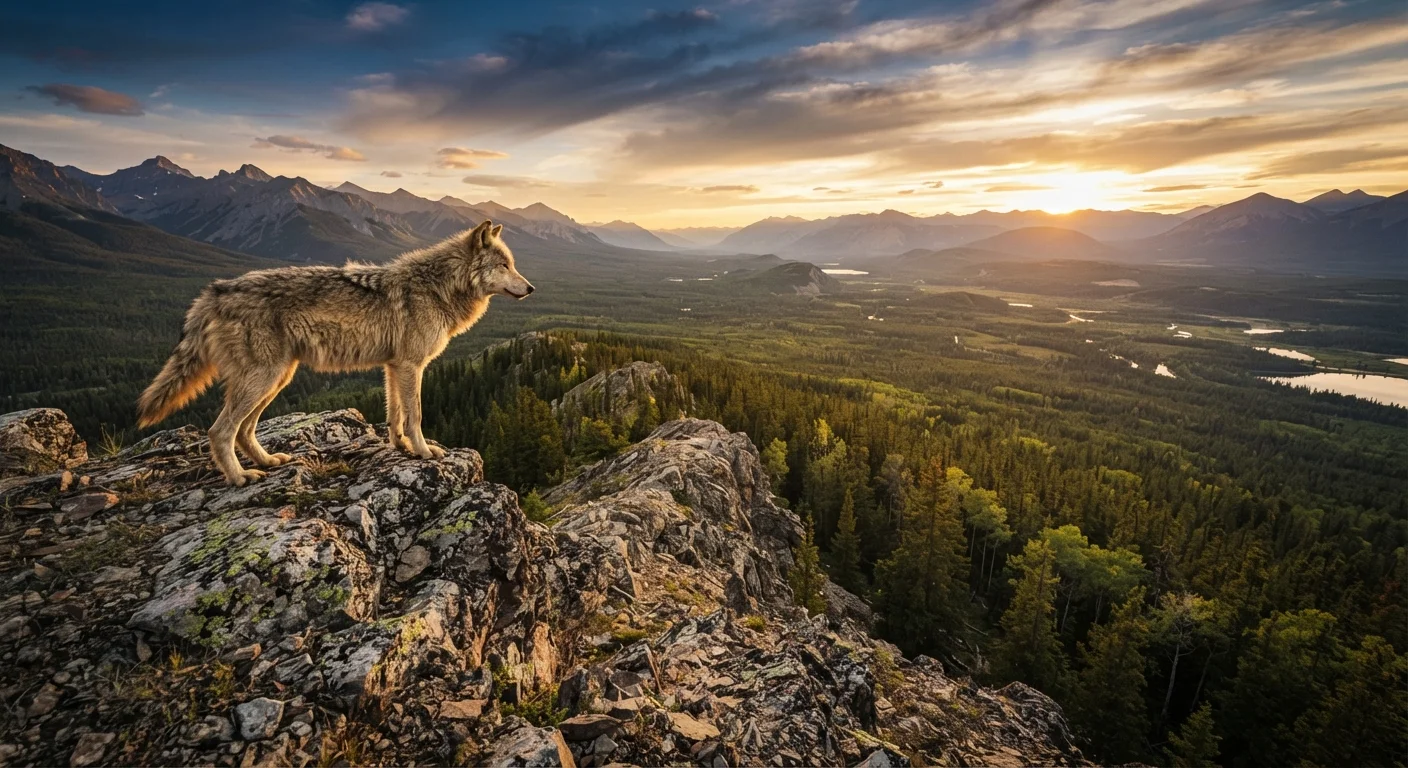
Biodiversity in rainforests is also shaped by the roles individual species play. Understanding the difference between apex predators and keystone species is essential here - jaguars, harpy eagles, and even fig trees each exert disproportionate influence on forest structure and species composition.
Why Structural Complexity Drives Species Richness
In all three ecosystems, the number of physical niches available - reef crevices, forest canopy layers, wetland microhabitats - directly correlates with species diversity. Protecting the physical architecture of these ecosystems is as important as protecting individual species. When structure is lost, the species communities it supports collapse with it, even if the broader habitat remains nominally intact.
Wetlands: The Underestimated Ecosystems
Wetlands - encompassing marshes, swamps, bogs, mangroves, and floodplains - are often undervalued in biodiversity discussions despite their outsized ecological importance. They cover roughly 6% of Earth's land surface and support more than 40% of the world's species, including many found nowhere else, according to the Ramsar Convention on Wetlands.
Unlike reefs or rainforests, wetlands derive much of their value from what they do rather than purely the number of species they contain. They filter pollutants, recharge aquifers, buffer coastlines from storms, and store carbon at rates that rival or exceed tropical forests - particularly in peatlands, where organic matter accumulates under waterlogged, low-oxygen conditions. Despite this, wetlands have seen a loss of more than 35% of their global extent since 1970, according to the Global Wetland Outlook.
Mangrove forests - a specialized coastal wetland type - further blur the boundary between marine and terrestrial systems, providing nursery habitat for reef fish species and forming a functional link between the ecosystems discussed here.