

Defining the Two Concepts
Ecology relies on precise language to explain how species interact, and two terms are frequently confused in both popular media and general conservation discourse: apex predator and keystone species. They are related but not interchangeable - each describes a fundamentally different kind of ecological role.
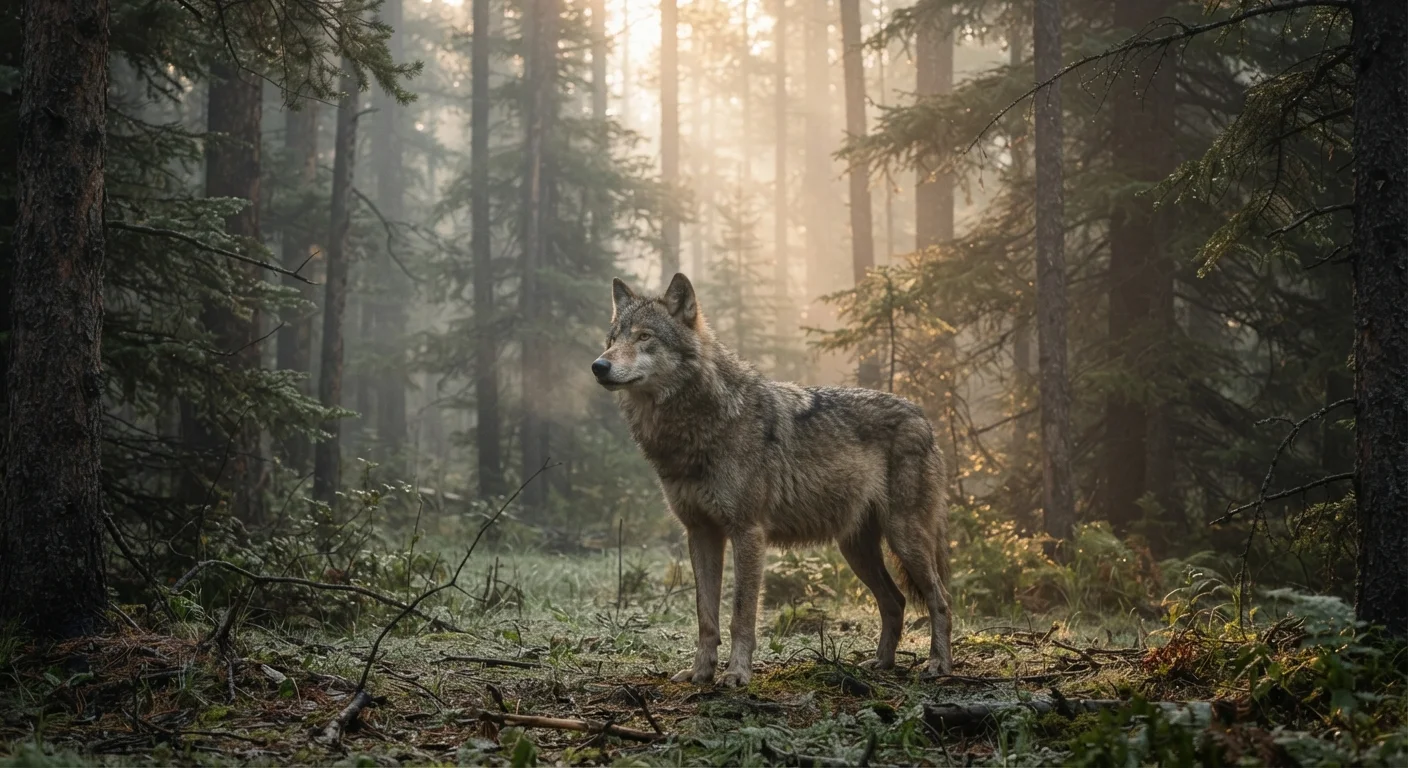
An apex predator is defined strictly by trophic position. It occupies the highest level of a food chain or food web, meaning no other animal routinely preys upon it as an adult in its native habitat. Examples include gray wolves (Canis lupus), great white sharks (Carcharodon carcharias), and lions (Panthera leo). Their influence on ecosystems flows primarily through predation - by hunting prey, they regulate prey population sizes, which in turn affects vegetation, river systems, and species diversity at lower trophic levels.
A keystone species, a concept introduced by ecologist Robert Paine in 1969, is defined not by what eats it but by the magnitude of its ecological effect relative to its abundance. If a species is removed and the ecosystem changes dramatically, that species is a keystone. Sea otters (Enhydra lutris), African elephants (Loxodonta africana), and fig trees are all documented keystone species - none of which are apex predators. Even organisms like beavers and certain fungi can qualify.
| Criterion | Apex Predator | Keystone Species |
|---|---|---|
| Defined by | Trophic position (top of food chain) | Disproportionate ecological impact relative to abundance |
| Primary mechanism | Predation and top-down regulation | Habitat creation, predation, mutualism, or resource provision |
| Must be a predator? | Yes, by definition | No - plants, fungi, and herbivores can qualify |
| Classic examples | Gray wolf, great white shark, lion | Sea otter, African elephant, beaver, fig tree |
| Overlap possible? | Yes - some apex predators are also keystones | Yes - some keystone species are apex predators |
| Ecosystem effect if removed | Prey populations surge; trophic cascade follows | Ecosystem structure often collapses or simplifies dramatically |
| Concept origin | Derived from food web and trophic level theory | Introduced by ecologist Robert Paine, 1969 |
The conceptual overlap is real: a species like the gray wolf can be both an apex predator and a keystone species simultaneously. But the categories ask different questions. Apex predator asks, where does this animal sit in the food web? Keystone species asks, how much does this organism's presence matter to the broader system?
How Each Role Shapes Ecosystems
The mechanisms by which these two categories influence ecosystems differ in instructive ways.
Apex predators act through top-down regulation, a process ecologists call a trophic cascade. When wolves were reintroduced to Yellowstone National Park in 1995, their predation on elk changed not only elk population density but also elk behavior - the animals avoided overgrazing river valleys where wolves could ambush them. This behavioral shift allowed willows and aspens to regenerate, stabilized riverbanks, and ultimately altered water flow and fish habitat. The cascade proceeded from predator through herbivore to vegetation to hydrology. To explore how such ripple effects unfold in detail, see this examination of trophic cascades.
Keystone species act through a wider variety of mechanisms - predation is only one. Sea otters control sea urchin populations; without them, urchins overgraze kelp forests into barren rocky seafloors. African elephants uproot trees and create open grassland patches used by dozens of other species. Beavers dam streams to create wetlands that support amphibians, waterfowl, and riparian plants. In each case, the defining feature is disproportionate structural influence: these species create or maintain the physical and biological conditions that other species depend on.
1969
Year the keystone species concept was introduced
Ecologist Robert Paine coined the term after removing sea stars from a Pacific tidal pool and observing the collapse of mussel bed diversity.
~25%
Estimated decline in wolf prey overgrazing after reintroduction
Studies of Yellowstone's Northern Range documented measurable vegetation recovery in riparian zones following wolf reintroduction in 1995.
~40x
Sea urchin density increase without sea otters
Research in kelp forest systems has documented urchin population explosions when sea otter populations are depleted, leading to rapid kelp canopy loss.
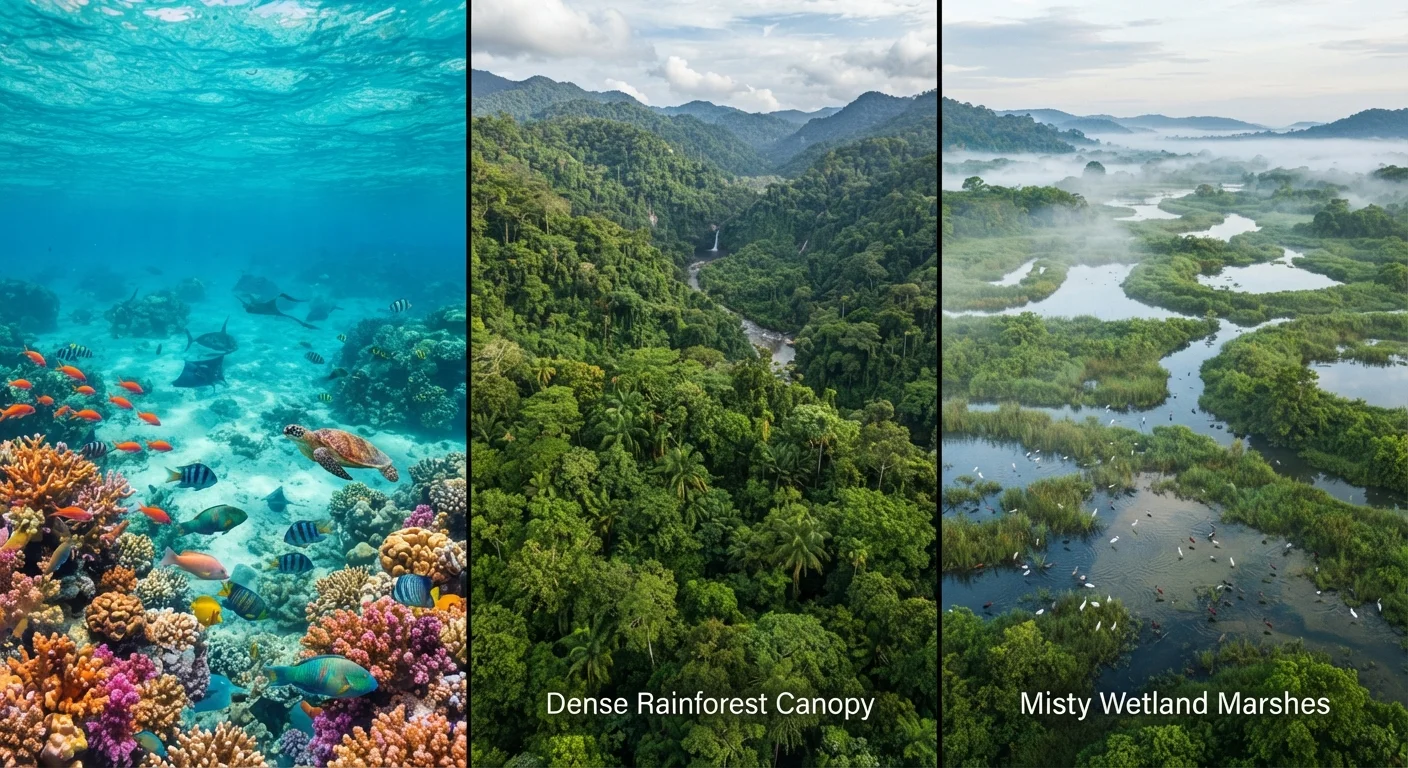
Understanding these mechanisms matters for conservation. Ecosystems that harbor high biodiversity - such as those discussed in this comparison of coral reefs, rainforests, and wetlands - are often structured around keystone relationships that took millennia to develop.
Where the Concepts Overlap - and Where They Don't
The gray wolf is perhaps the most cited example of a species that is simultaneously an apex predator and a keystone species. Its reintroduction data from Yellowstone provides some of the strongest empirical evidence for trophic cascades in terrestrial ecosystems. Similarly, large sharks function as apex predators in marine food webs while also qualifying as keystone species in reef and coastal ecosystems - a reality often obscured by cultural misrepresentations of these animals.
However, most apex predators are not automatically keystones. A species at the top of its food chain may have relatively limited ecological impact if its prey base is robust and alternatives exist. Conversely, keystone species are frequently not predators at all. The fig tree, for instance, produces fruit year-round in tropical forests and supports primates, birds, and bats during periods when other food sources fail - yet it hunts nothing.
A Common Source of Confusion
The term 'apex predator' is sometimes used loosely in popular media to mean any powerful or dominant animal, which blurs its scientific meaning. Ecologically, the term is strictly about trophic position and the absence of natural predators - not about size, aggression, or dominance within a species. Similarly, 'keystone species' is sometimes applied too broadly; rigorous identification requires empirical evidence of what happens to the ecosystem when that species is experimentally or observationally removed.
This distinction has direct conservation implications. Protecting an apex predator is important, but it does not guarantee ecosystem stability if other keystone species are lost. Effective conservation requires identifying which species - regardless of trophic level - hold disproportionate structural roles. Both concepts, used together, give ecologists a richer picture of ecological architecture than either provides alone. For further reading on how species interactions shape social and behavioral patterns across the animal kingdom, see how ecological pressures drive solitary versus social lifestyles.