
The City as an Evolutionary Pressure Cooker
Cities now cover roughly three percent of Earth's land surface, yet their ecological footprint extends far beyond their boundaries. For the wildlife that remains within or moves through urban areas, the challenges are immediate and multidimensional: constant artificial light, broadband noise, fragmented habitat, and an entirely novel food landscape. These are not gradual pressures - they arrive within an animal's lifetime, demanding responses that genetic evolution alone cannot supply quickly enough.
The result is a body of evidence, accumulated over several decades of urban ecology research, showing that many species modify core behaviors in measurable, consistent ways. These shifts are not random; they track predictable urban stressors and often appear independently in the same species across geographically separate cities - a phenomenon researchers call parallel urban adaptation.
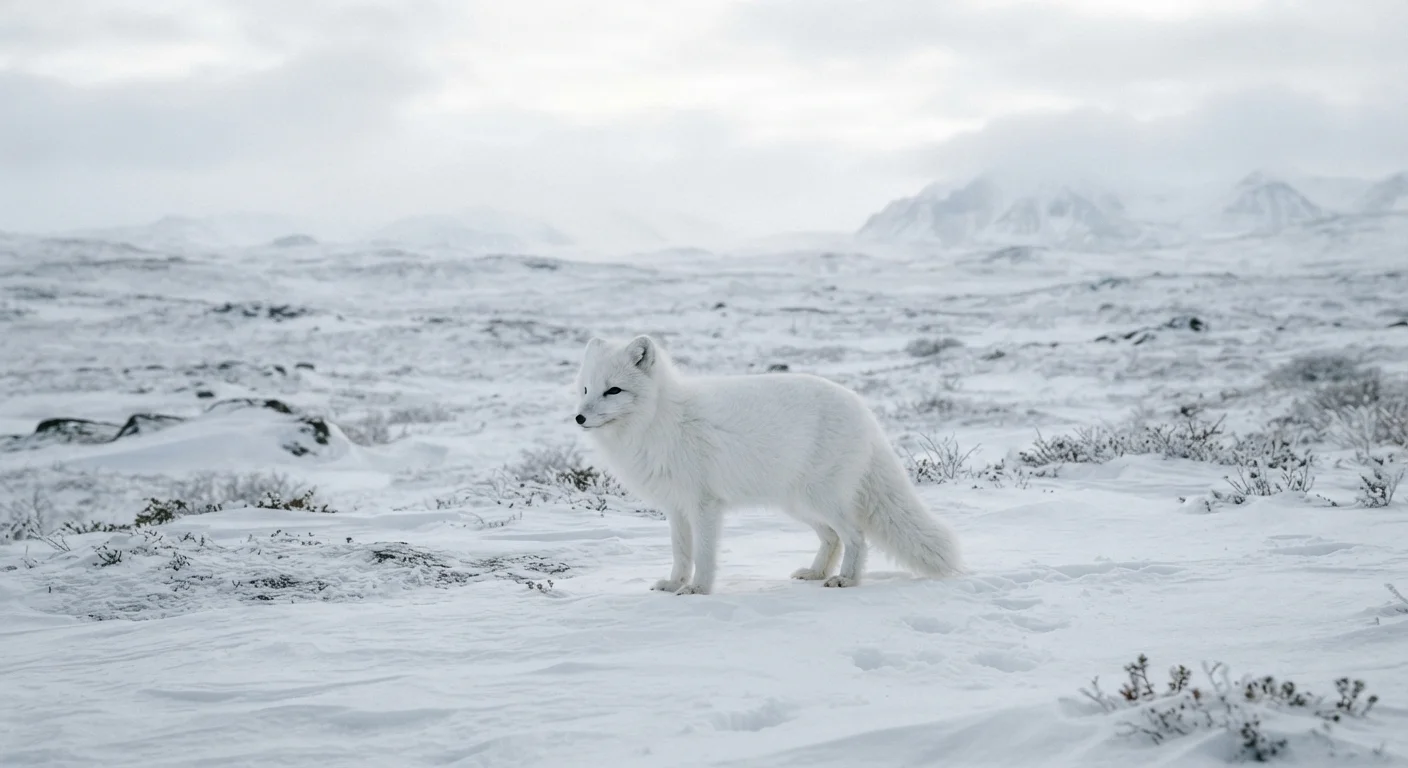
This stands in instructive contrast to how evolution works across the planet's extreme environments. Adaptations to biomes like the Arctic or desert unfold across millennia; urban behavioral change can be documented within years.
~3%
Earth's land surface covered by urban areas
Despite their small footprint, cities exert disproportionate ecological influence on surrounding wildlife through noise, light, and habitat fragmentation.
Up to 1 hour
Earlier dawn song onset in urban blackbirds
Studies comparing urban and rural blackbird populations in Europe have recorded dawn song beginning significantly earlier in city-dwelling birds, linked to artificial light levels.
5-10x
Higher population densities in urban fox groups
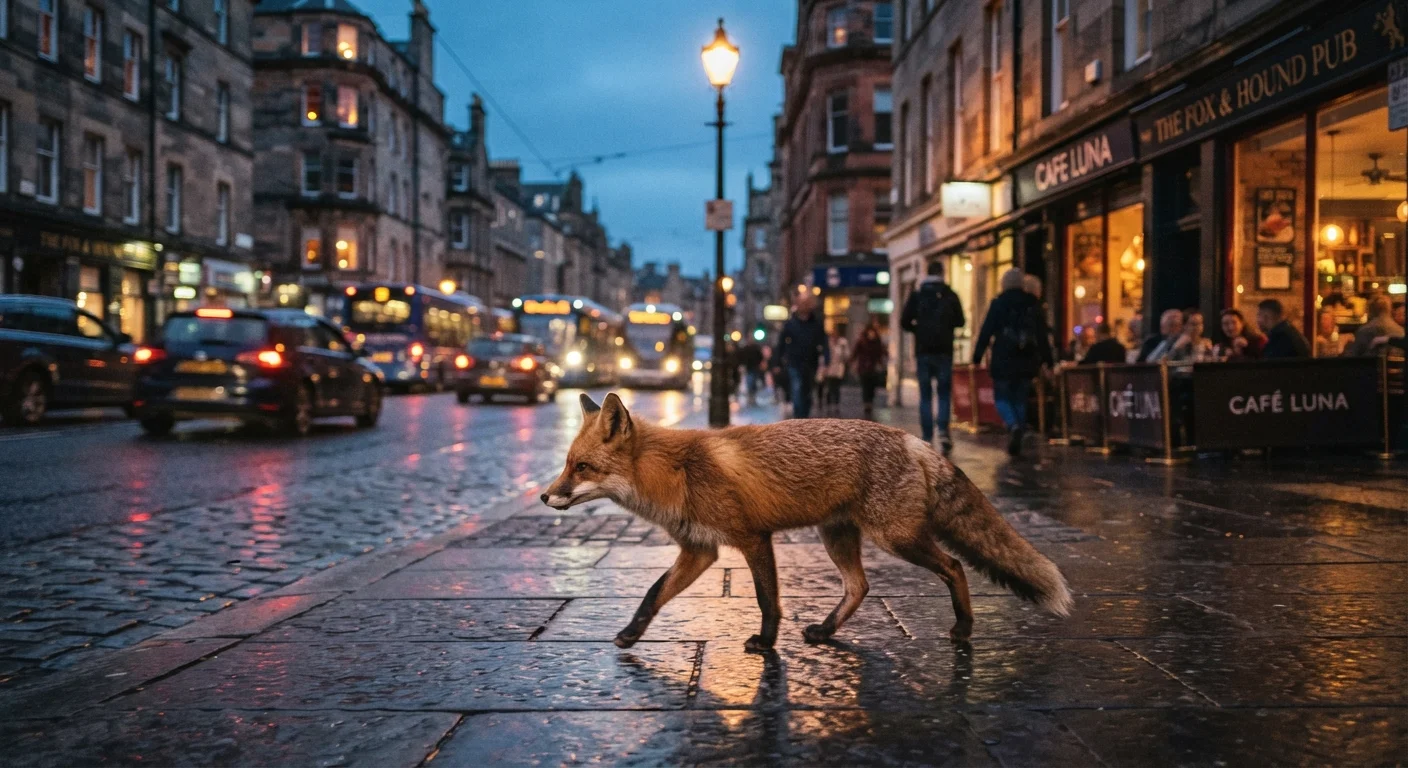
Urban red fox densities in British cities have been measured at significantly higher levels than rural counterparts, reflecting behavioral tolerance for compressed territories.
Acoustic Shifts: Singing Over the City
Traffic noise occupies low-frequency acoustic space - roughly the same range many bird species use for territorial songs and mate-attraction calls. Researchers studying great tits (Parus major) in European cities documented that urban males consistently sing at higher minimum frequencies than their rural counterparts. Because low-frequency notes are masked by traffic rumble, birds that sang higher were simply more audible, and over time this trait became prevalent in urban populations.
Similar patterns have been recorded in house finches, song sparrows, and several corvid species across North America and Europe. Some individuals adjust their pitch in real time depending on ambient noise levels - a form of behavioral plasticity rather than a fixed trait. Urban birds also tend to start singing earlier in the morning, partly because artificial light advances their internal clocks.
“The urban environment is not just a backdrop for wildlife - it is an active selective force, reshaping behavior faster than almost any other habitat transition we study.”
— Hans Slabbekoorn, Sensory ecologist and researcher in bioacoustics, Leiden University
The acoustic environment of a city is not merely louder - it is spectrally different, and the species best equipped to modify their communication accordingly gain a measurable reproductive advantage.
Foraging, Boldness, and the Urban Food Web
Cities offer a paradox for foraging animals: food is often abundant but spatially concentrated around human activity. Raccoons, foxes, crows, and gulls have all been documented expanding their dietary breadth in urban settings, exploiting refuse, restaurant waste, and human handouts. This dietary generalism is not coincidental - species with innate flexibility in foraging strategies were already pre-adapted to exploit novel food sources.
Alongside dietary change comes measurable behavioral boldness. Urban coyotes in North American cities exhibit shorter flight-initiation distances - the threshold at which an animal flees an approaching human - compared to rural populations. This reduced wariness is not naivety; it reflects learned risk assessment calibrated to environments where humans are frequent but rarely dangerous.
However, dependence on anthropogenic food carries costs. Animals conditioned to human food sources may show reduced fitness when those sources disappear, and concentrated foraging near roads elevates collision risk. Understanding these tradeoffs matters for anyone interested in responsible wildlife encounters in urban parks and green spaces.
Observe Urban Wildlife Responsibly
If you encounter urban wildlife - a fox den under a porch, crows gathering in a park, or a hawk perched on a lamppost - maintain distance and avoid feeding. Supplemental feeding from humans alters foraging behavior and can create dependency that reduces long-term fitness. Passive observation, without intervention, gives researchers and the animals themselves the best outcomes.
Light Pollution and the Disruption of Biological Timing
Artificial light at night (ALAN) is among the most pervasive urban stressors affecting wildlife, and its effects cascade through multiple behavioral systems. For migratory birds, city glow interferes with star-based navigational cues, drawing individuals toward illuminated buildings and increasing collision mortality. Insects attracted to artificial lights concentrate prey in unnatural locations, altering the foraging economics for bats and insectivorous birds alike.
Breeding timing is particularly sensitive to light cues. Studies have found that urban great tits and blue tits begin nesting several days earlier than rural counterparts in the same climatic zone, apparently because artificial light advances their perception of spring day length. Whether this earlier timing synchronizes well with peak food availability - such as caterpillar emergence - varies by location and year, meaning early breeding is not automatically advantageous.
The relationship between darkness and behavior extends to nocturnal species whose entire ecological niche depends on low-light conditions. For many of these animals, urban light pollution effectively compresses or eliminates the night, with significant downstream consequences for predator-prey dynamics and population health.
Social Behavior and Territory in Compressed Habitat
Urban habitat fragmentation forces species into higher-density living than their natural ecology typically supports. This compression alters territorial behavior, social hierarchies, and dispersal patterns in ways researchers are still mapping. Urban red foxes in British cities, for example, maintain smaller home ranges but tolerate closer proximity to neighboring families than rural foxes, suggesting a degree of social flexibility not predicted by baseline ethological models.
Crow and corvid social dynamics in cities show parallel shifts. Group-level intelligence already documented in corvid flocks appears amplified in urban populations, where birds have been observed learning and transmitting information about specific dangerous humans across group members - a culturally transmitted behavior documented in controlled studies.
Not all species navigate urban social pressure equally well. Solitary species with large territorial requirements often cannot compress their ranges sufficiently and are simply excluded from heavily urbanized zones, leaving cities dominated by the most socially flexible generalists. This filtering effect is one reason urban fauna worldwide tends to converge on a similar cast of adaptable species, even across different continents and climatic zones.