
The Language of the Dealership Floor
Walking into a dealership without knowing its vocabulary puts you at an immediate disadvantage. Terms like MSRP, invoice price, and APR are used constantly in sales conversations and contract paperwork - but they are rarely explained unprompted. This reference guide defines each term precisely so you can evaluate what you're actually being offered.
| MSRP legal requirement | Monroney label required on all new U.S. passenger vehicles (Automobile Information Disclosure Act (U.S.)) |
| Typical dealer holdback | Approximately 2-3% of MSRP (Industry standard; varies by manufacturer) |
| APR disclosure requirement | Mandatory under the Truth in Lending Act (TILA) (U.S. federal law) |
| Money factor to APR conversion | Multiply money factor × 2,400 (Standard lease financing calculation) |
Understanding these figures also matters beyond the showroom. The total cost of ownership extends well past any sticker price, so anchoring your budget to the right numbers from the start prevents surprises later.
MSRP, Invoice Price, and What Falls Between
MSRP (Manufacturer's Suggested Retail Price) is the price a vehicle's manufacturer recommends the dealer charge. It appears on the Monroney label - the window sticker required by U.S. federal law on all new passenger vehicles. "Suggested" is the operative word: dealers are legally free to sell above or below it, and many do both depending on supply and demand.
Invoice price is what the dealer nominally paid the manufacturer for the vehicle. It is widely published by automotive research services and is often used by buyers as a negotiation anchor. However, invoice price is not the dealer's true cost. Manufacturers frequently provide dealers with holdback - typically 2-3% of MSRP - paid back after the sale, along with other incentive programs that are not reflected in the invoice figure.
Dealer markup (sometimes called an addendum) is any amount added above MSRP, often for high-demand models or dealer-installed accessories. If a sticker shows a figure higher than the printed MSRP, the difference is markup - and unlike MSRP, it carries no manufacturer backing.
MSRP
Manufacturer's Suggested Retail Price - the price printed on a new vehicle's window sticker as recommended by the manufacturer. Dealers may sell above or below this figure.
Invoice Price
The price a dealer nominally pays the manufacturer for a vehicle. This is not the dealer's true final cost, as holdback payments and manufacturer incentives are paid separately.
APR
Annual Percentage Rate - the annualized cost of a loan expressed as a percentage. U.S. law requires lenders to disclose APR, which must include certain fees beyond the nominal interest rate.
Holdback
A portion of the vehicle's MSRP - typically 2-3% - that manufacturers pay back to dealers after a sale. It is not reflected in the invoice price.
Dealer Markup / Addendum
An amount added to the MSRP by the dealership, often applied to high-demand or low-inventory vehicles. It appears as a separate sticker alongside the manufacturer's window label.
Money Factor
The lease equivalent of an interest rate. Multiplying the money factor by 2,400 gives an approximate APR for comparing lease financing costs.
Capitalized Cost
In a vehicle lease, the agreed selling price of the car - analogous to the negotiated purchase price. A lower capitalized cost reduces monthly lease payments.
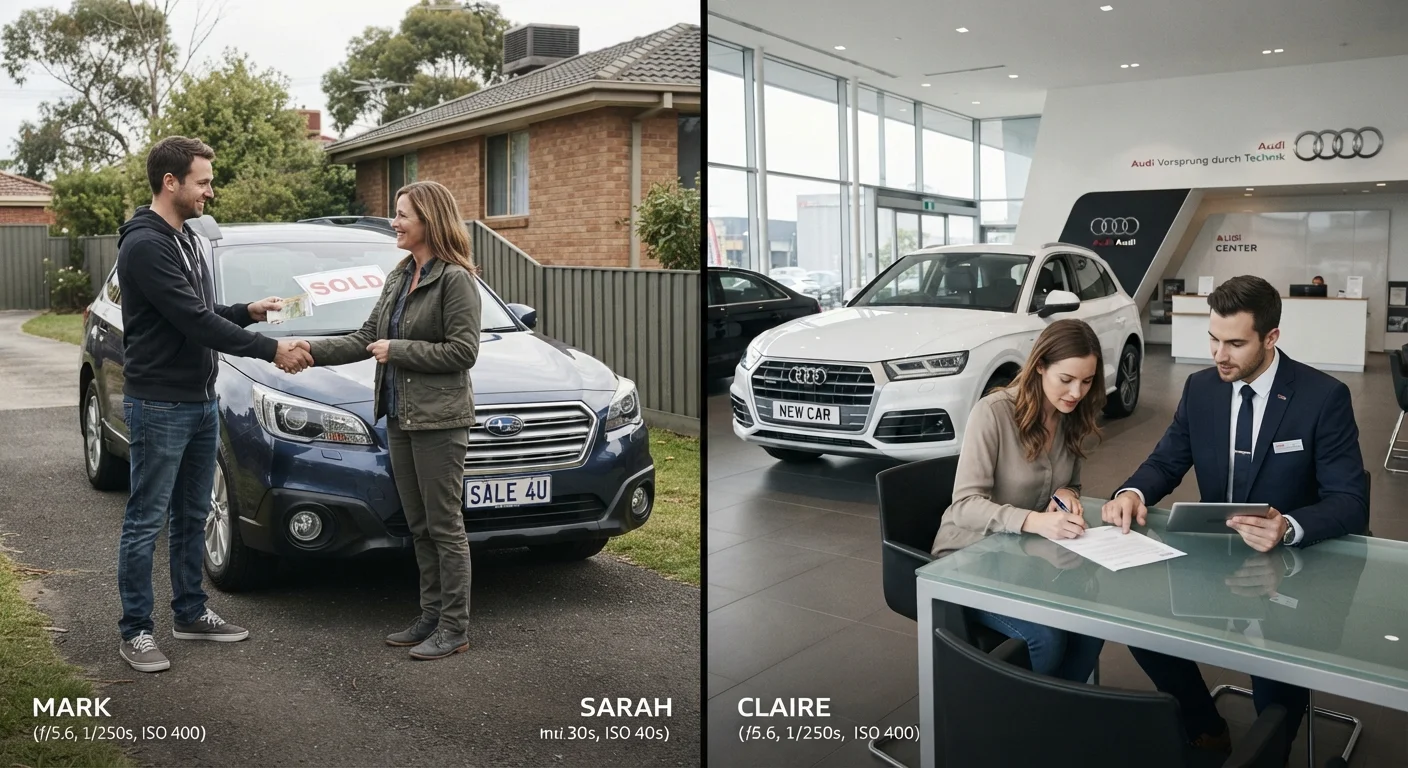
For context on how private sellers price differently, see our overview of buying from a private seller vs. a dealership.
APR and Financing Terms Explained
APR (Annual Percentage Rate) is the annualized cost of borrowing money to finance a vehicle. Unlike the nominal interest rate, APR is required by the U.S. Truth in Lending Act to include certain fees, making it a more complete comparison figure. A lower APR means less interest paid over the life of the loan - but the loan term length and total amount financed matter just as much.
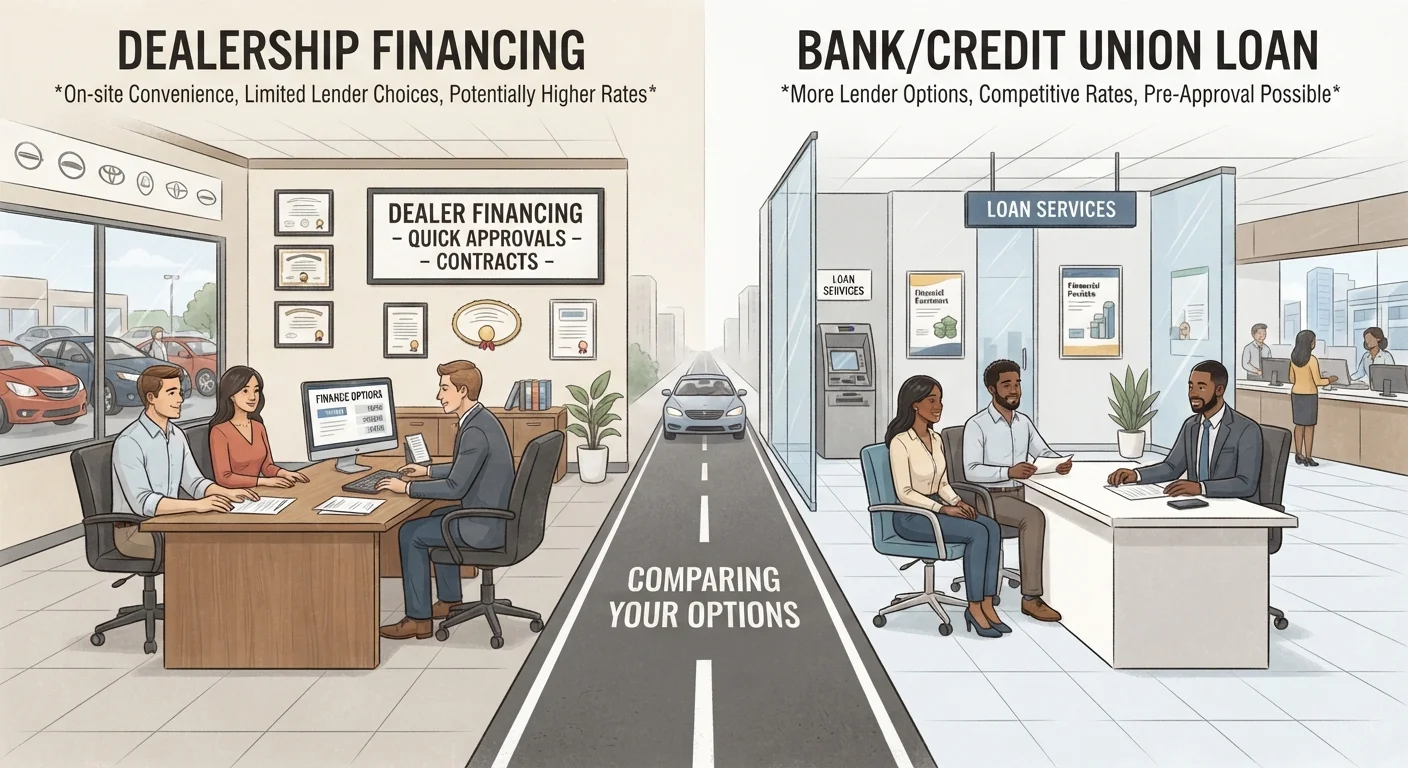
Dealer-arranged financing typically involves the dealership acting as an intermediary between you and a lender. Dealers often receive compensation - called a finance reserve or dealer participation - when they mark up the rate above what the lender approved. This is legal, but it means the rate presented to you may not be the lowest you qualify for.
Dealer Finance Reserve: What It Means for Your Rate
When a dealer arranges financing, the lender approves a minimum rate based on your credit profile. The dealer may then present a higher rate and keep the difference - known as the finance reserve or dealer participation. This practice is legal under U.S. regulations, but it means the rate you're quoted may exceed your actual approved rate. Obtaining a pre-approval from your own bank or credit union before visiting the dealership gives you a concrete benchmark for comparison.
Capitalized cost (common in lease contracts) is the agreed selling price of the vehicle in a lease - the equivalent of the negotiated purchase price. Reducing the cap cost directly lowers monthly lease payments. Money factor is the lease equivalent of an interest rate; multiply it by 2,400 to approximate an APR for comparison.
Before accepting dealer financing, it pays to understand the alternative. Our article on financing through a dealer vs. your own bank or credit union walks through how the two routes compare in practice. And if a salesperson focuses the conversation on monthly payments, that's worth scrutinizing - see why monthly payments can be a misleading metric.
This article provides general educational information about automotive pricing and financing terminology. It is not personalised financial or legal advice. Consult a qualified financial professional before making decisions based on your individual circumstances.