
Germany's BAC Thresholds: A Three-Tier System
Germany structures its drink-drive rules around three escalating thresholds, each carrying distinct legal consequences under the StVG and the StGB.
- 0.5 ‰ to 1.59 ‰ - Administrative offence (Ordnungswidrigkeit): A first offence typically results in a €500 fine, one month's driving ban, and two points in the Flensburg FAER. Repeat offences attract higher fines and longer bans.
- 0.3 ‰ - Relative unfitness (relative Fahruntüchtigkeit): Even below the 0.5 ‰ mark, a driver who causes an accident or shows visible impairment can be prosecuted under § 316 StGB if evidence of diminished control exists. This threshold is particularly relevant in road-traffic accidents.
- 1.6 ‰ and above - Absolute criminal impairment (absolute Fahruntüchtigkeit): At this level, the law presumes the driver is categorically unfit. Criminal charges under § 316 or § 315c StGB can follow, often accompanied by mandatory medical-psychological assessment (MPU) before any licence can be reinstated.
For broader context on traffic rules you must know on German roads, see our guide to Autobahn regulations.
0.5 ‰
General BAC limit for German drivers
Set under § 24a StVG; violations above this threshold but below 1.6 ‰ are processed as administrative offences with fines and points.
1.6 ‰
Threshold for absolute criminal impairment
At this level, German law presumes absolute unfitness to drive; MPU assessment is typically required before licence reinstatement.
0.0 ‰
Limit for drivers under 21 and probationary licence holders
Mandated by § 24c StVG; any detectable alcohol constitutes a violation regardless of behavioural impairment.
~0.1-0.15 ‰
Average alcohol elimination rate per hour
This is a general population average; individual rates vary based on body weight, sex, liver health, and food intake.
Zero Tolerance: Probationary Drivers and Under-21s
Under § 24c StVG, two groups face an absolute 0.0 ‰ requirement: drivers still within their two-year probationary period and all drivers under the age of 21, regardless of licence age. Any measurable alcohol is a violation.
A first breach typically carries a €250 fine, one point in Flensburg, and an extension of the probationary period by two years - plus mandatory attendance at a driver education seminar. Second and subsequent violations escalate significantly, potentially triggering licence withdrawal.
New drivers are also statistically more vulnerable to errors in unfamiliar traffic situations, making impairment especially hazardous. Our article on common first-year errors for new drivers in Germany covers the situational misjudgements that most often result in incidents during this period.
Probationary Drivers: Plan Ahead
If you are in your two-year probationary period, the safest approach at any social event involving alcohol is to arrange alternative transport in advance. Rideshare services, public transit, or a designated non-drinking driver eliminate the uncertainty entirely. The financial penalty and licence consequences of even a single minor violation are substantially higher than the cost of a taxi.
Medications That Can Affect Your Legal Fitness to Drive
Many drivers are unaware that the law treats medication-related impairment with the same seriousness as alcohol impairment. The relevant provision is § 316 StGB, which targets driving in a condition of unfitness regardless of cause.
Drug categories most commonly associated with driving impairment include:
- Sedatives and anxiolytics
- Benzodiazepines (e.g. diazepam, lorazepam) reduce reaction speed and spatial awareness. Even therapeutic doses can affect driving performance.
- Opioid analgesics
- Prescription painkillers containing tramadol, codeine, or morphine-class compounds can cause drowsiness, slowed reflexes, and altered judgement.
- Antihistamines (first-generation)
- Older antihistamines used for allergies or sleep cause pronounced sedation and are explicitly flagged in their patient information leaflets.
- Antidepressants and antipsychotics
- Effects vary widely by compound and individual. Some SSRIs have minimal driving impact after stabilisation; tricyclics and antipsychotics generally carry greater risk.
- Antiepileptics
- While controlling seizures protects road safety, many antiepileptic drugs also reduce cognitive processing speed. Physicians routinely advise on driving fitness when prescribing.
The patient information leaflet (Gebrauchsinformation) for any prescription or over-the-counter medicine in Germany must state whether it affects the ability to drive or operate machinery. This section is legally mandated. If uncertain, consult your pharmacist before driving.
Cannabis and Driving: Changing Regulations
Germany's rules on cannabis and driving have been subject to regulatory revision following changes to cannabis law. A specific THC threshold for driving impairment has been under active legislative discussion. Because these rules were in flux at the time of writing, drivers who use cannabis - including medicinally prescribed cannabis - should consult current guidance from the KBA or a legal professional before driving.
Combining Alcohol and Medication
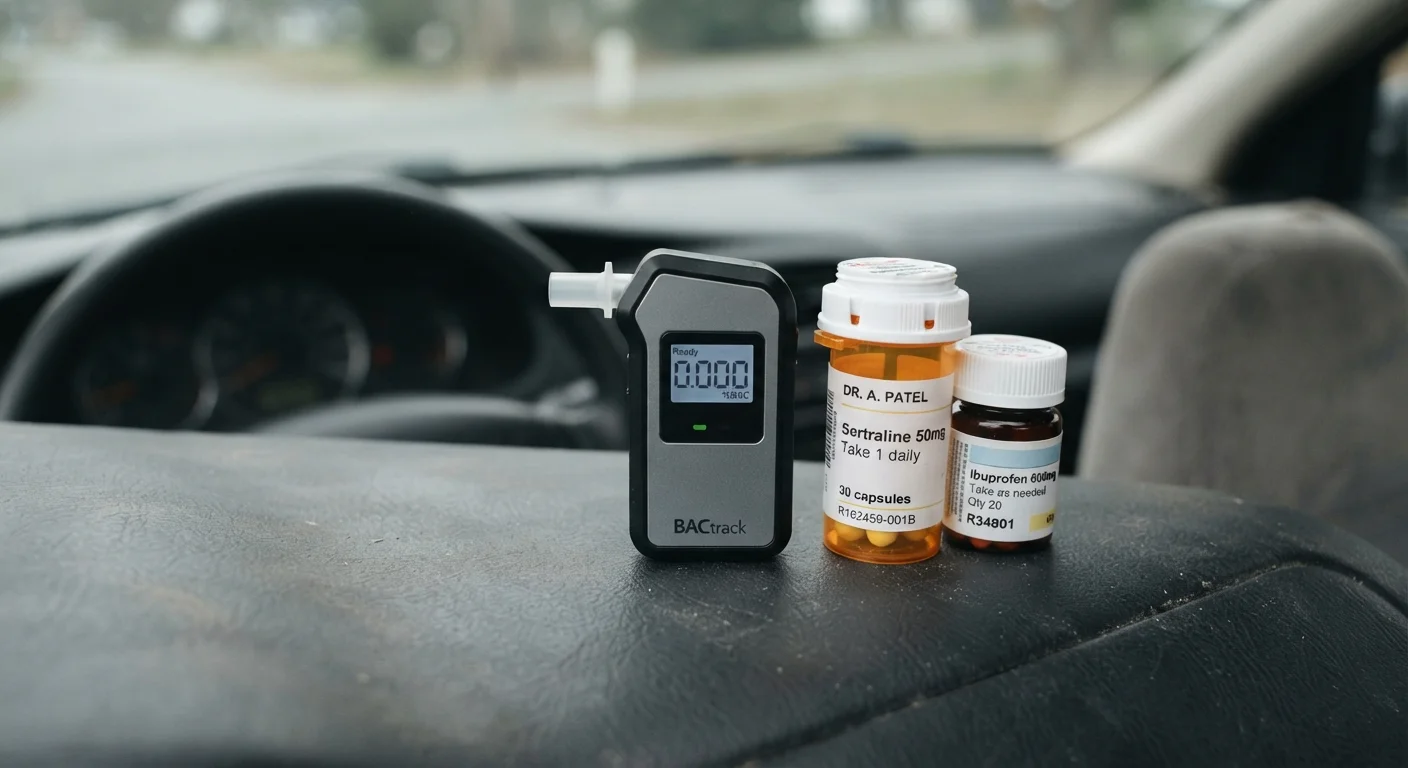
Mixing alcohol with sedative medications - including some antihistamines, sleeping aids, and anxiolytics - can produce effects far exceeding what either substance would cause alone. Even a BAC below 0.5 ‰ combined with a sedative drug may result in visible impairment sufficient for prosecution. If your medication carries a driving warning, the safest course is to abstain from alcohol entirely on days you intend to drive.
Practical Guidance: Staying Within the Law
No breathalyzer app or rule of thumb reliably predicts your BAC at a given moment. Alcohol elimination rates of roughly 0.1-0.15 ‰ per hour are commonly cited averages, but body weight, liver function, food intake, and individual metabolism all introduce meaningful variation. The only safe strategy before driving is to allow sufficient time - typically overnight after any meaningful drinking - or to not drink at all.
For medication, follow these steps:
- Read the Gebrauchsinformation section on driving and machinery operation when you receive any new prescription.
- Ask your prescribing physician or pharmacist explicitly whether the drug or combination of drugs affects driving at your current dose.
- Be especially cautious when starting a new drug or adjusting a dose - effects are often more pronounced before your body acclimatises.
- Do not assume a familiar medication is safe if the dose, brand, or combination has changed.
German traffic law distinguishes between urban and rural driving environments in ways that interact with impairment risk - reaction time matters more at higher speeds. See our overview of city versus rural driving differences in Germany for context. For information on licence categories and what each permits, our explainer on German driving licence categories provides a clear breakdown.
This article provides general legal and safety information about German road traffic regulations. It is not legal advice. For questions about your individual situation - including medication effects on driving - consult a licensed physician, pharmacist, or qualified legal professional.