
Why Urban Speed Limits Differ Across Europe
European countries set their own road traffic laws, meaning urban speed limits are not harmonised at EU level. While many nations have converged on a 50 km/h default inside built-up areas, exceptions are common - and the consequences of getting it wrong range from on-the-spot fines to licence points recorded against your home country's driving record.
The term built-up area (or Ortschaft in German) is generally defined by the presence of entry and exit signs, not by population size or road type. Entering a village with one of these signs means the lower limit applies immediately, even if the road looks identical to the rural stretch you just left.
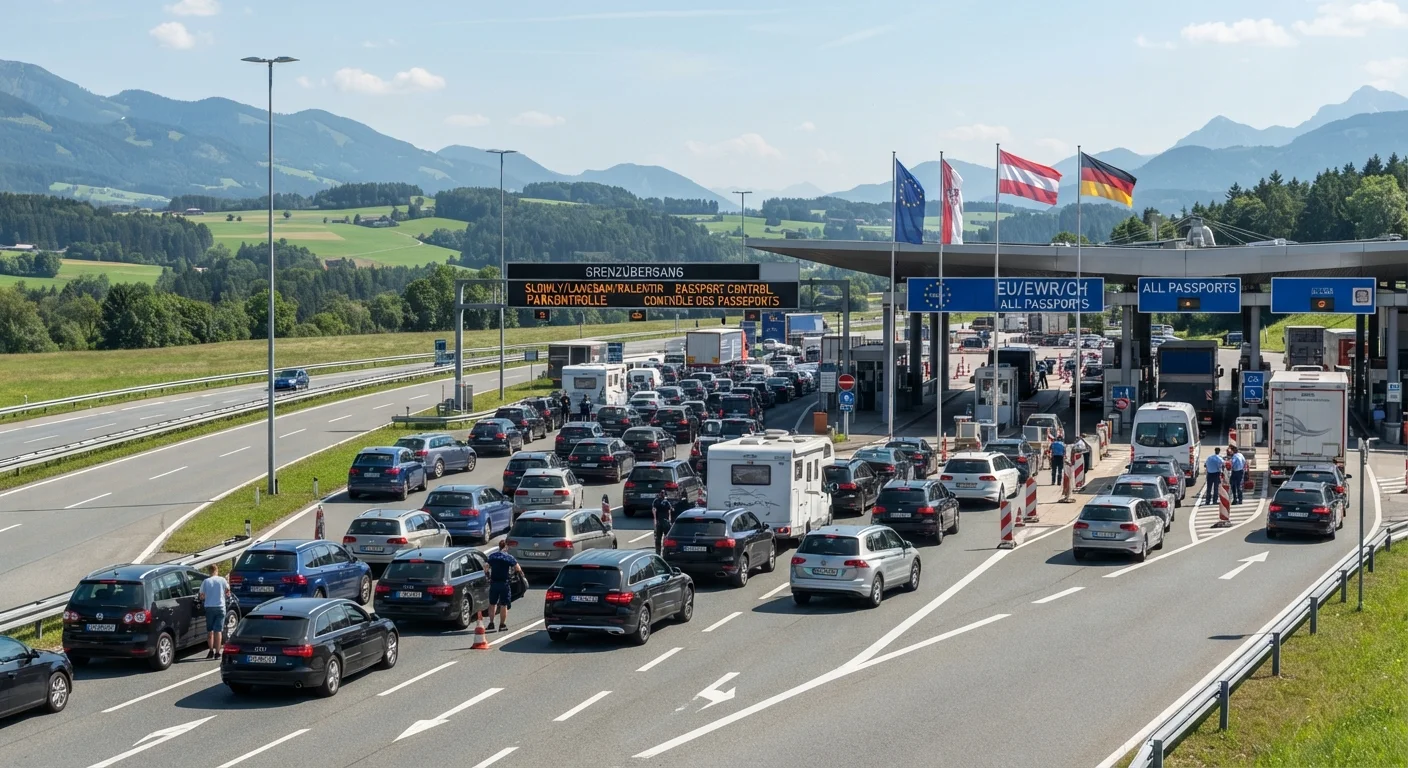
If you regularly drive across borders, our guide to cross-border driving rules covers vignettes, mandatory equipment, and the legal changes that take effect the moment you enter a new country.
| Most common urban default | 50 km/h (Applies in the majority of EU member states and neighbouring countries) |
| Germany urban default | 50 km/h (StVO §3 - German Road Traffic Regulations) |
| Lowest typical urban zone limit | 7 km/h (walking pace) (Applies in German Spielstraße / verkehrsberuhigter Bereich zones) |
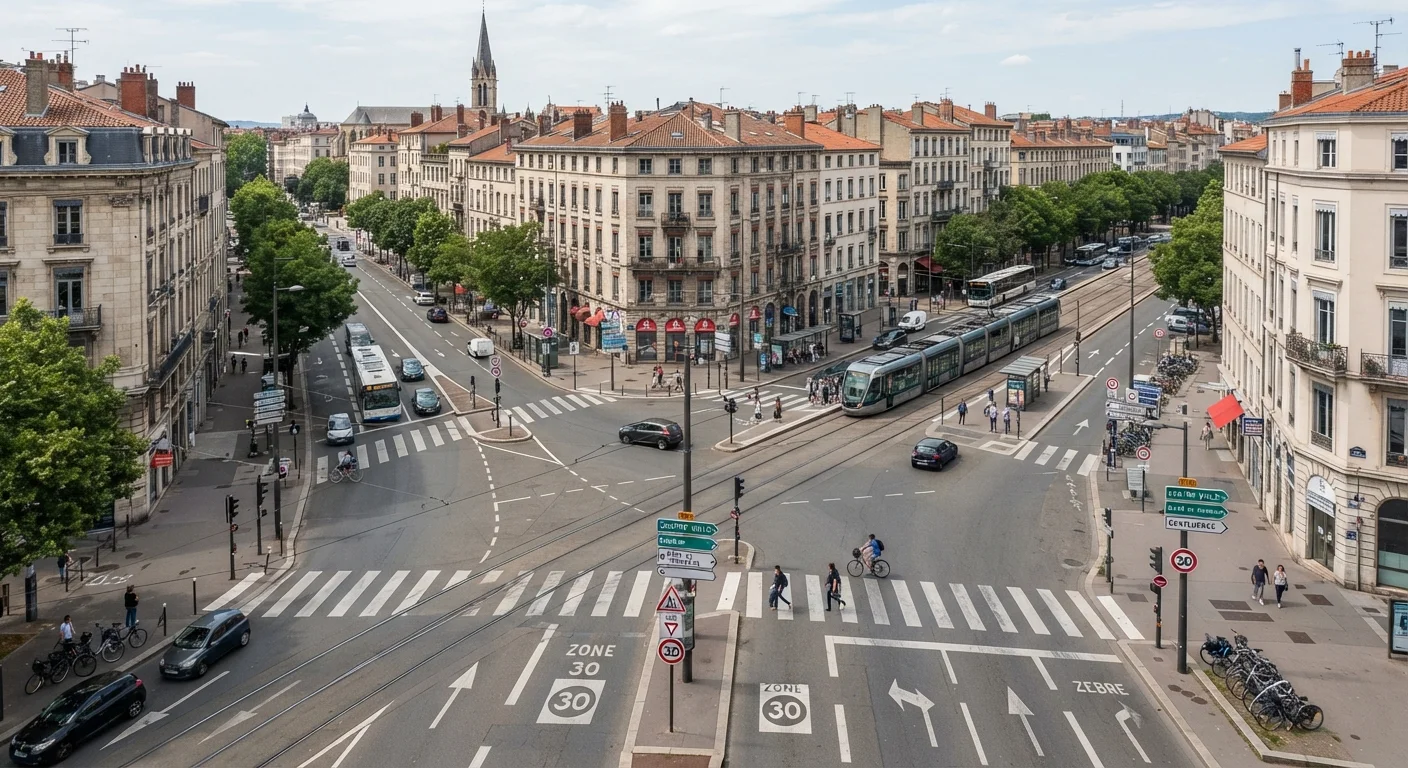
| Countries with citywide 30 km/h | France (Paris), Belgium (Brussels) and others (Municipal decisions effective from 2021) |
| Poland night-time urban limit | 60 km/h (Applies within built-up areas between 23:00 and 05:00) |
| Fastest motorway default in table | 140 km/h (Poland's statutory motorway limit) |
Country-by-Country Speed Limit Reference
The table below lists default statutory limits - the speed that applies unless a sign specifies otherwise. Many countries allow municipalities to post lower limits in residential zones (commonly 30 km/h), near schools, or in environmental low-emission zones.
| Country | Urban (km/h) | Rural (km/h) | Motorway (km/h) |
|---|---|---|---|
| Germany | 50 | 100 | No general limit* |
| France | 50 | 80 | 130 (110 in rain) |
| Italy | 50 | 90 | 130 |
| Spain | 50 | 90 | 120 |
| Netherlands | 50 | 80 | 100 |
| Belgium | 50 | 70 | 120 |
| Austria | 50 | 100 | 130 |
| Switzerland | 50 | 80 | 120 |
| Poland | 50 (60 at night) | 90 | 140 |
| Czech Republic | 50 | 90 | 130 |
| Sweden | 50 | 70-100 | 110-120 |
| Norway | 50 | 80 | 110 |
| Denmark | 50 | 80 | 130 |
| Finland | 50 | 80-100 | 120 |
| Portugal | 50 | 90 | 120 |
| Hungary | 50 | 90 | 130 |
| Croatia | 50 | 90 | 130 |
| Greece | 50 | 90 | 130 |
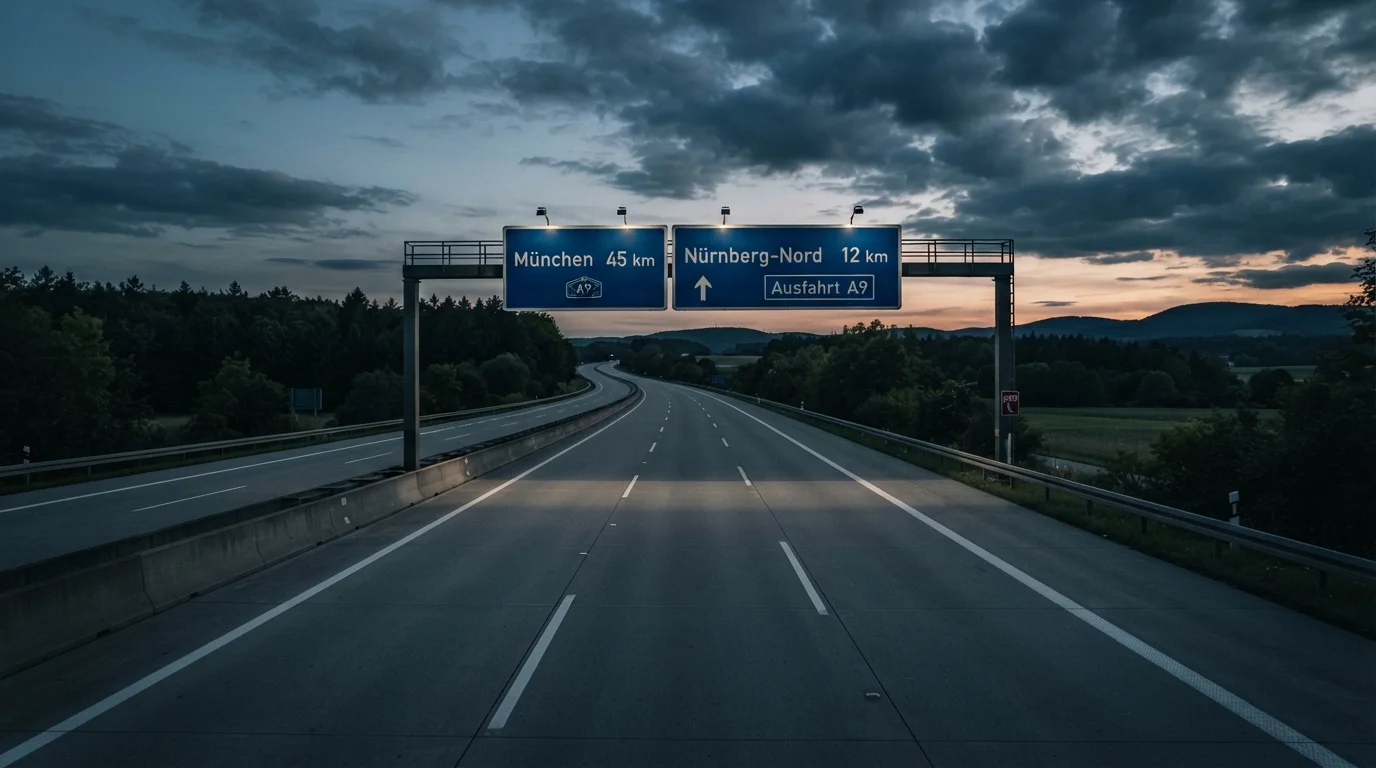
*Germany's Autobahn has a recommended advisory speed of 130 km/h but no statutory maximum on unrestricted sections. For a full breakdown, see what the rules actually say about the Autobahn.
Posted Signs Always Override Default Limits
Statutory defaults apply only when no sign is present. A posted limit - whether higher or lower - takes precedence the moment it comes into force. Always watch for limit changes at urban entry and exit signs, roadworks zones, and variable message signs on motorways. Ignorance of local rules is not a valid defence against a fine in any European jurisdiction.
Zones Below the Default: Tempo 30 and Residential Areas
Across Europe, a growing number of cities have extended 30 km/h zones well beyond school areas and residential streets. Paris set its entire inner city to 30 km/h in 2021; Brussels followed with a citywide 30 km/h default in 2021 as well. Several Spanish cities including Bilbao and Valencia have applied similar measures. In Germany, individual municipalities may designate Tempo-30-Zonen, which override the 50 km/h default - these are marked at every entry point.
Shared-zone designations (Spielstraße or verkehrsberuhigter Bereich in Germany) reduce the limit to walking pace - typically 7 km/h - and give pedestrians full priority over the entire road surface. German traffic law on shared roads explains the full priority rules for these zones and cycle paths.
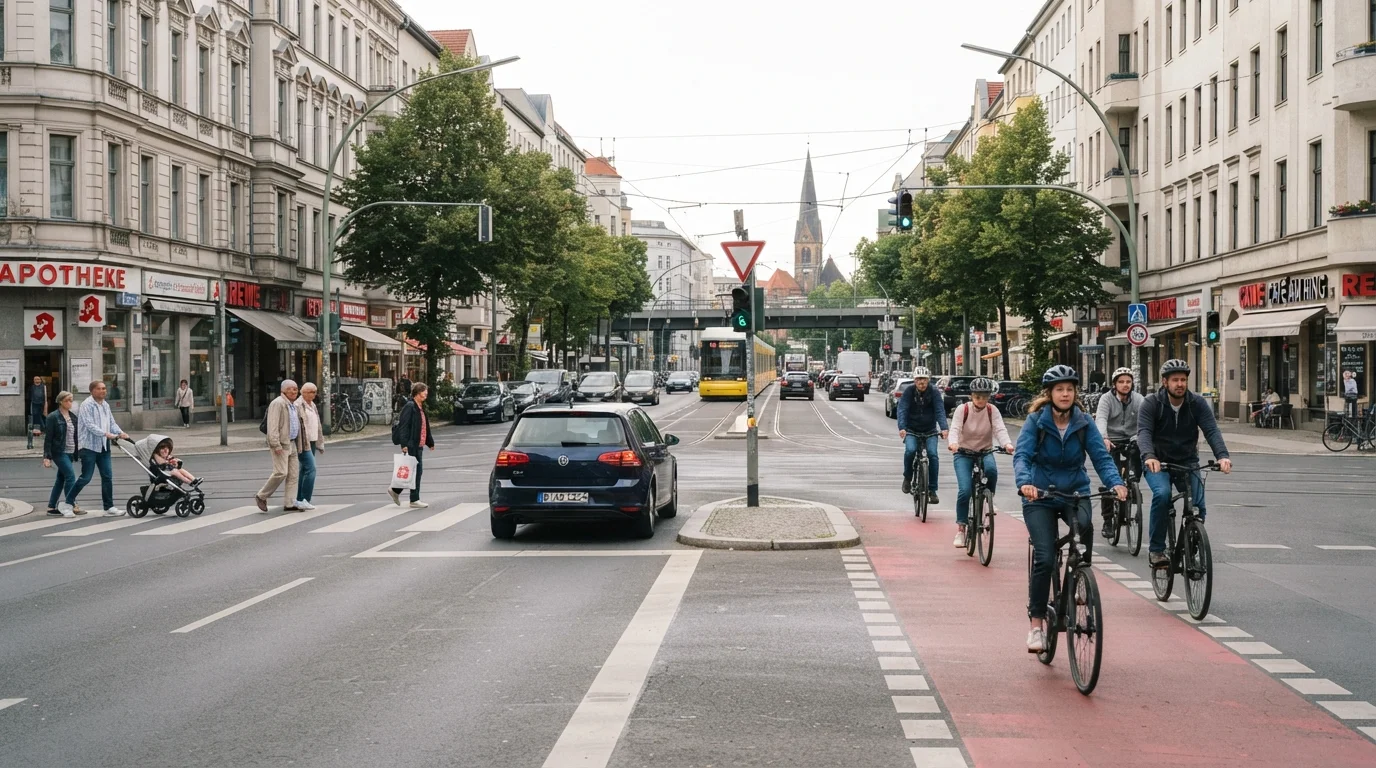
For drivers navigating Germany's city centres specifically, our city vs. rural driving comparison sets out how speed rules, road markings, and hazard patterns shift in urban environments.
50 km/h
Urban default shared by ~90% of European nations
Despite no EU-wide mandate, most member states and neighbours have independently adopted 50 km/h as the standard built-up area limit.
30 km/h
Growing citywide limit in major European capitals
Paris and Brussels both adopted citywide 30 km/h defaults in 2021, reflecting a broader urban road-safety trend across Europe.
130 km/h
Advisory speed on Germany's unrestricted Autobahn sections
Germany's recommended (but non-mandatory) Richtgeschwindigkeit on motorway stretches without posted limits, per the StVO.