
The Problem with Calling Animals Selfless
When a honeybee stings an intruder and dies in the process, or a ground squirrel cries out to warn its colony at visible personal risk, human observers tend to reach for a familiar word: selfless. But biological science asks a harder question - selfless from whose perspective? Evolution does not reward sacrifice for its own sake. Every behavior that persists across generations must, on balance, increase the transmission of genes. Understanding cooperative behavior means understanding that framework first.
This is not a cynical view of nature. It is, in fact, a far richer one. The evolutionary logic behind apparent altruism reveals intricate social systems, long-term memory, and sophisticated kin-recognition mechanisms. As explored in ethology's core concepts, interpreting behavior requires grounding observation in evolutionary and ecological context.
Myth
Animals sometimes sacrifice themselves purely for the good of their group, just as humans might act heroically for strangers.
Fact
Apparent self-sacrifice almost always confers a net genetic benefit to the actor through kin selection or reciprocal mechanisms - not genuine group-level altruism.
The concept of group selection - where individuals sacrifice fitness for the species as a whole - was popular in mid-20th century biology but has been largely superseded. Modern evolutionary theory, supported by decades of field data, shows that selection operates primarily at the level of genes and individuals. Behaviors that look self-sacrificial typically propagate the actor's genes indirectly, through shared relatives or future reciprocation.
Myth
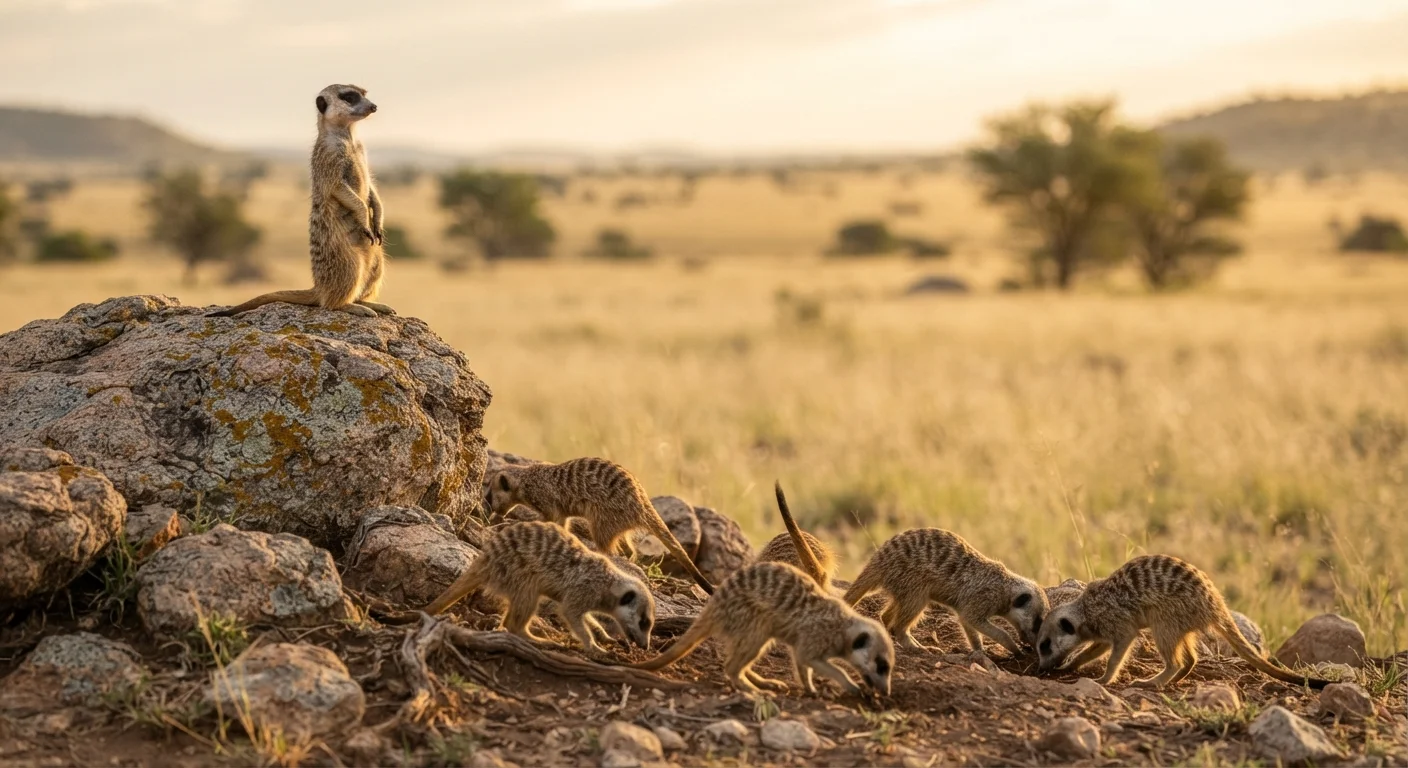
A meerkat giving an alarm call is risking its life to save the whole colony.
Fact
Alarm-calling meerkats are often centrally positioned animals whose close kin are nearby, and calling may actually reduce their own predation risk by prompting group flight.
Research by ethologists including Tim Clutton-Brock's field group found that meerkat sentinels call most frequently when they are in safe, elevated positions - not exposed ones. The relatedness of nearby group members and the reduced predator success when prey scatter collectively both factor into the calculus. The behavior is consistent with kin selection and personal risk reduction, not pure sacrifice.
Myth
Reciprocal altruism is common across the animal kingdom because most social animals help one another.
Fact
True reciprocal altruism is cognitively demanding and has been robustly documented in only a relatively small number of species with stable social groups and strong individual recognition.
For reciprocal altruism to work, an individual must recognize specific partners, remember past interactions, and withhold future help from cheaters. These requirements restrict the mechanism to species with sufficient memory and social stability - including certain primates, cetaceans, vampire bats, and some corvids. What looks like reciprocity in many other species is often better explained by simultaneous mutualism or kin effects.
Myth
Mutualistic relationships between species prove that animals can be genuinely generous across species lines.
Fact
Inter-species mutualism is maintained by mutual benefit, not generosity; each party participates because it improves its own fitness.
The oxpecker bird removing ticks from a zebra, or the clownfish sheltering in a sea anemone while driving away polyp-eating fish, are sustained precisely because both parties gain. Remove the benefit for one party and the relationship dissolves or shifts to parasitism. Evolutionary ecology treats mutualism as stable because cheating the partnership reduces the cheater's own fitness - not because of cross-species goodwill.
Myth
Play behavior in young animals is purely social bonding - it has no connection to altruistic or cooperative dynamics.
Fact
Play frequently involves negotiated role reversal and self-handicapping, which are foundational to reciprocal fairness and early cooperation.
In many mammals, dominant individuals voluntarily adopt submissive postures during play with smaller partners - a phenomenon researchers call self-handicapping. This keeps the play partner engaged and willing to continue. It also appears to build the social trust and individual recognition that underpin later reciprocal cooperation. Our article on what play behavior really means in mammals covers this in depth.
The Mechanisms That Actually Drive Cooperation
Three well-supported mechanisms account for most of what looks like animal altruism: kin selection, reciprocal altruism, and mutualism.
Kin selection, formalized by W. D. Hamilton in 1964, holds that an individual's genetic fitness includes the reproductive success of relatives - because relatives share portions of the same genes. Hamilton's rule states that a costly behavior will spread if the benefit to the recipient, discounted by relatedness, exceeds the cost to the actor. This explains why sterile worker bees labor for a queen: they share roughly 75% of their genes with sisters in a haplodiploid colony, making colony investment genetically profitable.
Reciprocal altruism, developed by Robert Trivers in 1971, applies where relatedness is low but repeated interaction is high. Vampire bats famously regurgitate blood meals to roostmates who failed to feed - but predominantly to individuals who have helped them before. Cheaters who never reciprocate are eventually shunned. This mechanism depends on individual recognition and memory, which is why it appears mainly in cognitively capable, socially stable species.
Mutualism involves cooperation where both parties benefit simultaneously, with no deferred cost. Cleaner wrasse fish remove parasites from larger fish that could easily eat them - both parties gain immediately, with no altruism required at all. See how these dynamics intersect with social structure in our look at why some species are social and others are solitary.
75%
Gene sharing among honeybee sisters
Due to haplodiploidy, female honeybee workers share approximately 75% of their genes with sisters, making colony labor genetically advantageous under Hamilton's rule.
~170
Species documented with reciprocal altruism
Reviews of the peer-reviewed literature suggest robust reciprocal altruism is confirmed in far fewer species than popular accounts imply, concentrated in cognitively advanced vertebrates.
What Cooperation Looks Like at Scale
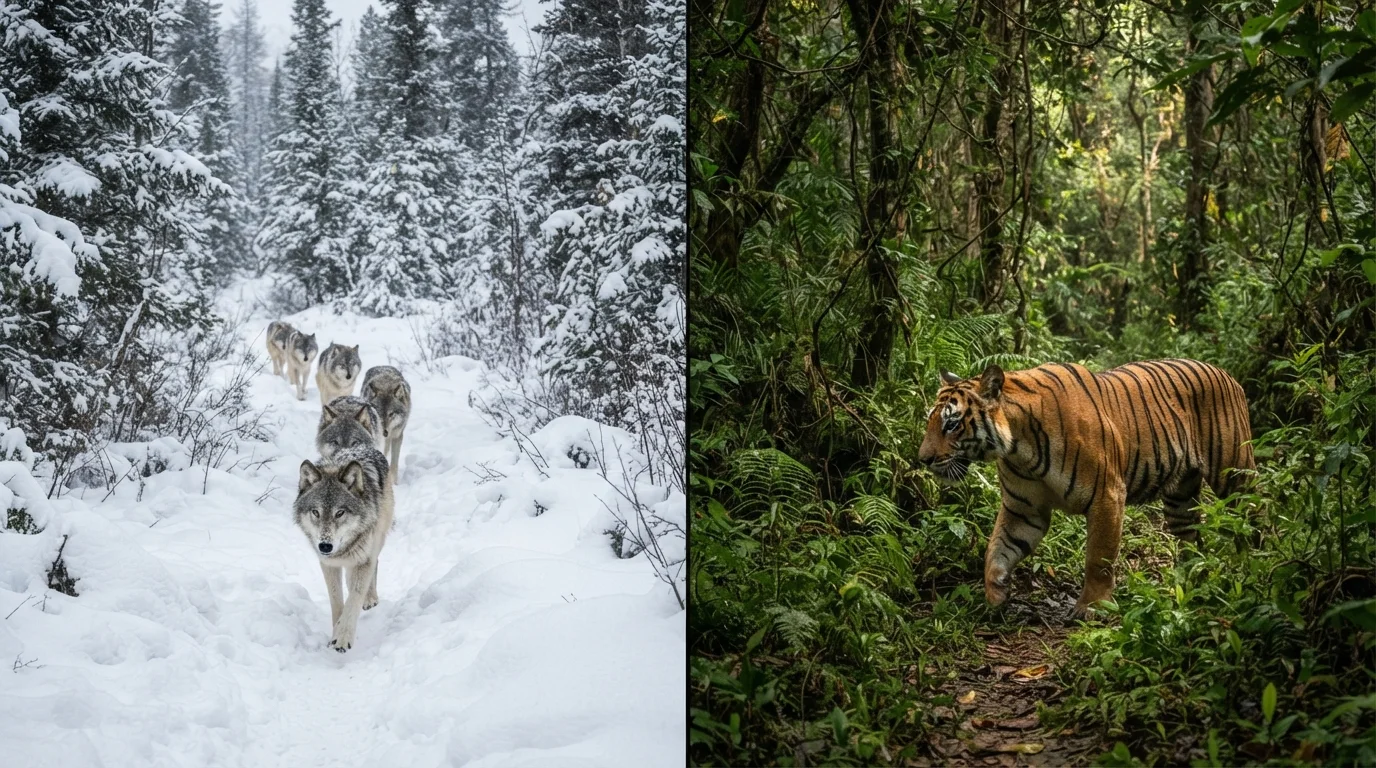
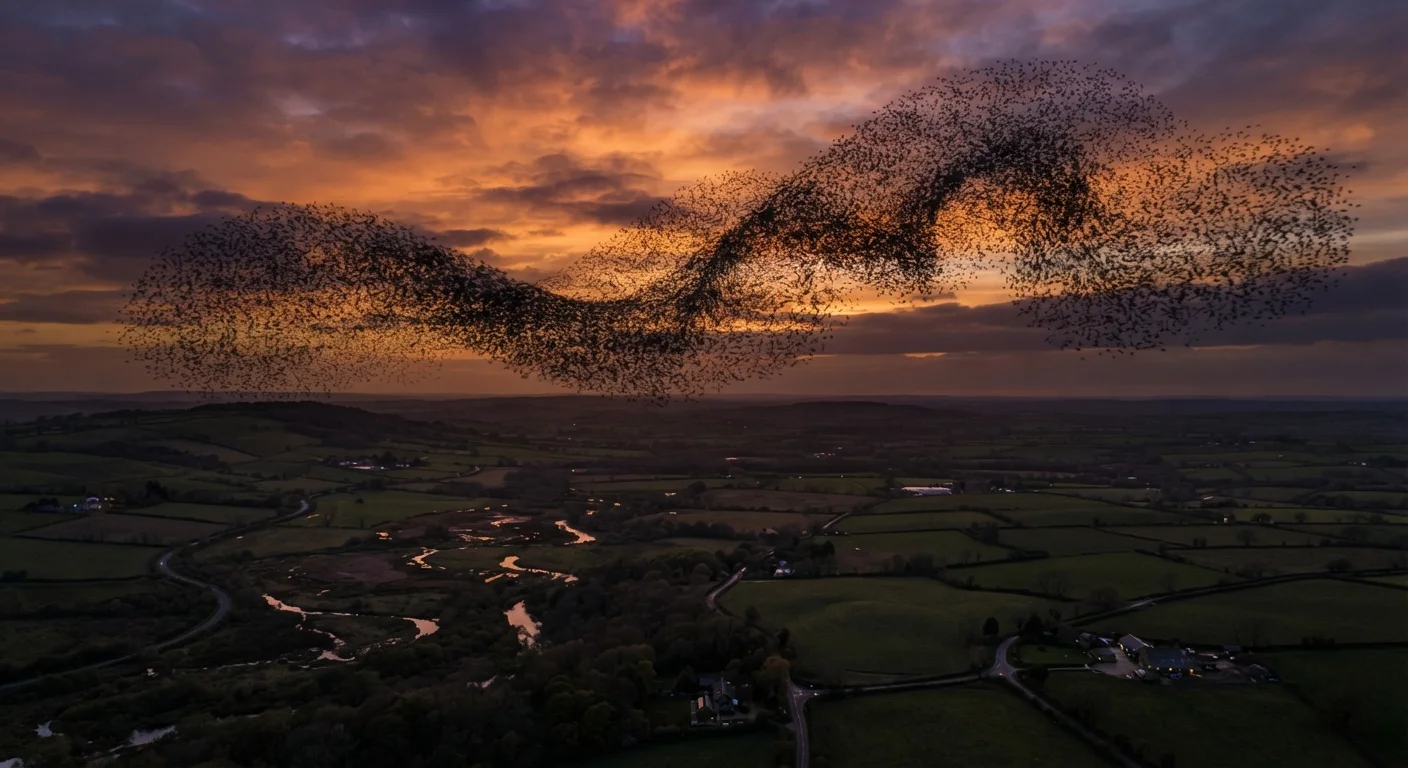
Group-level cooperation - the kind visible in wolf packs, primate troops, or bird flocks - is often mistaken for a kind of collective generosity. In reality, it typically reflects overlapping individual interests shaped by ecology. Wolves hunt cooperatively not because they are magnanimous but because large prey is otherwise inaccessible. The benefit to each individual outweighs the cost of sharing the kill. For a deeper look at decentralized group coordination, collective intelligence in flocks and swarms shows how group-level patterns emerge from simple individual rules rather than shared purpose.
Dominance hierarchies further complicate the picture. High-ranking individuals often tolerate or even support subordinates when doing so maintains group cohesion - and thus collective hunting or defense capacity. The science of social dominance in animal groups illustrates that hierarchy and cooperation are not opposites; they frequently reinforce each other.
Anthropomorphism Can Mislead Interpretation
Assigning human motivations - compassion, heroism, loyalty - to animal behavior is a recognized interpretive hazard in ethology. While emotional states in animals are a legitimate area of scientific inquiry, projecting complex moral intentions onto cooperative acts without supporting behavioral evidence distorts both public understanding and conservation messaging. Careful observation and mechanistic explanation remain the appropriate starting point. The distinction between innate and learned behavior is equally important when evaluating what drives any individual animal's actions.