
Family First: The Real Foundation of a Wolf Pack
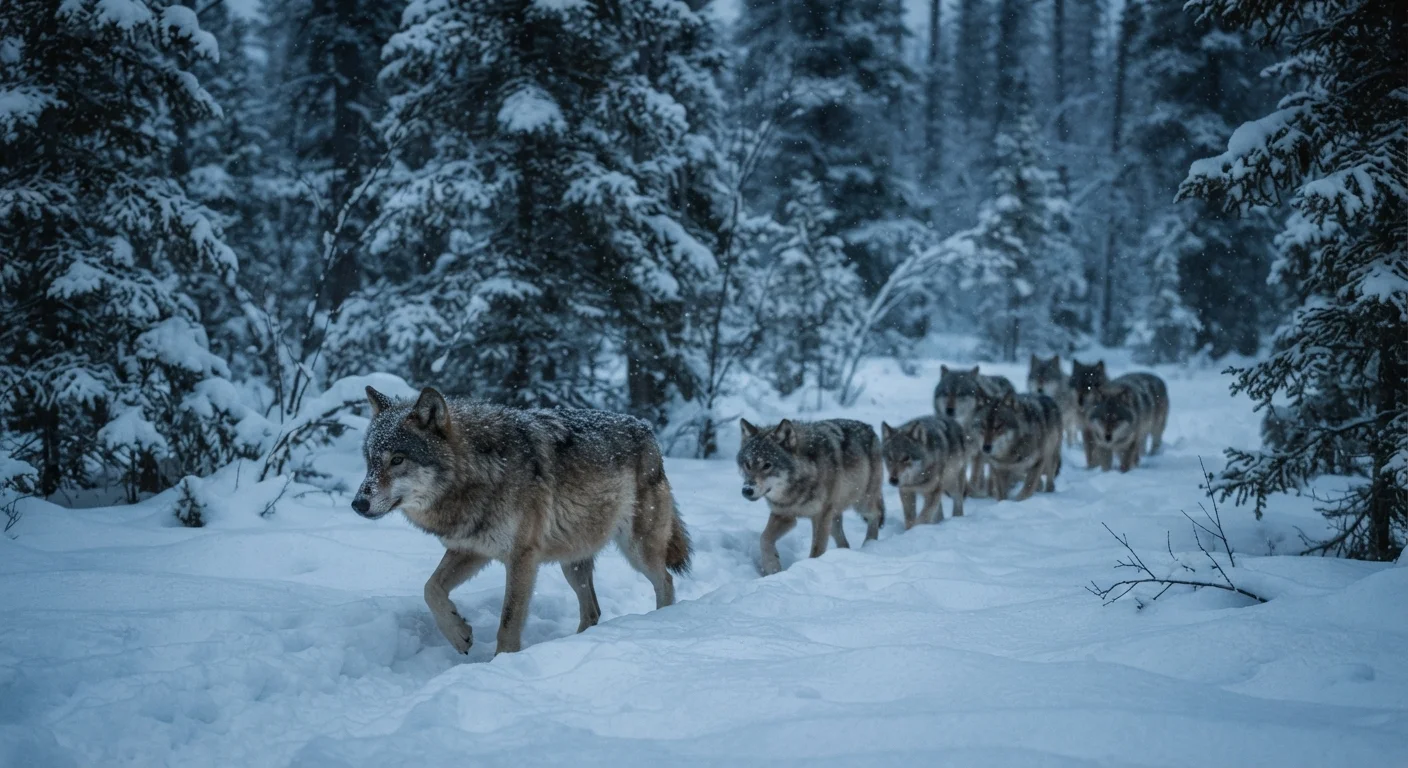
The image of wolves locked in perpetual power struggles for dominance is one of popular culture's most persistent misconceptions. In the wild, a pack functions as something far more recognizable: a family. The core of virtually every pack is a mated pair - the breeding adults - surrounded by their offspring, sometimes spanning multiple birth years.
Pups born in spring remain with the pack, learning to hunt and read social cues from older siblings and parents. This multigenerational structure means that "hierarchy" in a wolf pack looks less like a corporate org chart and more like a functional household. As science continues to challenge predator stereotypes, wolves stand out as a species especially misrepresented by reductive narratives.
“The "alpha" concept as popularly understood applies to captive wolves forced together artificially. In the wild, the so-called alpha wolves are simply the parents of the pack, and their status derives from that role, not from winning fights.”
— L. David Mech, Senior Research Scientist, U.S. Geological Survey; leading wolf researcher and author
Roles Within the Pack: Fluid, Not Fixed
While the breeding pair generally make key decisions - leading hunts, choosing den sites, initiating travel - the roles of other pack members shift based on context and individual personality. Older offspring may lead smaller scouting forays. Yearlings (wolves in their second year) frequently serve as pup caretakers, a behavior ethologists call alloparental care.
During a hunt, individuals take on different positions depending on terrain and prey behavior. A wolf that leads one chase may flank the prey in the next. This flexibility is a key reason packs outperform solitary hunters when pursuing large ungulates like elk or bison. The ecological pressures that push species toward social living are clearly visible in wolf biology: cooperative hunting unlocks prey that no single wolf could reliably take down alone.
5-10
Typical wild wolf pack size
Research across multiple North American wolf populations, including Yellowstone, consistently finds most packs fall within this range, though size varies with prey density.
~500 mi
Maximum dispersal distance recorded
Some GPS-tracked dispersing wolves in North America have traveled over 500 miles from their birth pack before establishing new territories, according to U.S. Fish & Wildlife Service tracking data.
2-3 yrs
Typical age wolves leave natal pack
Ethological studies indicate most wolves disperse between one and three years of age, with variation based on pack dynamics and available territory.
Communication and Cohesion: How Packs Stay Together
Social bonds in a wolf pack are maintained through continuous, layered communication. Howling is the most iconic - and most functional - of these signals. A pack's collective howl can be heard up to ten kilometers away under favorable conditions, serving simultaneously to reunite scattered members, reinforce group identity, and warn neighboring packs away from a defended territory.
Equally important are the subtler signals: the lowered tail of a subordinate individual, the muzzle-nudge of greeting, the scent marks deposited at territory boundaries. These cues allow wolves to manage social tension without constant physical confrontation, which would be energetically costly and potentially injurious. The result is a group that can coordinate complex, extended hunts while maintaining the cohesion needed to rear pups through harsh winters.
Interpreting Wolf Body Language
When observing wolves - whether in the wild or in wildlife documentaries - pay attention to tail position and ear orientation rather than vocalizations alone. A tail held high signals confidence or assertiveness; a lowered or tucked tail indicates deference or submission. These cues resolve social tension quickly and efficiently without physical conflict.
Understanding wolf social structure also illuminates broader ecological dynamics. Wolves are a well-documented example of how apex predators and keystone species reshape ecosystems - effects that depend entirely on the coordinated behavior of functional packs, not isolated individuals.
Dispersal and New Packs: How Wolf Society Expands
Wolf packs are not closed systems. As offspring mature - typically between one and three years of age - many leave their birth pack voluntarily in search of mates and unoccupied territory. These individuals, called dispersers, may travel several hundred miles before founding a new pack.
Dispersal is ecologically critical. It prevents inbreeding, expands wolf populations into new habitat corridors, and ensures that prey populations across large landscapes are regulated rather than exhausted in a single area. In this sense, individual wolf social behavior scales up to shape entire ecosystems - a compelling parallel to the deep social drives that shape human communities and their broader effects on society.