
Defining Innate Behavior: What Animals Know at Birth
Innate behaviors - sometimes called instincts or fixed action patterns (FAPs) - are genetically encoded responses that emerge without prior learning. They are typically species-universal: every healthy member of a species expresses the behavior in the same stereotyped way when exposed to the relevant trigger, known in ethology as a sign stimulus or releaser.
Classic examples include the egg-rolling behavior of greylag geese, which Konrad Lorenz and Nikolaas Tinbergen documented in the mid-twentieth century. When a goose spots an egg outside its nest, it extends its bill to roll the egg back - and critically, continues the motion even if the egg is removed mid-action. The behavior runs to completion automatically once triggered. Similarly, newborn sea turtles orient toward the brightest horizon immediately after hatching, a reflex calibrated to lead them to the ocean under natural conditions.
Innate behaviors carry a significant evolutionary advantage: they require no learning period. For species whose young receive little or no parental guidance, reliable pre-programmed responses to feeding, predator avoidance, and reproduction can be the difference between survival and death. For a deeper grounding in how ethologists classify and study these patterns, see this introduction to ethology.
| Criterion | Innate Behavior | Learned Behavior |
|---|---|---|
| Origin | Genetic encoding | Individual or social experience |
| Development | Present at birth or maturation | Acquired over time |
| Variability | Species-universal, stereotyped | Varies by individual and population |
| Flexibility | Resistant to modification | Highly adaptable |
| Examples | Egg-rolling, spider web-spinning, suckling | Tool use, dialect learning, urban foraging |
| Ecological advantage | Reliable in stable environments | Adaptive in variable or novel environments |
| Learning requirement | None | Experience, observation, or conditioning |
Defining Learned Behavior: Experience Reshaping the Repertoire
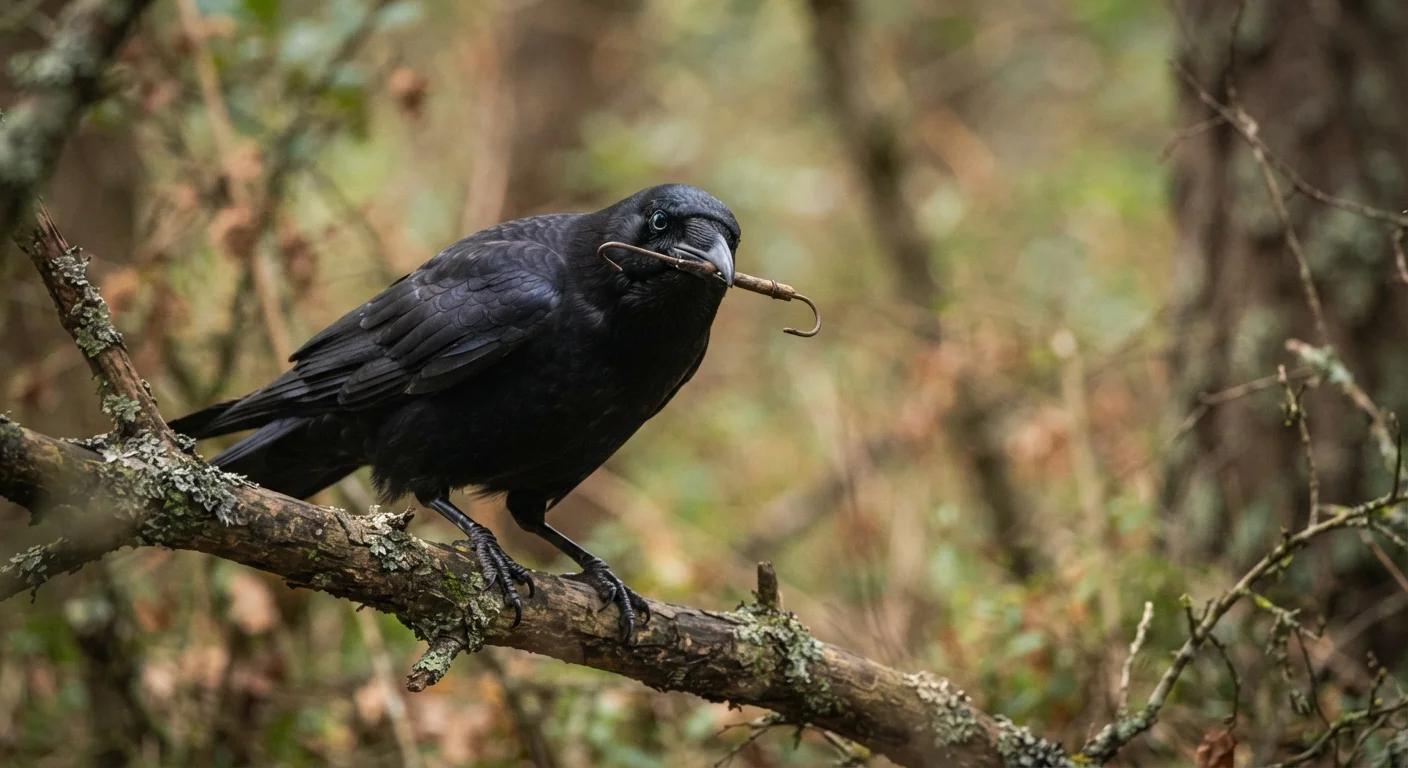
Learned behavior encompasses any change in behavior that results from an individual's experience rather than genetic programming. Ethologists and comparative psychologists identify several distinct mechanisms through which learning occurs.
- Habituation: The simplest form - an animal stops responding to a repeated, harmless stimulus. A ground squirrel living near a hiking trail eventually ceases its alarm calls in response to routine human foot traffic.
- Classical conditioning: Pioneered by Ivan Pavlov, this involves pairing a neutral stimulus with a biologically significant one until the neutral stimulus alone elicits a response.
- Operant conditioning: Animals modify behavior based on its consequences - reinforcement increases a behavior, punishment reduces it.
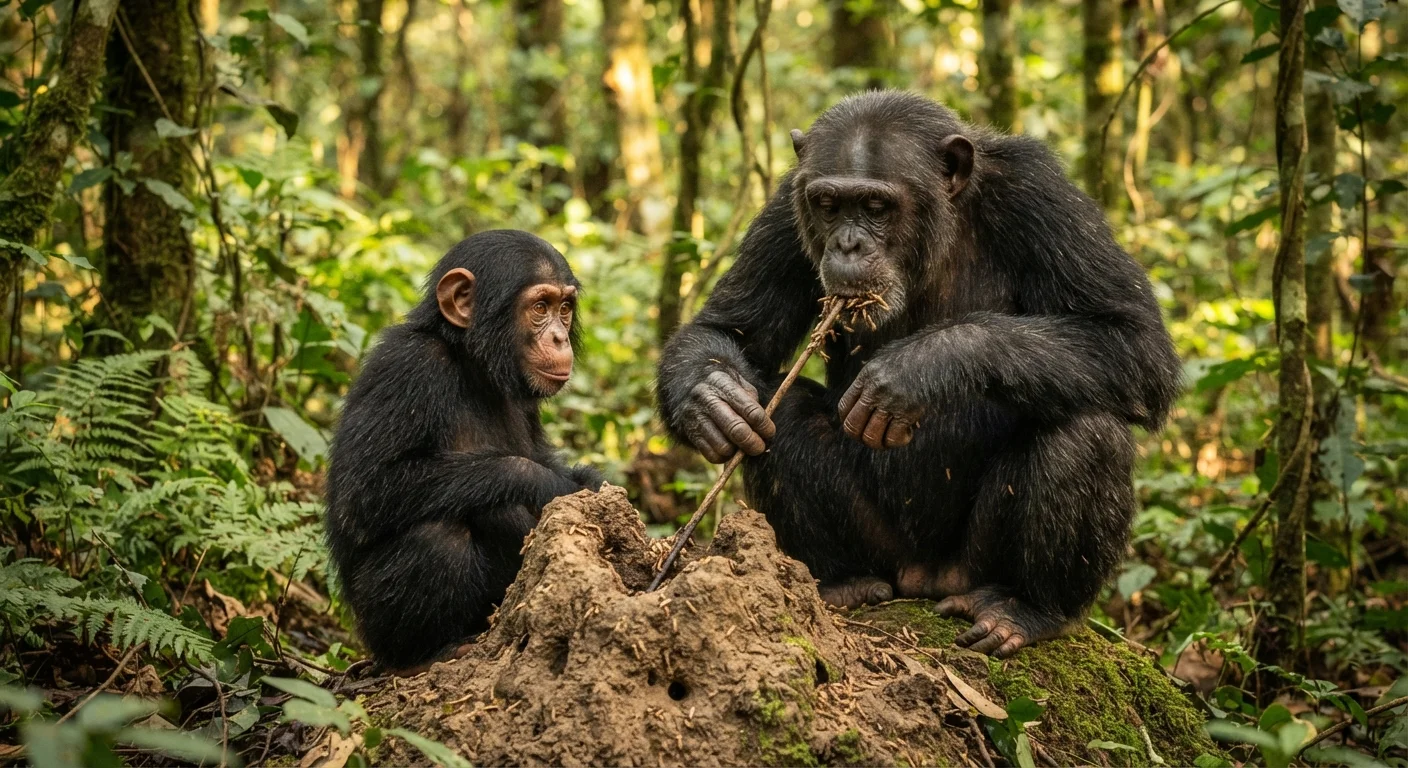
- Observational and social learning: Perhaps the most ecologically significant form. Young chimpanzees acquire termite-fishing techniques by watching experienced adults, a process that can take years to master. This is cultural transmission of behavior.
- Imprinting: A time-sensitive form of learning occurring in a critical developmental window - as when newly hatched birds identify and bond with the first moving object they encounter, typically a parent.
The key concepts in animal cognition such as episodic memory and theory of mind are closely intertwined with how animals encode and apply learned information over their lifetimes.
Why the Distinction Is Rarely Clean
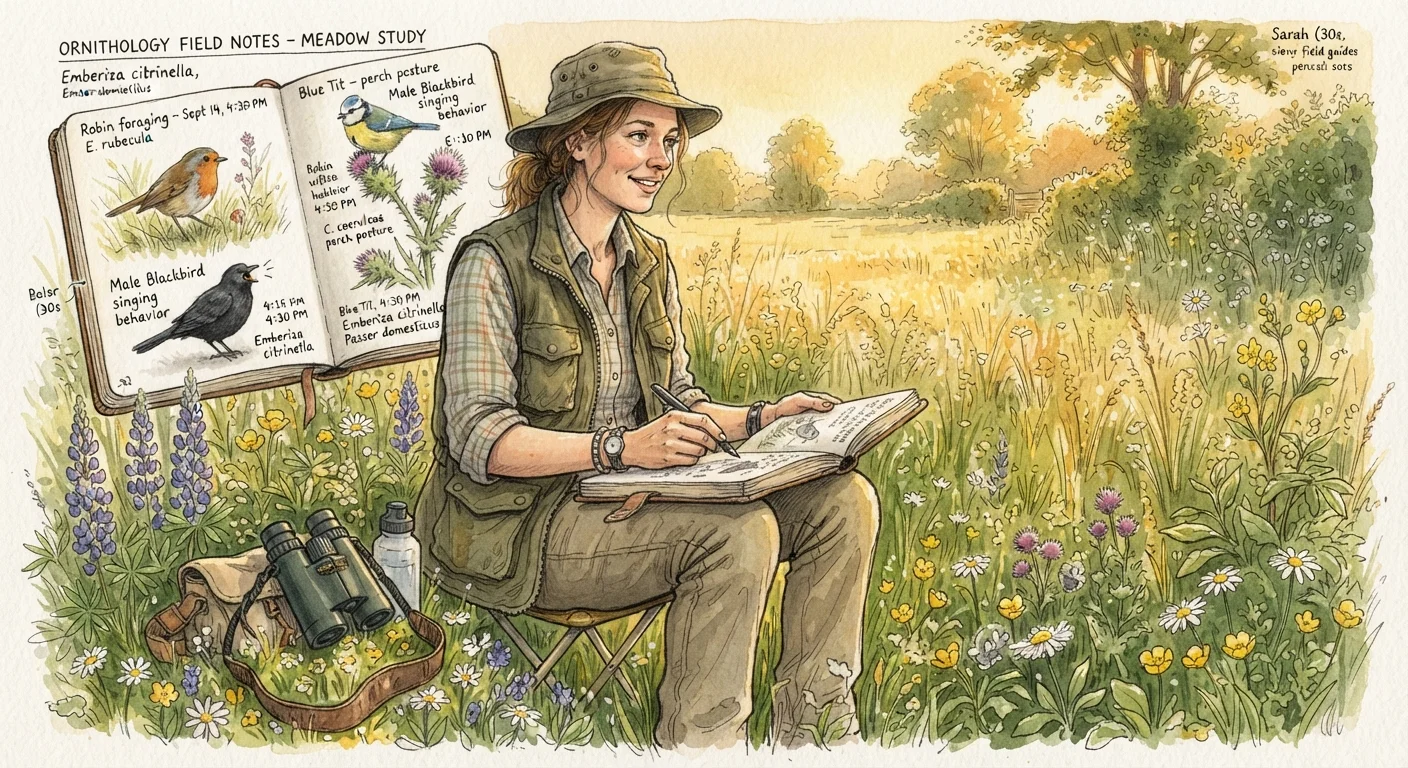
In practice, most behaviors involve a layered interaction between genetic predispositions and experience. Songbirds illustrate this well. White-crowned sparrows (Zonotrichia leucophrys) are genetically primed to learn song - but they must hear the species-specific dialect during a critical early window to develop it correctly. Without that acoustic input, their song remains incomplete. The capacity is innate; the content is learned.
Similarly, fear of predators in many prey species has an innate component - ground squirrels respond to hawk silhouettes without prior exposure - but experience refines and contextualizes the response, reducing false alarms and calibrating reaction intensity. This interplay is sometimes described as prepared learning: evolution shapes which associations an animal finds easy to form.
~50 days
Critical song-learning window in white-crowned sparrows
Research on Zonotrichia leucophrys established that sparrows exposed to conspecific song only during a narrow post-hatching window develop normal vocalizations; exposure outside this period is largely ineffective.
39+
Distinct chimpanzee behavioral traditions documented
A landmark 1999 study by Whiten and colleagues in Nature identified 39 behavioral patterns in wild chimpanzee communities that varied culturally rather than genetically across populations.
Hours
Time for newborn foals to stand and walk
Equine neonates express standing and locomotion through innate motor programs, typically achieving independent movement within one to three hours of birth with no prior experience.
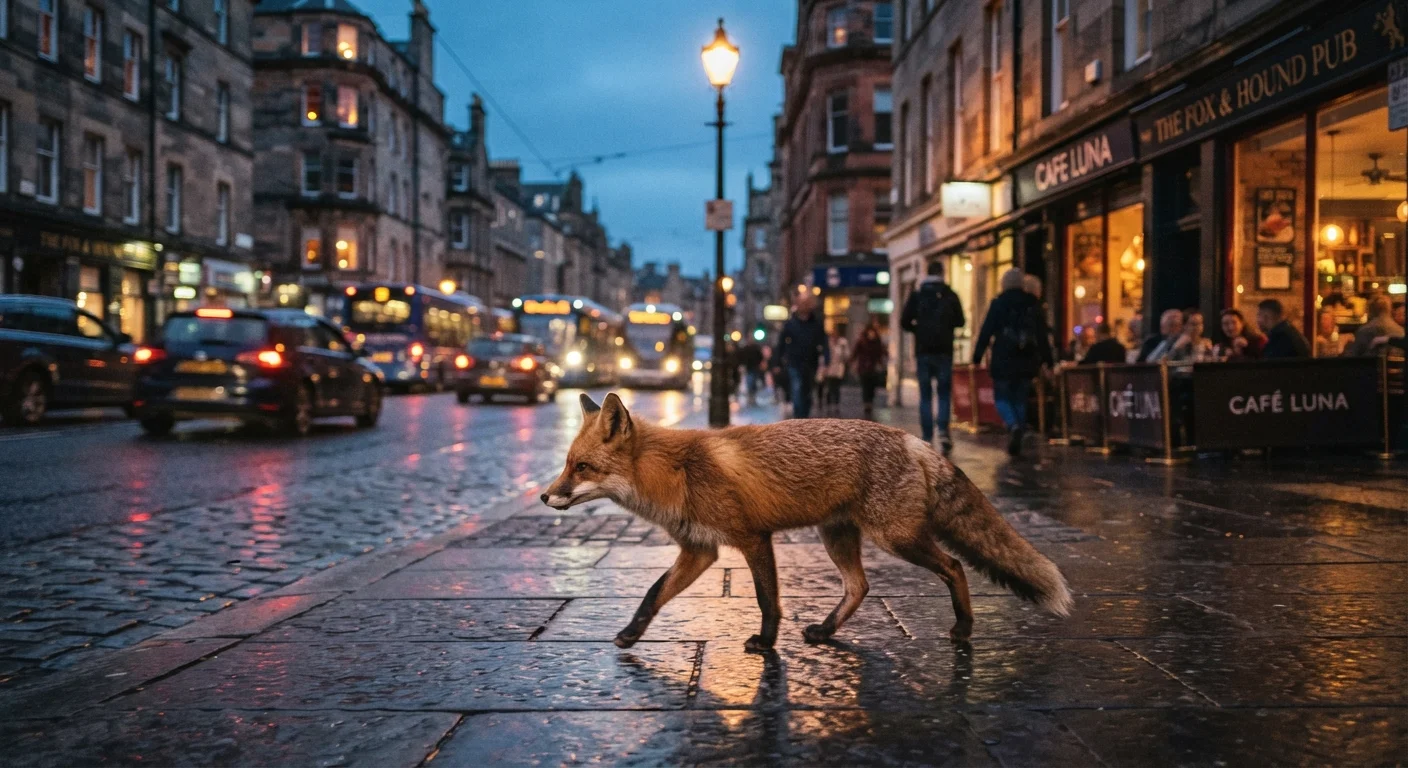
The balance also shifts with ecological context. Species living in stable, predictable environments tend to rely more heavily on innate responses, while those navigating variable or human-modified habitats lean toward behavioral flexibility. Research on urban wildlife documents this vividly - city-dwelling populations adjust foraging schedules, alarm call frequencies, and dietary choices in ways their rural counterparts do not. Read more in our article on how animals adapt their behavior to urban environments.
The innate-versus-learned question also echoes the broader nature vs. nurture debate in human behavioral science, where the consensus has similarly shifted toward recognizing gene-environment interaction rather than either extreme.
The Concept of 'Prepared Learning'
Evolutionary biologists use the term 'prepared learning' to describe how natural selection shapes which associations are easy or difficult for a species to acquire. Rats, for example, form taste aversions rapidly but struggle to link visual cues with illness - the opposite of what birds tend to show. This is not a limitation of intelligence but an evolutionary calibration reflecting each species' natural ecology and sensory world.
Ecological and Evolutionary Implications
Understanding how species balance instinct and learning has practical implications for conservation, captive breeding, and wildlife management. Animals raised in captivity without opportunities for social learning may lack behaviors critical for survival upon release - a challenge documented in reintroduction programs for species such as California condors and black-footed ferrets.
Social structure also shapes this balance. In species with extended parental care or complex social hierarchies, learned behaviors transmitted through generations can produce genuinely cultural variation - distinct tool-use traditions in chimpanzee communities, for instance, differ across geographic regions without corresponding genetic differences. This parallels how ecological pressures drive species toward solitary or social lifestyles, with social living itself creating richer opportunities for behavioral transmission.
Even behaviors that appear purely cooperative or altruistic are shaped by this dual architecture. The evolutionary logic behind seemingly selfless acts - kin selection, reciprocal altruism - operates on innate predispositions that experience can modulate. For a closer look, see when animal behavior looks altruistic and when it really isn't.
Ultimately, the most adaptive animals are not those with the most rigid instincts or the greatest learning capacity in isolation - but those whose biology equips them to deploy both at the right moment.