
Why Observation Protocol Matters Ecologically
Watching wild animals is not a neutral act. Even well-intentioned observers can trigger measurable stress responses, interrupt feeding, cause nest abandonment, or displace animals from critical habitat. Research on ungulates, shorebirds, and marine mammals consistently shows that repeated close human approaches elevate stress hormones and reduce reproductive success over a single season.
The goal of principled wildlife observation is to gather authentic behavioural information - the kind that makes encounters genuinely meaningful - while leaving no detectable trace on the animals or their environment. This connects directly to the broader study of animal behaviour, where understanding species-specific ecology is the foundation of responsible engagement.
~61%
Encounters triggering avoidance behaviour
A review in PLOS ONE found that wildlife in protected areas showed flight or avoidance responses in a majority of encounters with recreational visitors who approached without structured protocol.
4-5×
Cortisol elevation from repeated human approach
Studies on ungulates subjected to repeated close human approaches measured stress hormone levels 4 to 5 times above baseline, with sustained elevations negatively affecting foraging and reproduction.
Core Practices for Responsible Wildlife Observation
The following practices are grounded in field ecology and ethological research. Applied consistently, they protect animals and dramatically improve the quality of what you witness.
Establish and hold a minimum approach distance appropriate to the species
Every species has a flight initiation distance (FID) - the point at which it will flee from a perceived threat. Approaching within that threshold triggers a stress response that disrupts foraging, parenting, and rest. Consistent distance discipline also conditions animals in frequently visited areas to remain calm around respectful observers.
Move slowly, deliberately, and in a low profile whenever approaching wildlife
Fast, upright, direct movement mimics predator behaviour and triggers immediate avoidance. Slowing down and reducing your profile lowers your threat signature dramatically, allowing you to close distance incrementally without alarming the animal.
Observe during peak activity windows aligned with species biology
Most wildlife concentrates activity at dawn and dusk, when temperature, light, and predator dynamics align with foraging and social behaviour. Visiting at these times maximises authentic behavioural observation while reducing the number of intrusions relative to sightings.
Never offer food, bait, or artificial attractants to wild animals
Feeding conditions animals to associate humans with food, degrades natural foraging behaviour, accelerates disease transmission, and frequently ends in the animal being destroyed after human conflict. Even unintentional baiting through unsecured waste carries the same consequences.
Use wind direction and natural terrain features to reduce your sensory presence
Mammals, in particular, rely heavily on olfactory cues to detect danger. Approaching from upwind broadcasts your presence before you are visible. Natural features such as ridgelines, dense vegetation, and rock formations double as effective hides and scent screens.
Timing, Position, and Minimising Your Sensory Footprint
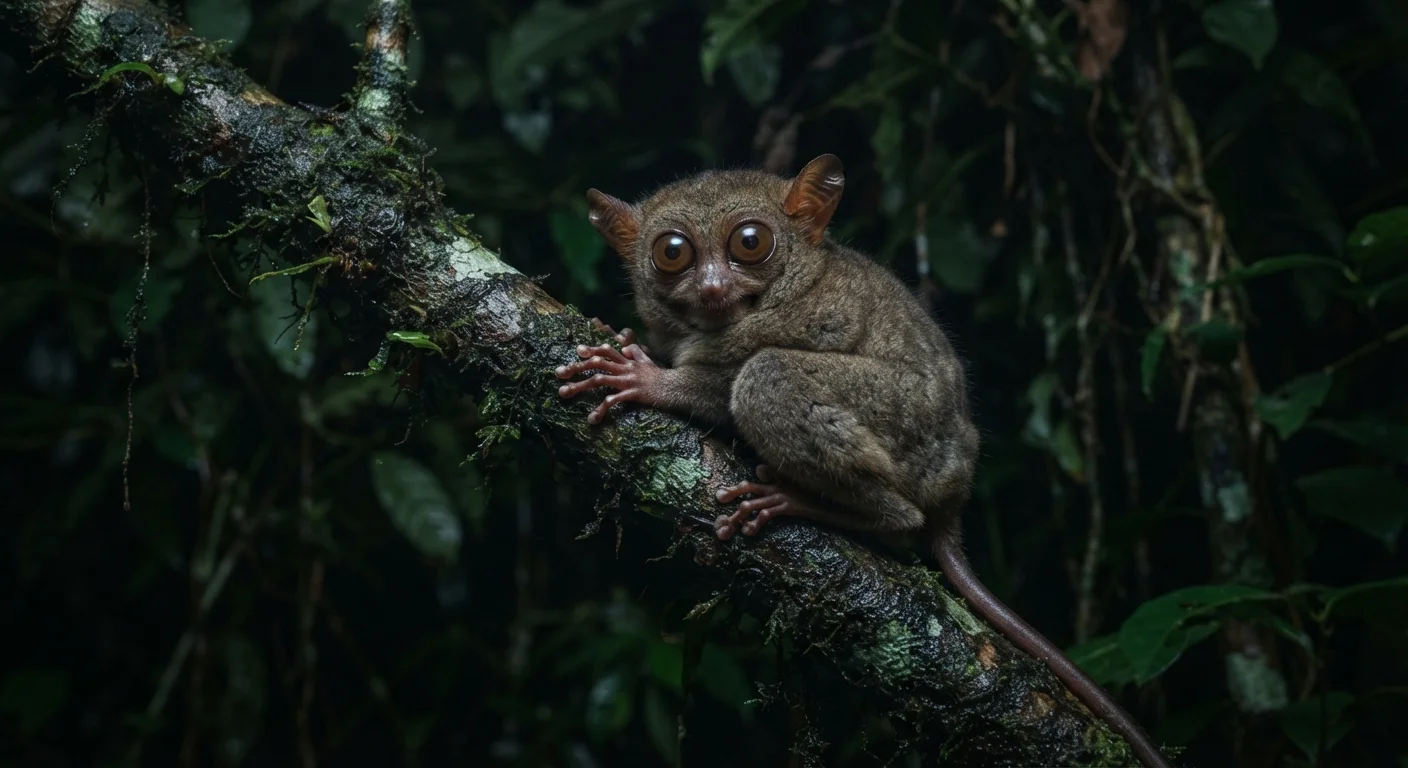
Most wildlife activity concentrates at dawn and dusk - crepuscular periods when light, temperature, and predator pressure align with foraging and social behaviour. Arriving early and settling into position before animals become active is far more productive than approaching animals mid-day. Nocturnal species require a separate approach entirely, using red-filtered torches and exceptional stillness to avoid disrupting their acute sensory systems.
Use Natural Features as Hides
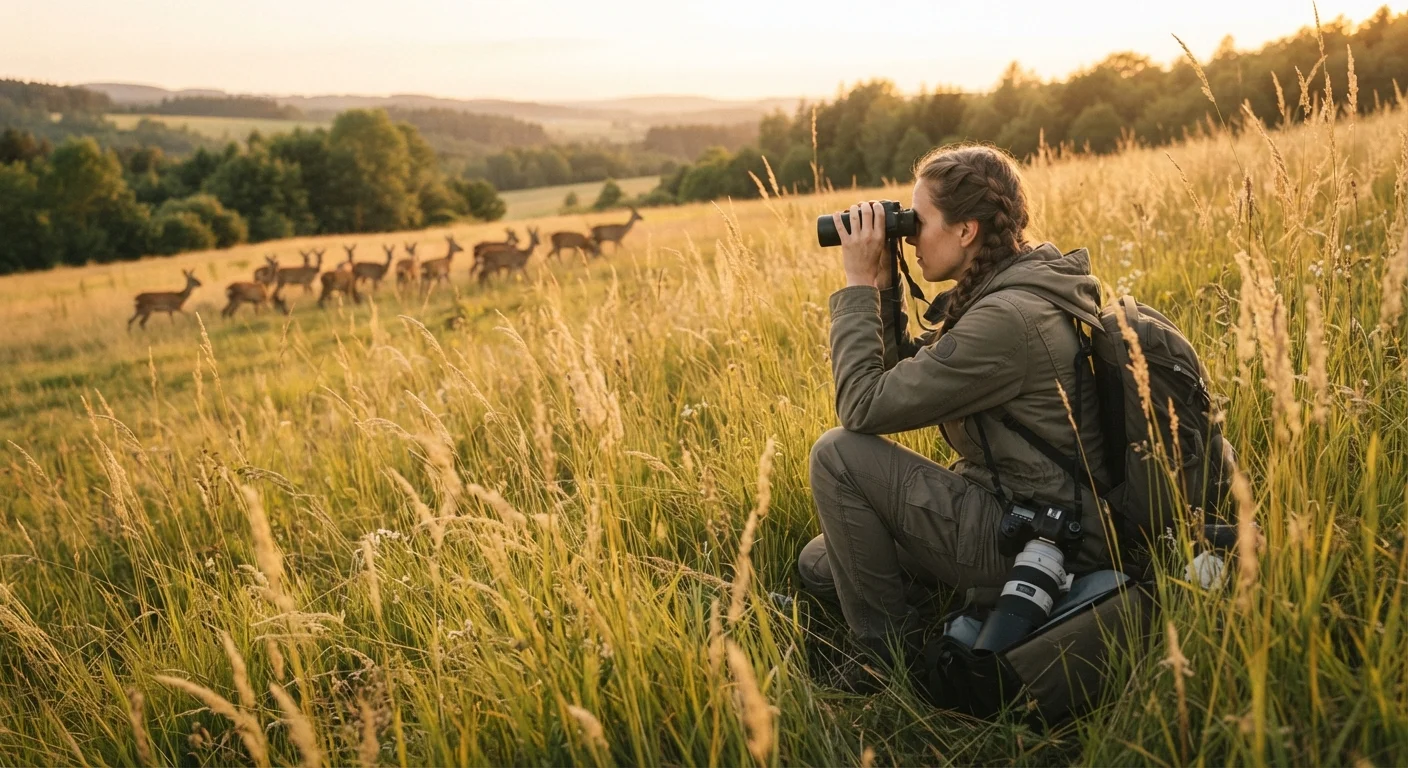
Rocks, fallen logs, dense shrubs, and slight ridgelines serve as effective natural blinds. Position yourself so your silhouette does not break the skyline - one of the most easily detected cues for alert prey species. Arriving at your position before dawn, before animals begin moving, means they will have no memory of your approach and will behave as though alone.
Your sensory profile - what animals can see, hear, and smell - determines whether you remain invisible. Move into the wind rather than with it. Avoid silhouetting yourself on open ridges. Keep vocalisations to a whisper or use pre-arranged hand signals with companions. These habits compound: an observer who controls all three sensory channels will consistently witness behaviour that a casual visitor never sees.
Regulations Vary by Location
Many protected areas have legally mandated minimum approach distances for specific species - particularly large mammals, nesting birds, and marine wildlife. Always check local park or reserve rules before your visit. Violating these distances can result in fines and, more importantly, genuine harm to the animals involved.
Reading Behaviour to Know When to Stop
Knowing when to retreat is as important as knowing how to approach. Animals broadcast discomfort well before they flee, and learning those signals is a core field skill. Raised heads, freezing, stiff posture, piloerection, and redirected gaze toward an observer are all early warning indicators. A detailed framework for interpreting these cues is available in our field guide to animal body language.
Social species add complexity: a solitary individual may tolerate closer proximity than a group with dependent young, where adult sentinels are highly vigilant. Understanding whether a species is solitary or social shapes how you read the scene in front of you.
“The observer who moves through a landscape without altering it is the most skilled naturalist of all. Every creature you fail to disturb is a scene you are privileged to witness honestly.”
— George Schaller, Wildlife biologist and field researcher, Wildlife Conservation Society
If any animal changes its behaviour because of your presence, you are already too close. Back away slowly, pause, and observe from that greater distance. The encounter remains valuable; the animal's welfare takes precedence.
What Never to Do - and Immediate Steps You Can Take
Several common observer behaviours cause disproportionate harm. Feeding wild animals is the most consequential: it conditions animals to associate humans with food, alters natural foraging patterns, and increases human-wildlife conflict. Even leaving food scraps unintentionally through poor camp hygiene has documented population-level effects on opportunistic species. Playback of recorded calls during breeding season wastes energy animals cannot afford, and drone use near nesting sites has caused nest desertion in colonial seabird populations.
Researchers who study wildlife without distorting it have developed rigorous protocols worth understanding - see how field researchers minimise observer effects for a deeper look at professional methodology. Wildlife in urban-edge habitats presents additional considerations, as explored in our article on how animals adapt to urban environments.